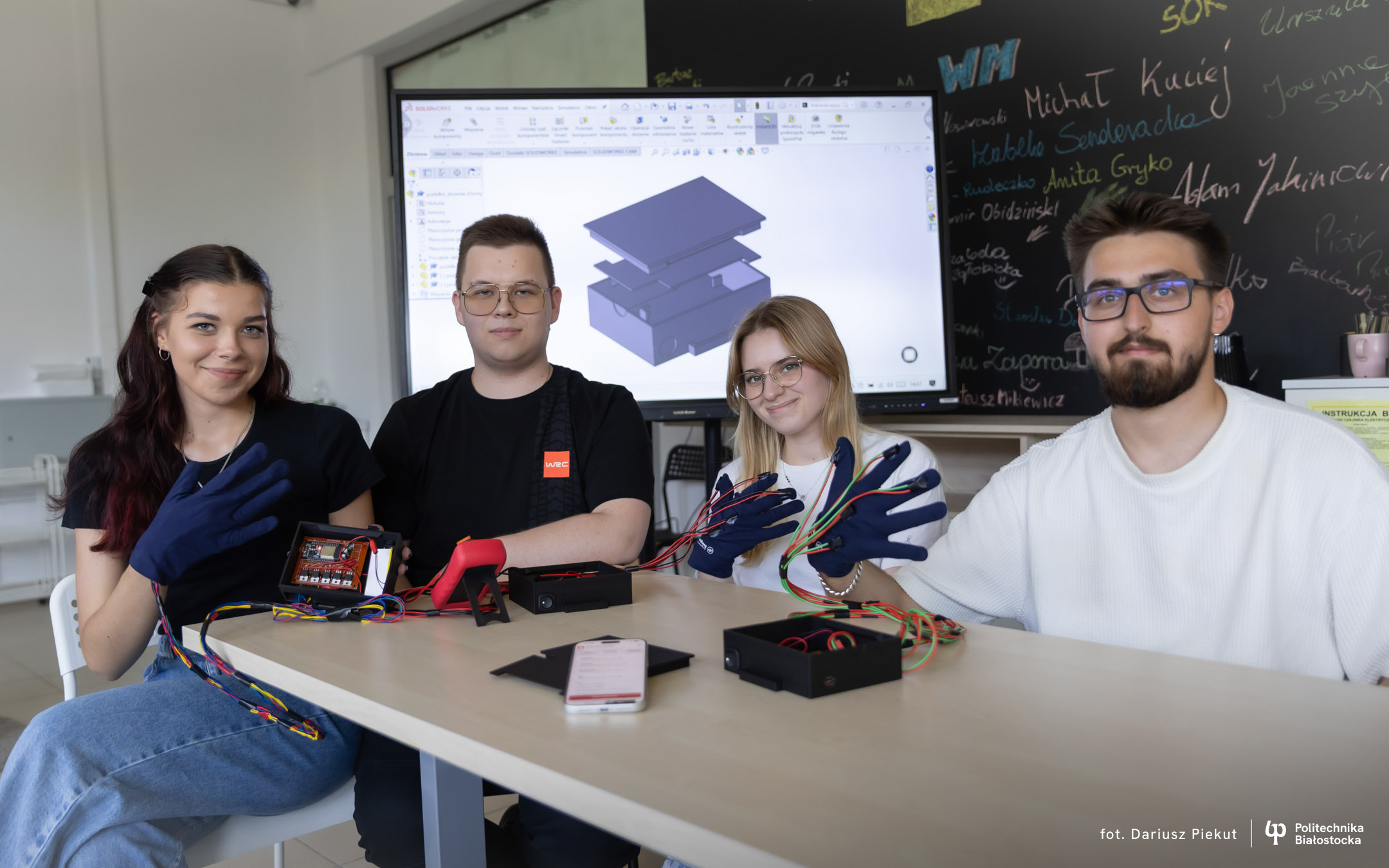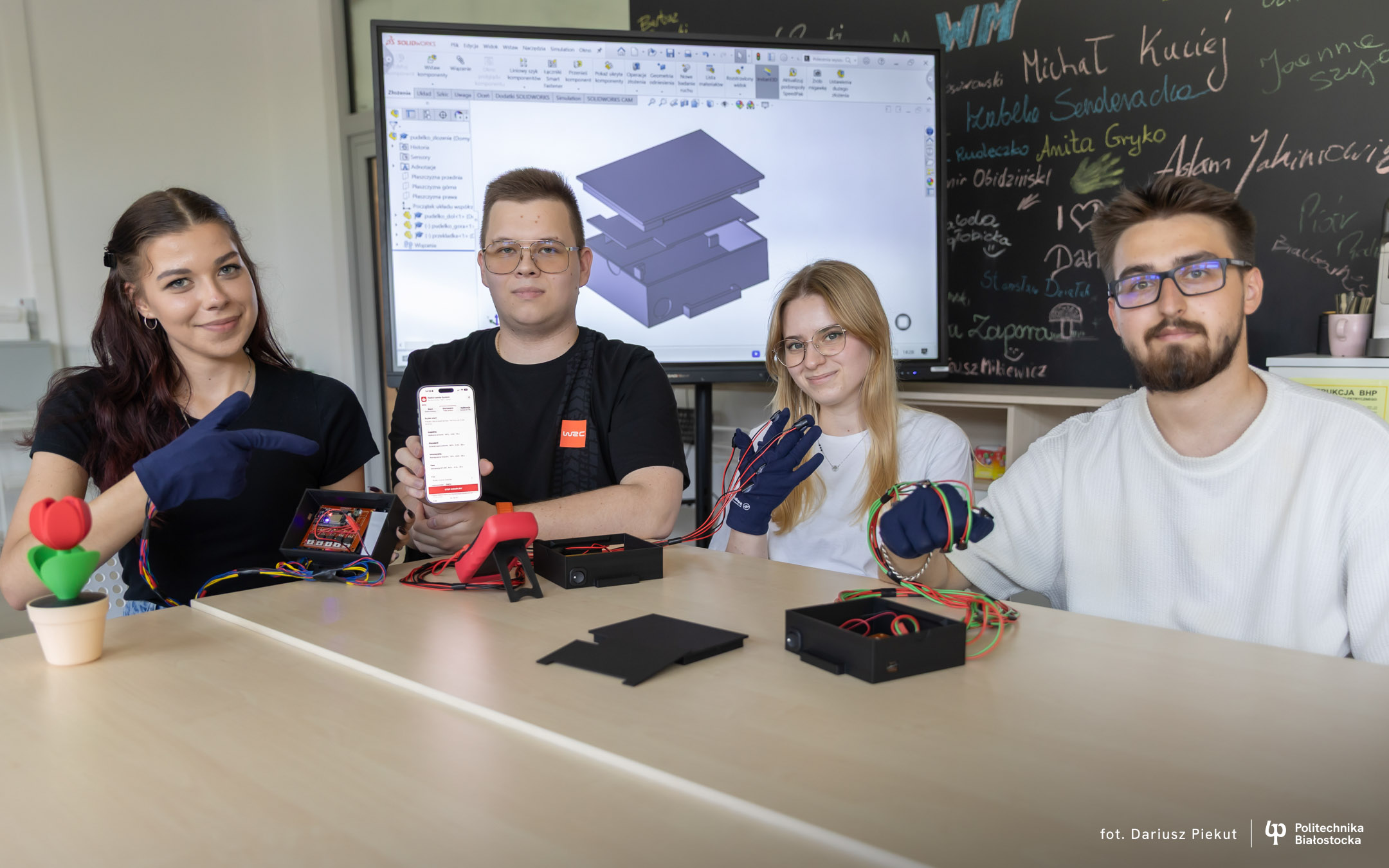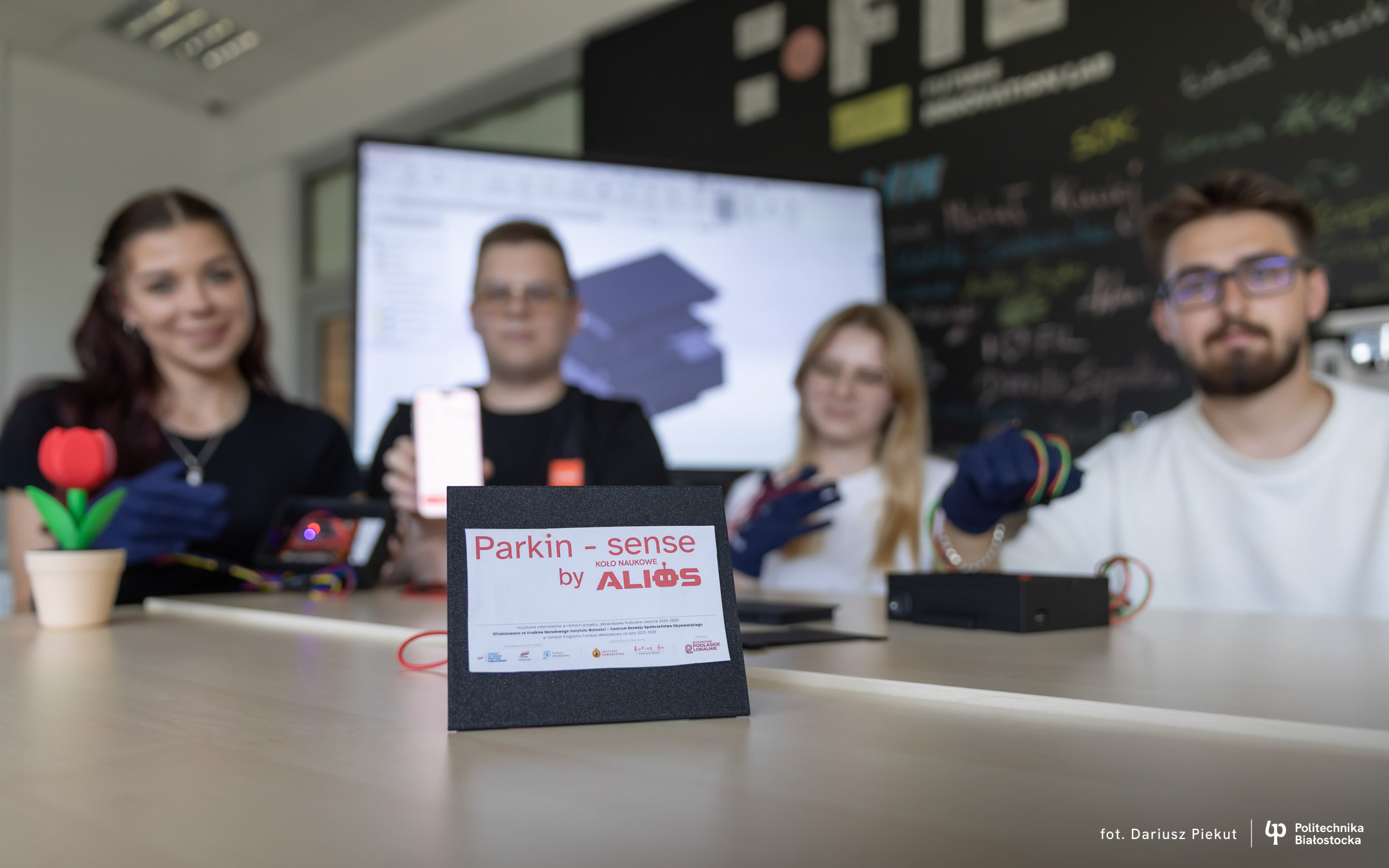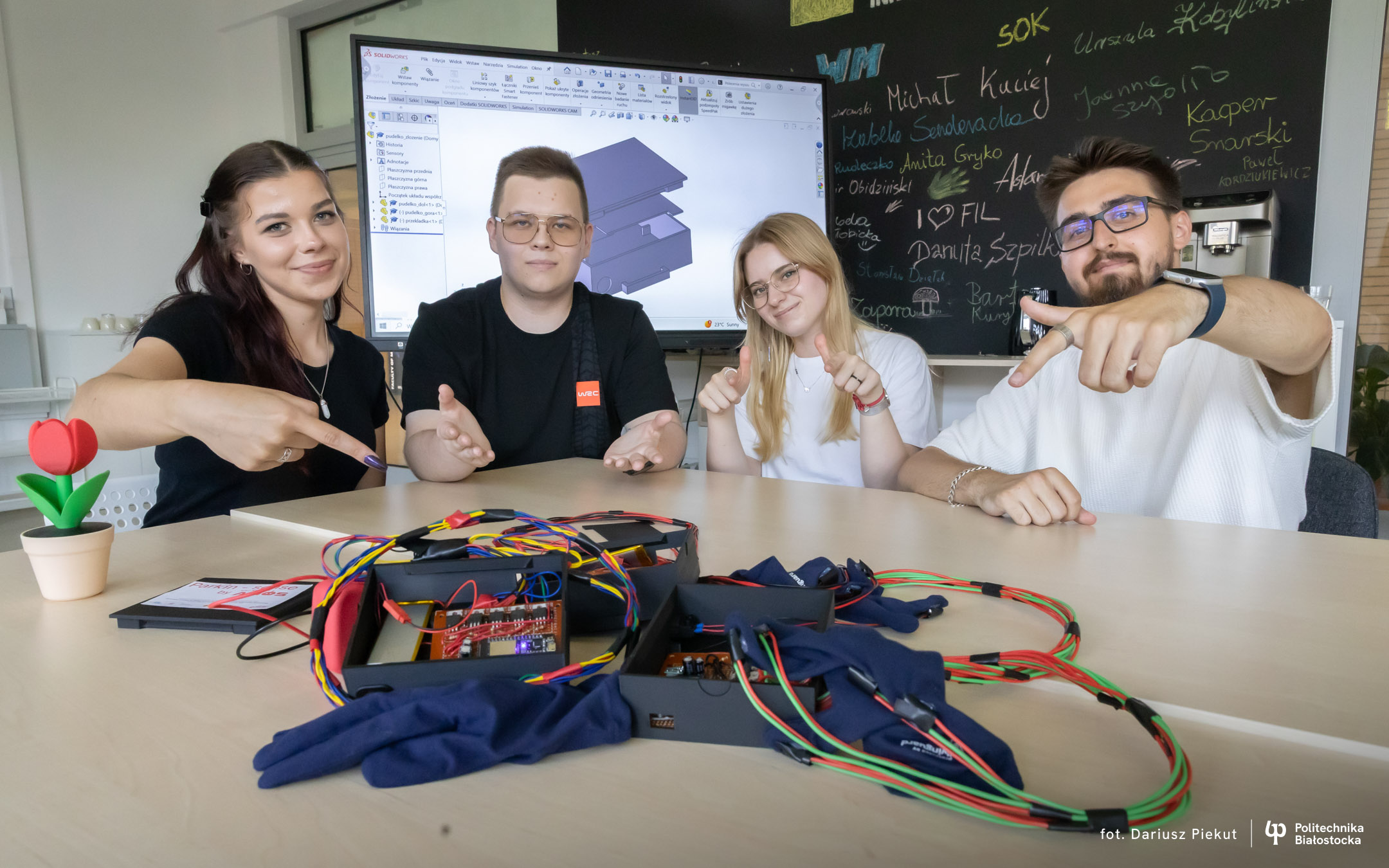
Thanks to the initiative of the Alios student scientific association, more than 200 students experienced first-hand the difficulties faced by people with Parkinson’s disease.
A classroom test of endurance
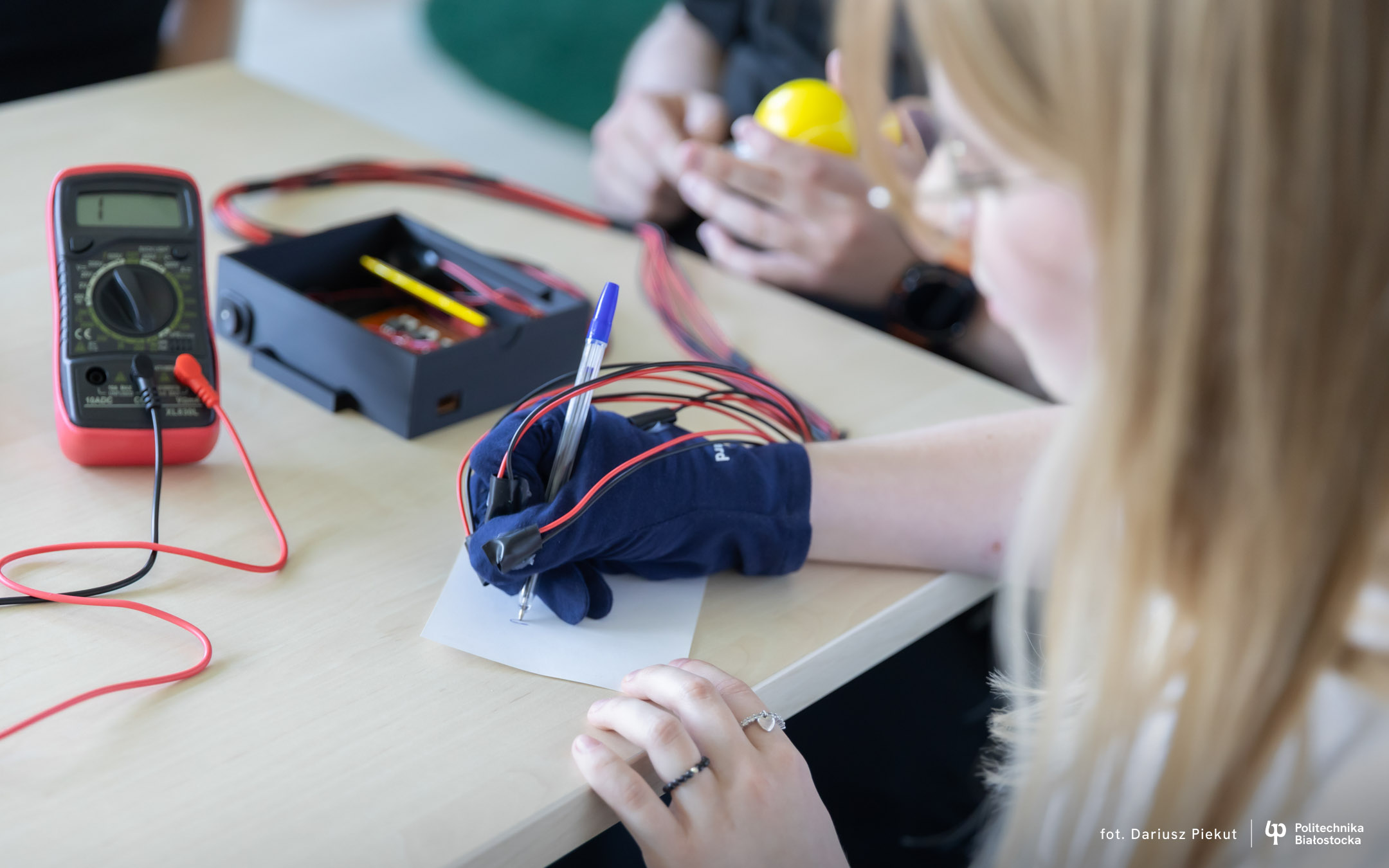
In one of the secondary schools in the Podlaskie region, a student puts on unassuming-looking gloves. A moment later, his hands begin to tremble uncontrollably. He tries to send a simple text message or tie his shoelaces, but every movement becomes a struggle against his own body. This is no ordinary lesson – it is a confrontation with the reality faced by around 100,000 people in Poland living with Parkinson’s disease.
– We decided to focus on learning through experience because it is far more effective in engaging young people’s imagination – says Sergiusz Jakuszewicz, a master’s student in Automation and Robotics at the Faculty of Mechanical Engineering of Bialystok University of Technology and a member of the Alios student scientific association. – Young people rarely have the opportunity to see the world from the perspective of people living with chronic illnesses. The moment a student puts on our glove and discovers that even the simplest task becomes a major challenge is a real confrontation with reality. Such an experience stays in memory for a very long time.
From idea to microgrant
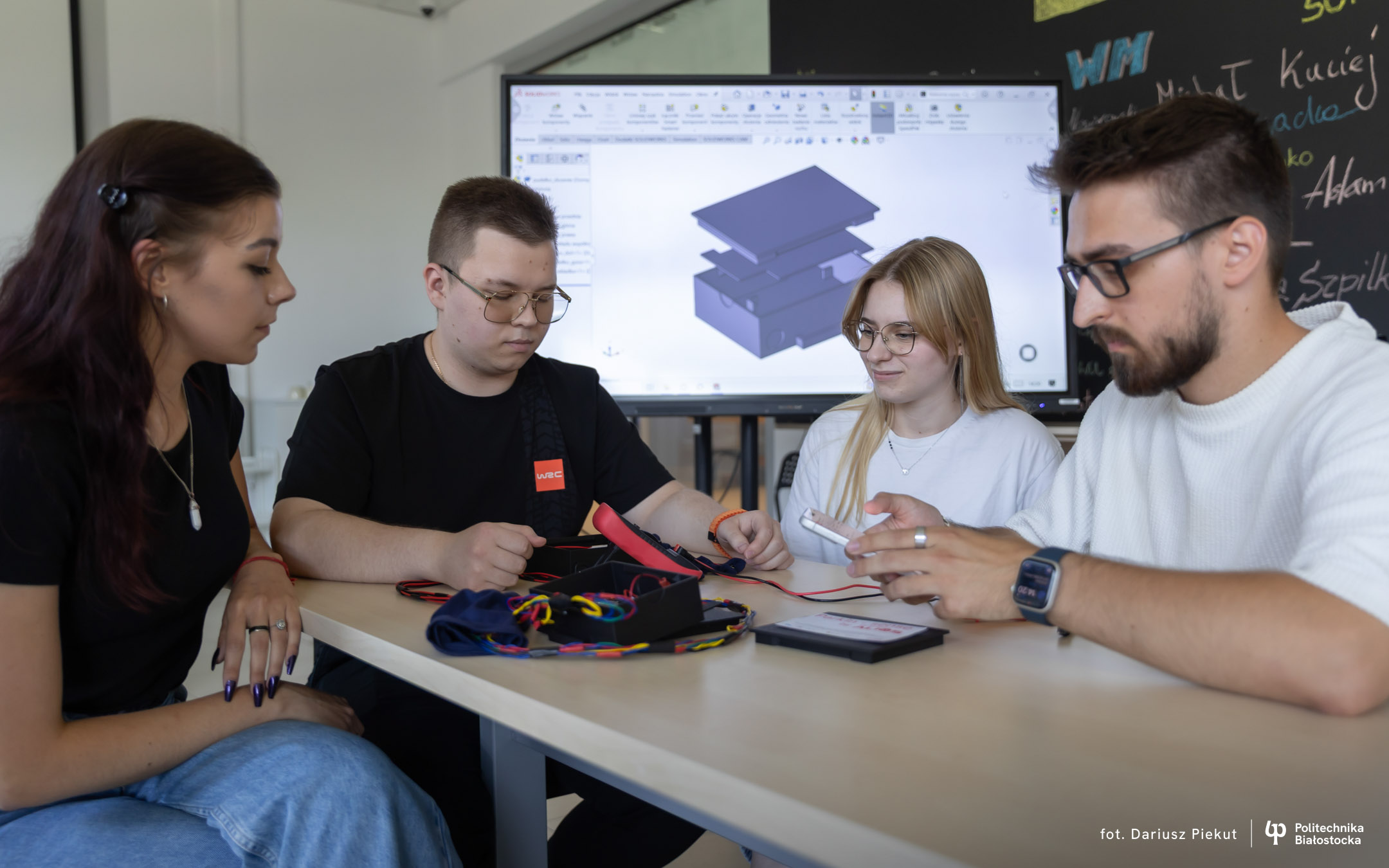
It all started at the Faculty of Mechanical Engineering of Bialystok University of Technology. Students of Automation and Robotics and Biomedical Engineering noticed a growing generational gap and decided to bridge it using technology. The path was challenging: from preparing an application for a microgrant under the „Młodzieżowe Podlaskie Lokalnie” programme, through consultations with a physiotherapist, to organising the logistics of school workshops.
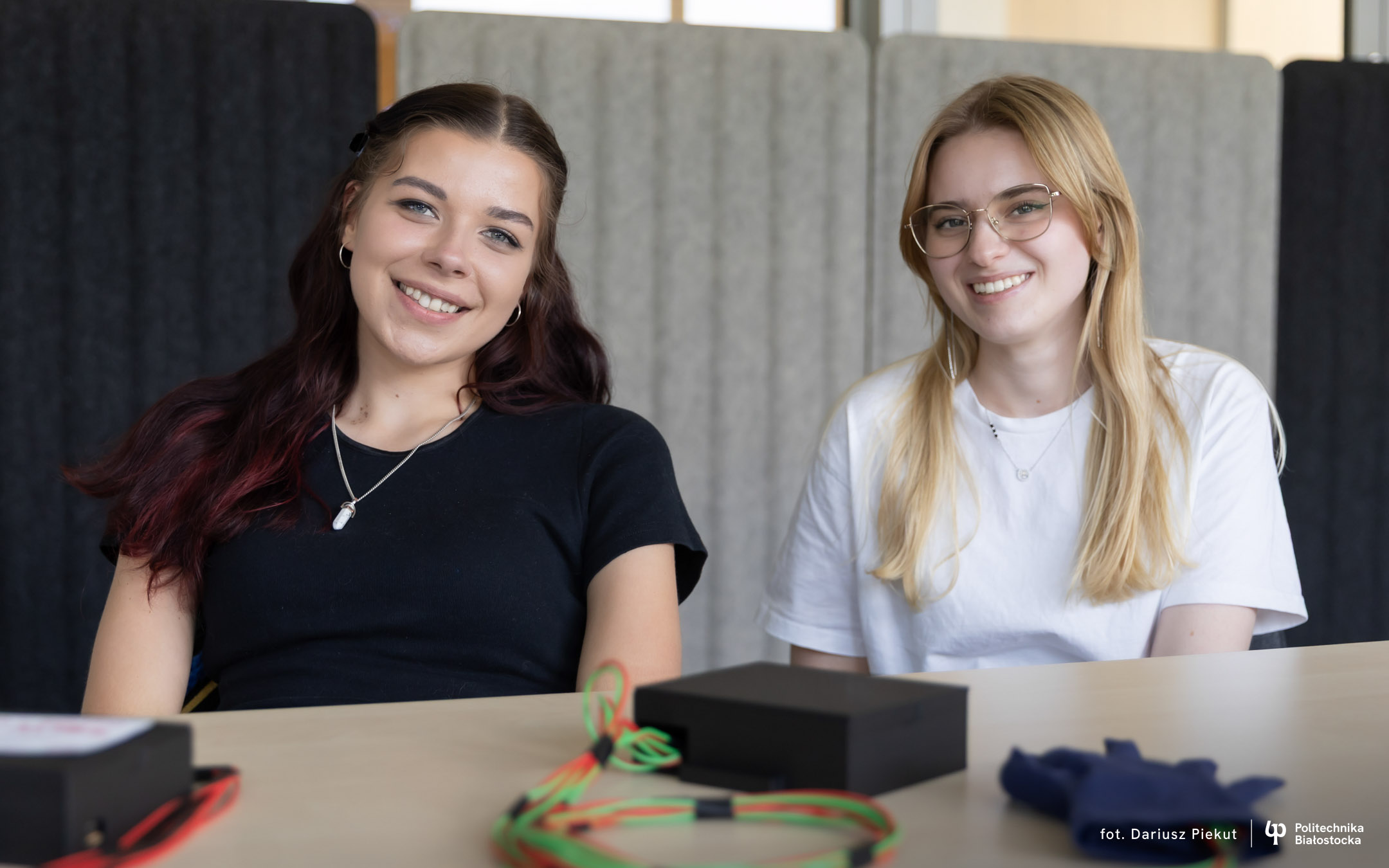
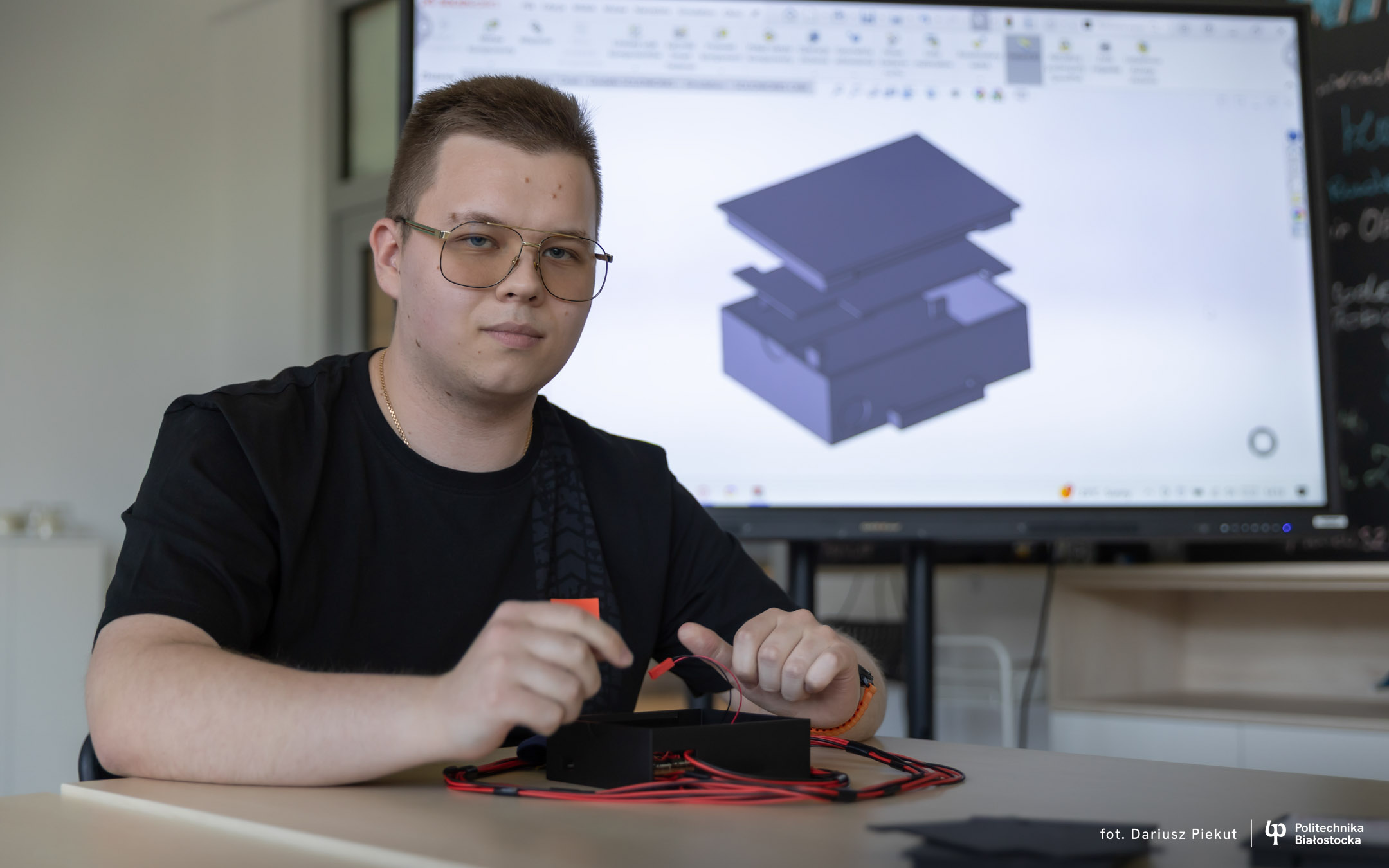
– The phrase “engineering teaches empathy” actually emerged from the nature of our biomedical engineering studies, where when designing devices or engineering solutions one must always remember that the end user is a human being – says Amelia Jeneralczuk, a first-cycle Biomedical Engineering student at the Faculty of Mechanical Engineering of Bialystok University of Technology and a member of the Alios student scientific association. – In addition to being functional, a device must also respond to human needs. We want to show young people that engineering builds awareness by fostering empathy, openness and understanding.
A “brain” enclosed in a glove
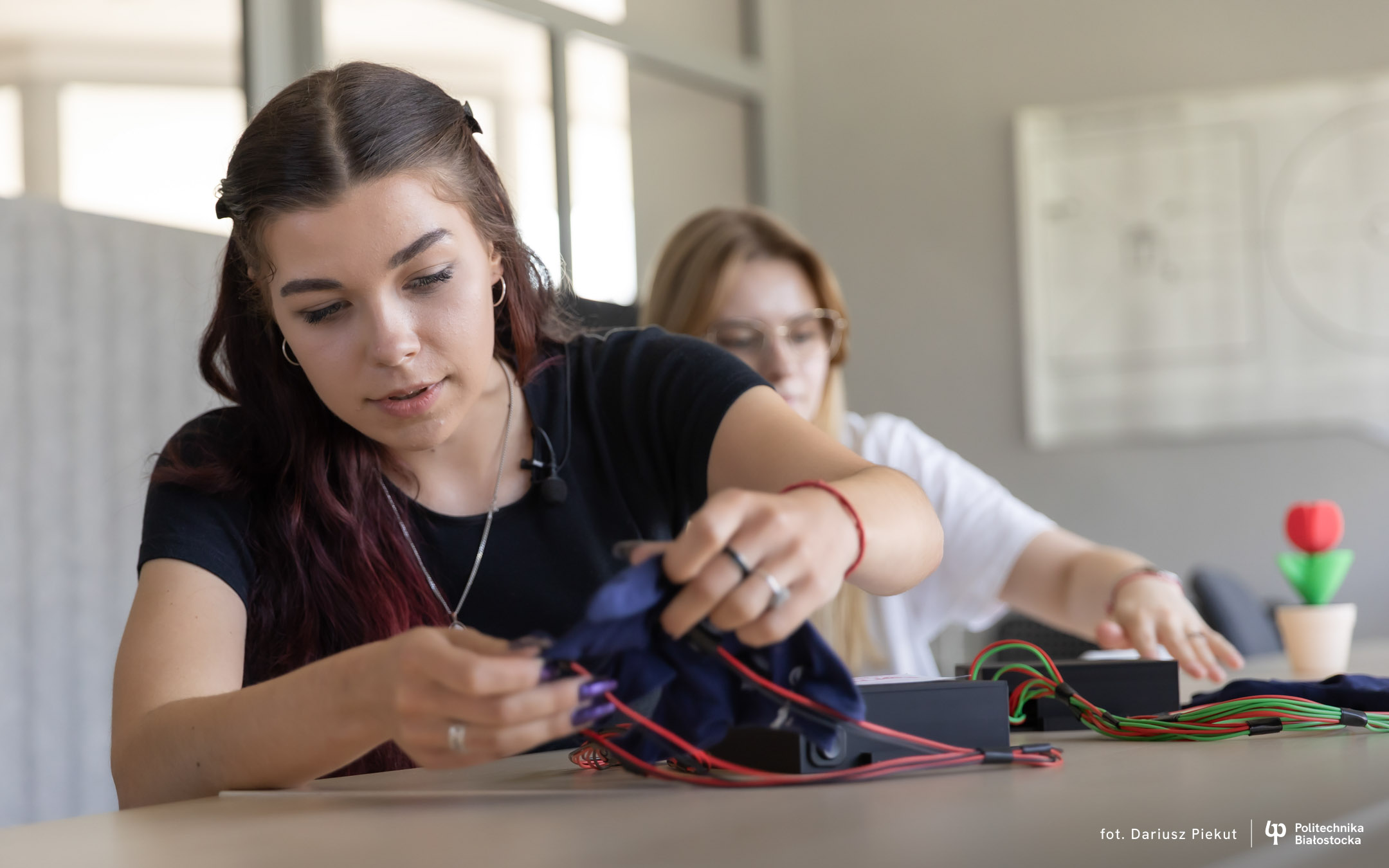
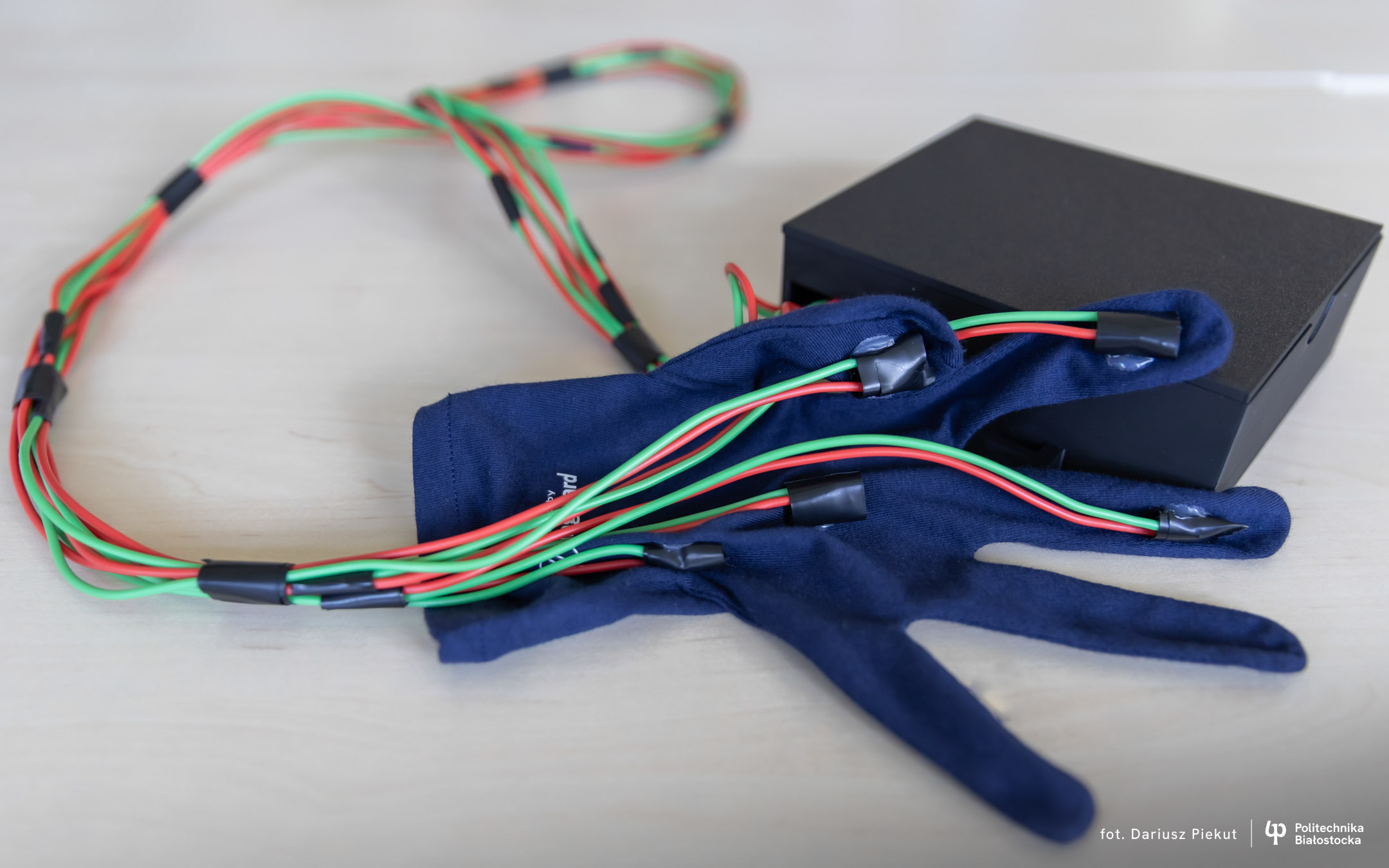
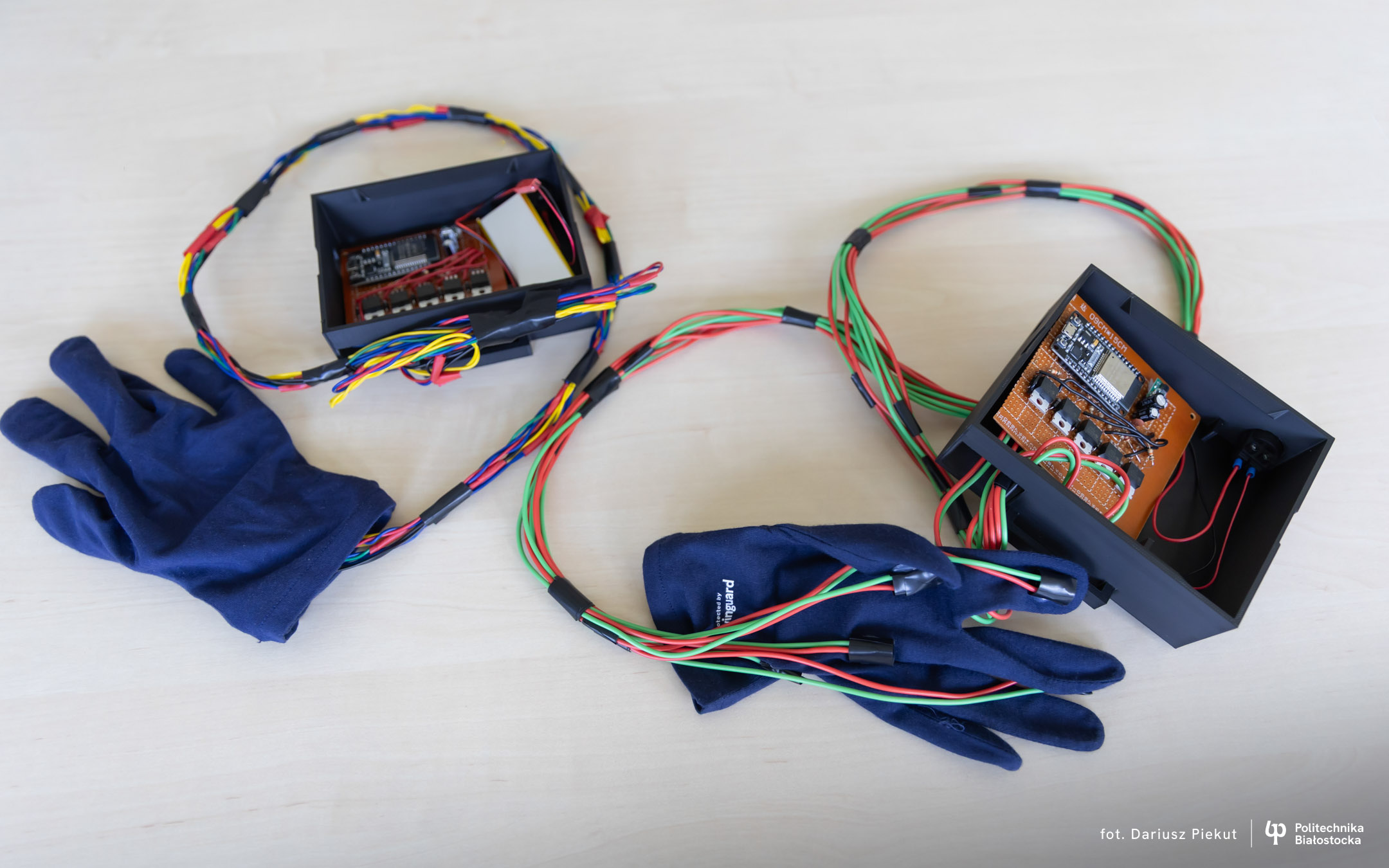
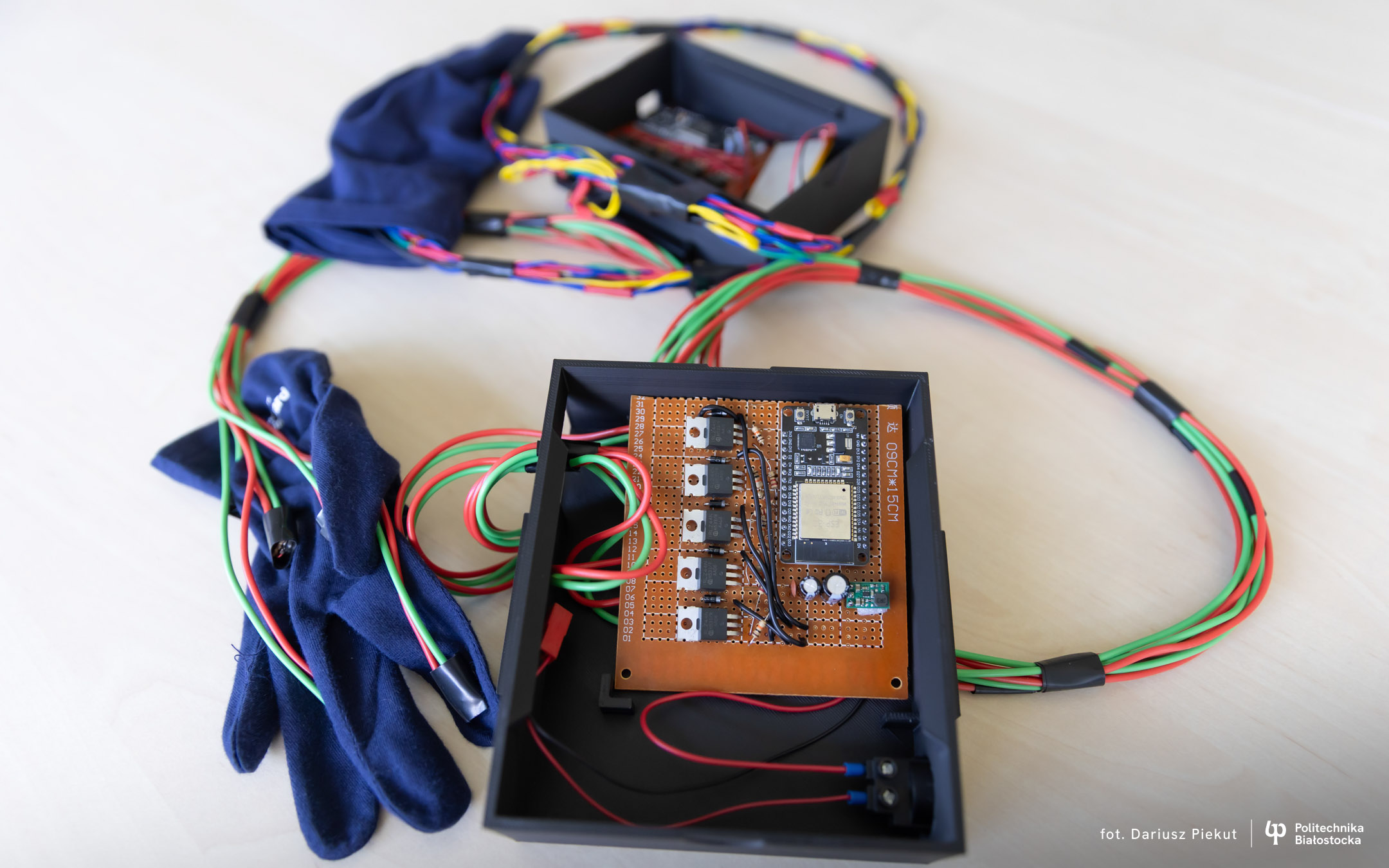
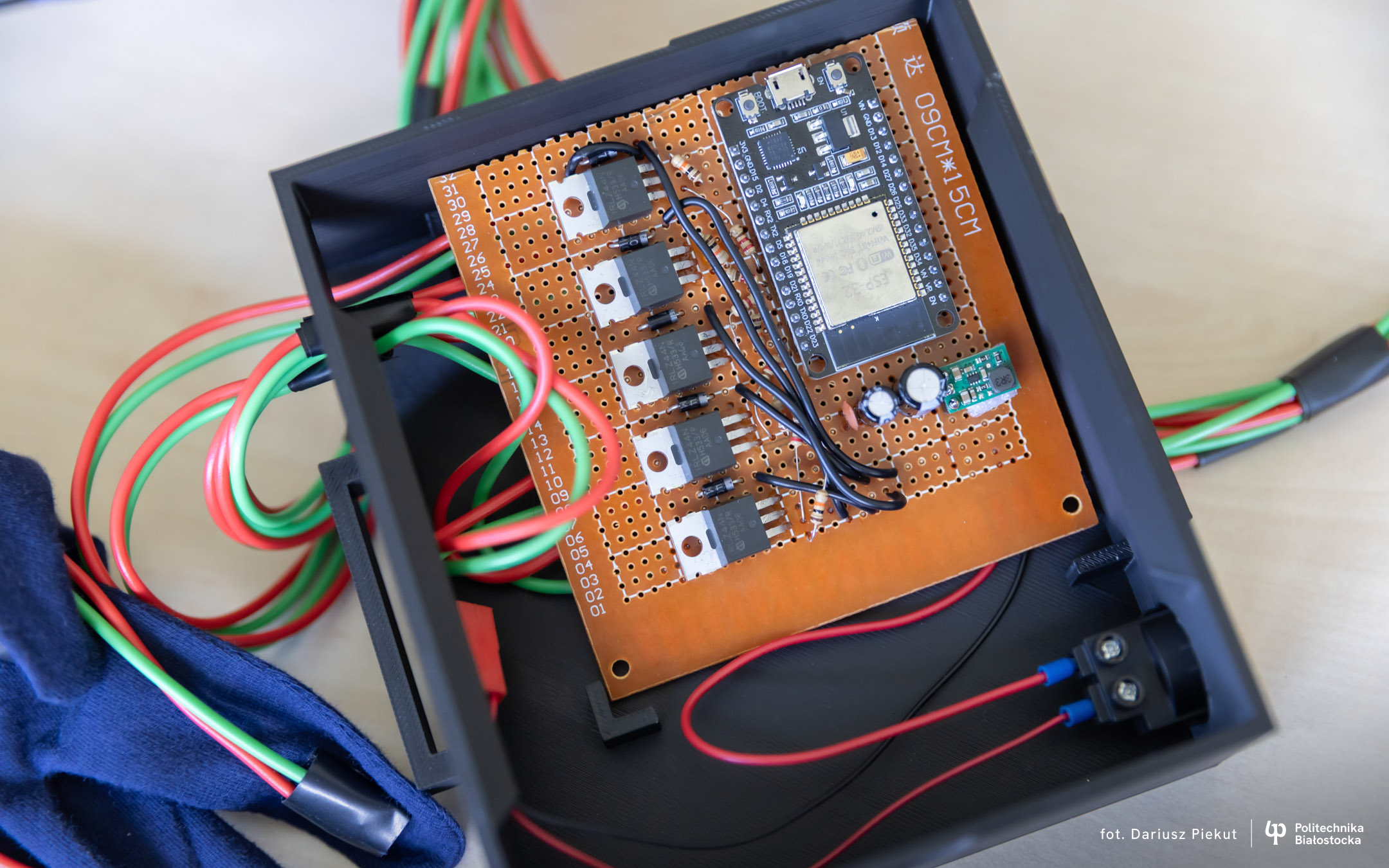
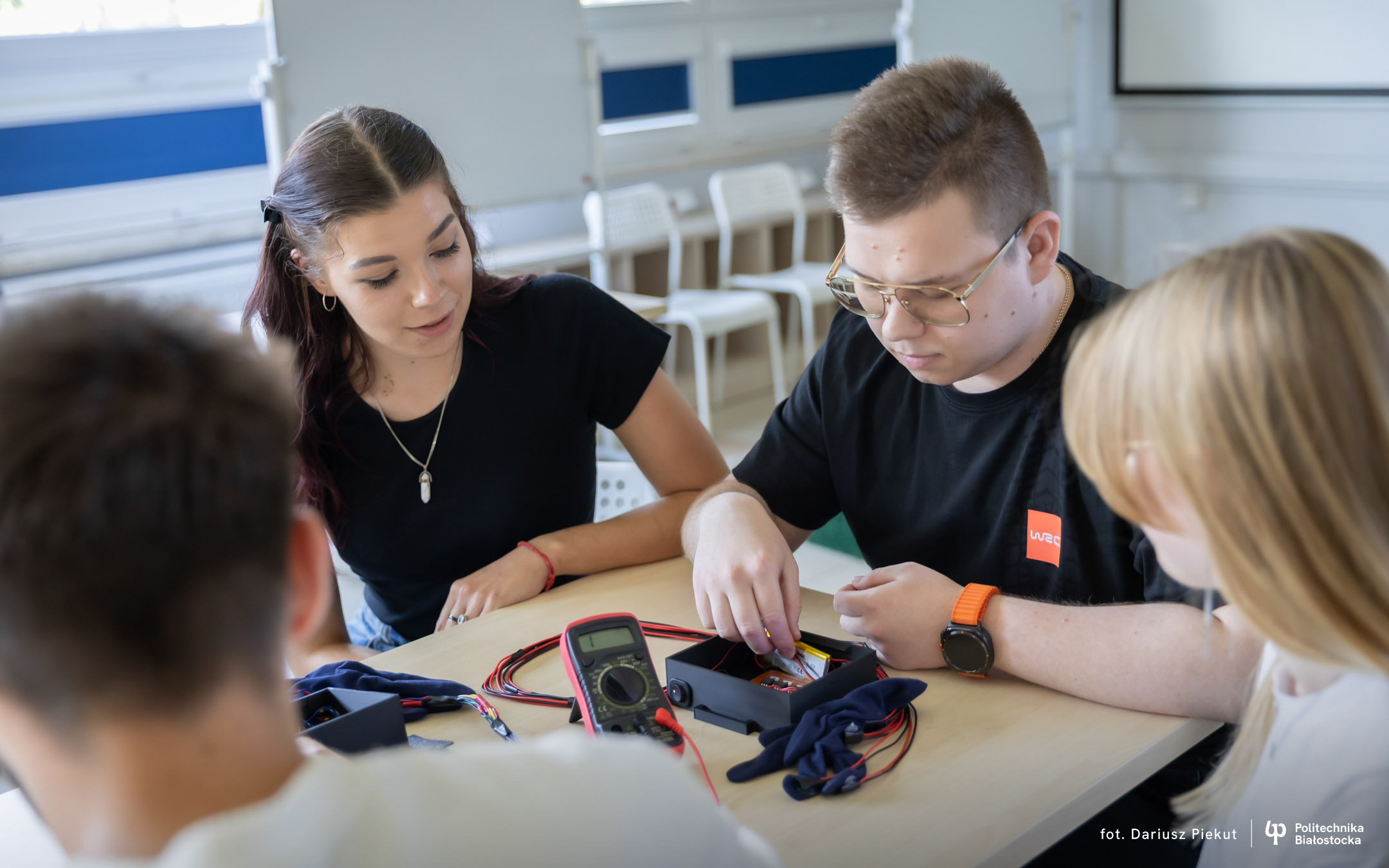
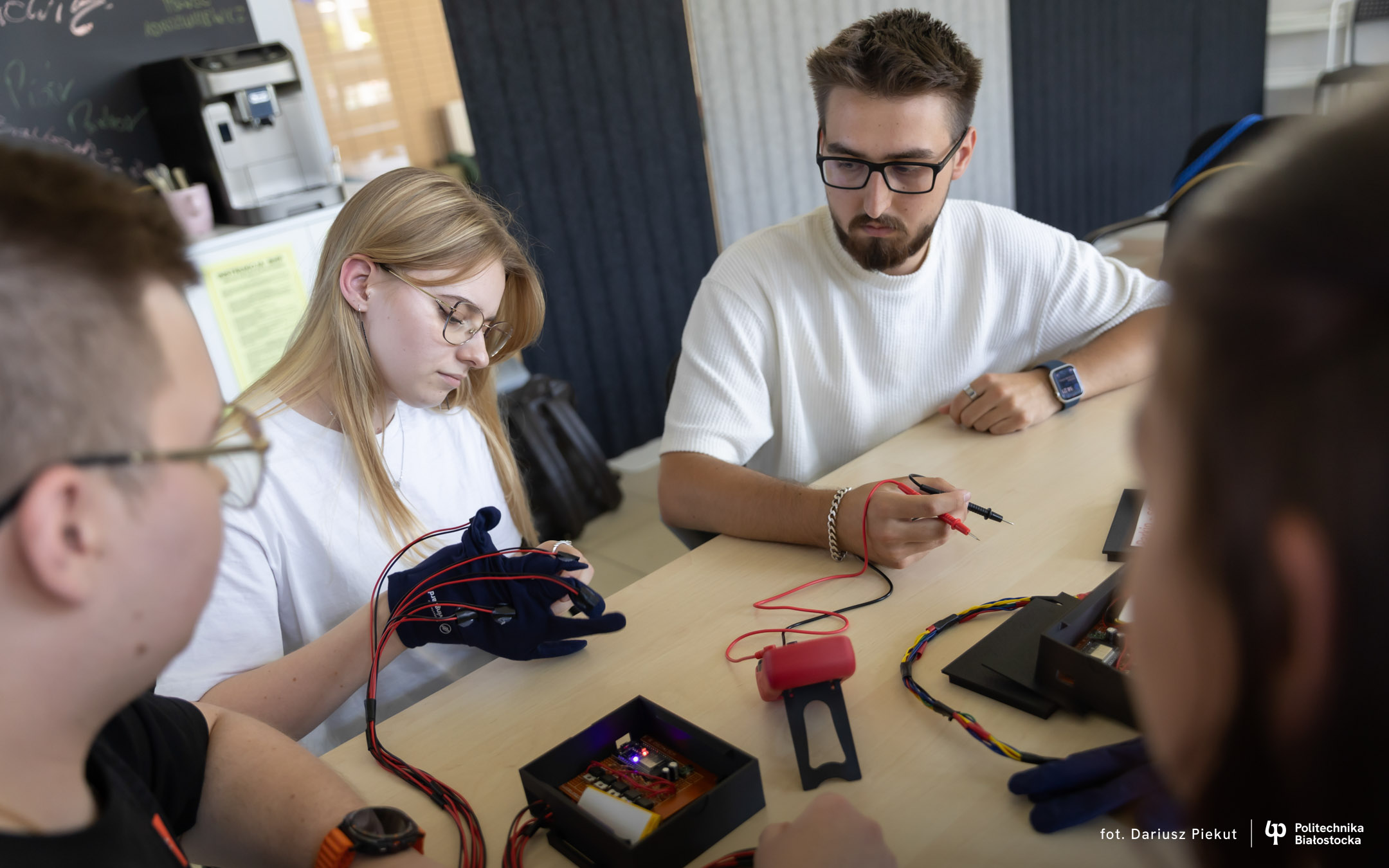
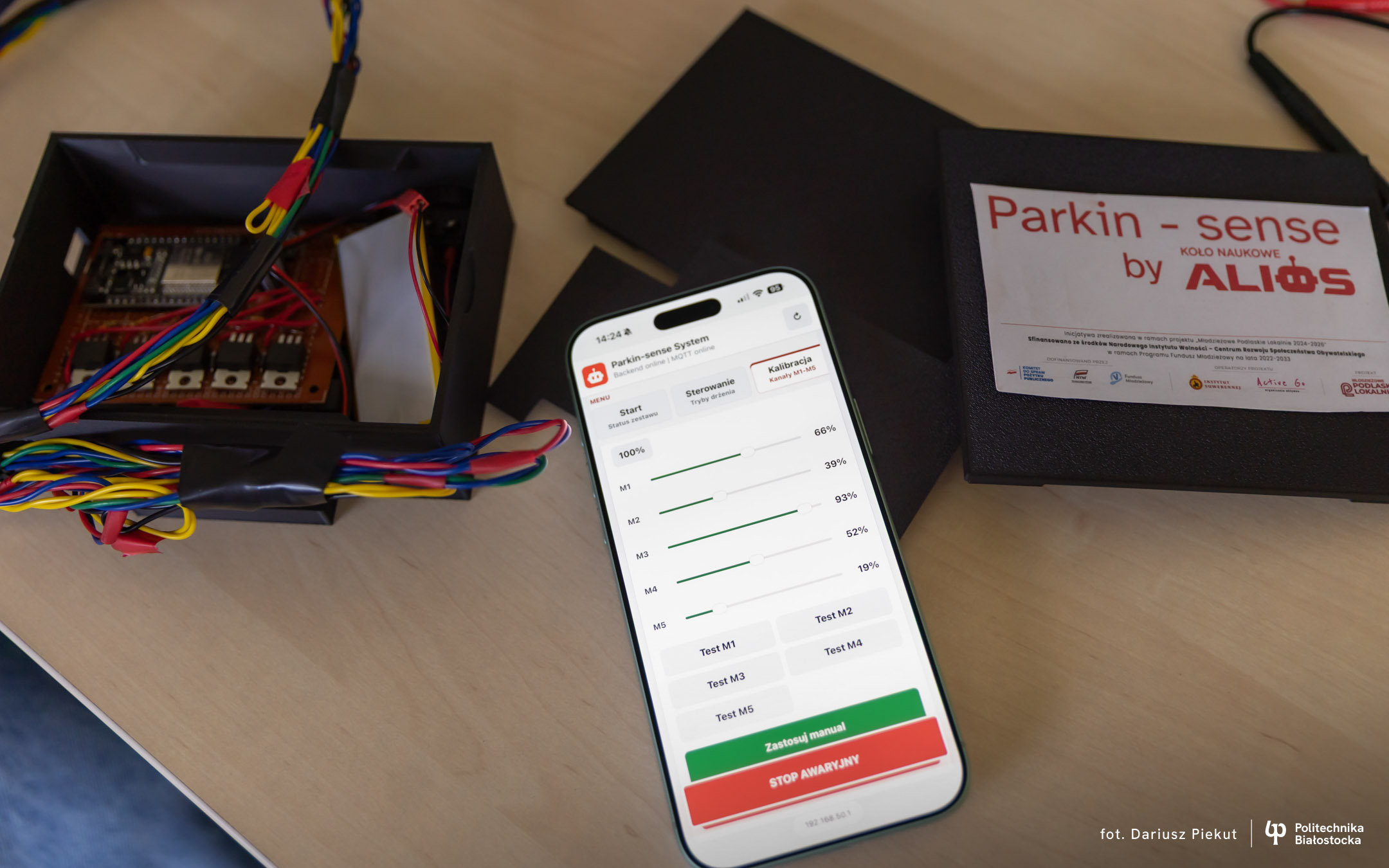
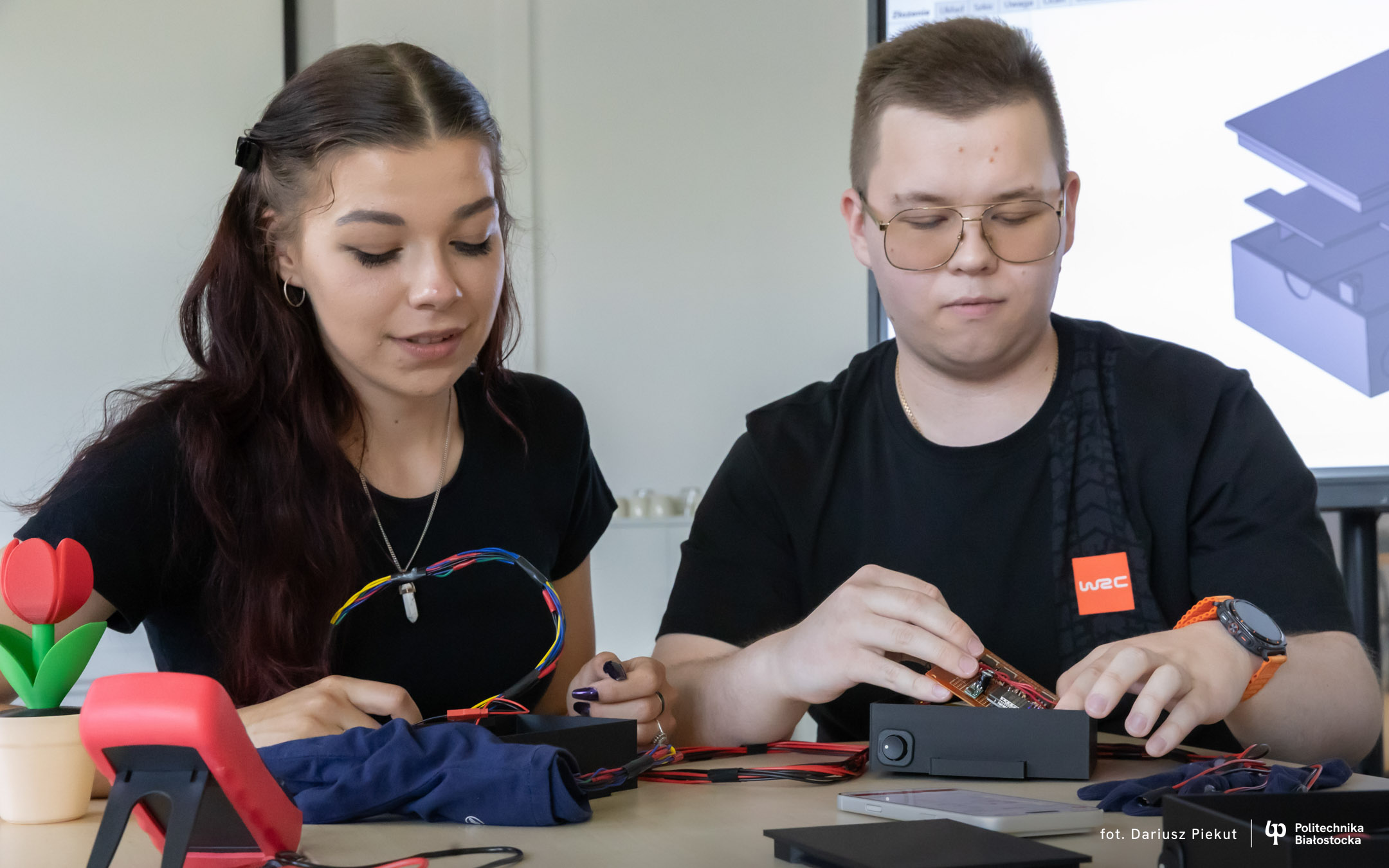
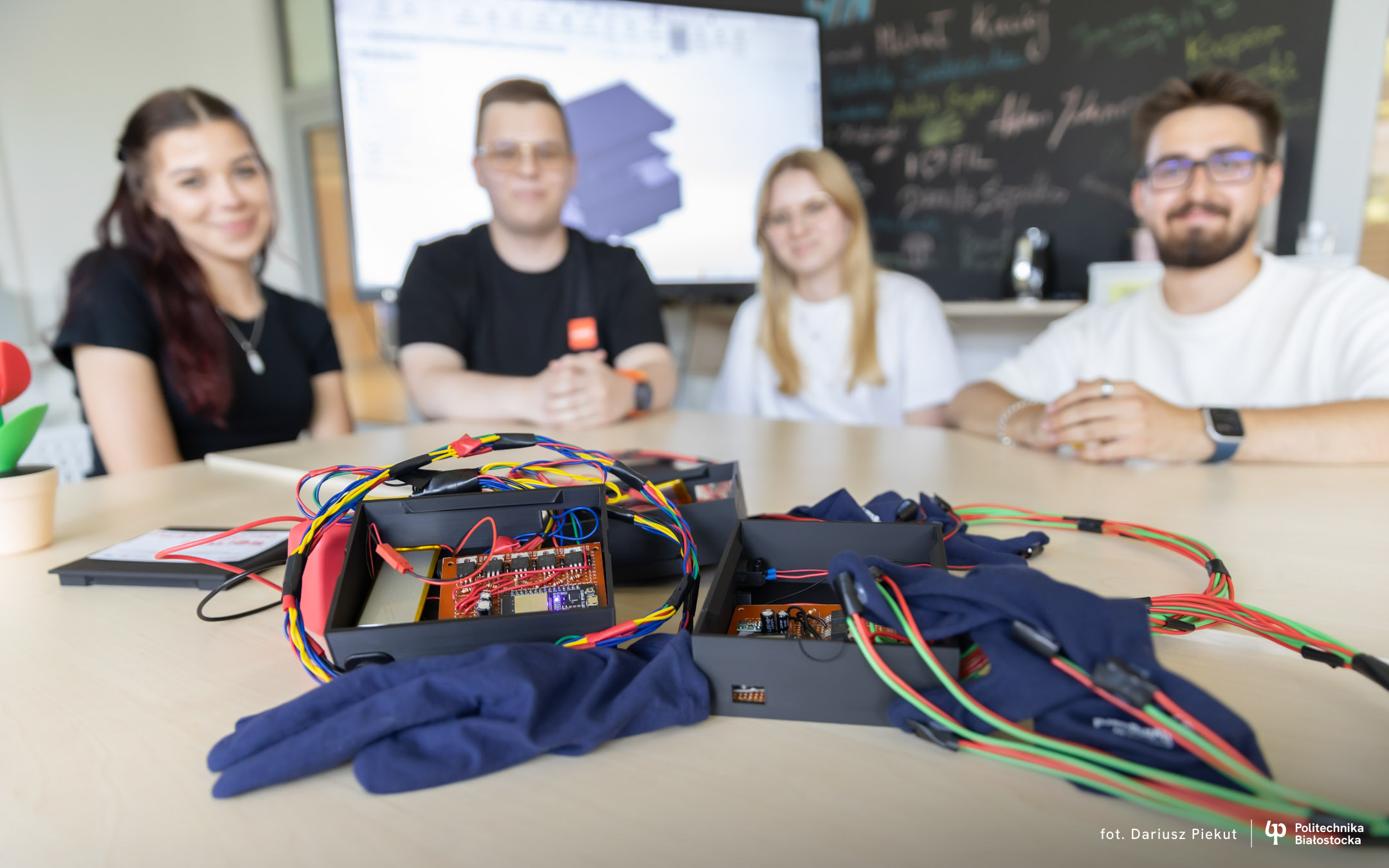
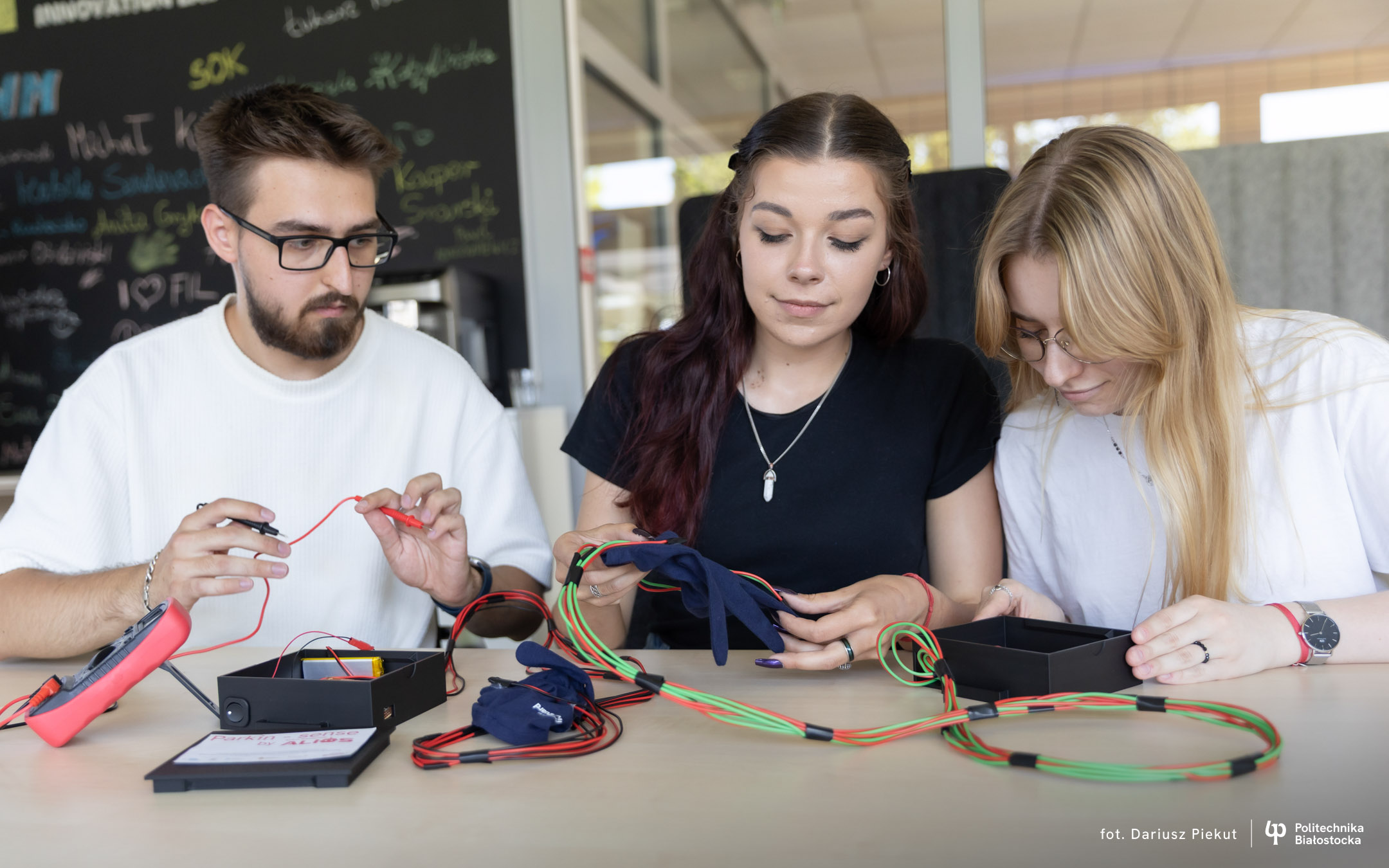
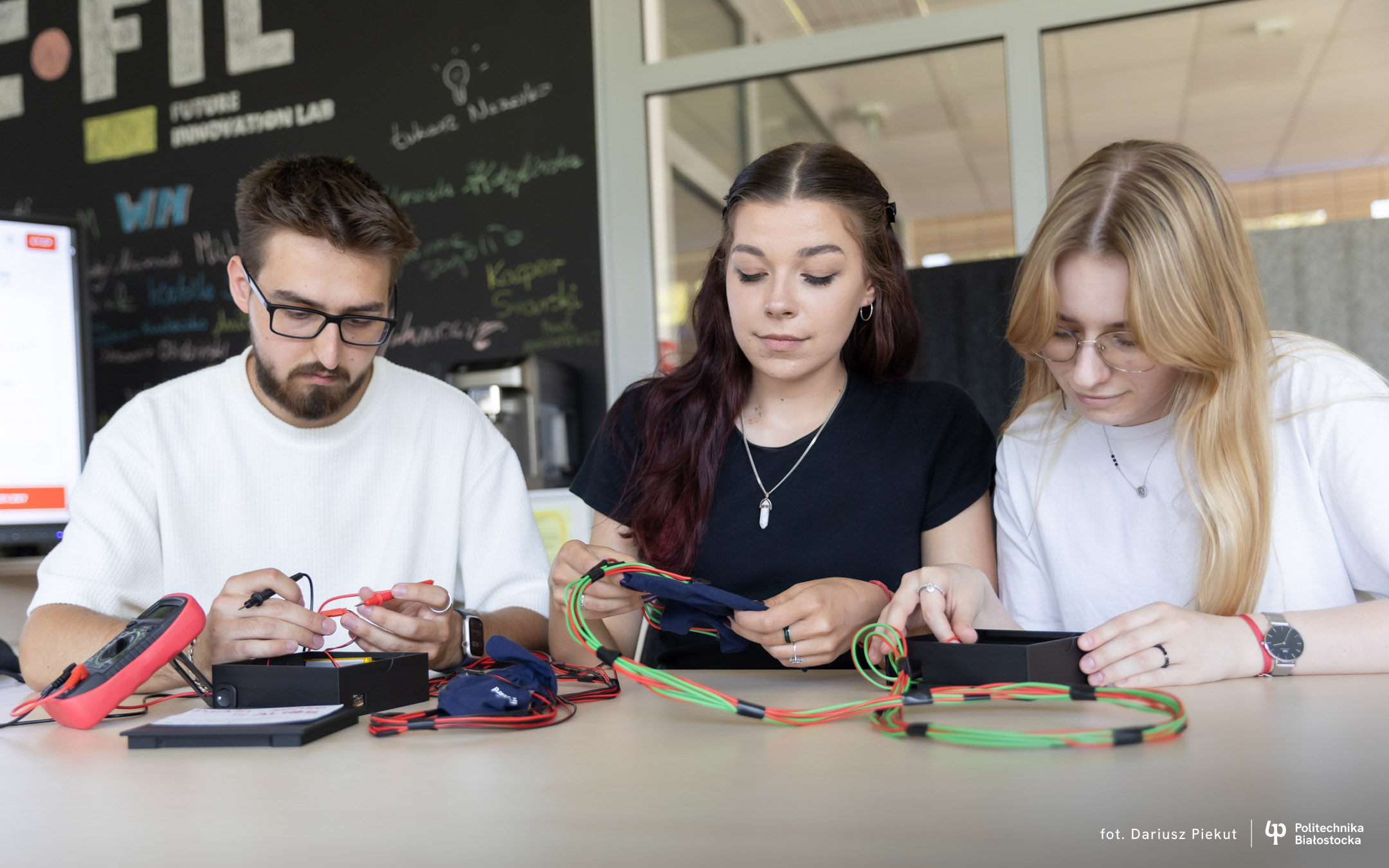
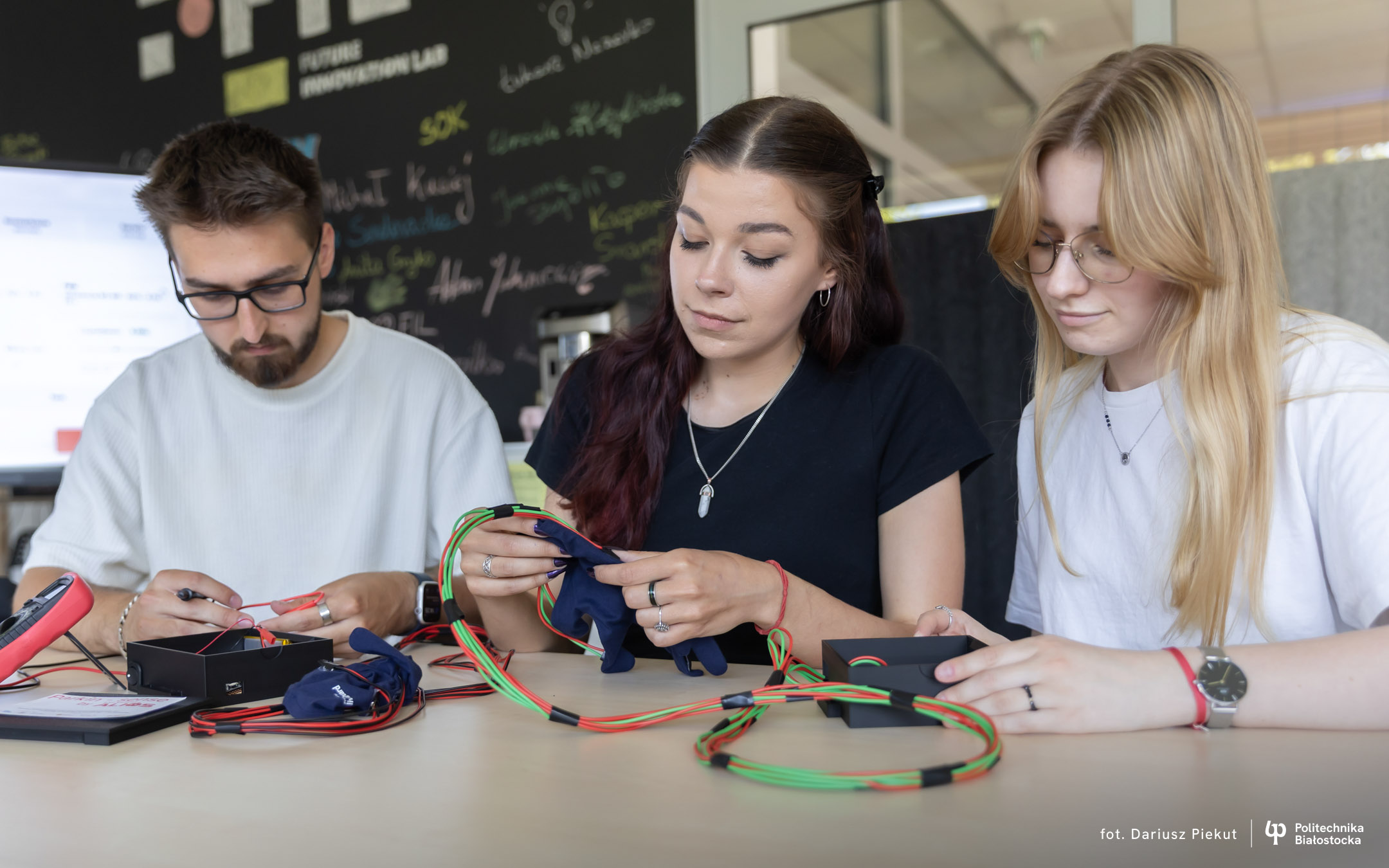
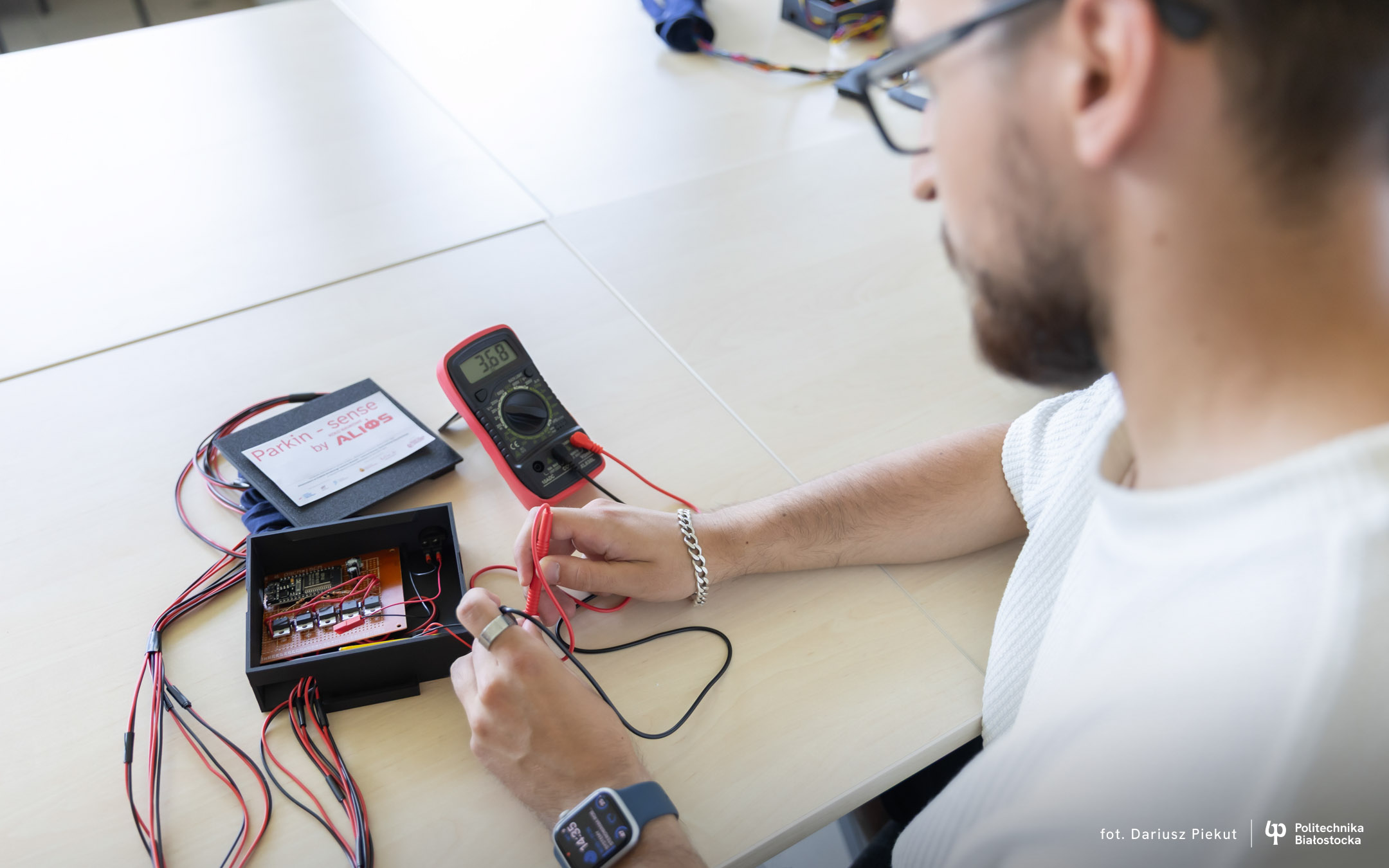
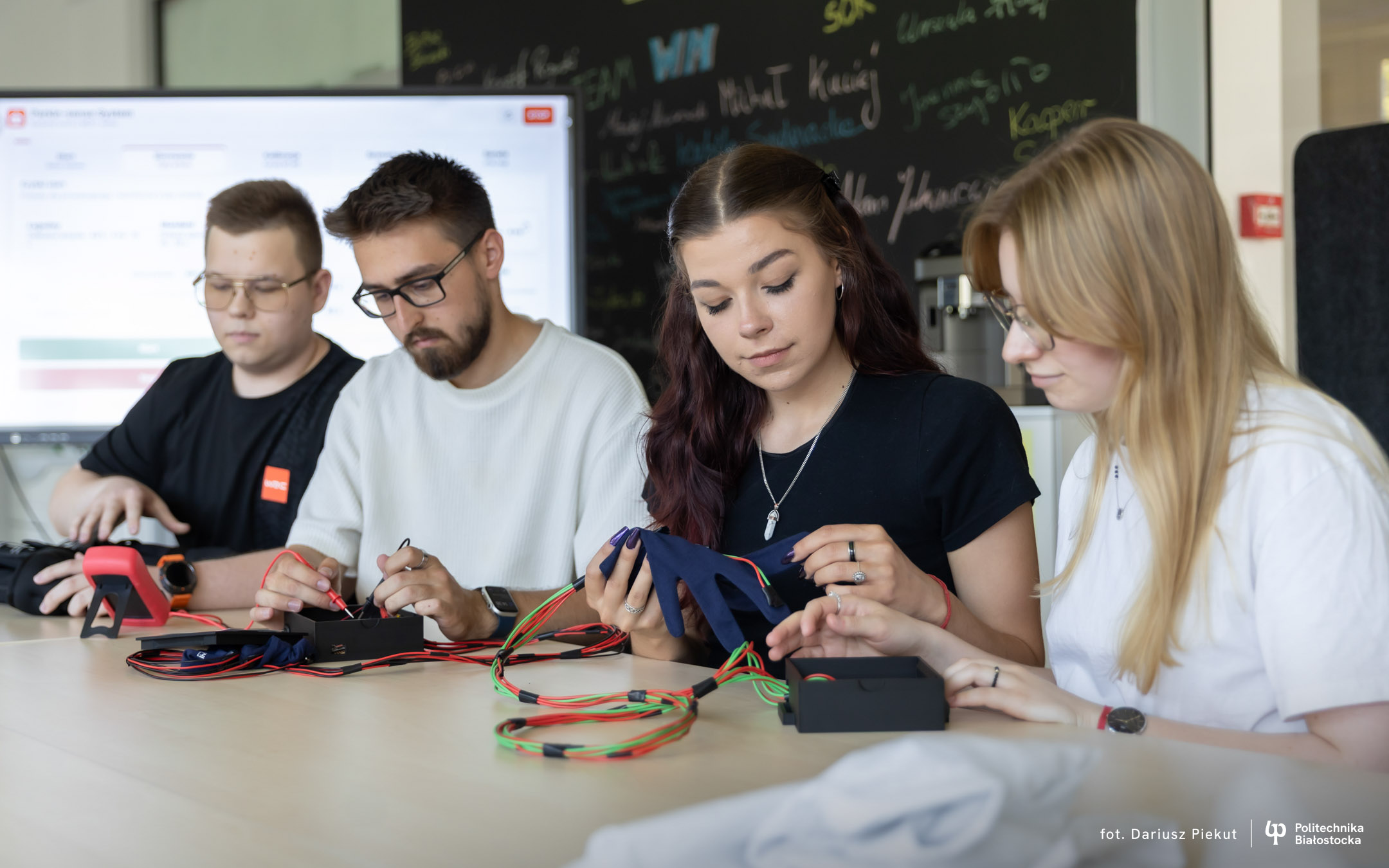
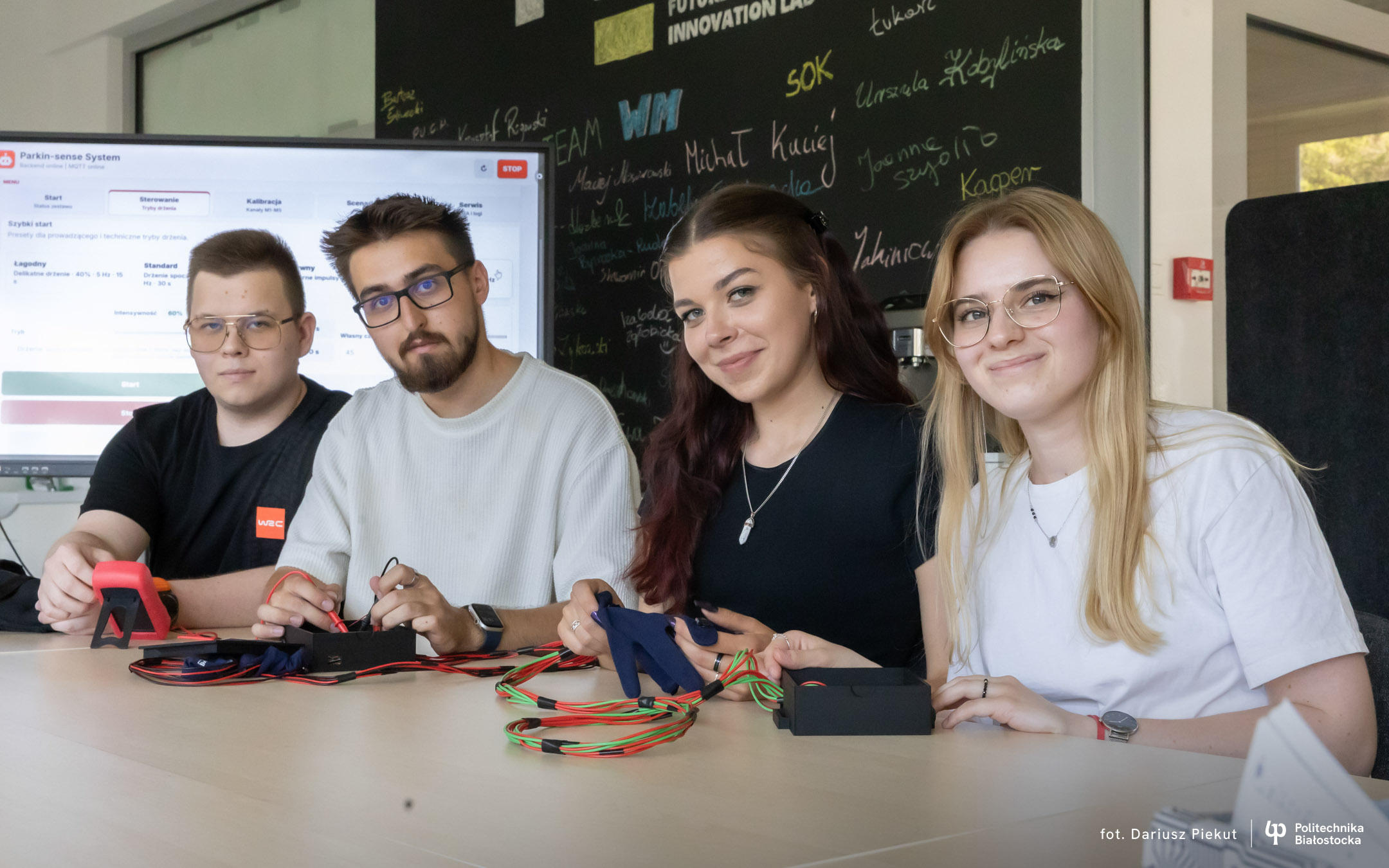
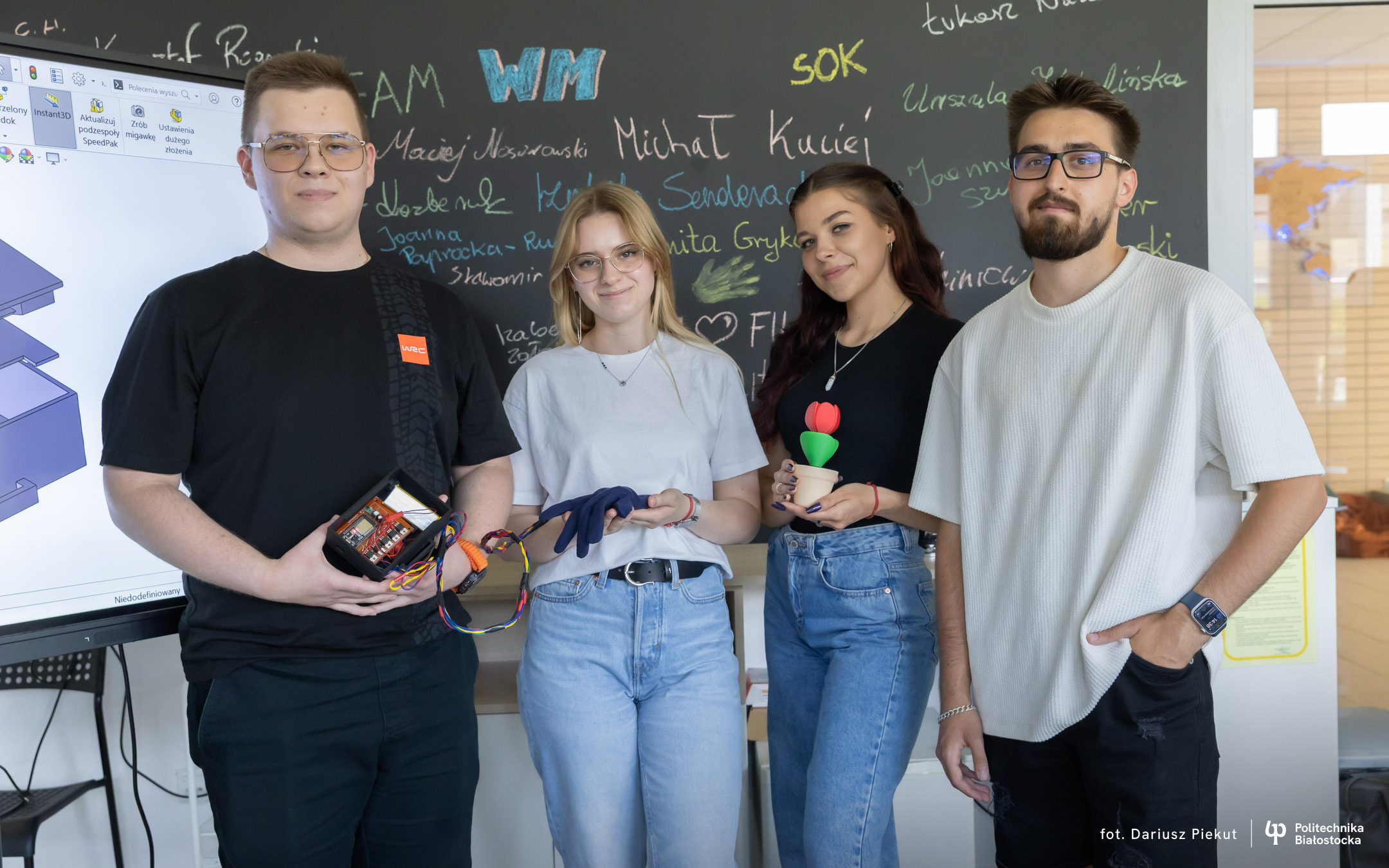
What was an emotional experience for students was a highly advanced mechatronic challenge for the designers. The heart of the system is a Raspberry Pi 5 microcomputer acting as the main controller. The tremor is generated by vibration motors controlled by ESP32 microcontrollers.
– The motors are placed on the palm and fingers – explains Dawid Pietrzykowski, co-developer of the gloves and a student of Automation and Robotics (second-cycle studies) at the Faculty of Mechanical Engineering of Bialystok University of Technology. – By controlling each motor individually, we can set the appropriate frequency and intensity, which allows us to reproduce a more realistic hand tremor.
The gloves are operated by a dedicated web application that communicates with them entirely wirelessly. It sends precise commands to each glove, where the signals are immediately interpreted and converted into vibration patterns.
A lesson not to be forgotten
The students completed the project in two months and carried out ten interactive 45-minute sessions in four secondary schools in the Podlaskie Voivodeship, engaging more than 200 students.
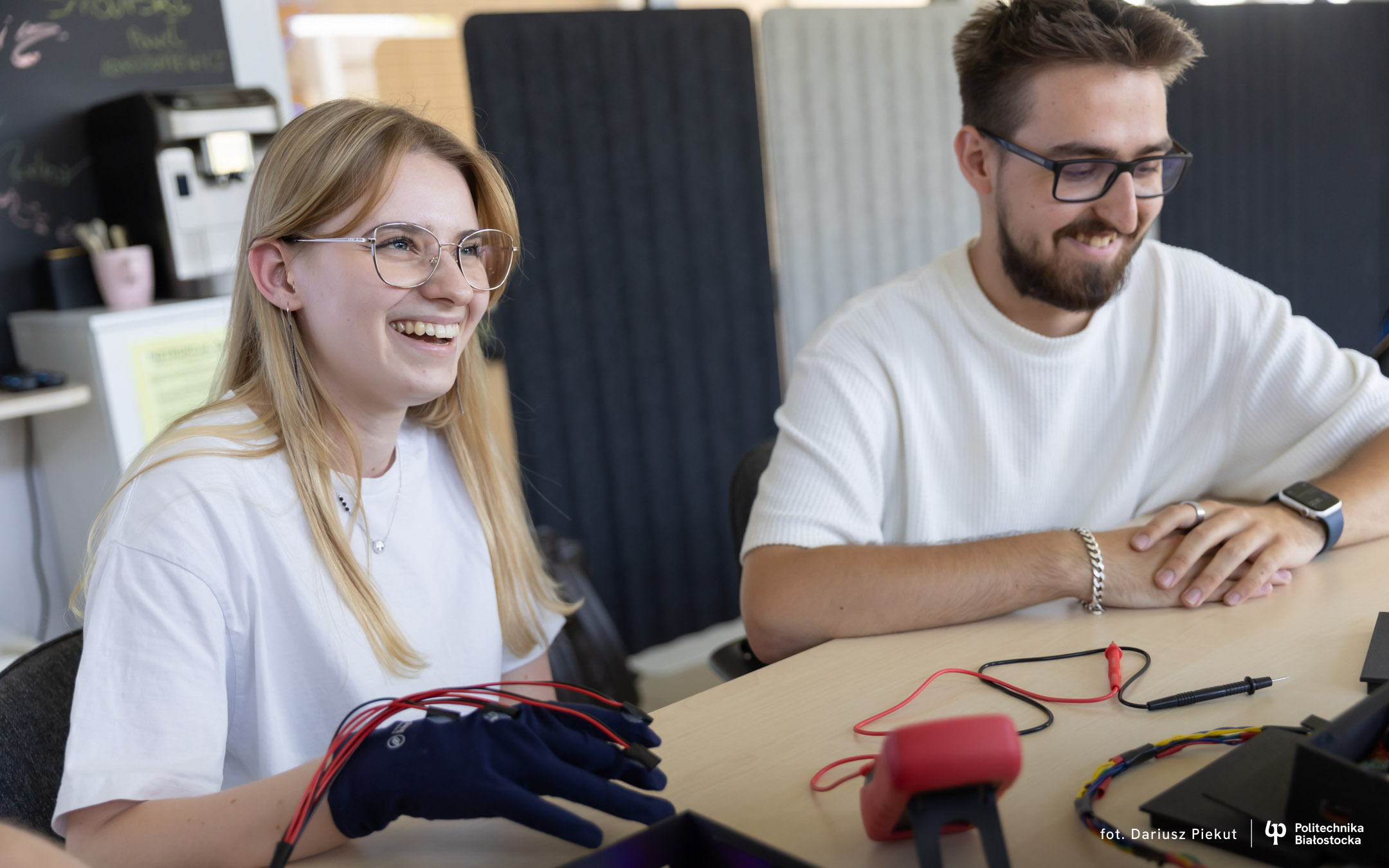
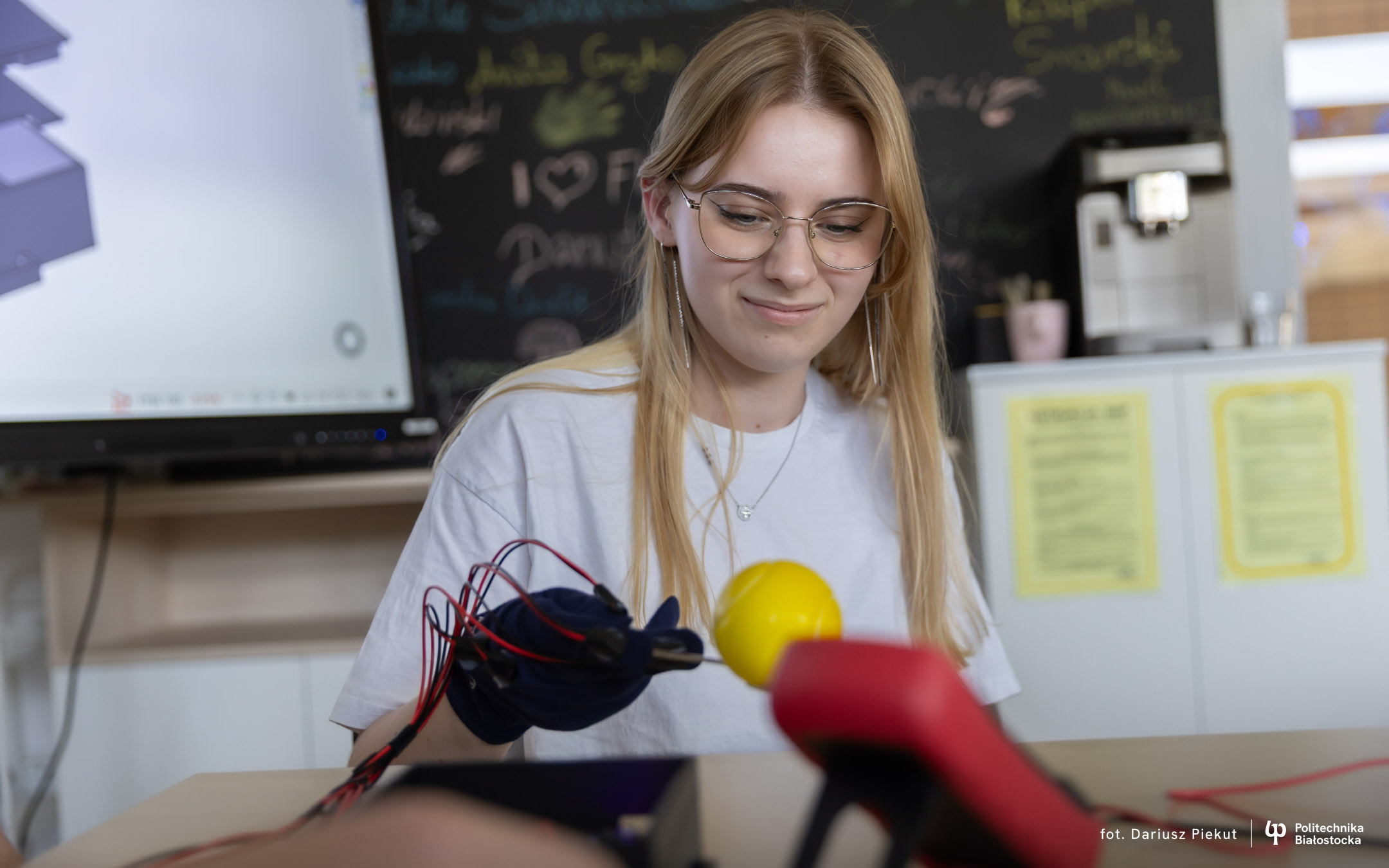
– In the theoretical part, we introduced students to the nature of Parkinson’s disease, its symptoms and treatment methods – explains Alicja Choszczyk, a Biomedical Engineering student at the Faculty of Mechanical Engineering of Bialystok University of Technology. – During the workshops, students were able to experience Parkinsonian tremor first-hand and see how challenging it becomes to perform simple everyday tasks under simulated conditions.
The workshops consisted of both theoretical and practical parts, during which students used not only gloves but also weighted vests simulating general physical weakness. The result? Surveys conducted before and after the sessions confirmed a significant increase in both empathy and knowledge among participants.
A proving ground for engineers
For the creators themselves, the project was an accelerated introduction to real-world project conditions. In addition to developing skills in IoT programming (Internet of Things), they had to learn budget management, scheduling and team coordination.
– Grant funding is not only about resources for purchasing components. It is also a kind of proving ground for project management skills, which we rarely encounter during our studies – summarises Sergiusz Jakuszewicz. – We had to work as a team, set a schedule and budget, meet deadlines, draw conclusions from the project and prepare a final report. We learned how to handle formal procedures in practice.
A project that continues
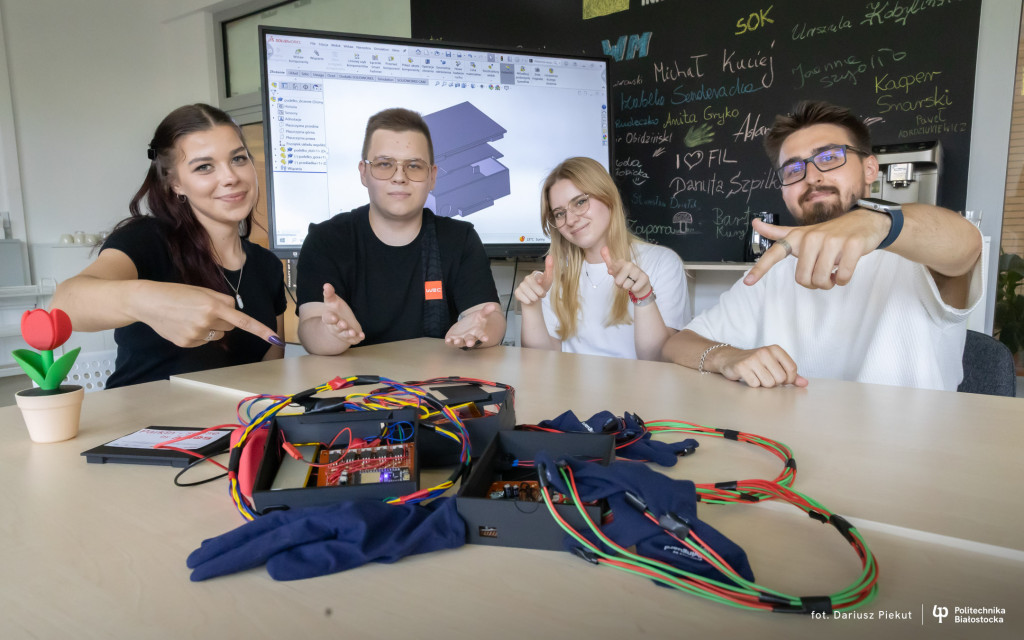
The three glove prototypes will not be put away. They remain the property of the Alios student scientific association and will continue to serve as educational tools during the Bialystok University of Technology Open Days and the Podlaskie Festival of Science and Art. The students plan to pass the project on to younger members so that the system can be continuously developed, showing that engineering is not only about machines, but above all about helping people.
Thanks to this initiative, the students gained:
- engineering competencies: integration of wireless IoT systems, programming microcontrollers (ESP32) and advanced use of the Raspberry Pi 5 microcomputer
- soft skills: public speaking, conducting workshops for large groups of young people and knowledge transfer
- project management experience: team coordination, budgeting, scheduling and completion of formal reporting processes
The students obtained funding under the “„Młodzieżowe Podlaskie Lokalnie” grant competition supporting the activity of student and pupil self-governments and academic organisations. A microgrant was also awarded to students from the Orthos student scientific association, also from the Faculty of Mechanical Engineering of Bialystok University of Technology. The competition was held under the honorary patronage of Bialystok University of Technology.
The supervisors of the Alios student scientific association are researchers from the Faculty of Mechanical Engineering of Bialystok University of Technology:
- Ewa Kulesza, PhD, Eng.
- Assoc. Prof. Kanstantsin Miatluk, DSc, PhD, Eng.
- Żaneta A. Mierzejewska, PhD, Eng.
Author: Magdalena Grzęda-Zajkowska
See photos from the Alios student scientific association: