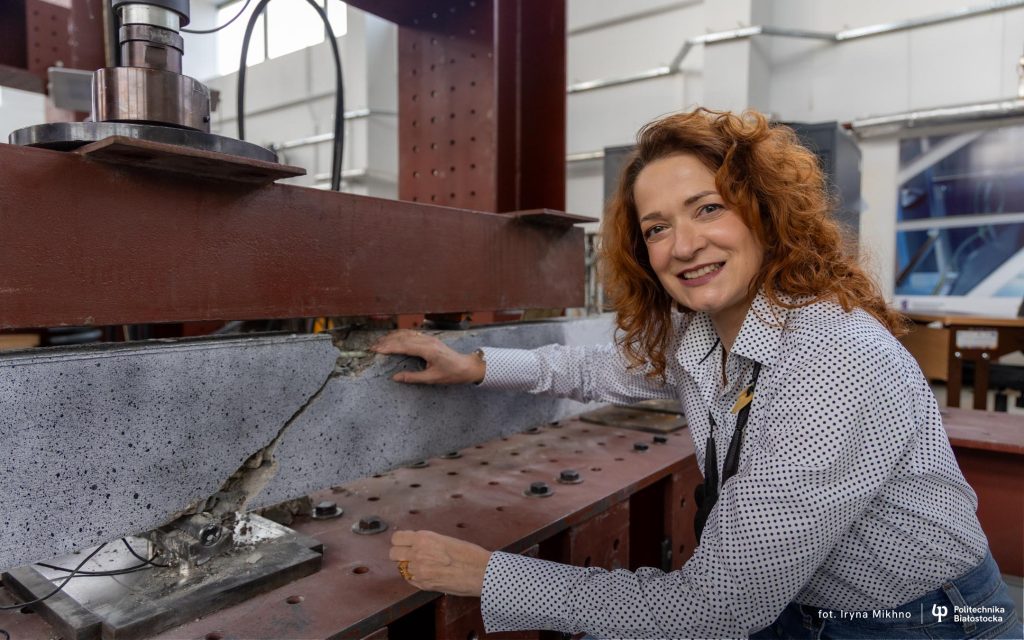
For a decade, Bialystok University of Technology has been studying the use of non-metallic reinforcement in concrete elements. Why did researchers from the Department of Building Structures and Structural Mechanics at the Faculty of Civil Engineering and Environmental Sciences focus their attention on this particular type of reinforcement for concrete structures?
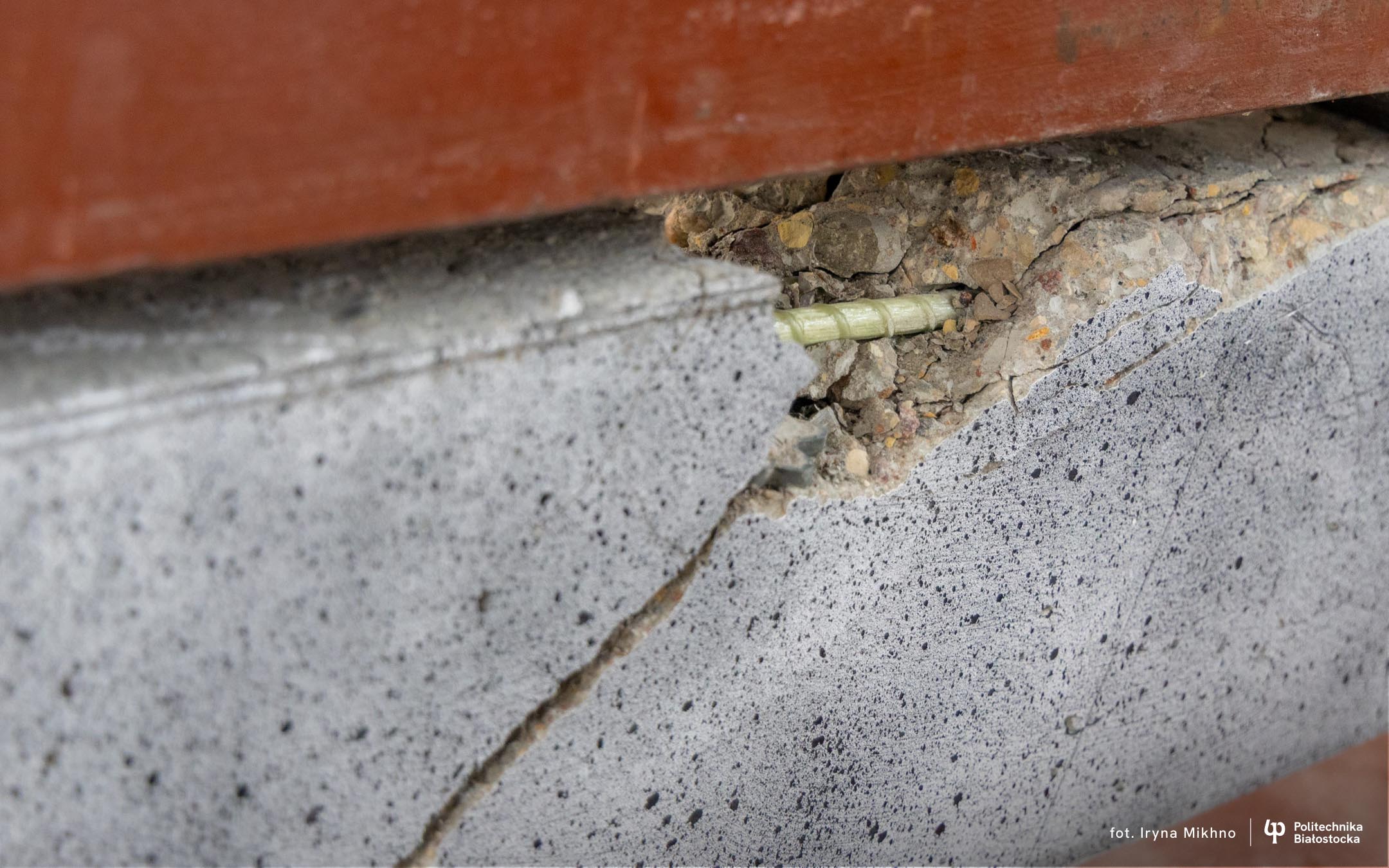
– Non-metallic bars used as reinforcement are resistant to corrosion, including the effects of very strong chemicals – explains Assoc. Prof. Marta Kosior-Kazberuk, DSc, PhD, Eng. – They are magnetically, electrically and thermally neutral, have lower weight compared to steel and are easier to transport.
What else distinguishes traditional steel reinforcement from non-metallic bars?
– Composite bars have several times higher tensile strength compared to steel reinforcement – says the Rector of Bialystok University of Technology. – Of course, this is a major simplification of the strength characteristics of composites.
Since reinforced structures must operate under conditions of varied loads, researchers face a specific challenge.
– Composite bars have a several times lower longitudinal modulus of elasticity – admits Prof. Kosior-Kazberuk. – This requires the development of a new approach to the design of elements reinforced with non-metallic reinforcement.
That is why researchers from Bialystok University of Technology are continuously searching for the most suitable materials that could replace corroding steel.
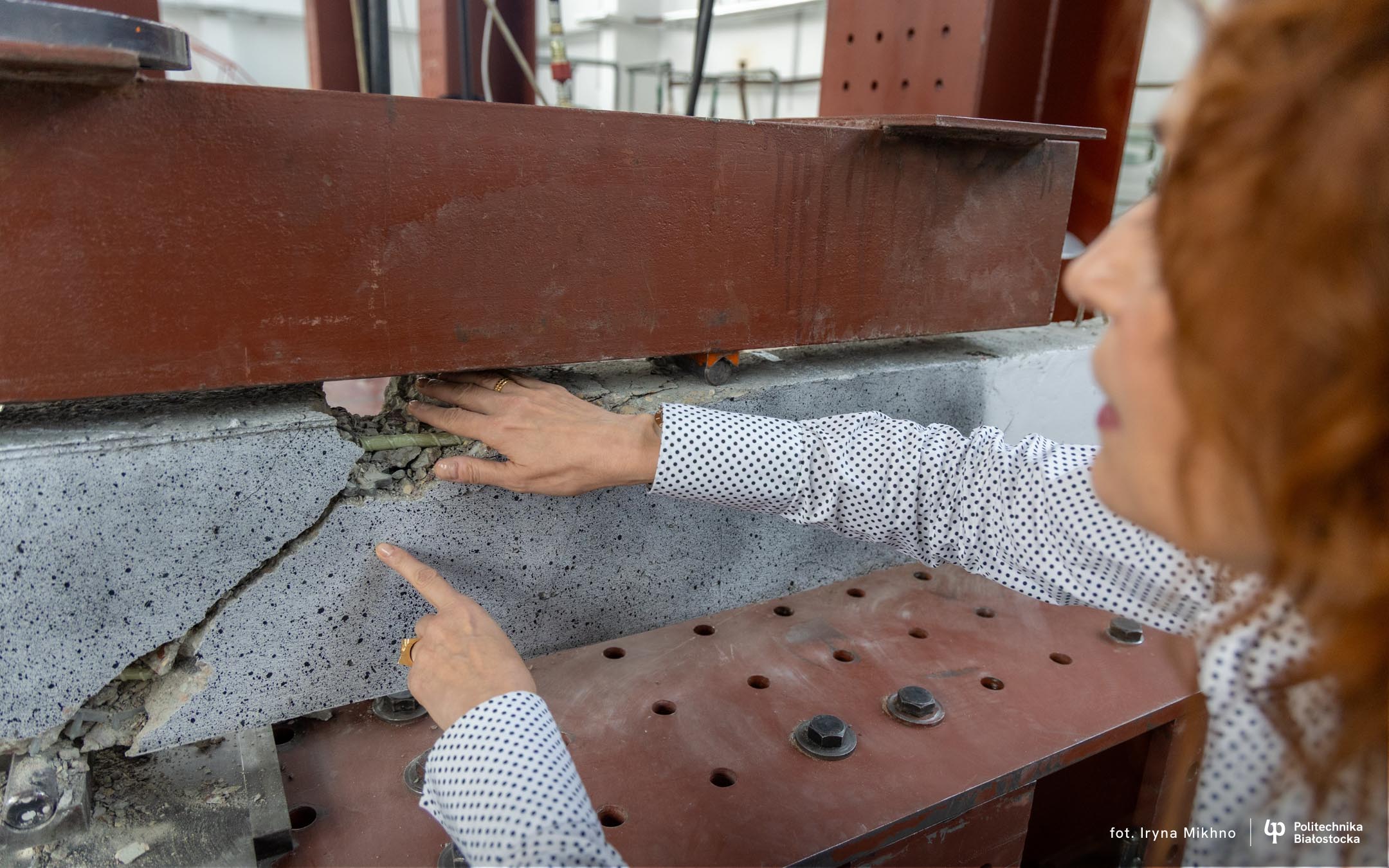
– When I speak of non-metallic reinforcement, I mean both composite bars, i.e. fibres embedded in a resin matrix from which longitudinal bars and stirrups are formed, as well as the fibres themselves and a novelty – micro-bars, which we use as dispersed reinforcement – explains Prof. Kosior-Kazberuk. – The production of composite bars primarily uses carbon, glass, basalt and aramid fibres. Fibre mixtures are also used. In such cases, hybrid bars are created.
The Rector of Bialystok University of Technology sees the greatest obstacle to the use of non-metallic reinforcement in the lack of standard regulations that could be binding in Poland. Then designers would have clear guidelines to help them properly select components of concrete structures.
– Research is necessary on the use of both longitudinal reinforcement in the form of bars and dispersed reinforcement in the form of fibres and micro-bars, so that on this basis we can prepare design guidelines, disseminate them and convince structural designers that non-metallic reinforcement is the future of concrete structures – says Assoc. Prof. Marta Kosior-Kazberuk, DSc, PhD, Eng.
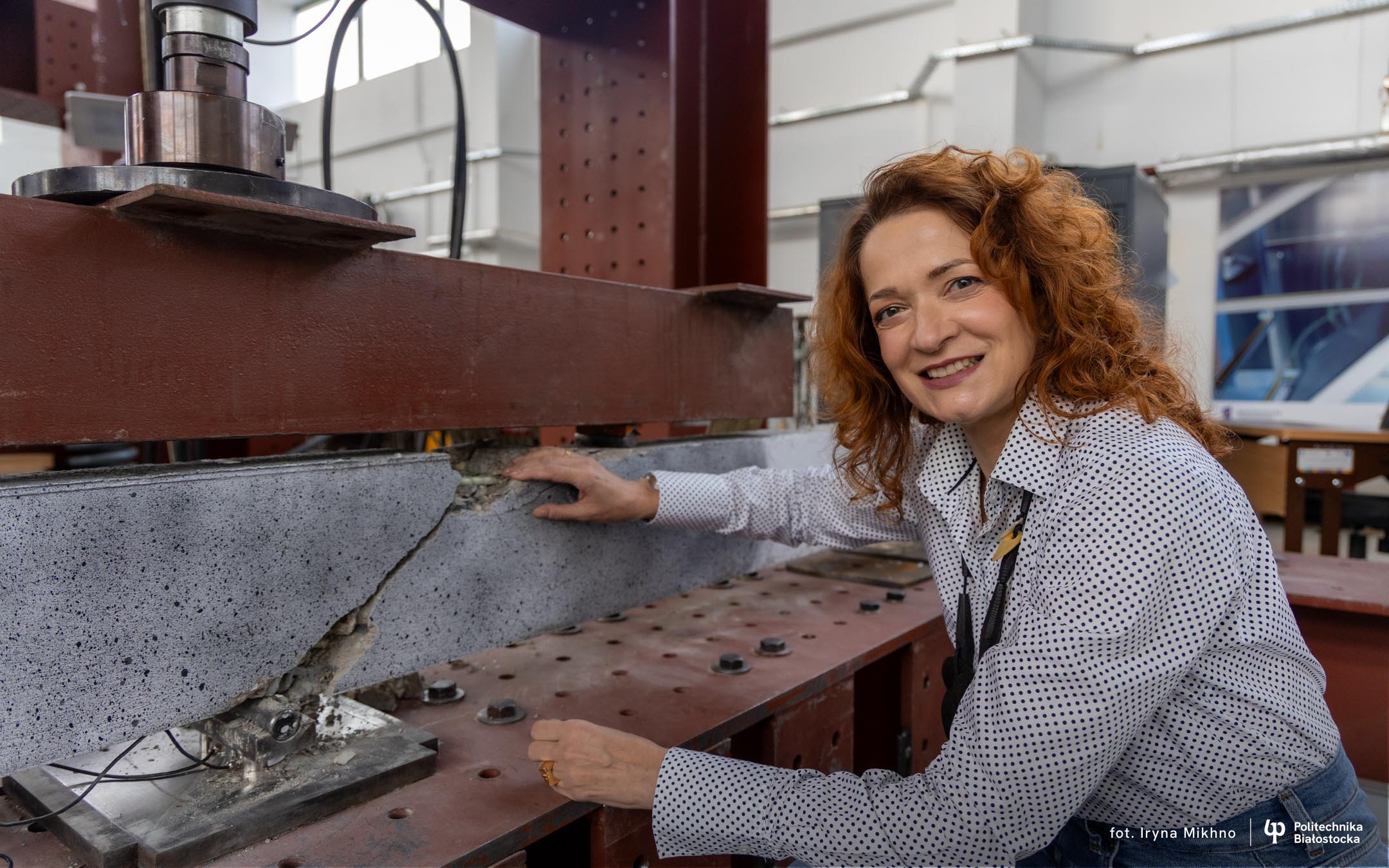
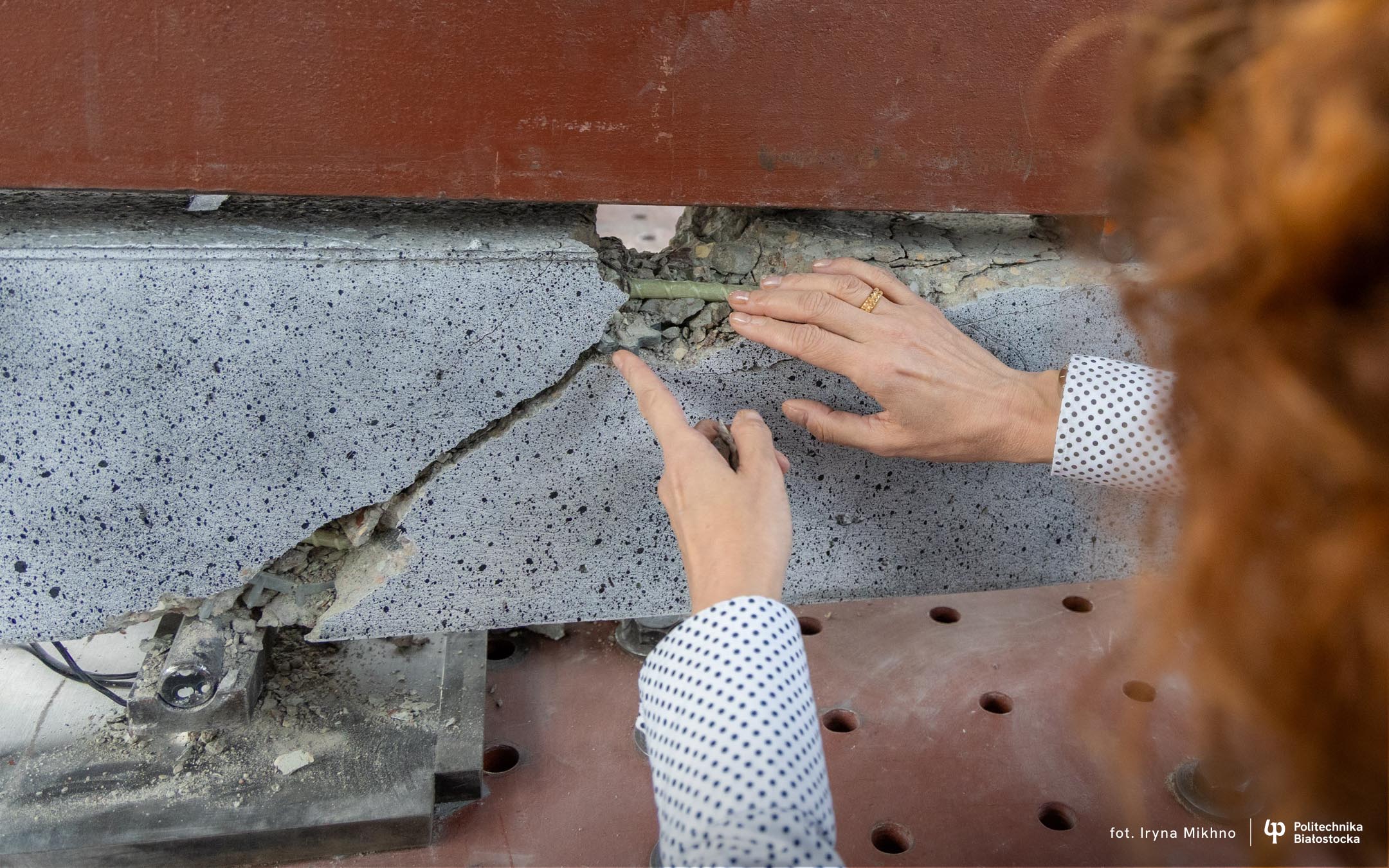
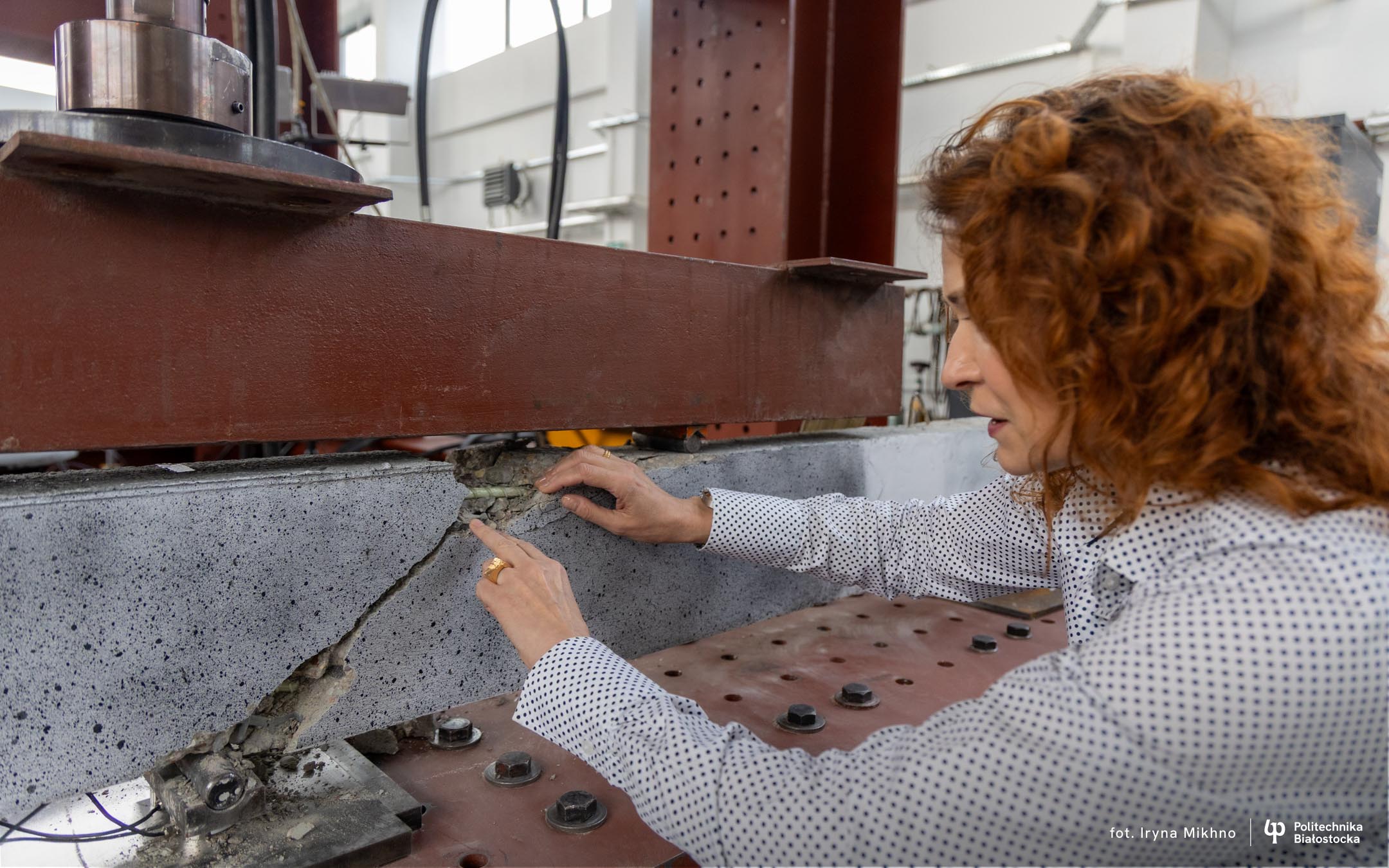
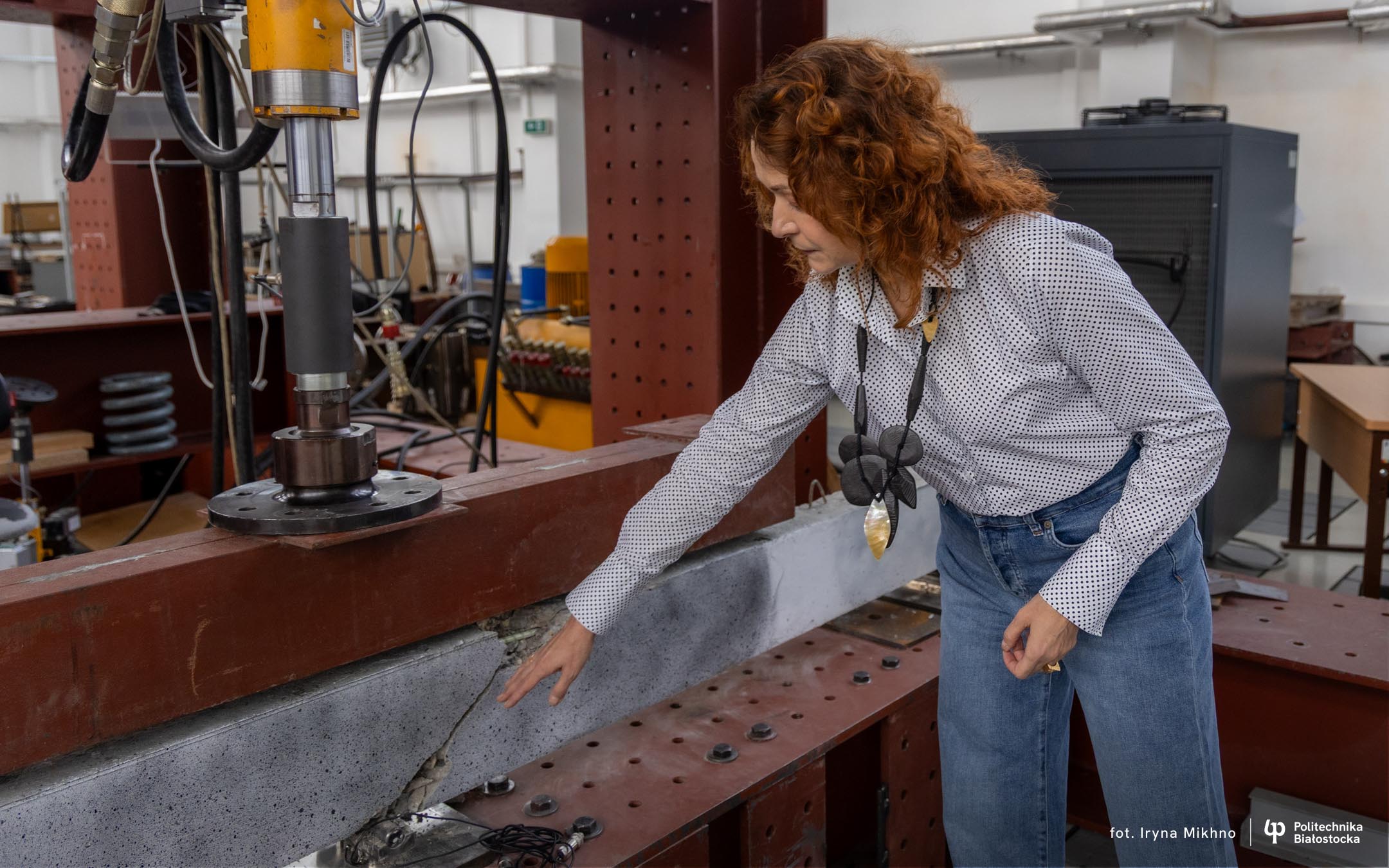
In the hall of the Faculty of Civil Engineering and Environmental Sciences at Bialystok University of Technology, there are numerous concrete beams waiting for detailed load tests.
– These are innovative studies, because this is non-metallic reinforcement, so we are testing the load-bearing capacity of beams in bending and shear, and we also observe the deformation zone under short-term load – explains Julita Krassowska, PhD, Eng, Assistant Professor in the Department of Building Structures and Structural Mechanics. – The natural environment benefits from reduced carbon dioxide emissions, because we limit the use of steel reinforcement, which causes high CO2 emissions.
Where can such reinforcement be used?
– For example, in structures that are exposed to groundwater, seawater, cyclic freezing and thawing – that is, all structures that are exposed to atmospheric factors and are more susceptible to corrosion – lists Krassowska. – Structures with non-metallic reinforcement will be much more resistant.
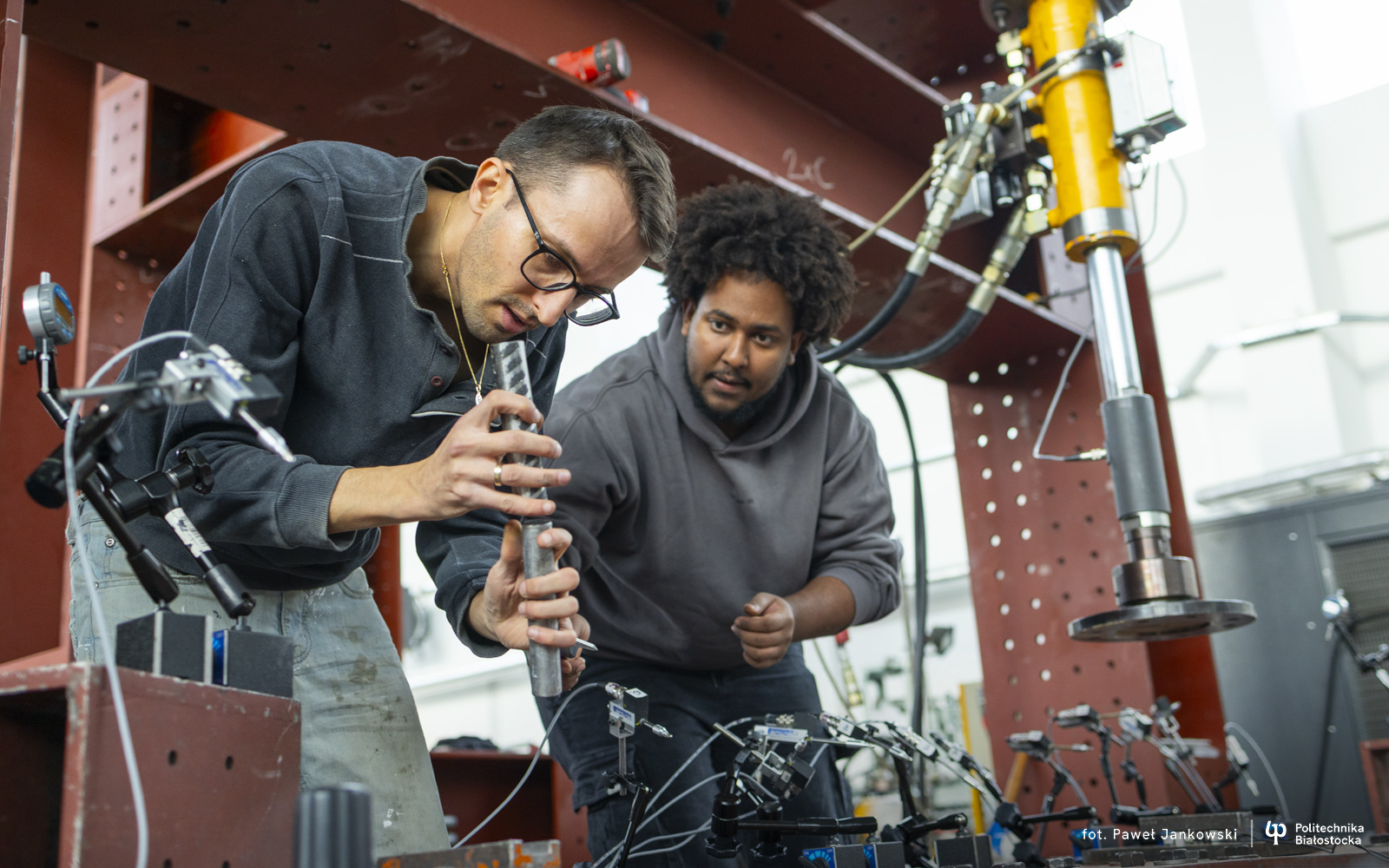
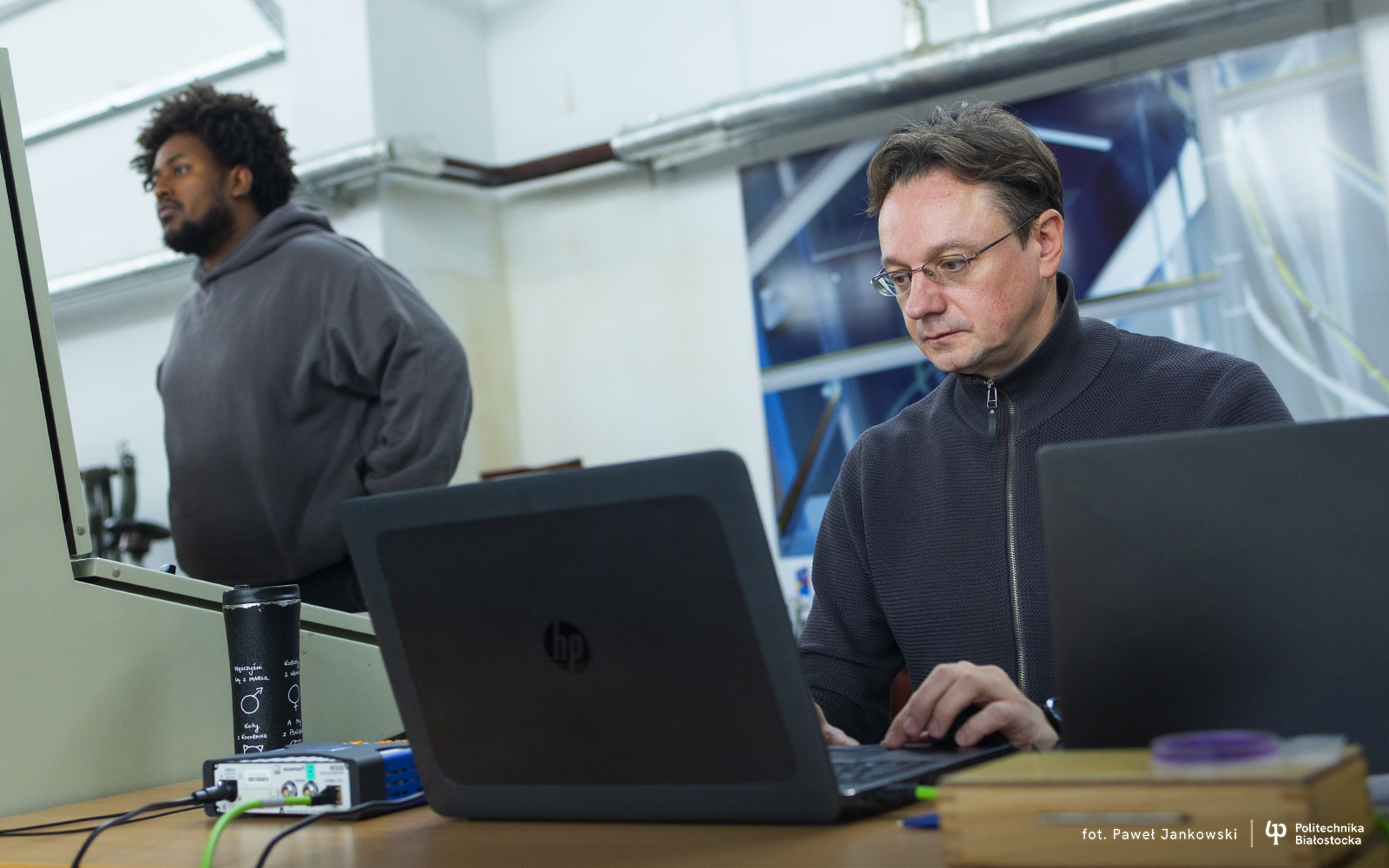
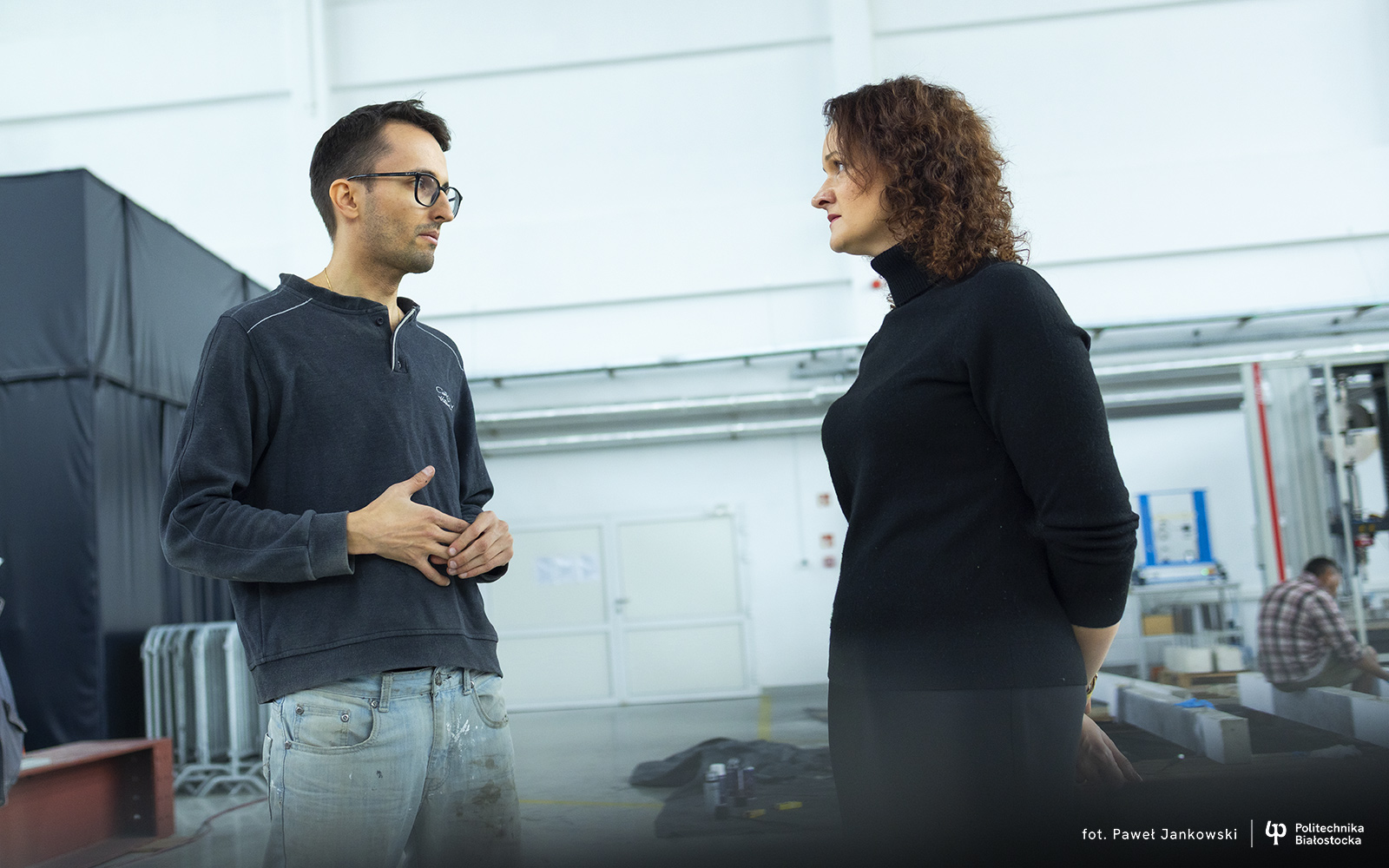
In science, master–apprentice relationships are indispensable, hence the numerous doctoral candidates dealing with research topics initiated a decade ago at the Department of Building Structures and Structural Mechanics at the Faculty of Civil Engineering and Environmental Sciences of Bialystok University of Technology. Abel Belay from Ethiopia conducts his research under the supervision of Prof. Kosior-Kazberuk. At the strength testing machine, Rafał Kostro, MSc Eng. is also busy.
– From the very first classes in concrete structures, I really liked this particular construction material – says Kostro. – I think it has great potential. There is probably no building that does not contain at least one concrete element, for example foundations. So it is a very important construction material, and its further development should be intensively studied.
It is clear that laboratory work is his passion.
– Already during my studies I was involved in research related to civil engineering – recalls Kostro. – At that time, I really caught the bug for this field of science, research and interpretation of results. I knew that I would want to continue working at the university, as well as working with students. Non-metallic reinforcement has very great potential and is considered more environmentally friendly than steel reinforcement. I think it is a forward-looking material worth working on and worth studying.
And so the apple does not fall far from the tree. Interesting studies can be the beginning of contributing to improving the world.
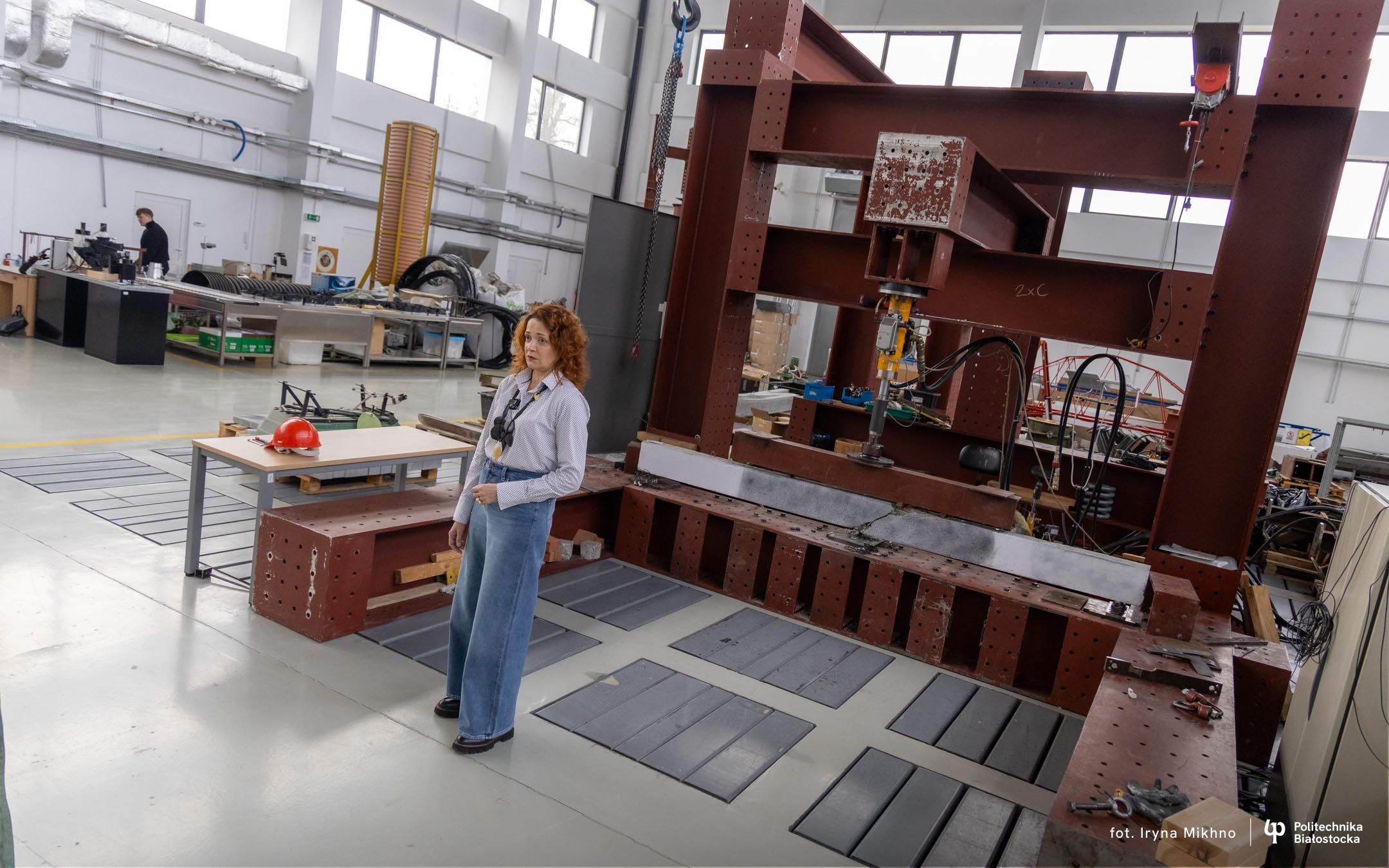
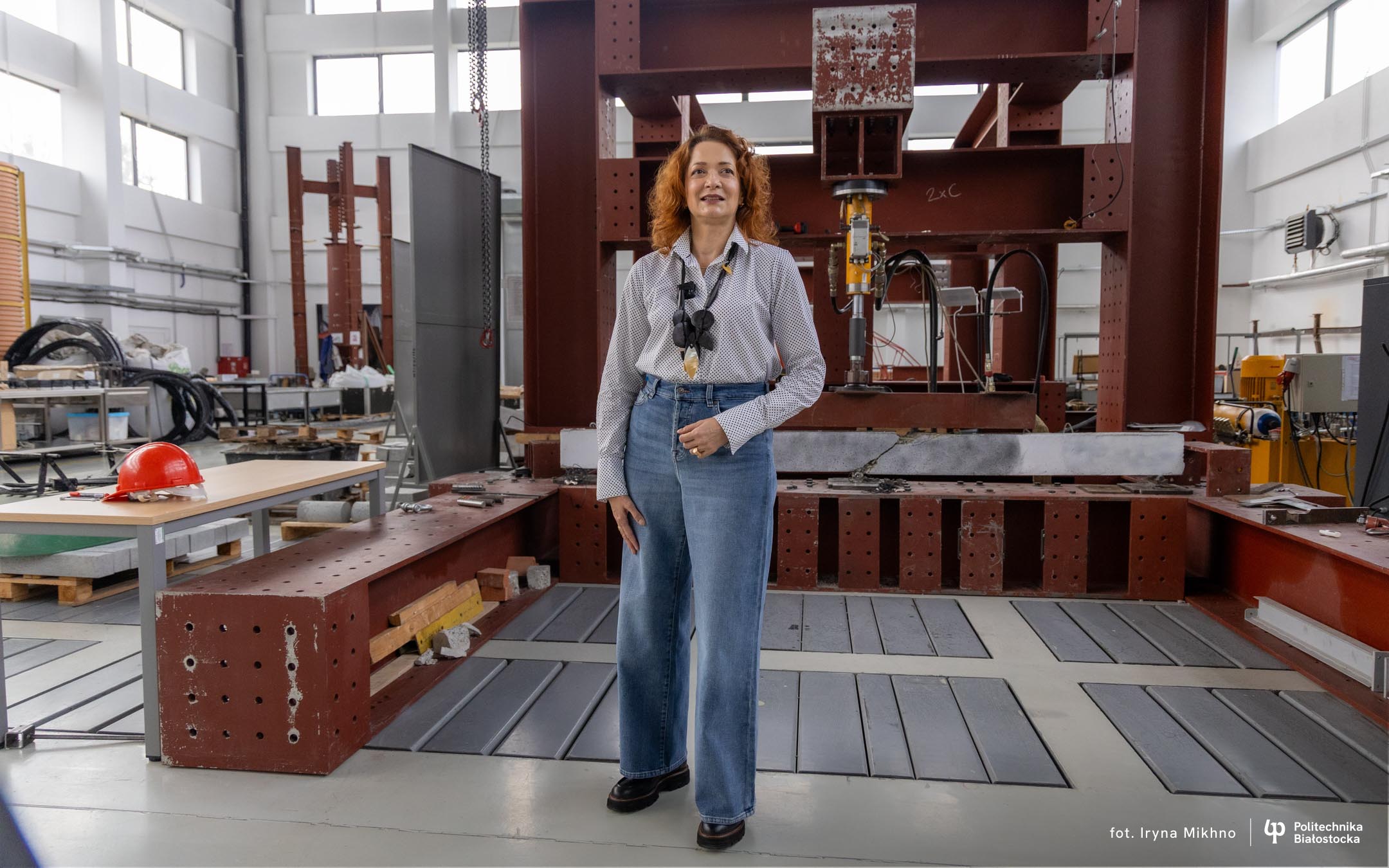
– In the laboratory of building structures, we have scientific and research infrastructure that allows us to conduct both material tests and tests of element models as well as full-scale elements – reminds Assoc. Prof. Marta Kosior-Kazberuk, DSc, PhD, Eng, Rector of Bialystok University of Technology. – This significantly contributes to the development of research and obtaining results that we will use to create guidelines for the design of structures with composite reinforcement.
Author: Jerzy Doroszkiewicz