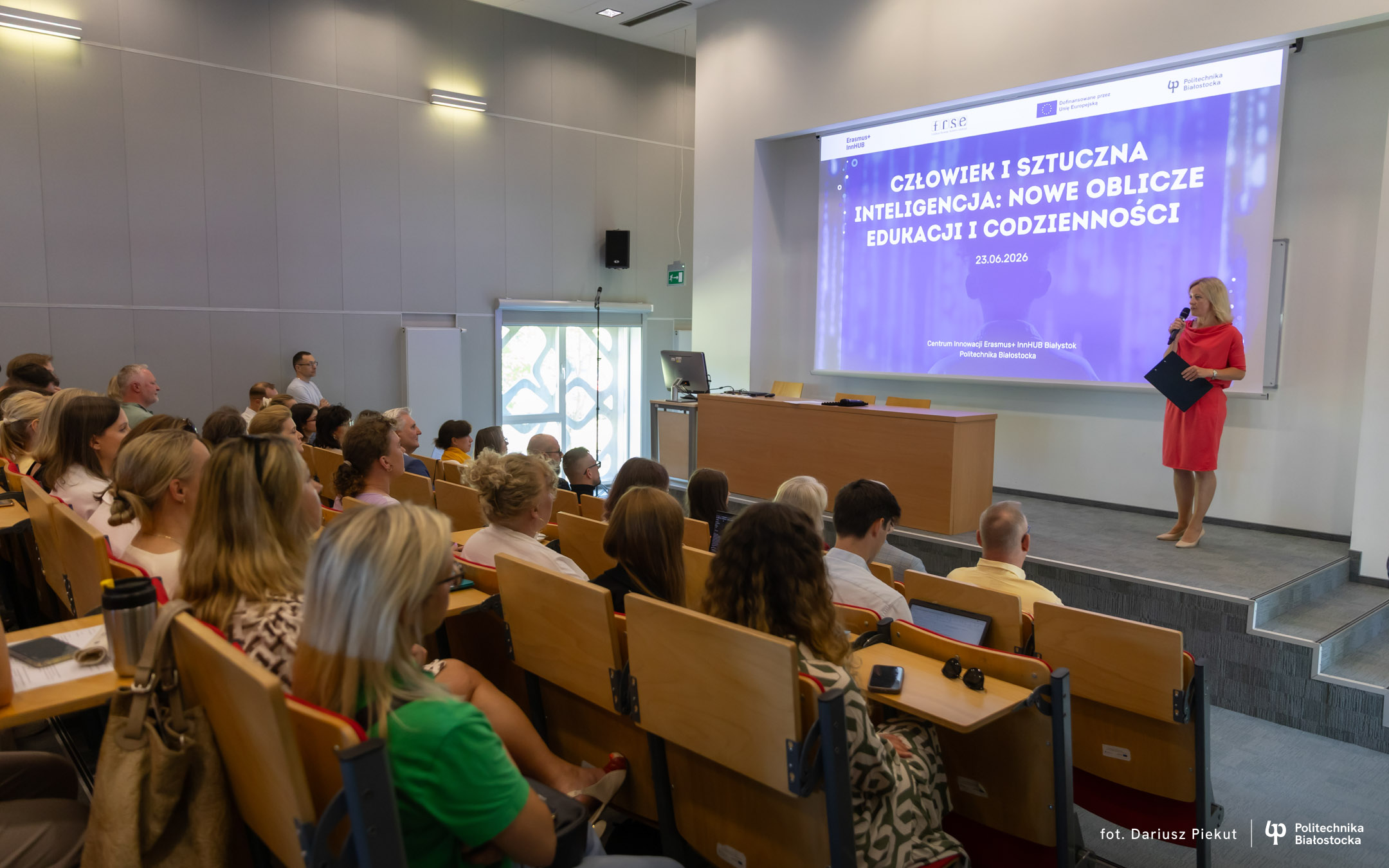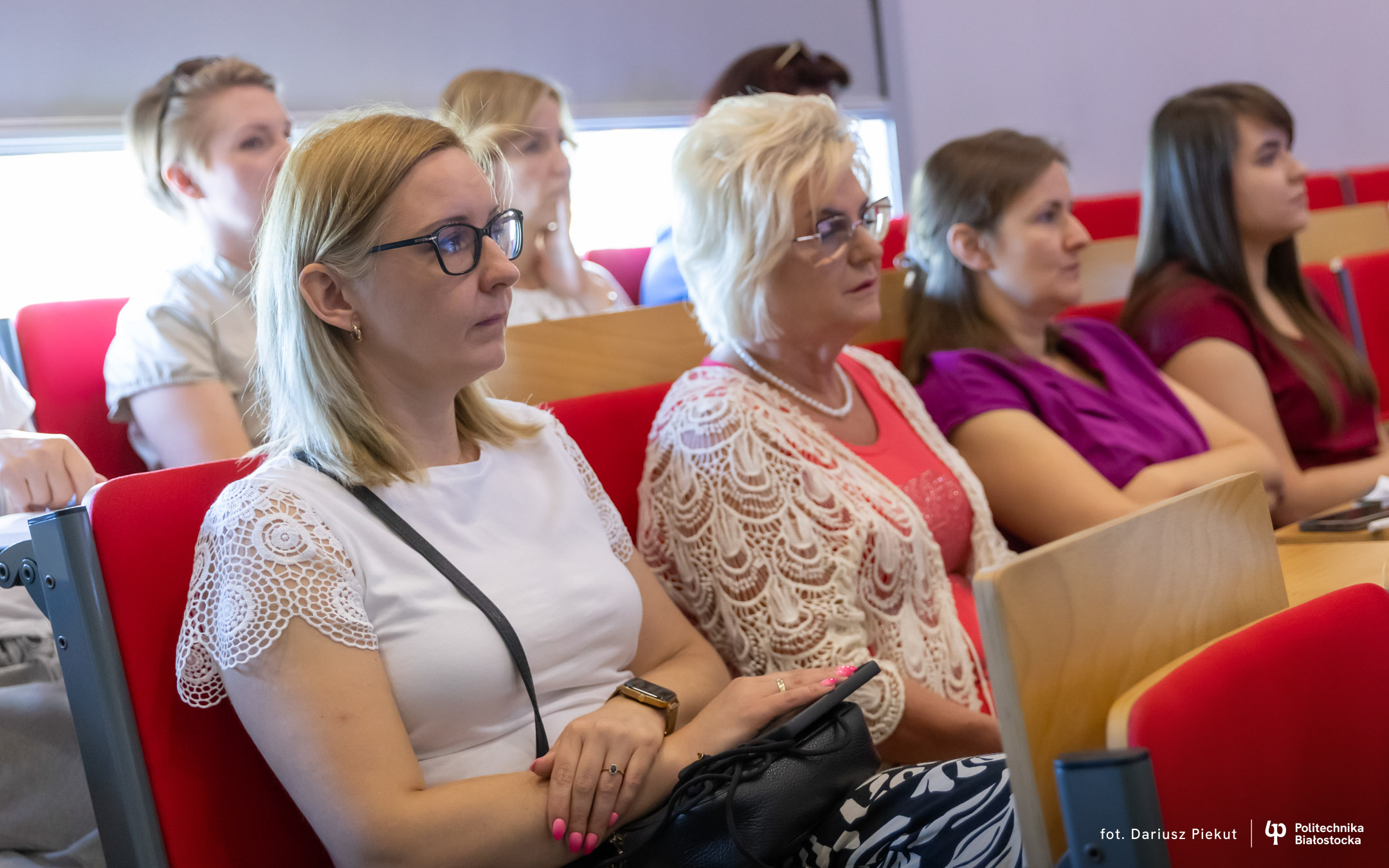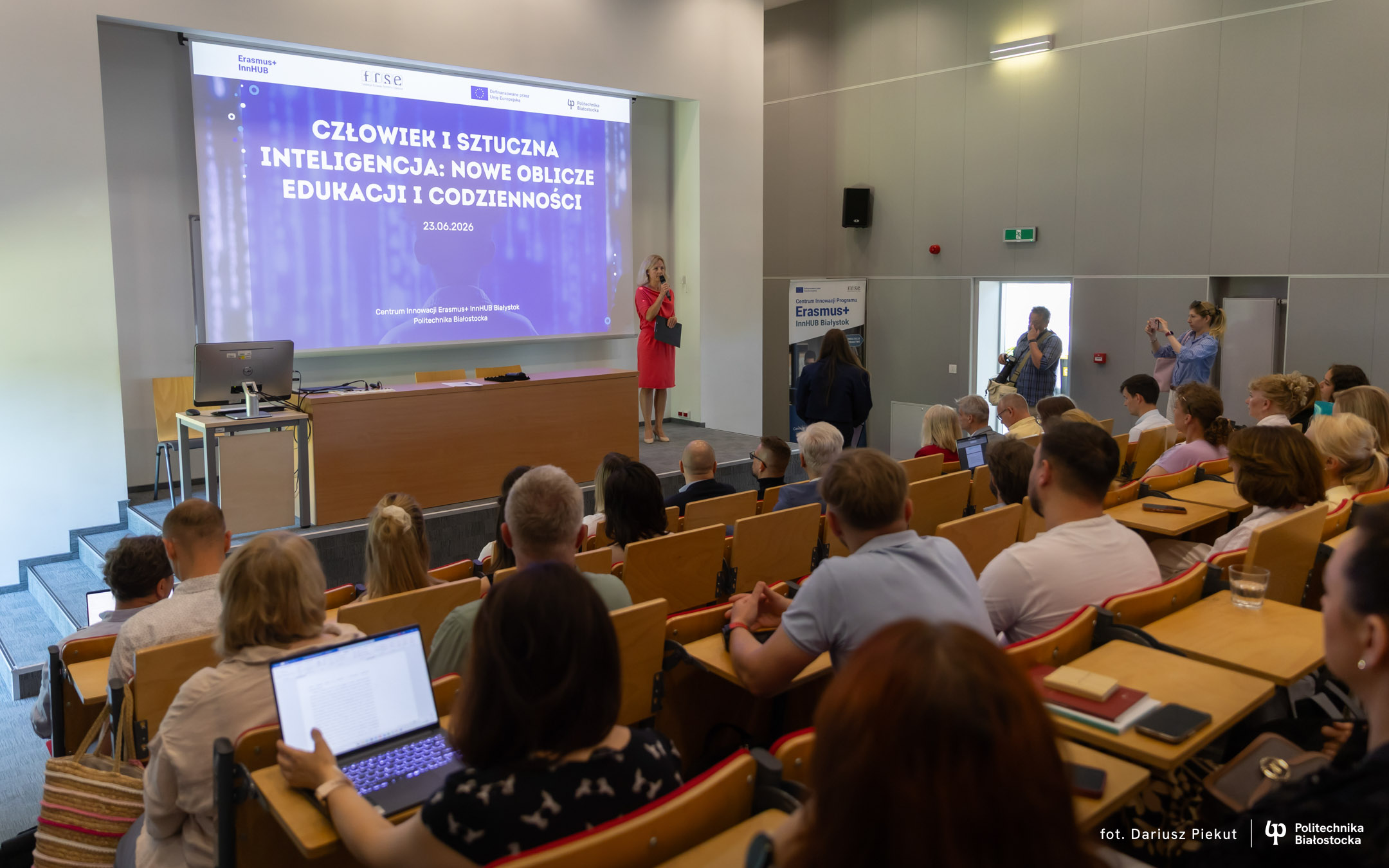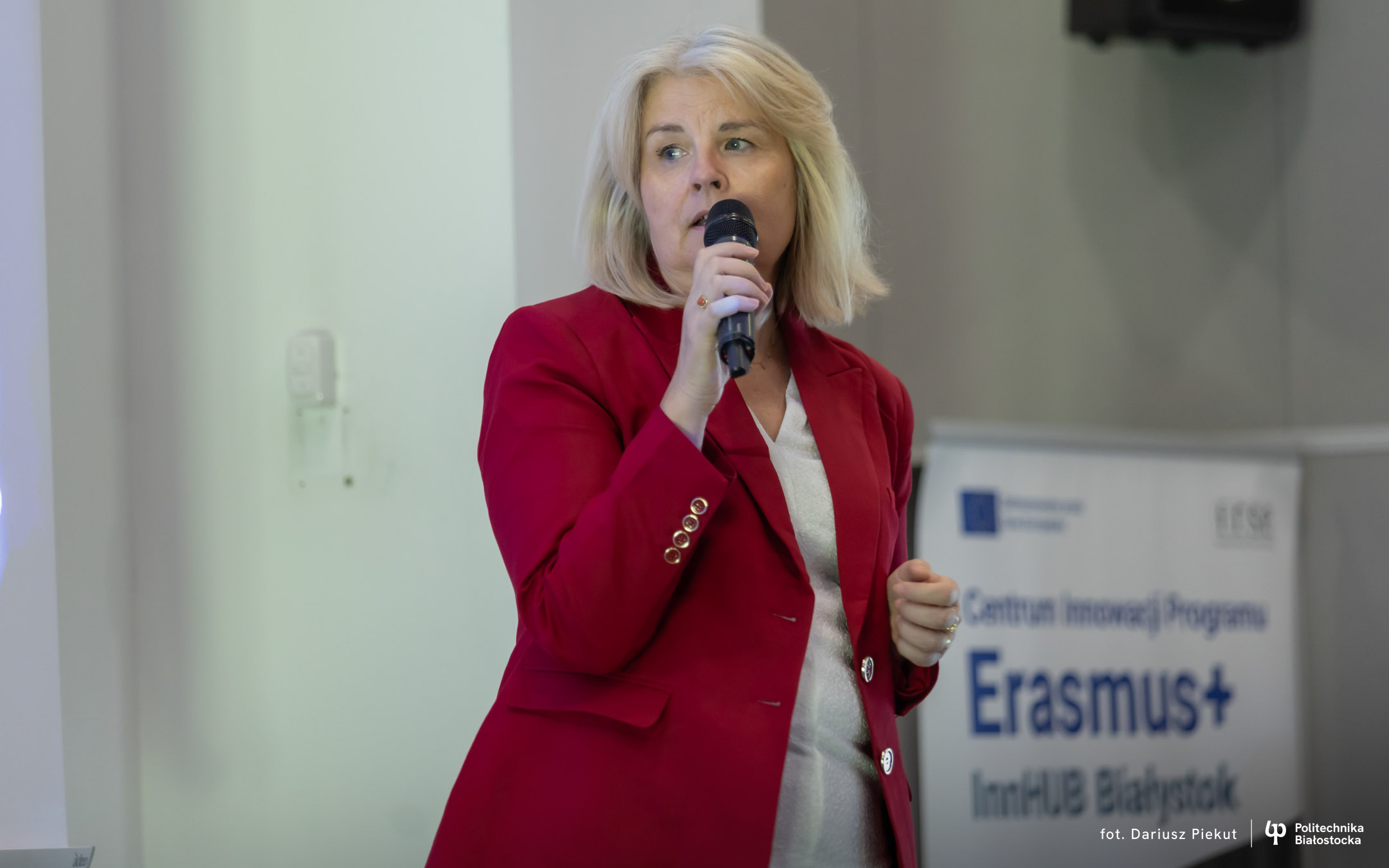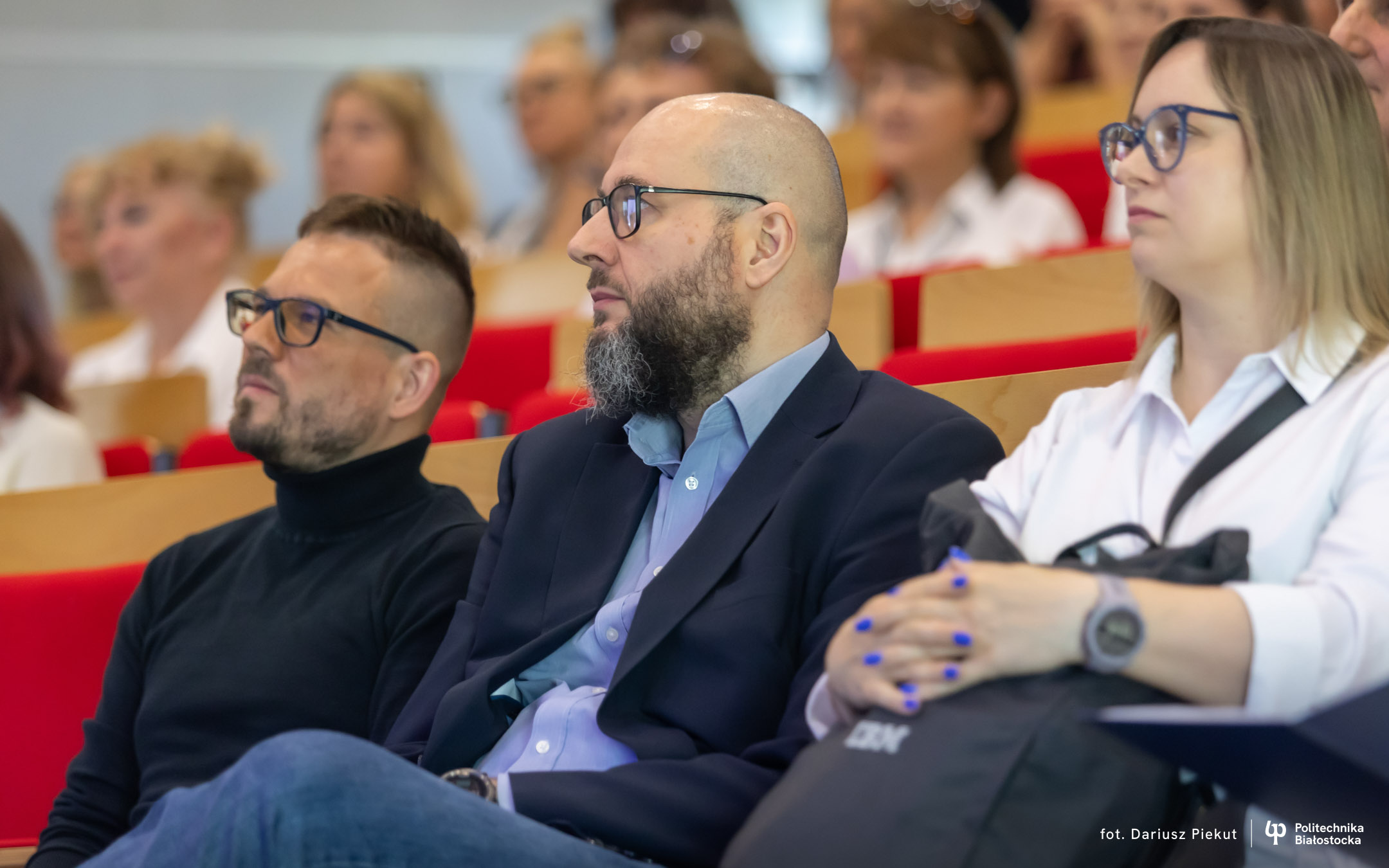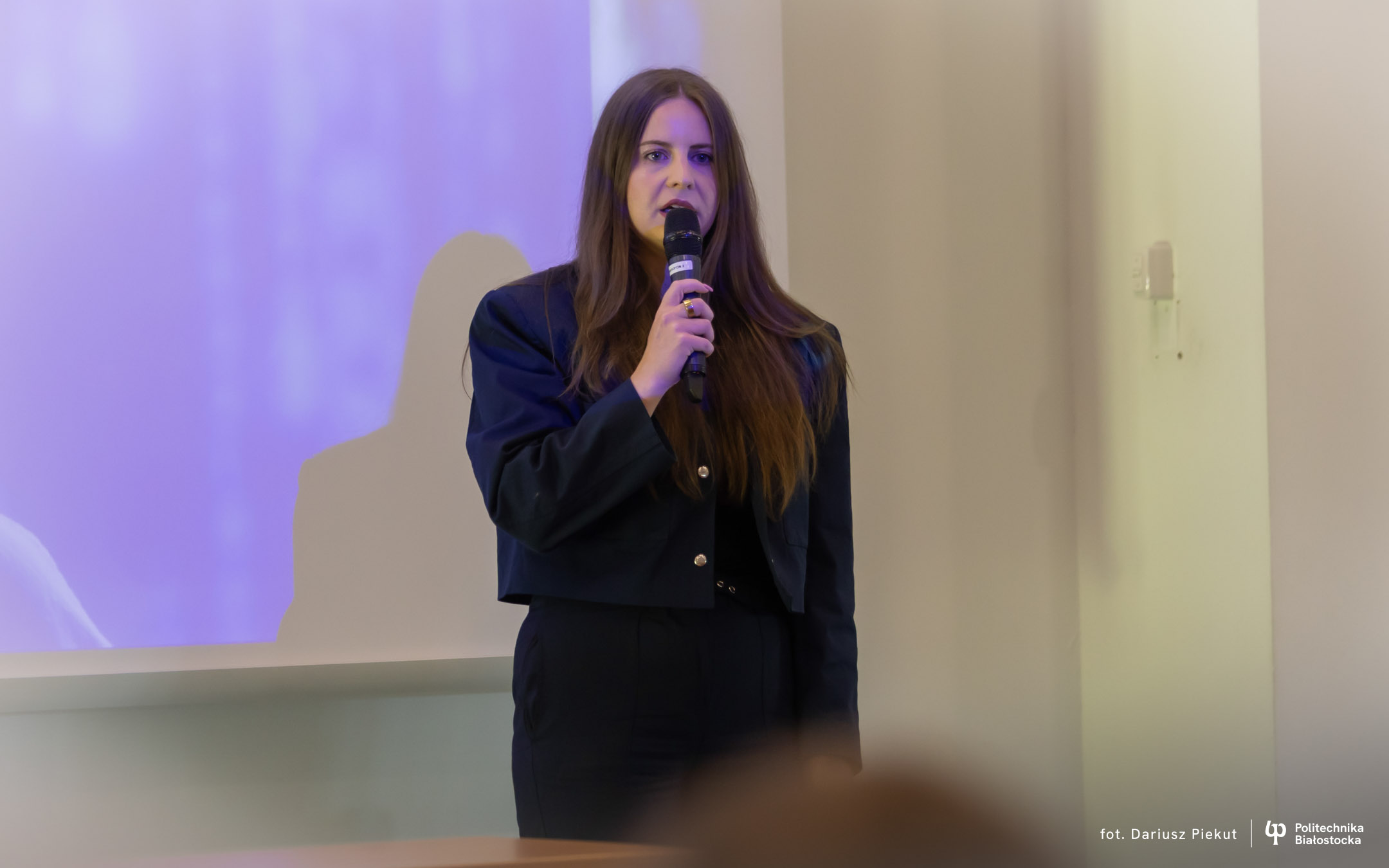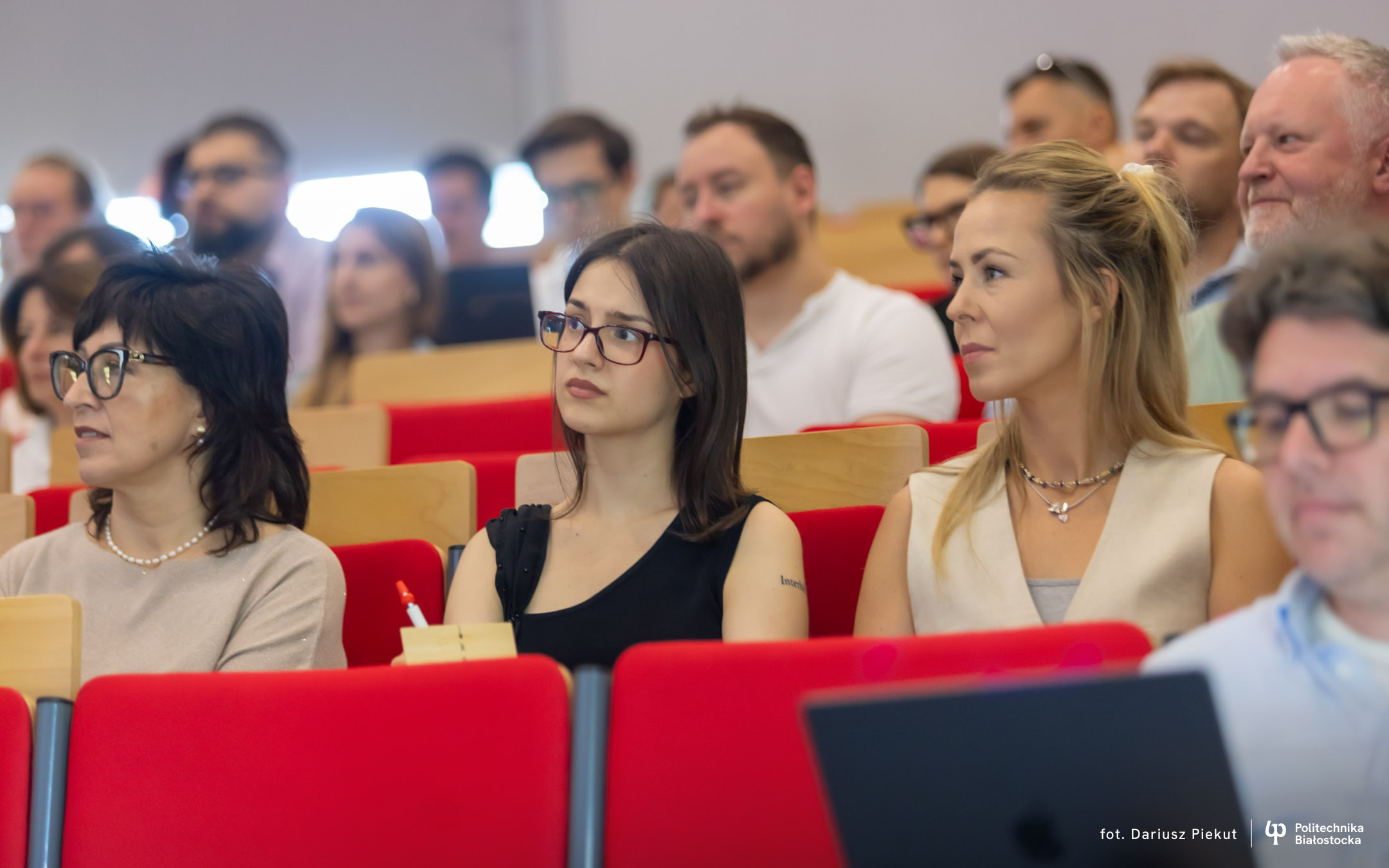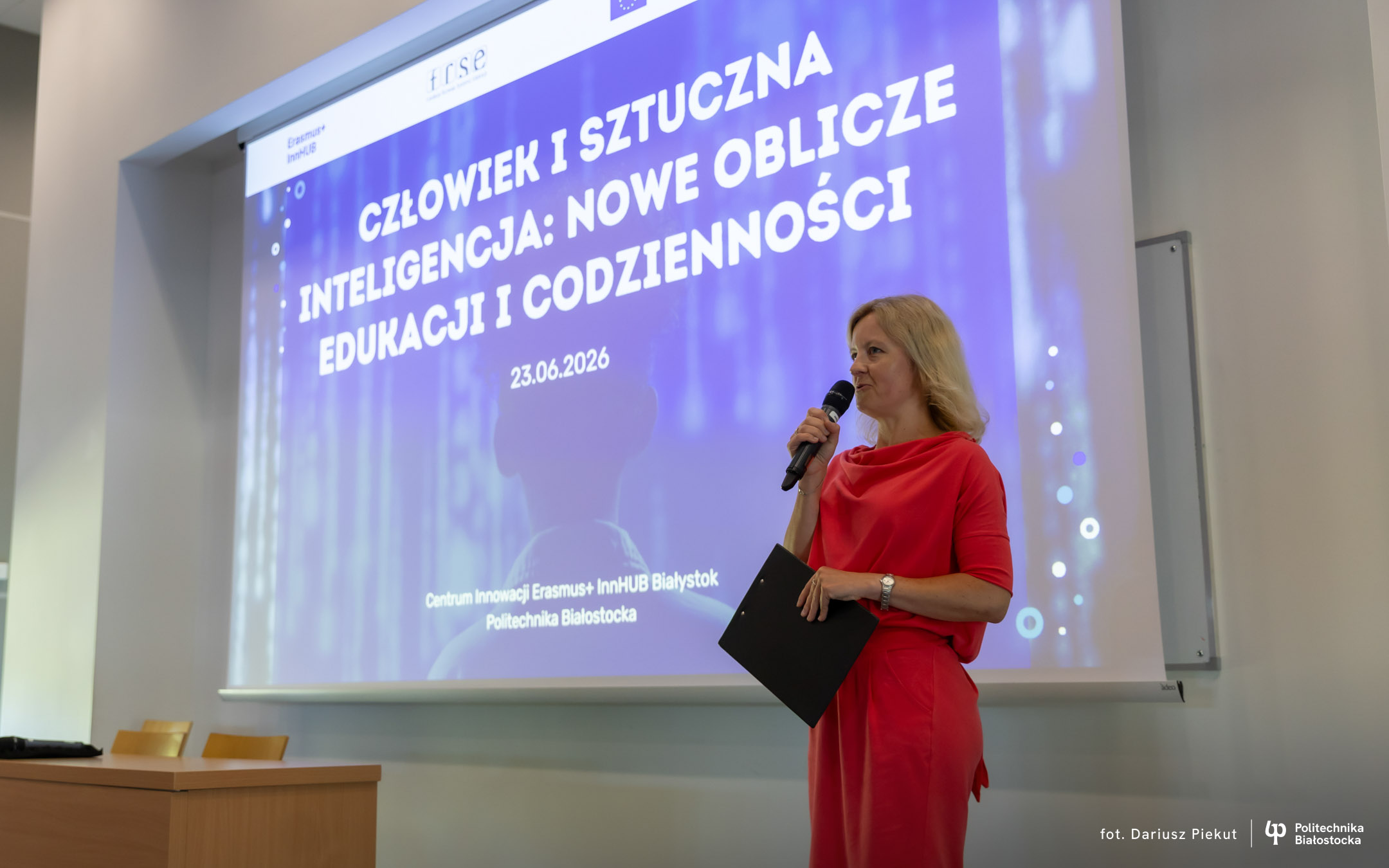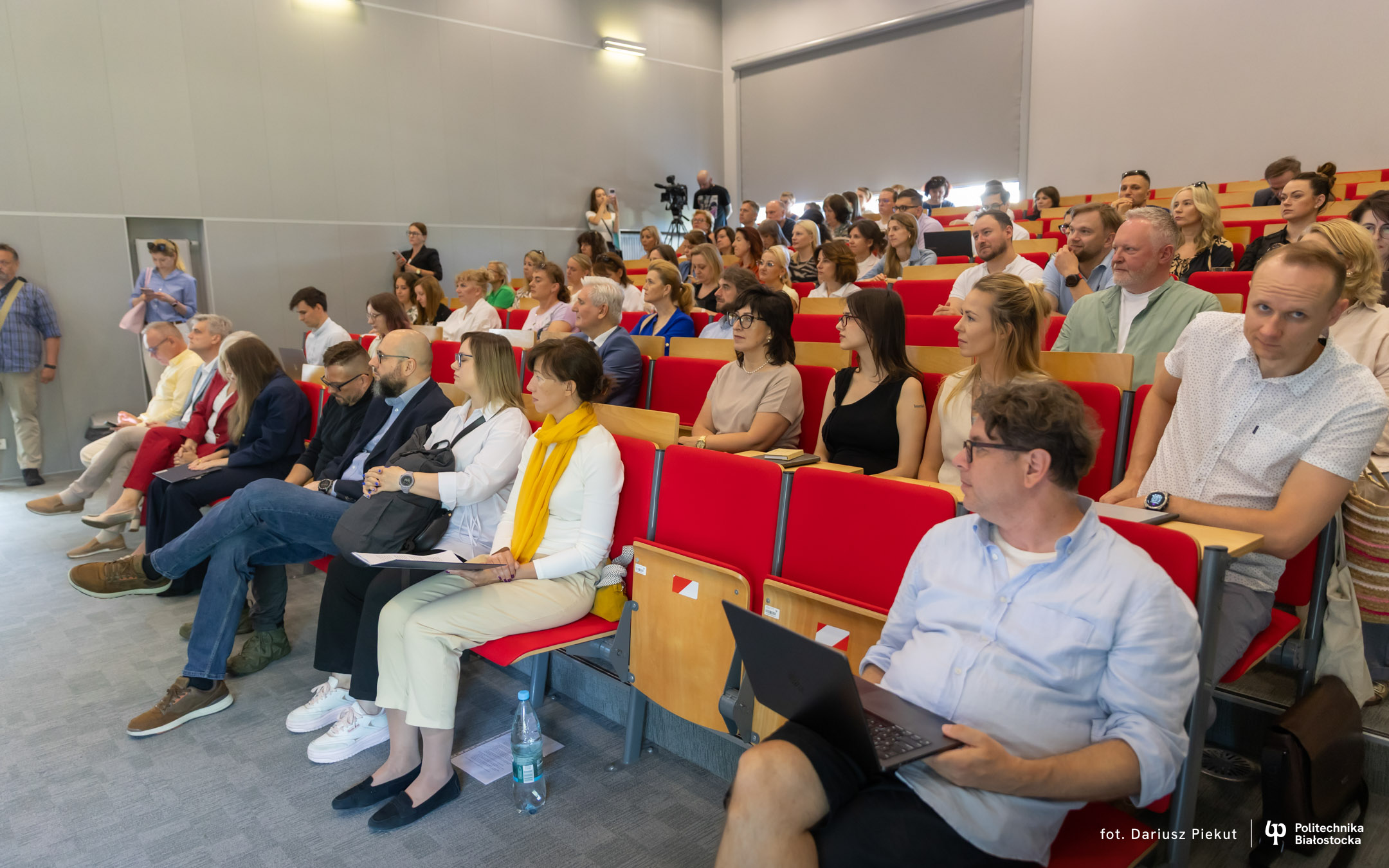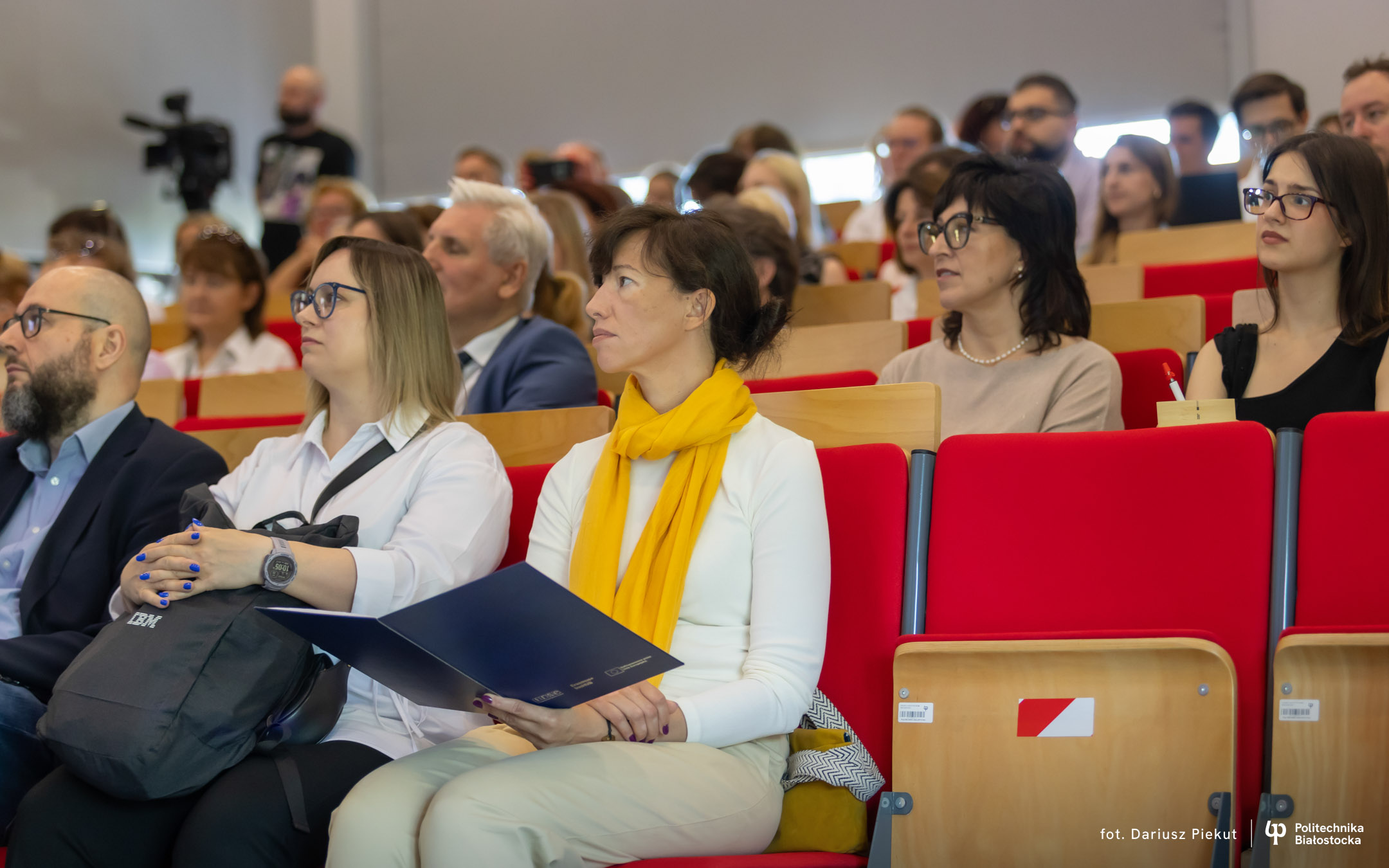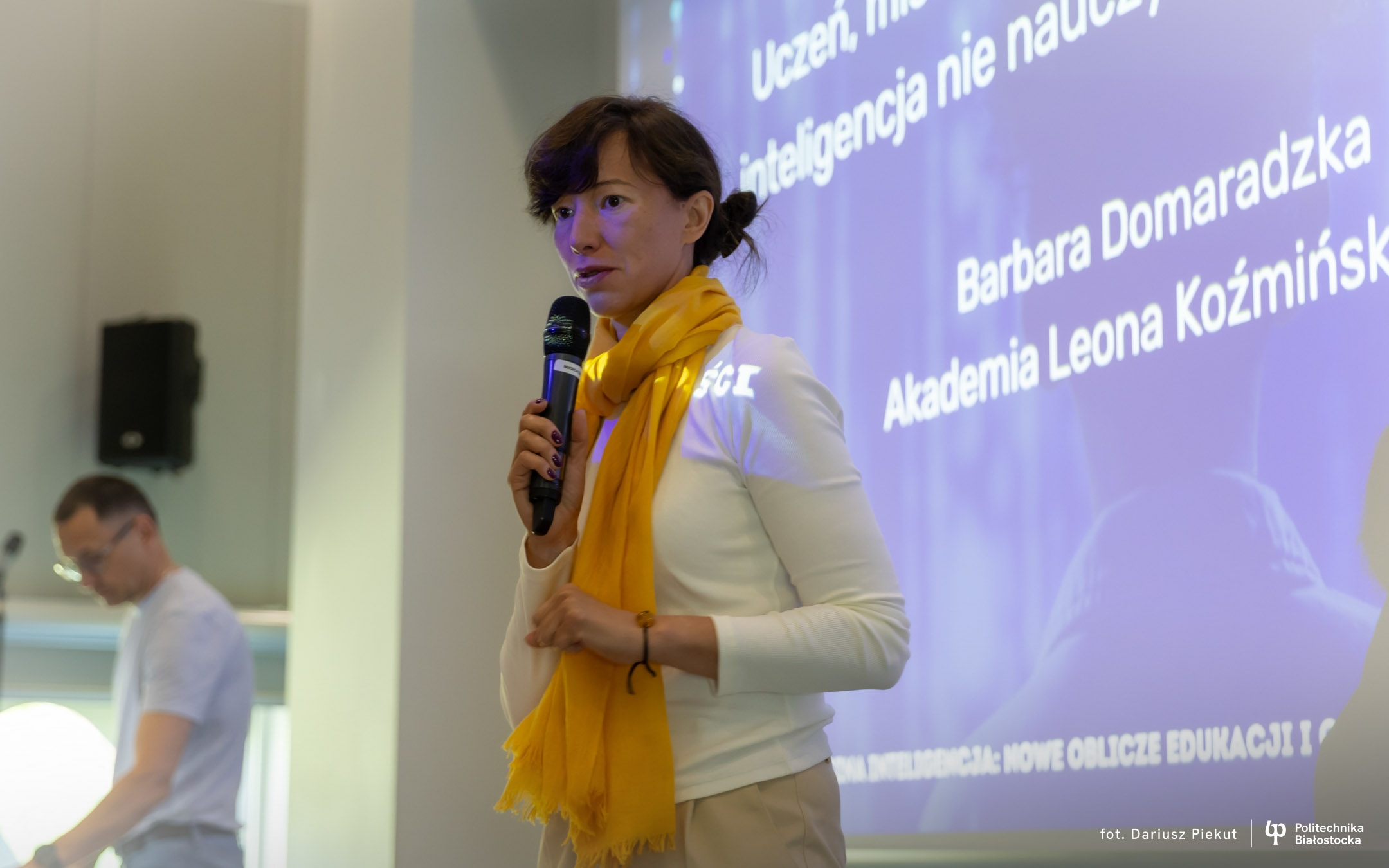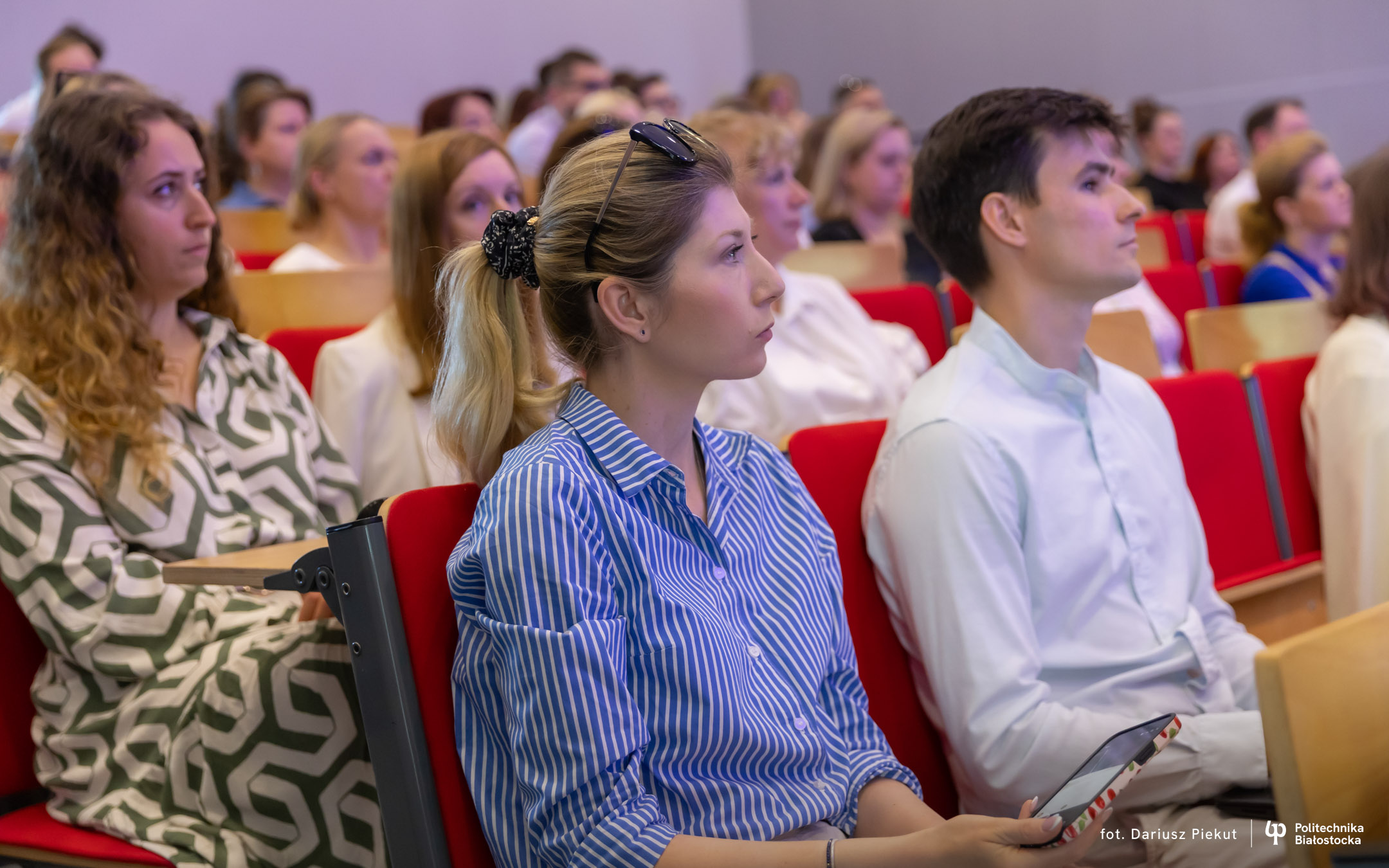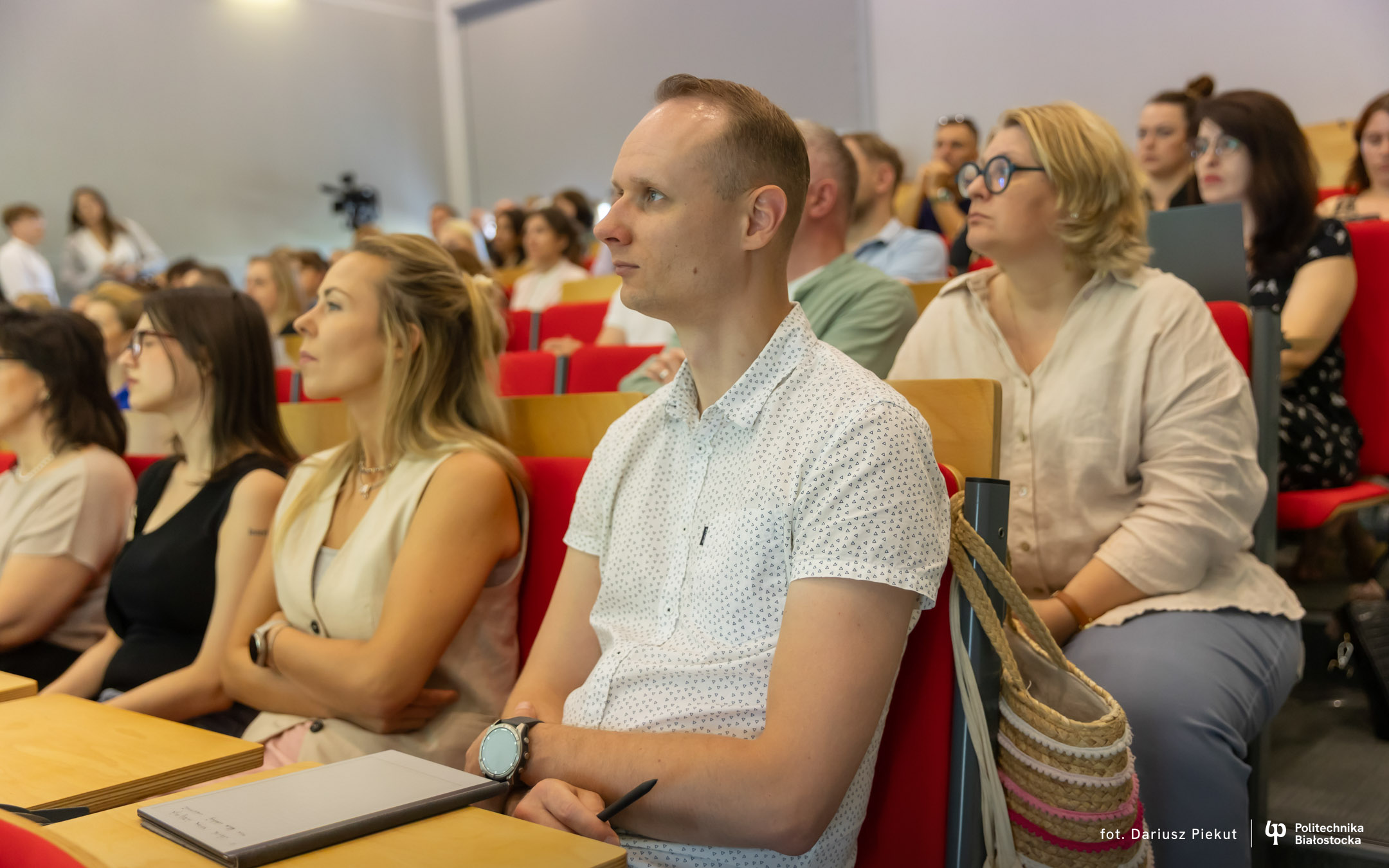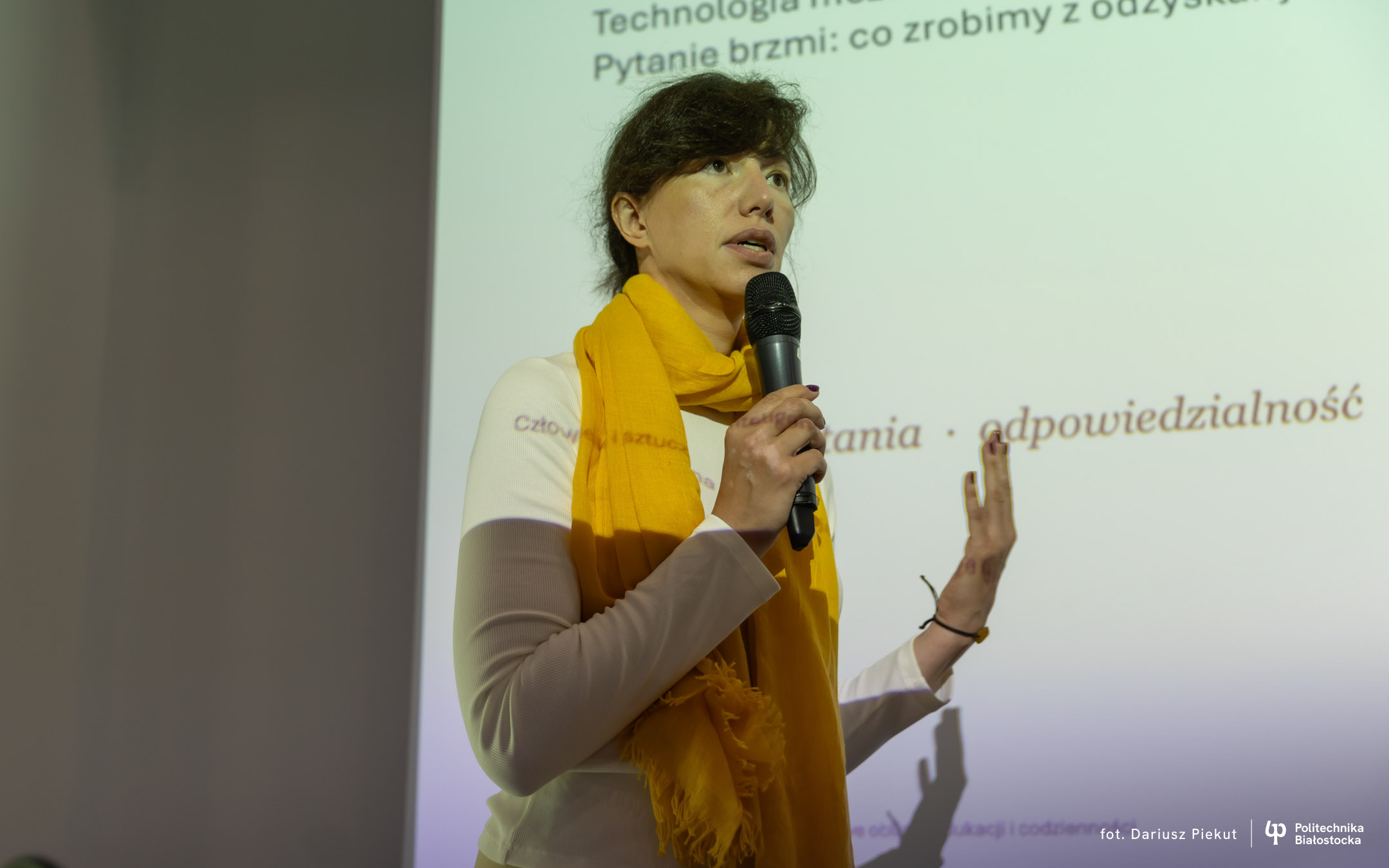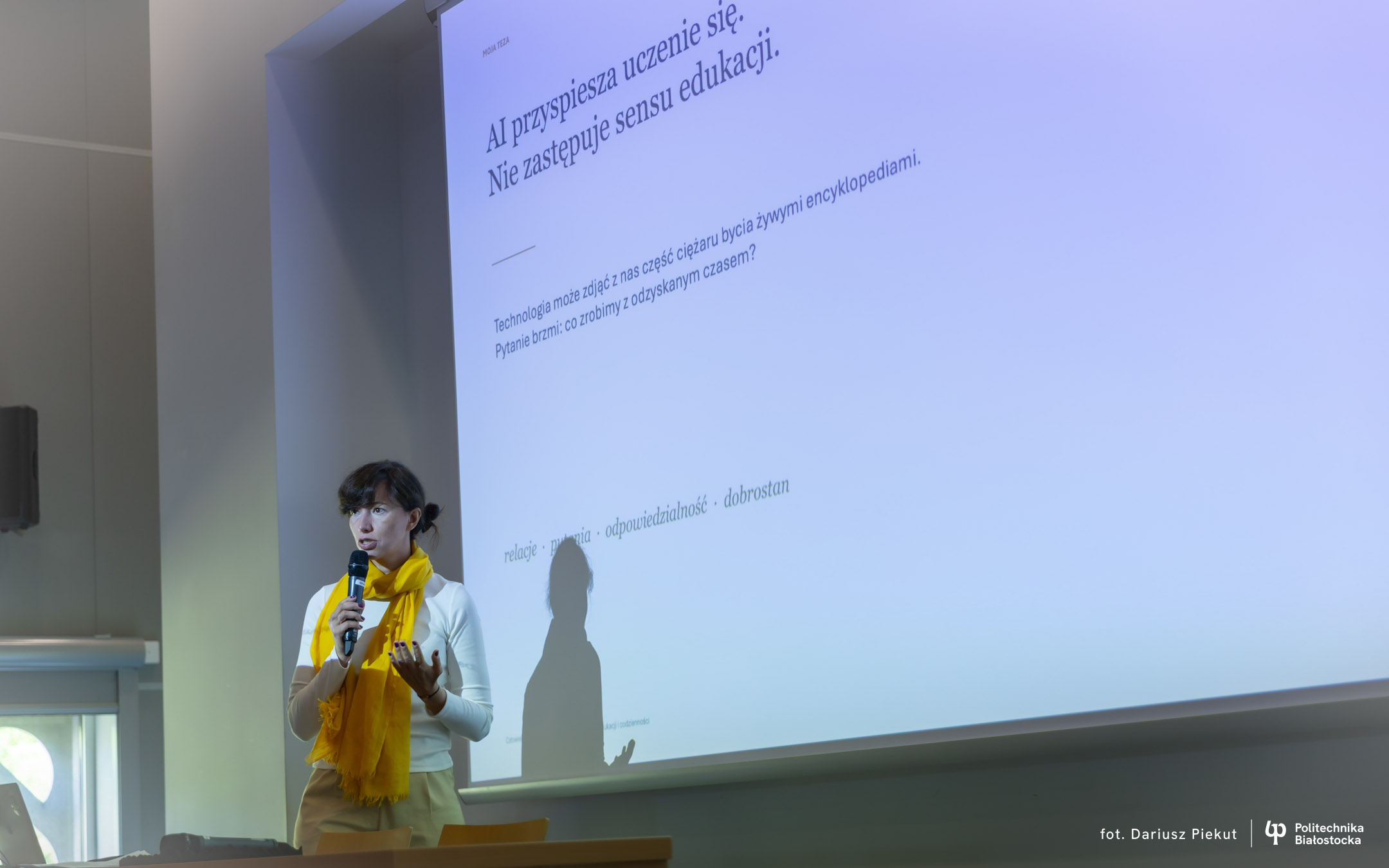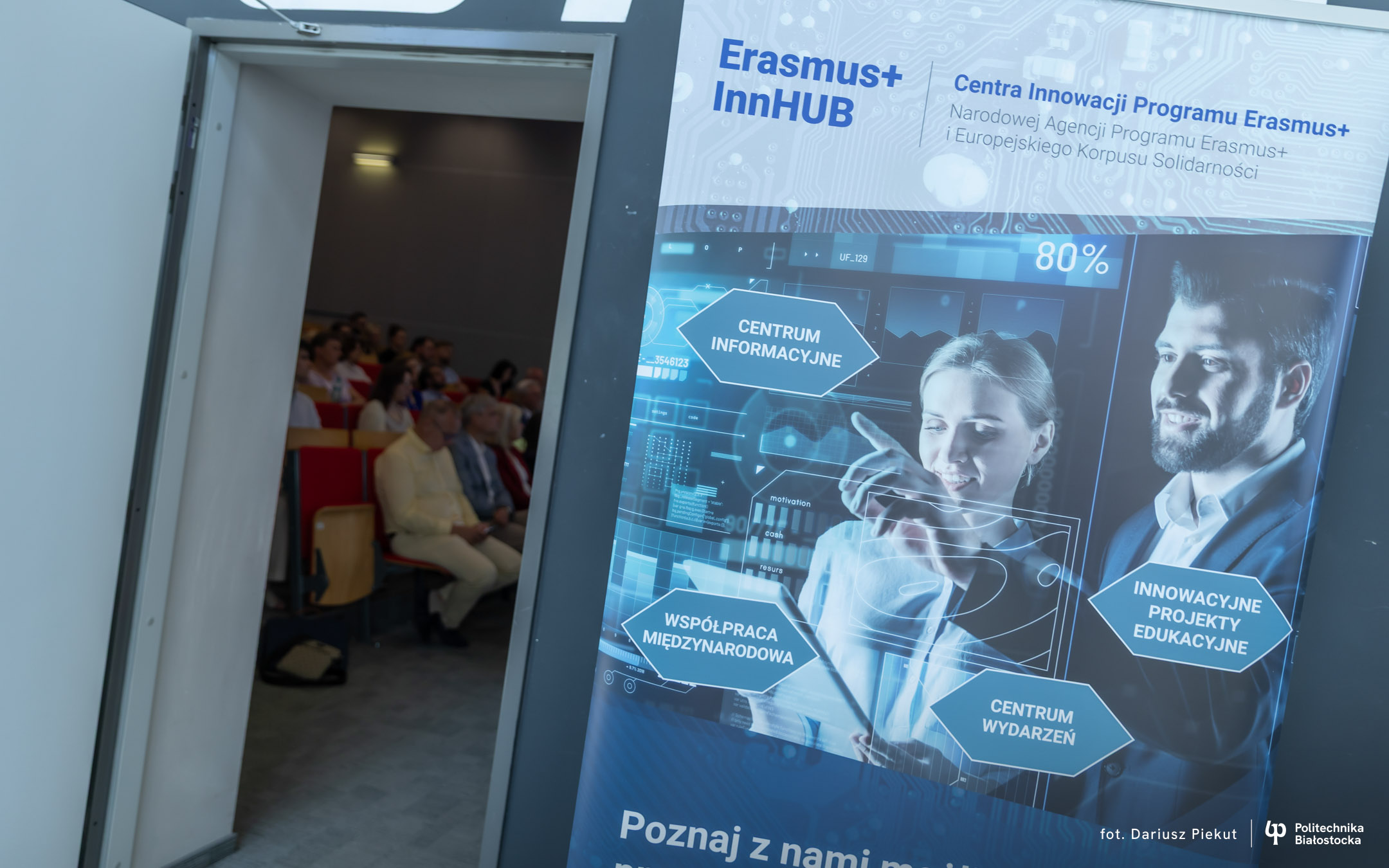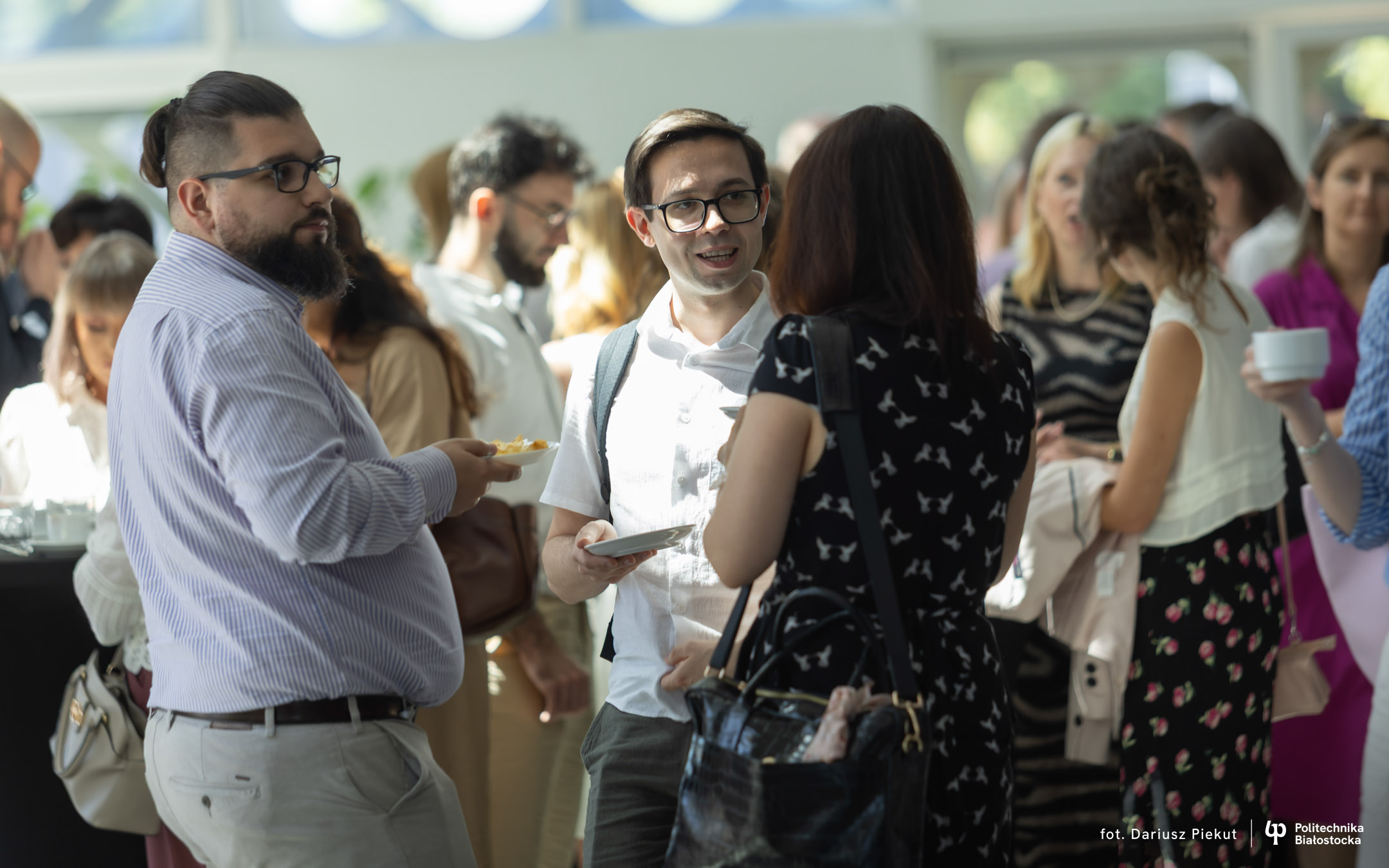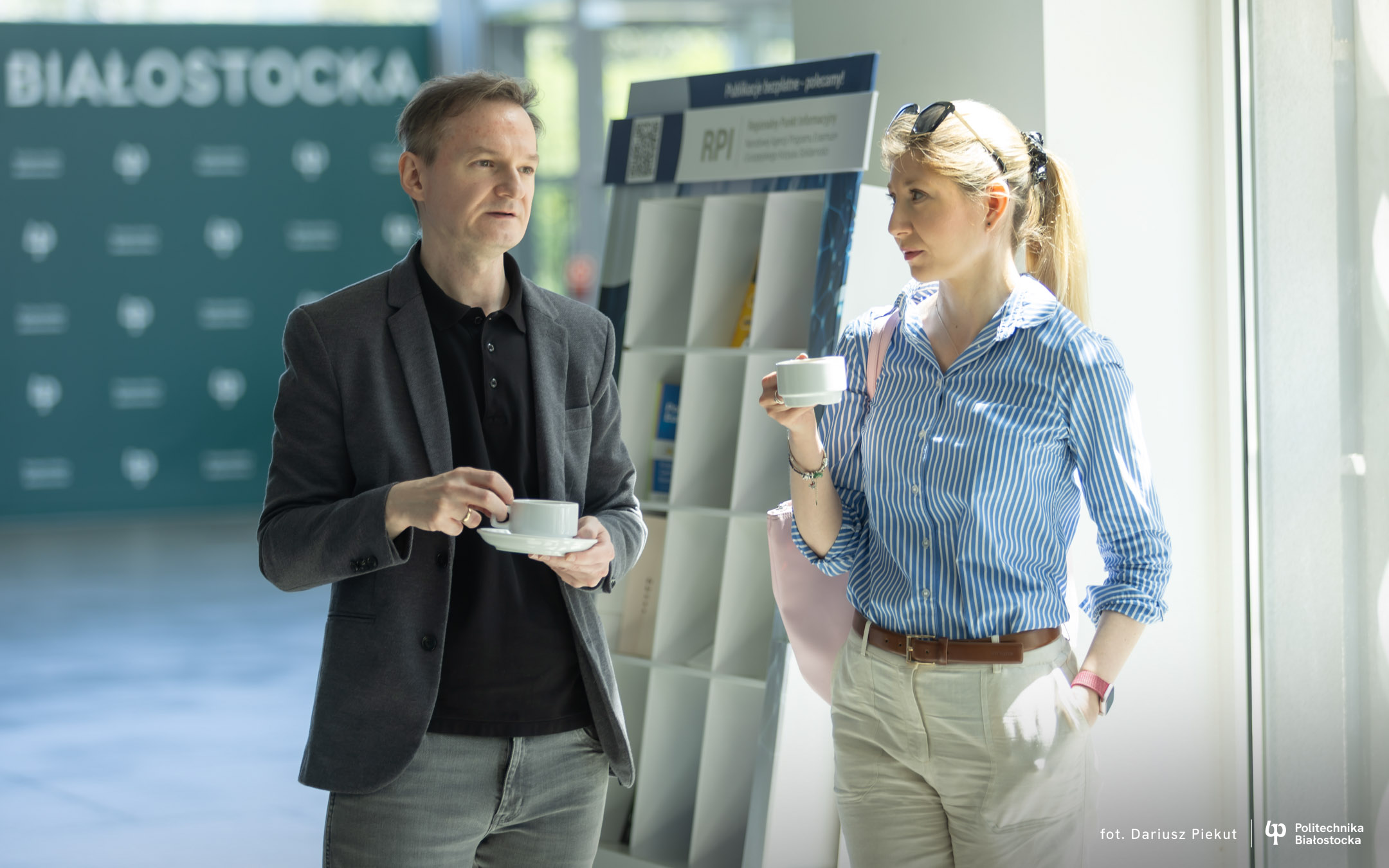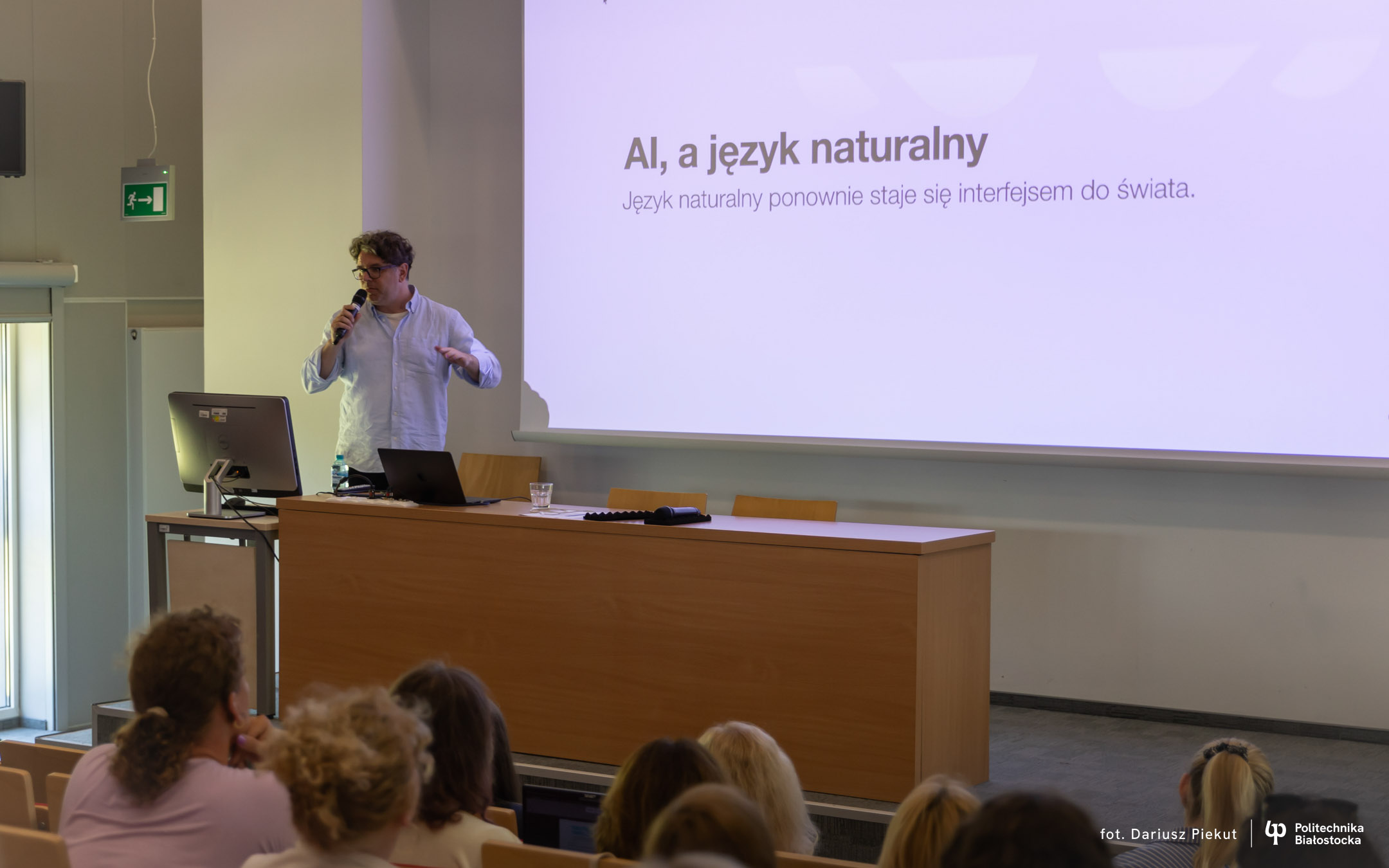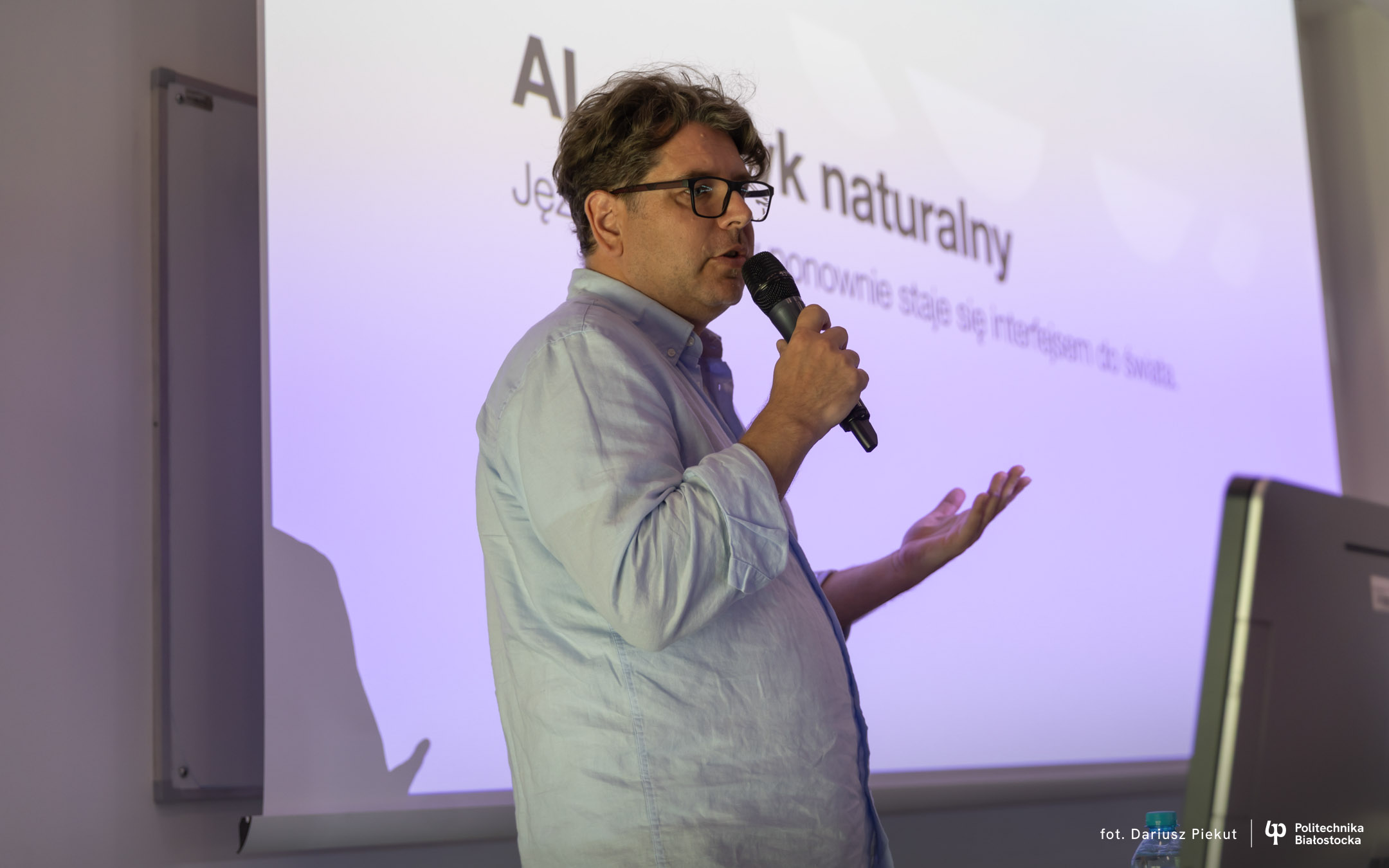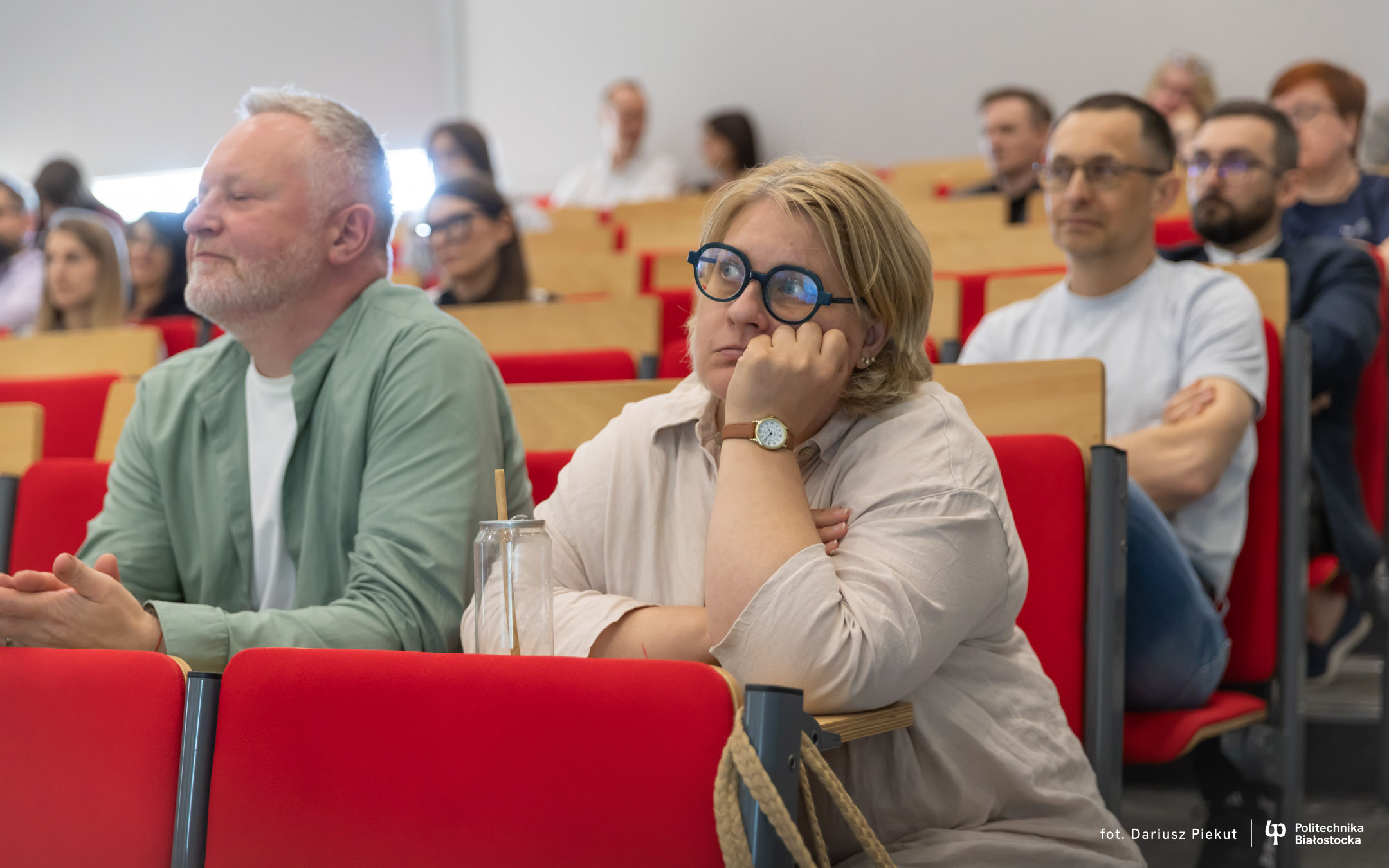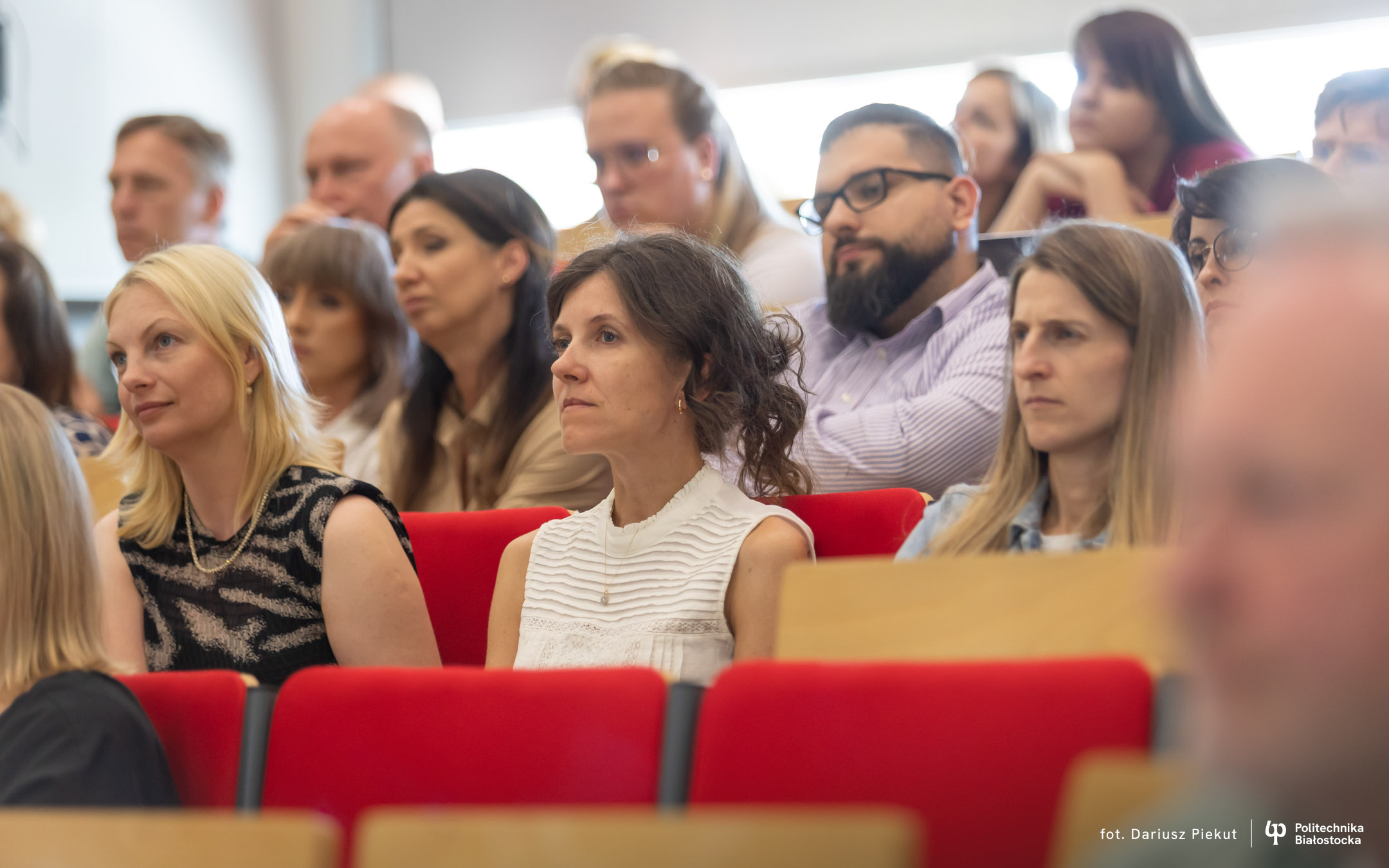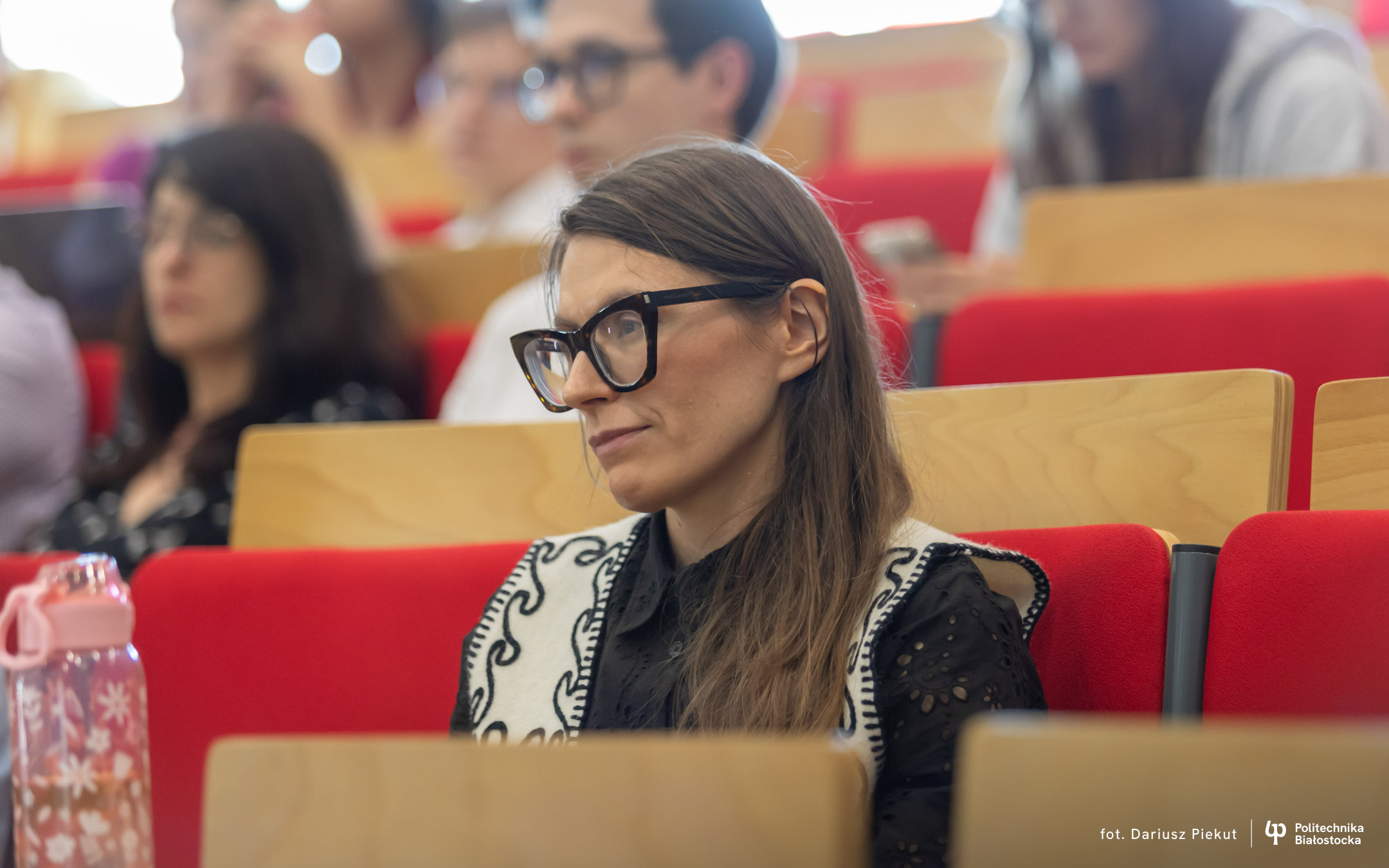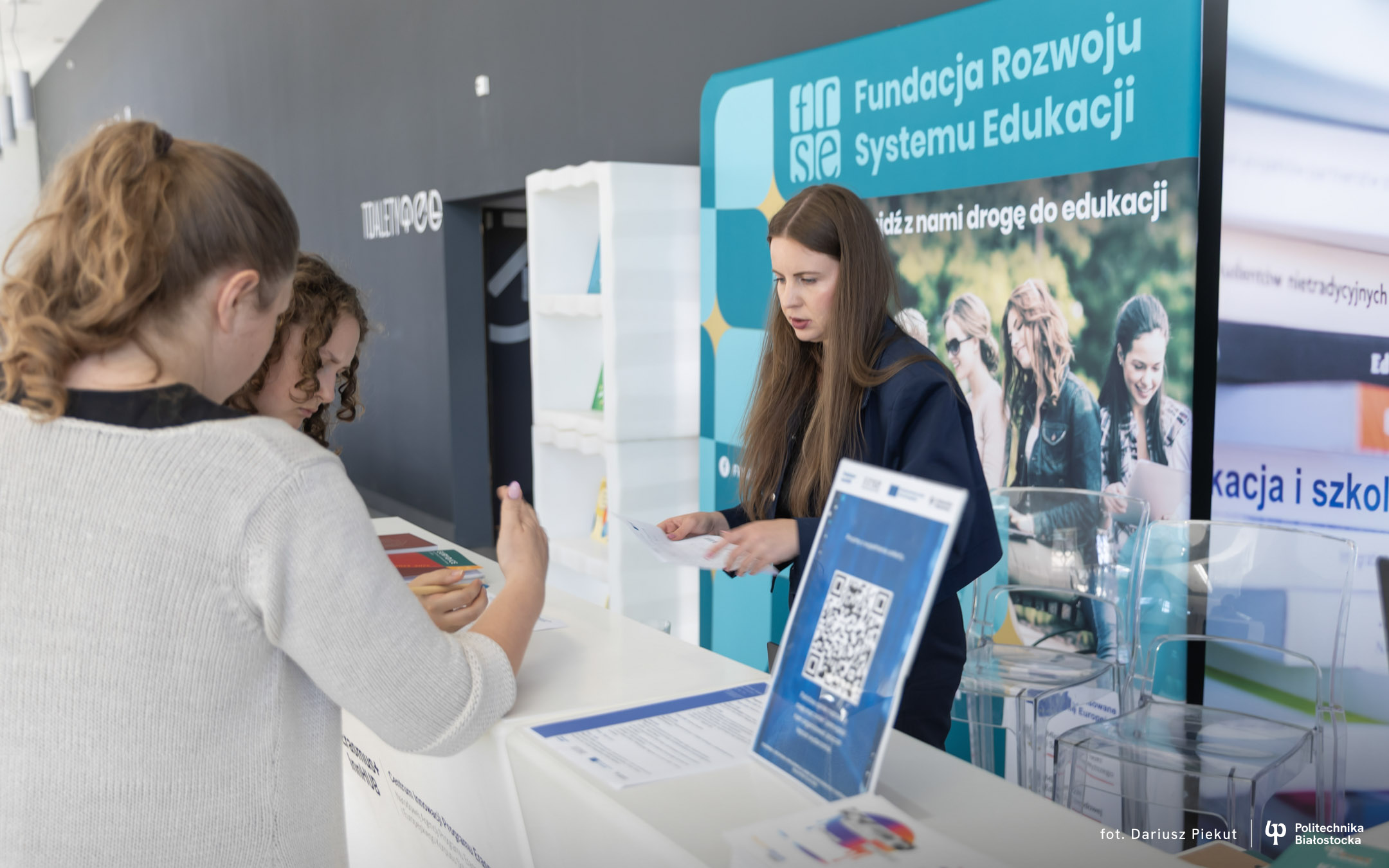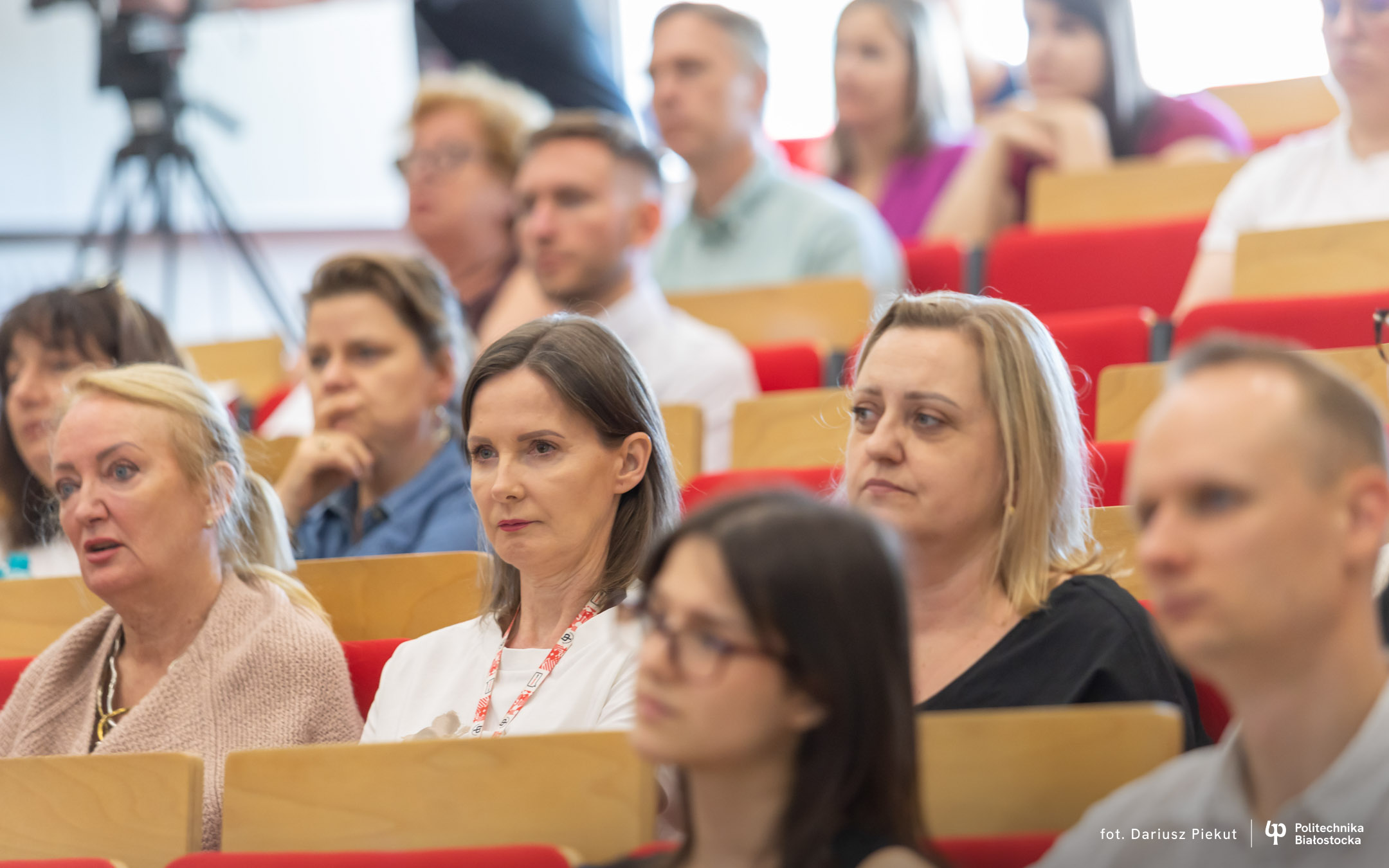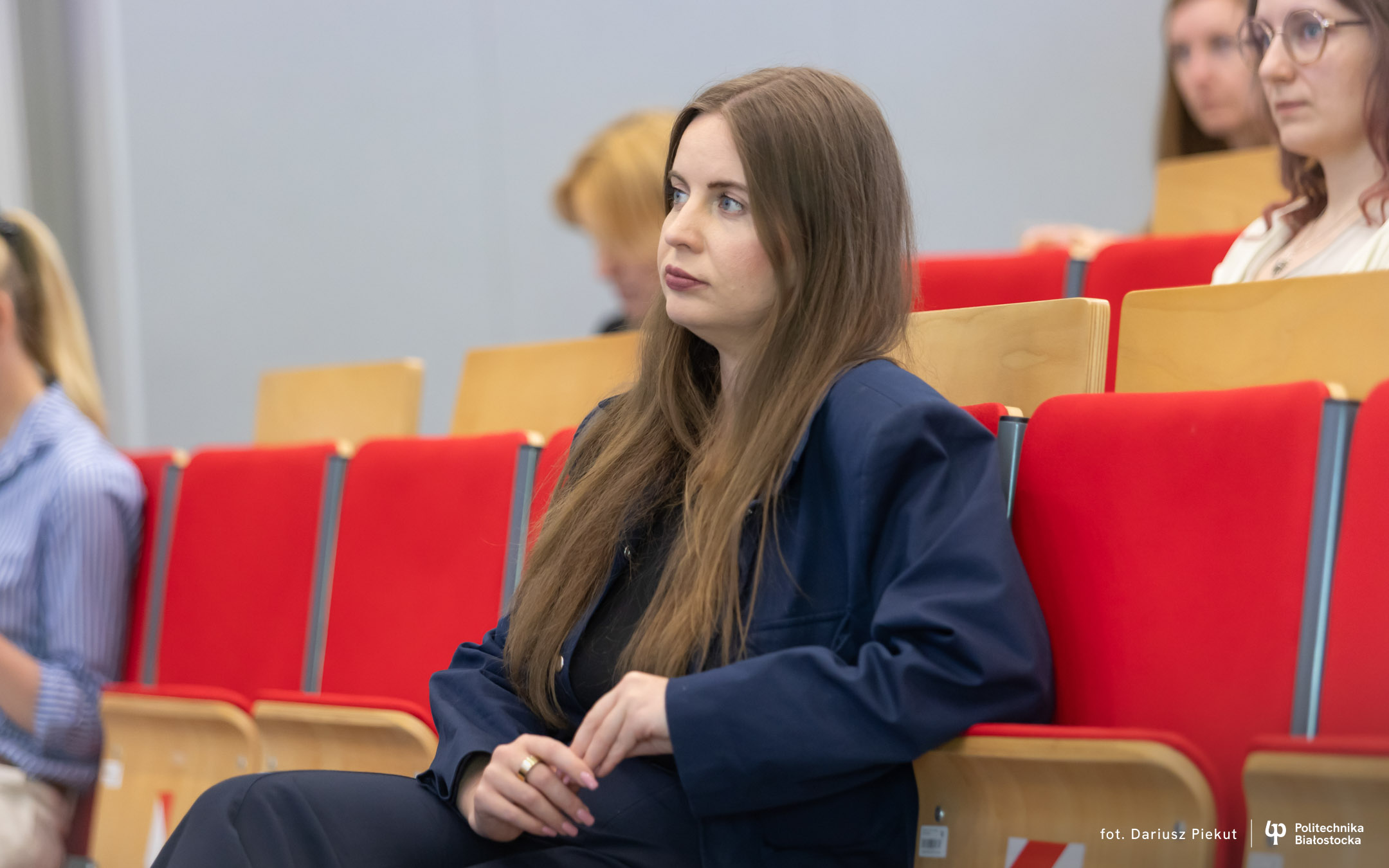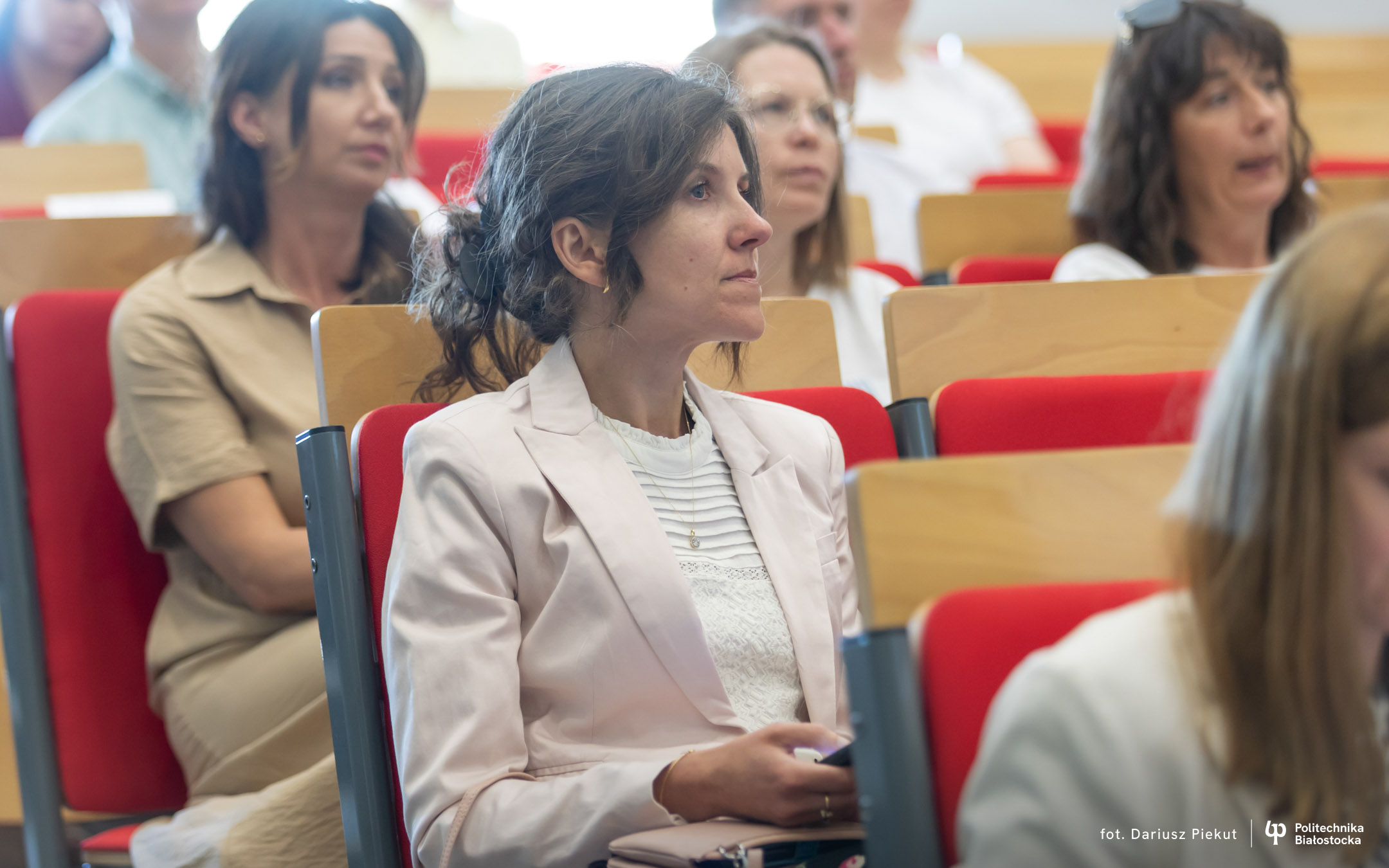
The event provided a unique opportunity for in-depth reflection on the impact of AI on today’s world. The main aim of the conference was to exchange specialist knowledge, analyse the opportunities and challenges facing the education sector, and inspire conscious and responsible use of new technologies.
Experts unanimously emphasised that technology will not replace human beings, provided that we maintain an appropriate level of critical distance towards the solutions it offers.
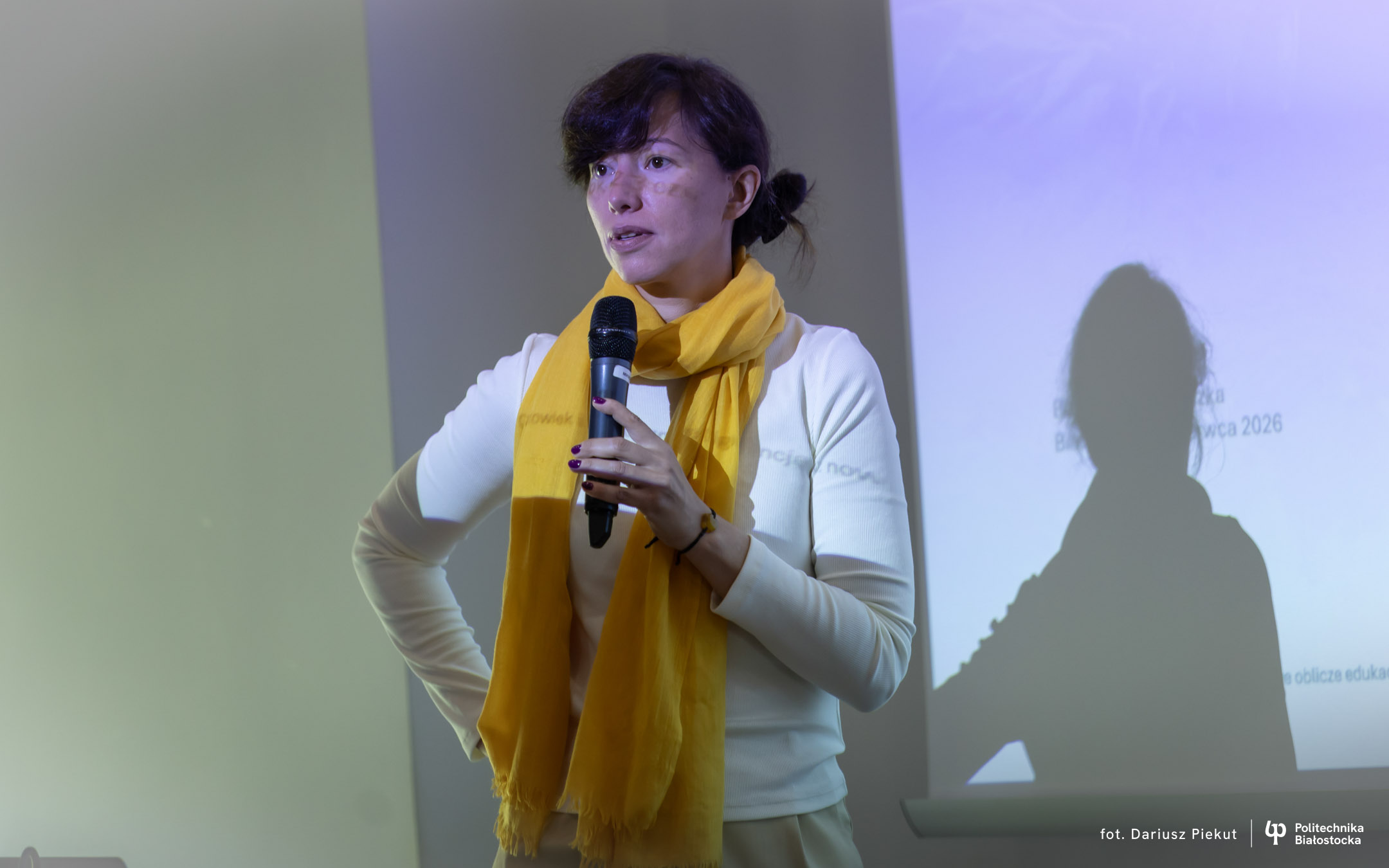
– The key is the sensible and selective use of new technologies – says Assoc. Prof. Dorota Mozyrska, DSc, PhD, Dean of the Faculty of Computer Science at Bialystok University of Technology. – AI tools are here to stay; they have become a permanent part of our reality. Completely rejecting them is not an option. The key question is how to wisely integrate them into the teaching process and where to establish safe boundaries.
The conference programme included, among others, presentations and debates on the transformation of hybrid education models, critical thinking in the age of disinformation, eliminating digital barriers and the practical application of artificial intelligence in the Erasmus+ Programme.
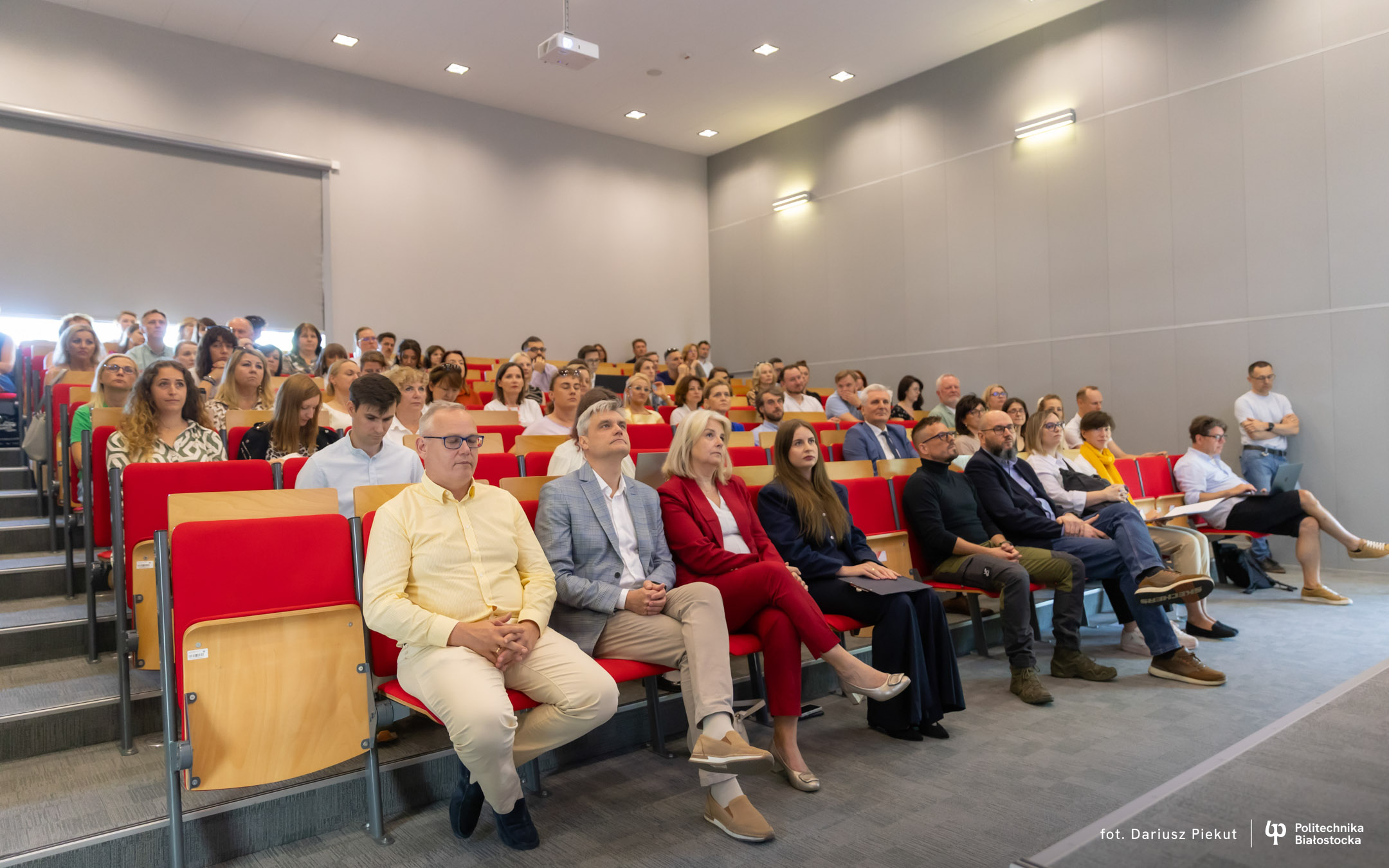
The discussions involved numerous experts, researchers and practitioners representing recognised institutions, universities and companies from Poland. The event was attended primarily by teachers, educators, academic staff, students and specialists interested in developing digital competences.
Transforming teaching through AI
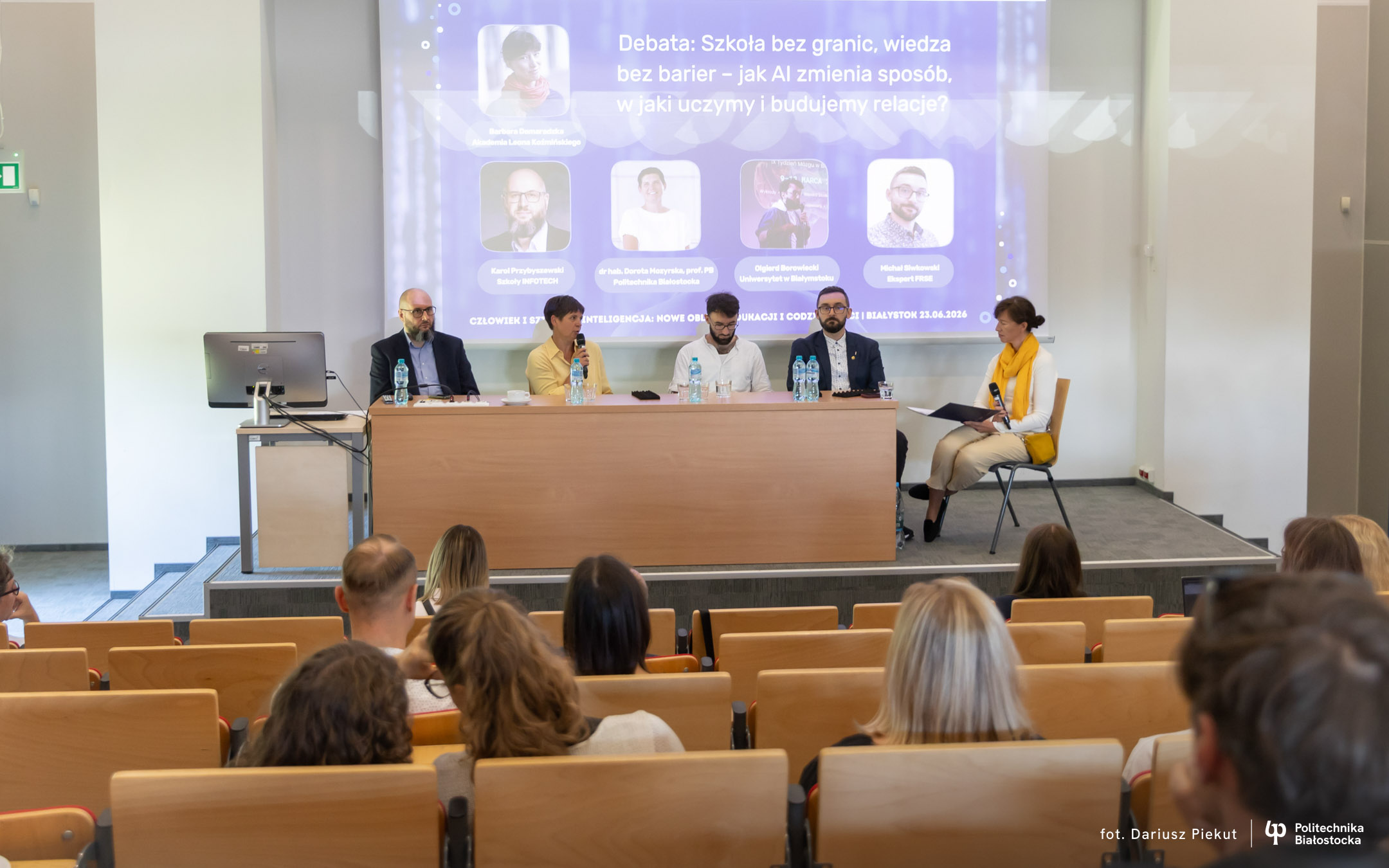
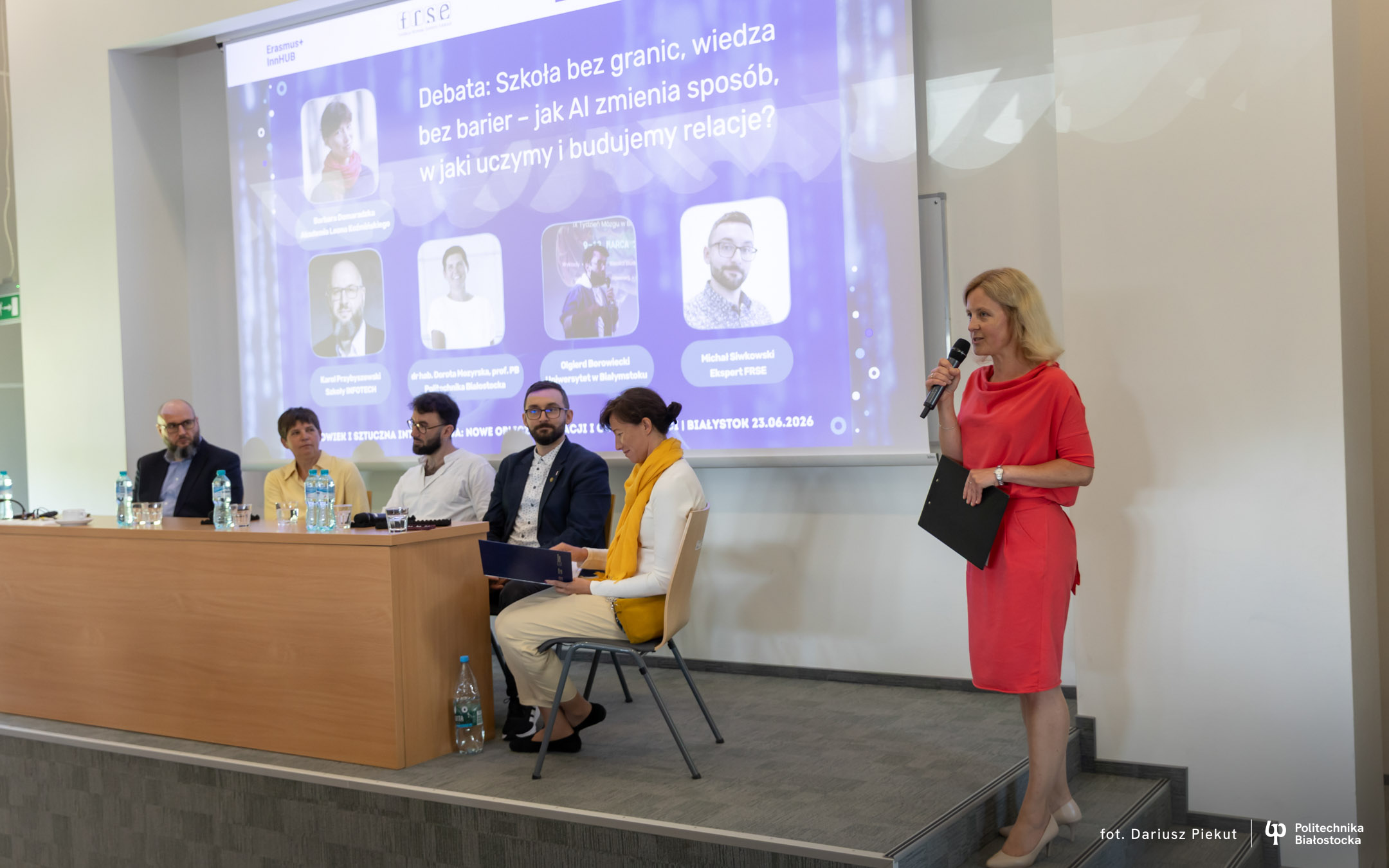
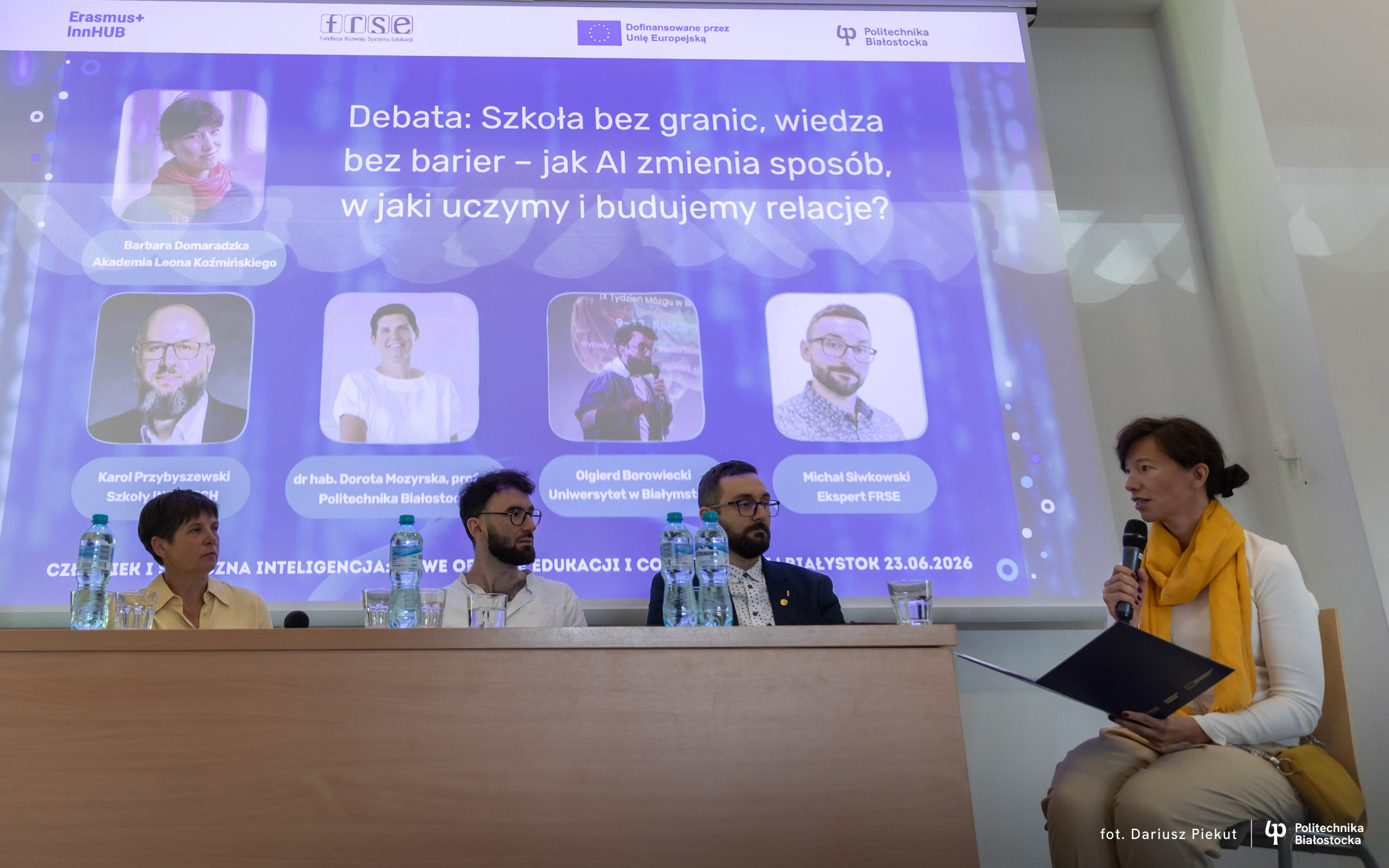
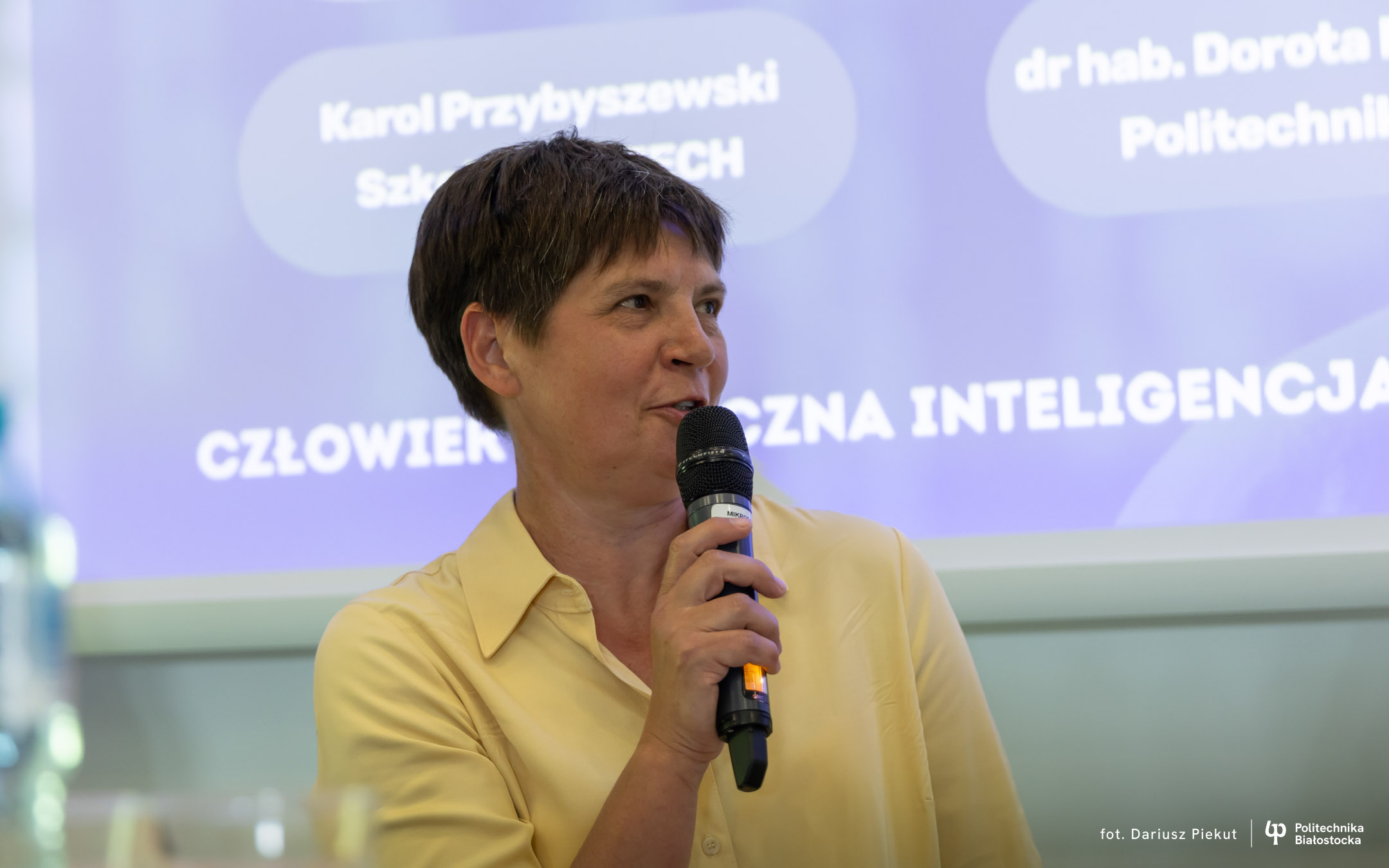
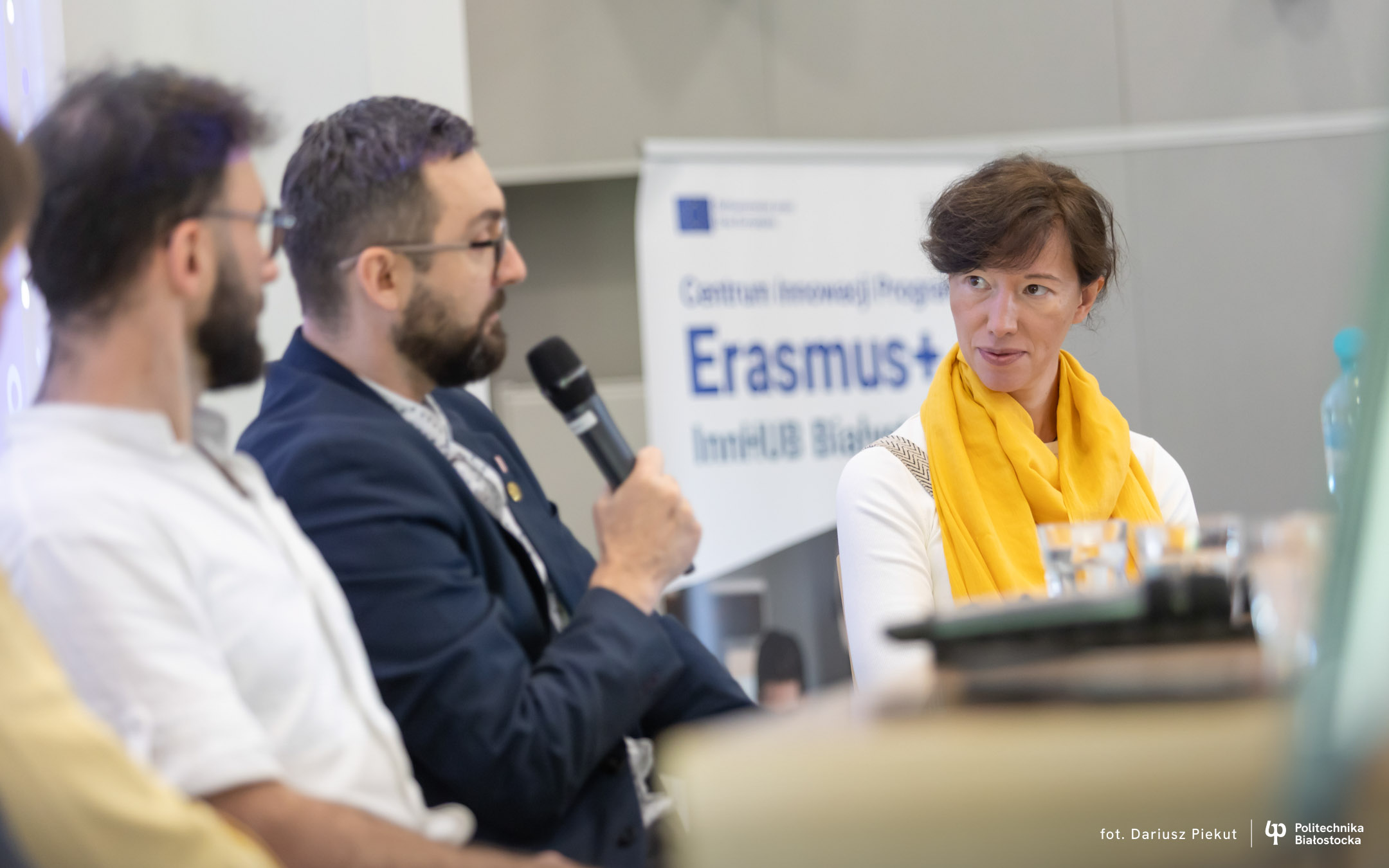
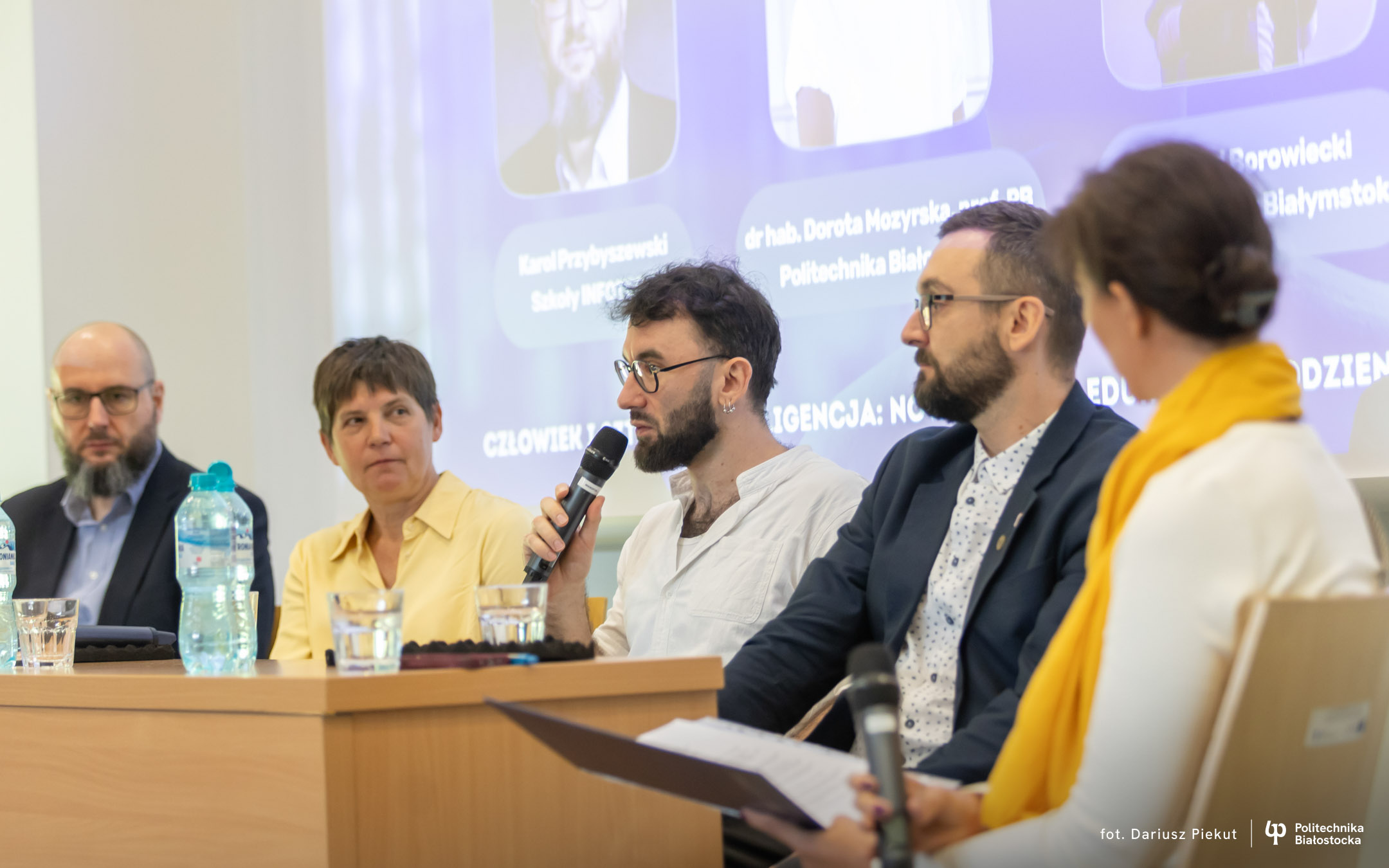
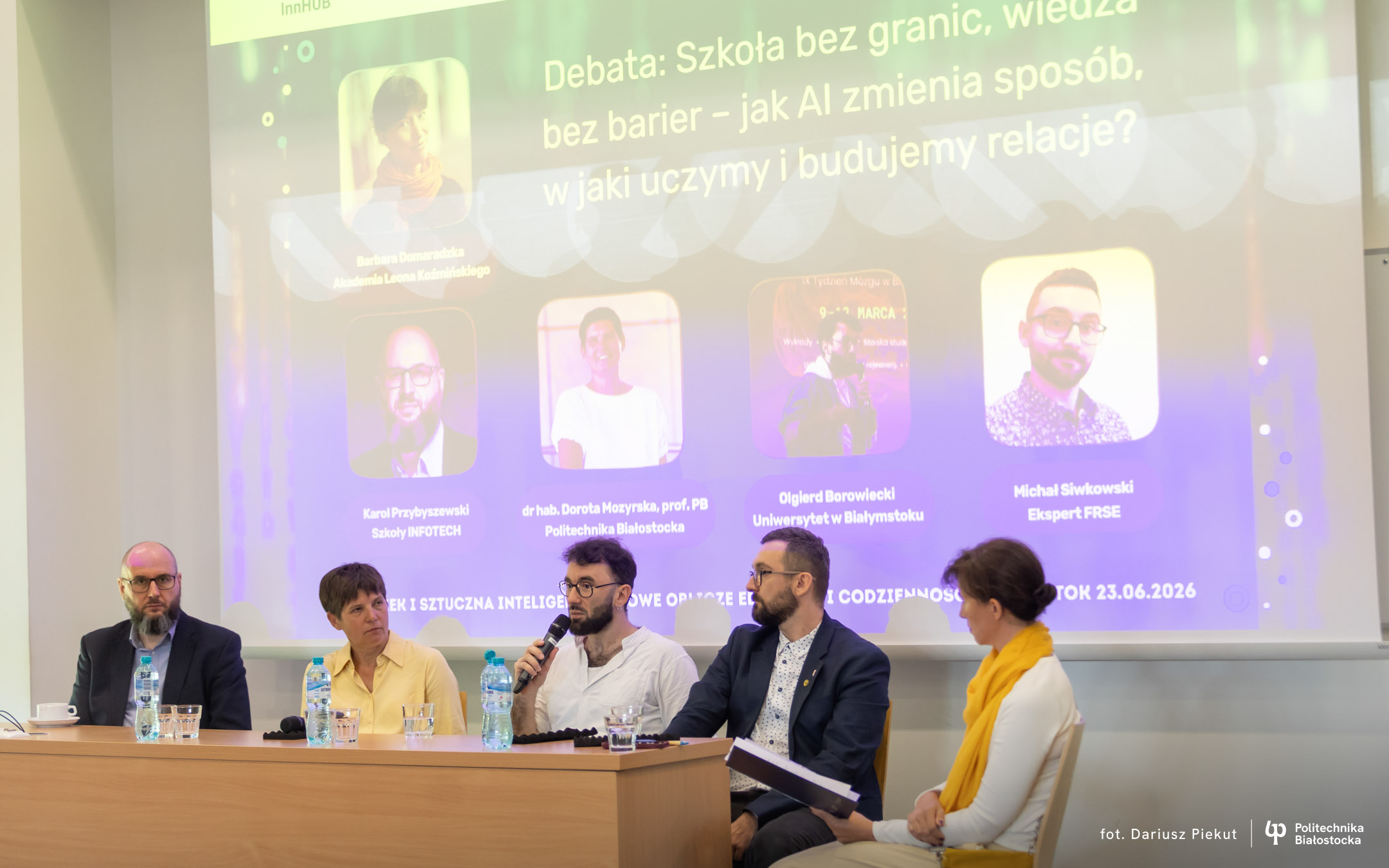
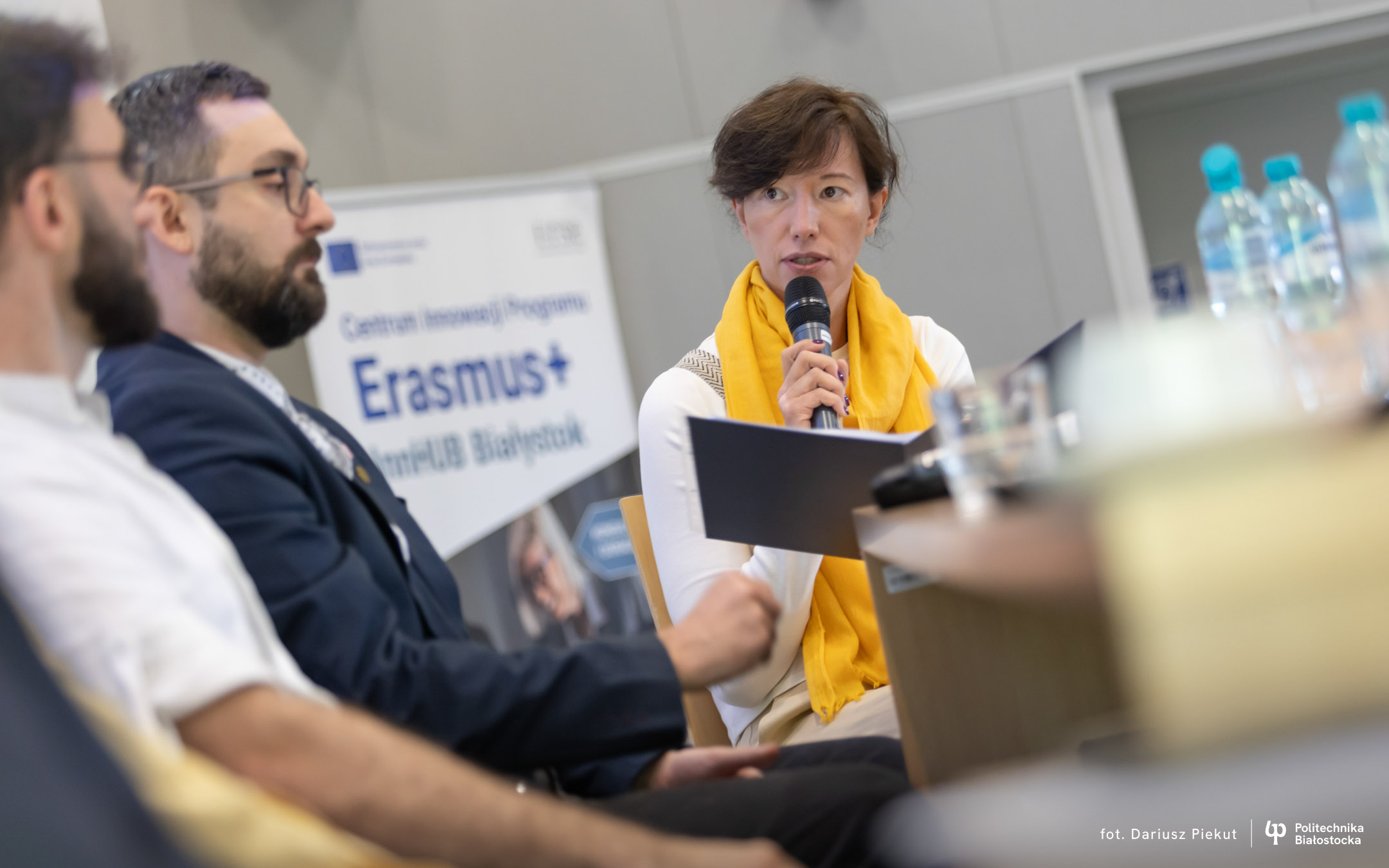
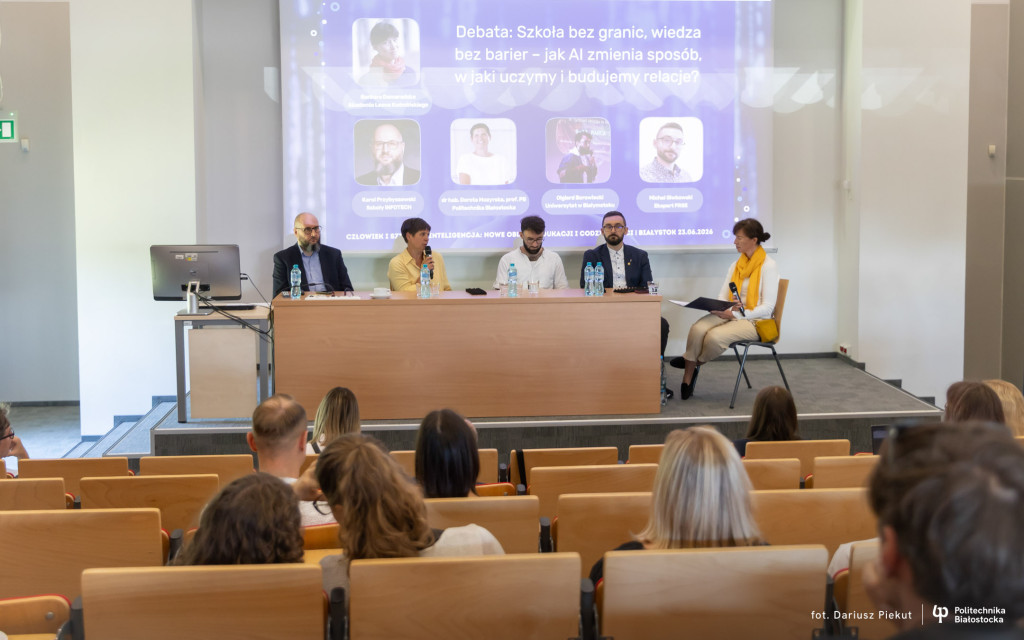
One of the highlights of the event was the debate entitled ‘A school without borders, knowledge without barriers – how AI is changing the way we teach and build relationships?’, involving secondary school teachers and academic staff. The representative of Bialystok University of Technology in the discussion was Assoc. Prof. Dorota Mozyrska, DSc, PhD.
– Artificial intelligence is redefining the teaching and learning process. It is an excellent tool supporting teaching – from creating materials and assignments to generating quizzes – emphasises the Dean of the Faculty of Computer Science at Bialystok University of Technology. – However, this requires us to change the way we verify knowledge and to adopt a fresh approach to achieving learning outcomes. This is an ongoing process; there is no single perfect definition of these changes. In a way, however, we are returning to the roots of education from 2,400 years ago – to the Socratic school of thought and the art of asking the right questions.
Students value human mentors over algorithms
As many as 70% of young people do not verify content generated by artificial intelligence. Is the situation similar among students? As it turns out, local and international studies provide encouraging results.
Together with universities from Greece, Romania and Portugal, Bialystok University of Technology is implementing the international MAESTRO-AI project, which aims, among others, to develop specialist textbooks and lesson scenarios for academic staff. As part of the project, extensive surveys were conducted among students of STEM degree programmes.
The results showed that students approach AI-generated suggestions in STEM disciplines very critically and clearly prefer a human mentor. Young people often do not yet know how to effectively verify answers generated by algorithms – in this area, it is the teacher who has the necessary knowledge and experience.
– Using AI requires an understanding of the sources of information and how they can be used. Artificial intelligence tools expand access to information, but they do not replace knowledge – therefore, the role of the teacher as a mentor and guide remains unchanged – says Assoc. Prof. Dorota Mozyrska, DSc, PhD. – Today, we need to teach in two directions: on the one hand, traditional foundations, such as coding, and on the other – effective use of technology, while placing particular emphasis on developing critical thinking skills.
Artificial intelligence and higher education
Bialystok University of Technology responds to the educational challenges of a world shaped by modern technologies, where the ability to process data, use AI tools and remain constantly aware of cybersecurity threats is becoming increasingly important.
To work effectively with modern technologies, knowledge of mathematics and statistics is essential, particularly in data-driven degree programmes such as the Data Science degree programme at Bialystok University of Technology.
– In fact, we need to start with probability theory and statistics, which we teach in our degree programmes. In the Data Science degree programme, we will teach these subjects in relation to the use of specific data warehouses, data analysis and, in particular, all kinds of probabilistic tools – says Assoc. Prof. Dorota Mozyrska, DSc, PhD.
Data Science is a modern degree programme at the Faculty of Computer Science of Bialystok University of Technology, which was added to the University’s educational offer in the 2025/2026 academic year. From October 2026, the University will launch another new programme – Cybersecurity. The programme will prepare highly sought-after specialists capable of effectively protecting IT systems against cyberattacks.
Why is studying still worthwhile?
In an era of widespread access to the internet, the question arises: why is studying still worthwhile?
The answer is simple: AI provides raw information, while higher education is about acquiring solid knowledge. This knowledge must first be gained in order to organise incoming information, critically analyse it, draw correct conclusions and know how to effectively apply it in everyday practice. These are precisely the essential skills that students of Bialystok University of Technology develop.
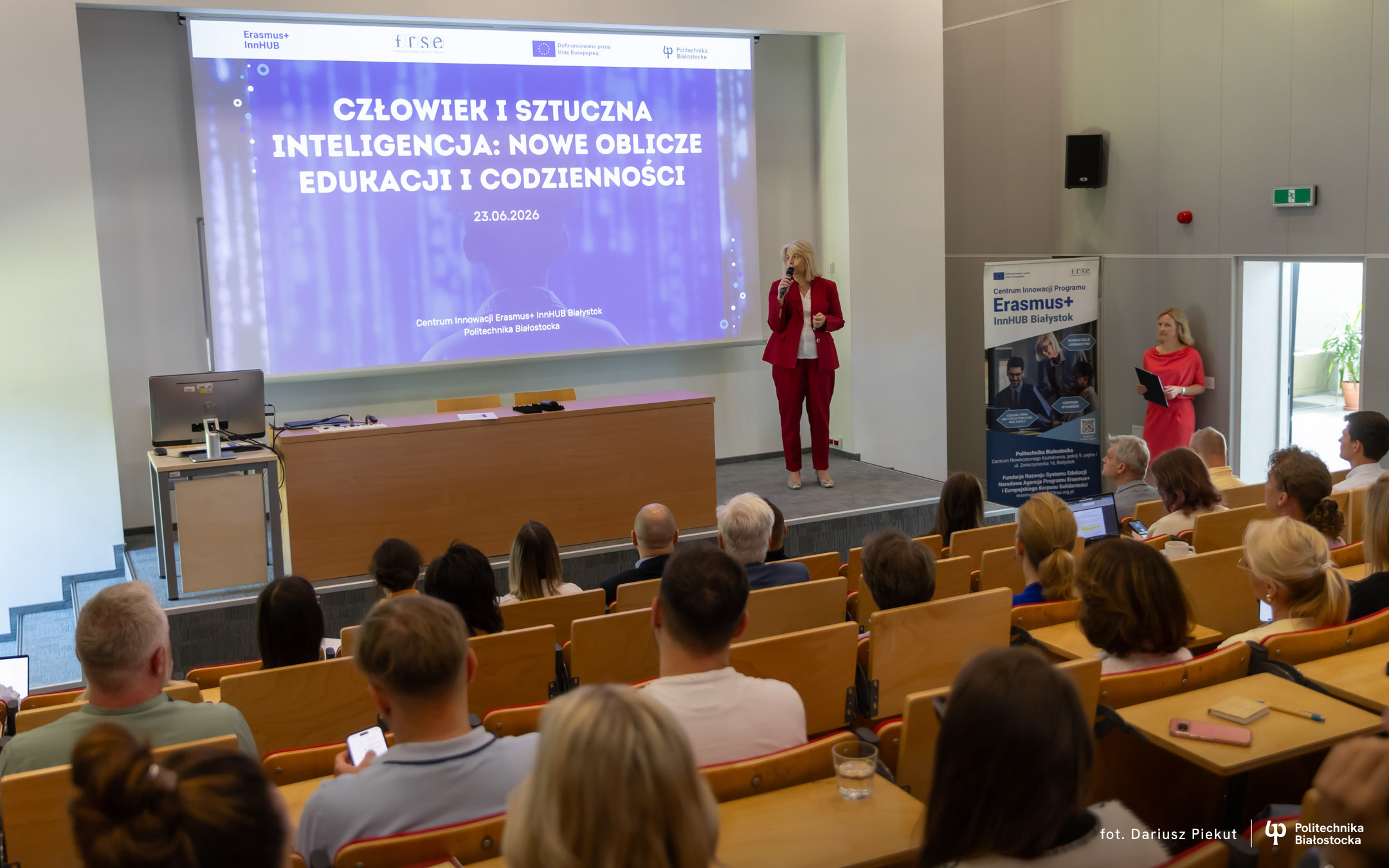
The conference ‘Human and Artificial Intelligence: A New Face of Education and Everyday Reality’ was held on 23 June 2026 at Bialystok University of Technology.
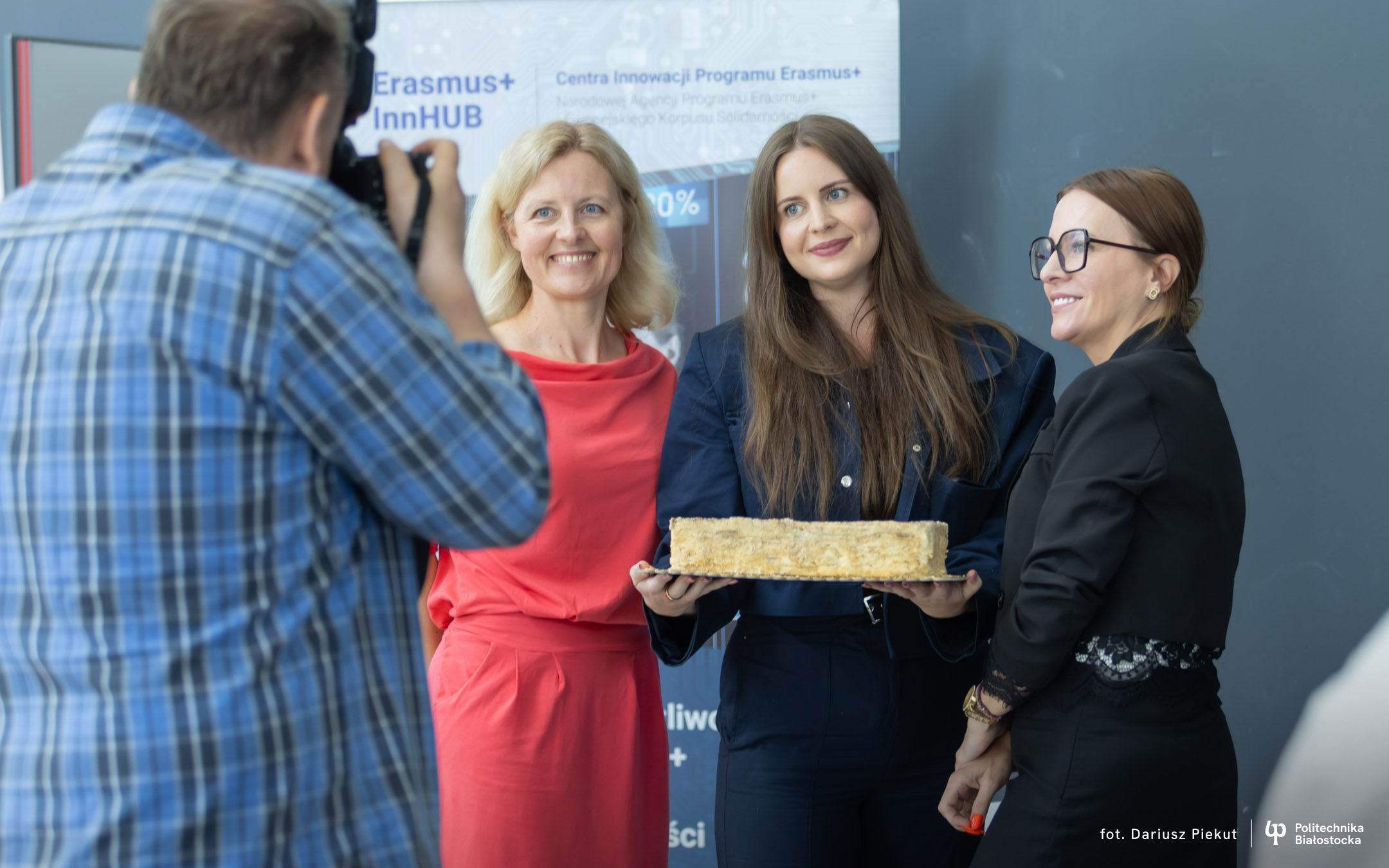
The event was organised by the Erasmus+ InnHUB Białystok Innovation Centre, the Foundation for the Development of the Education System (FRSE), the National Agency of the Erasmus+ Programme and the European Solidarity Corps, and Bialystok University of Technology.

Author: Magdalena Grzęda-Zajkowska
See the photo gallery: