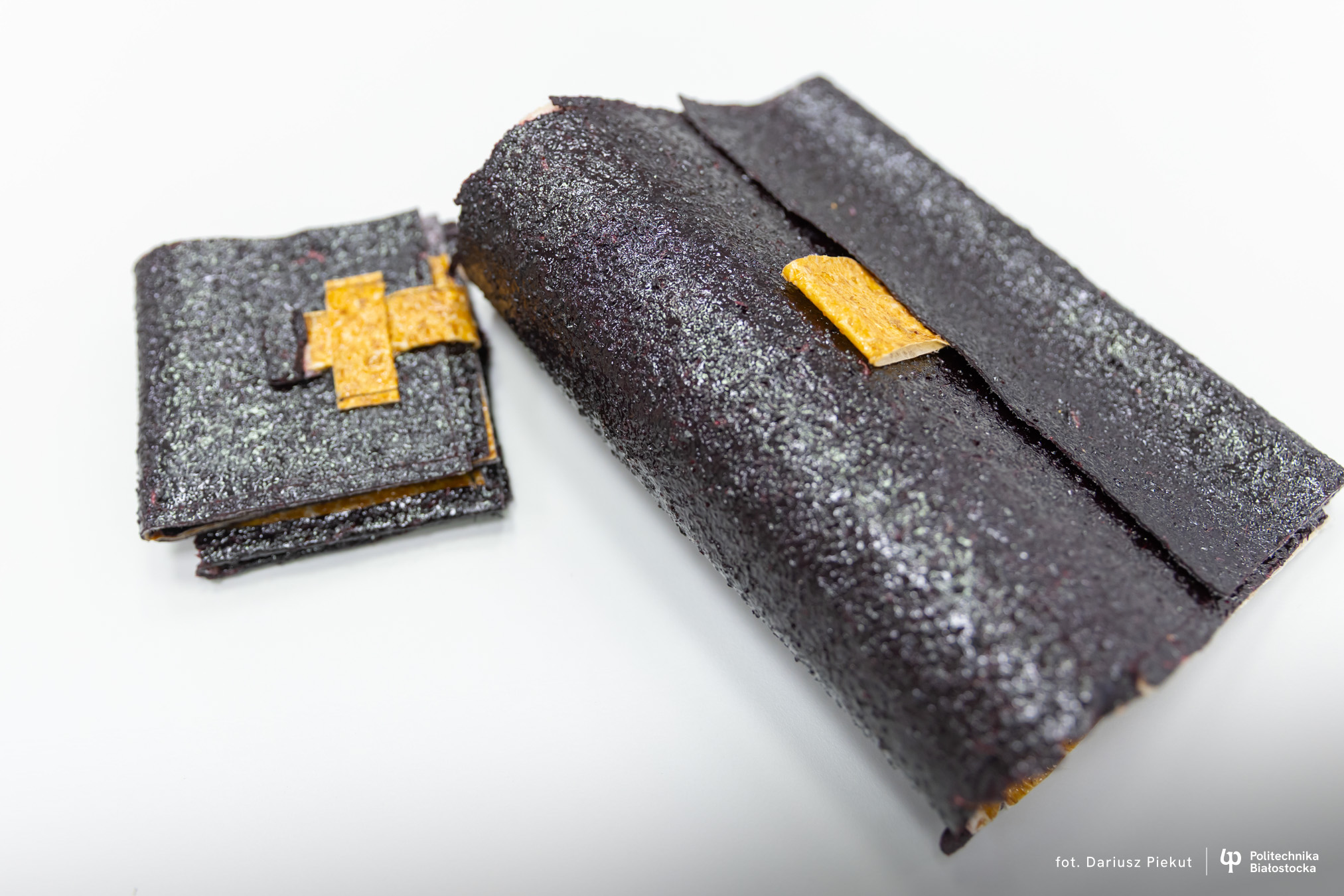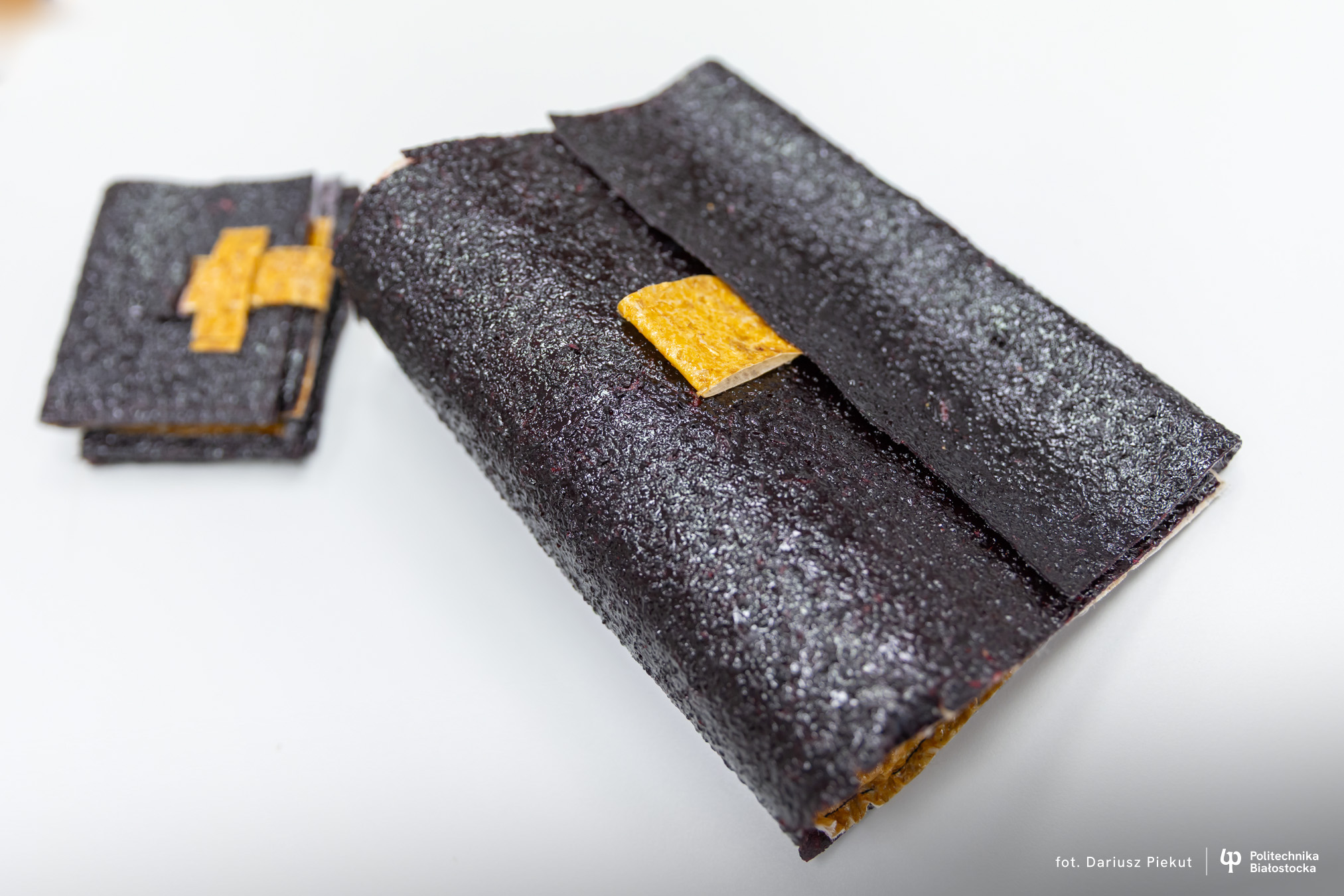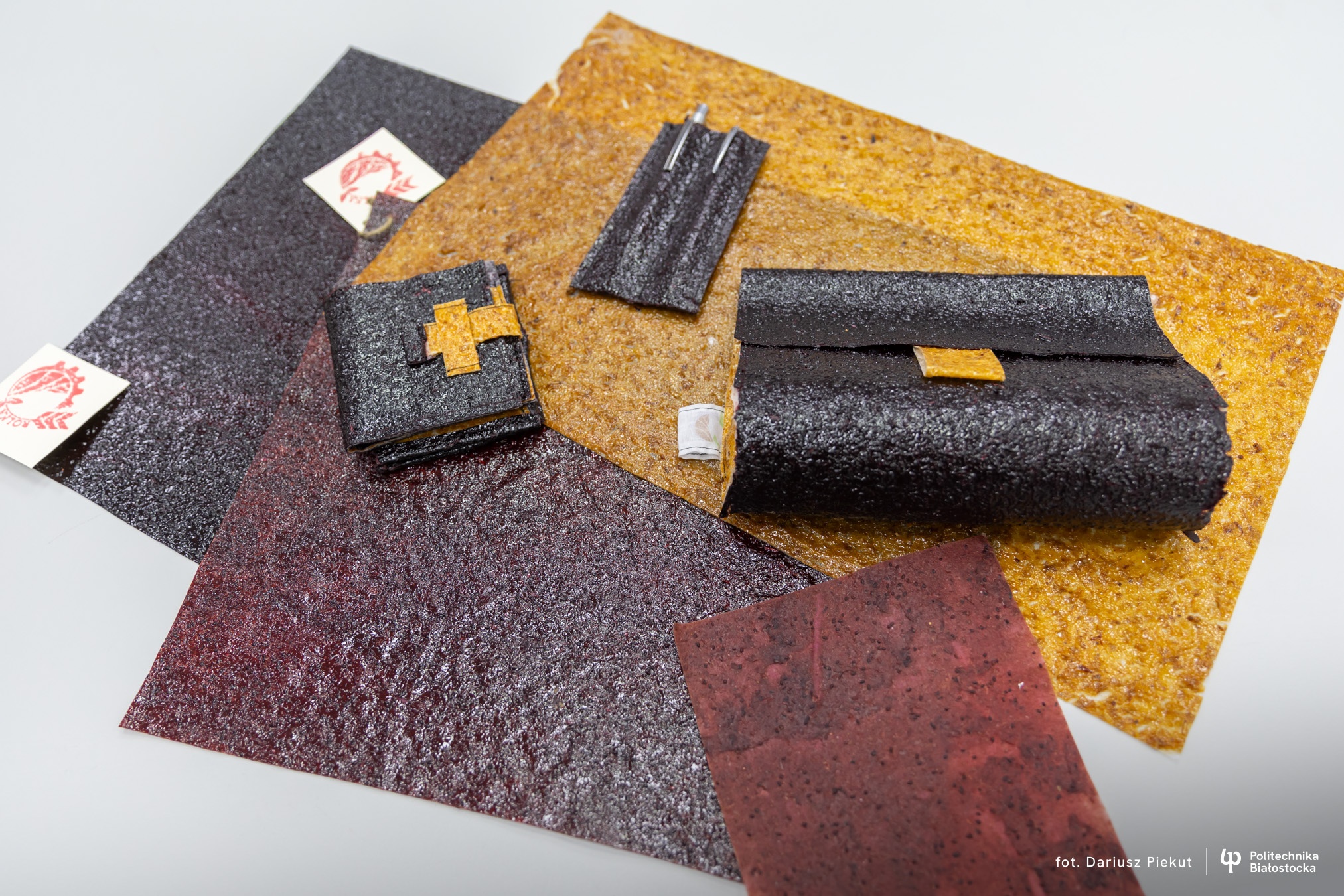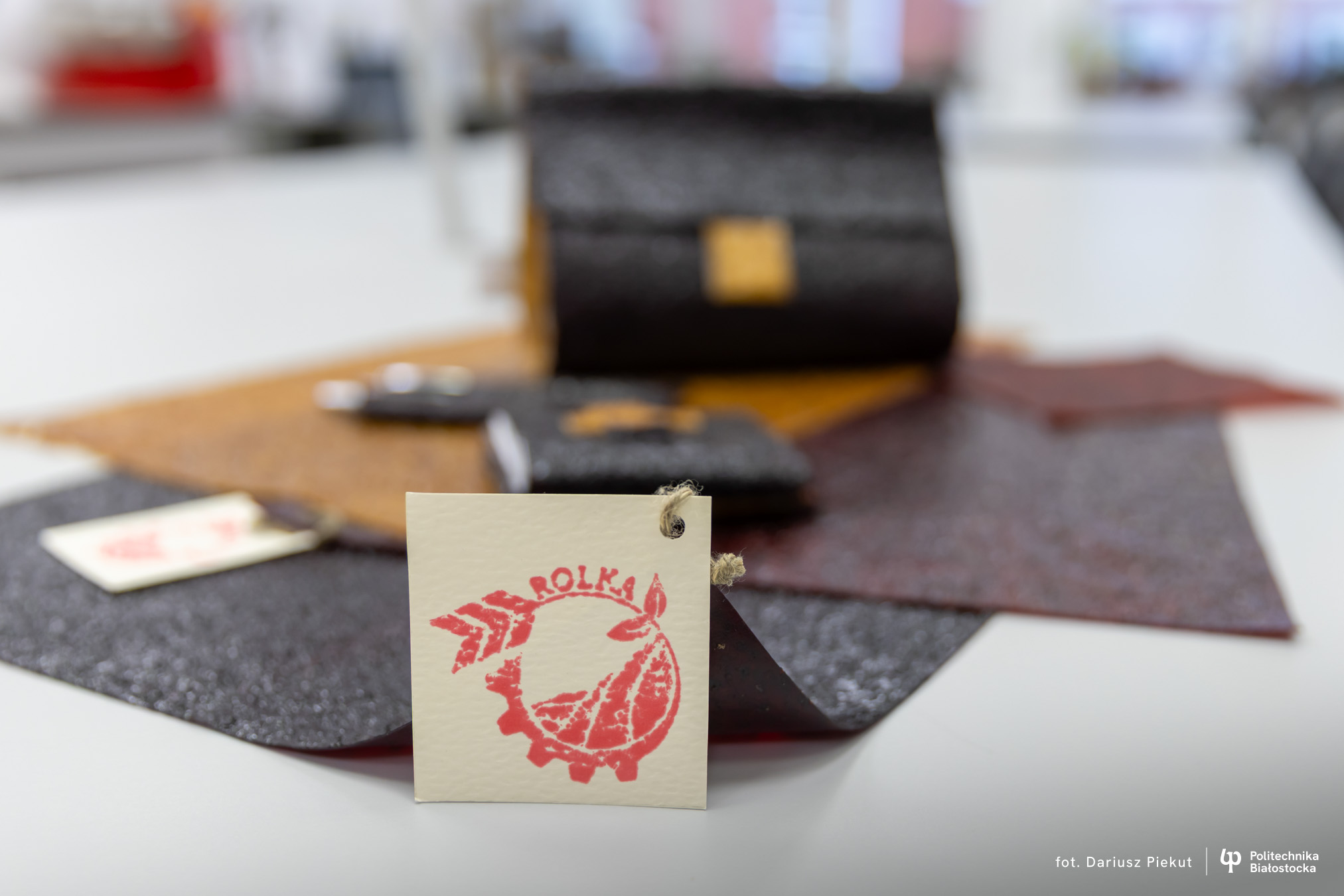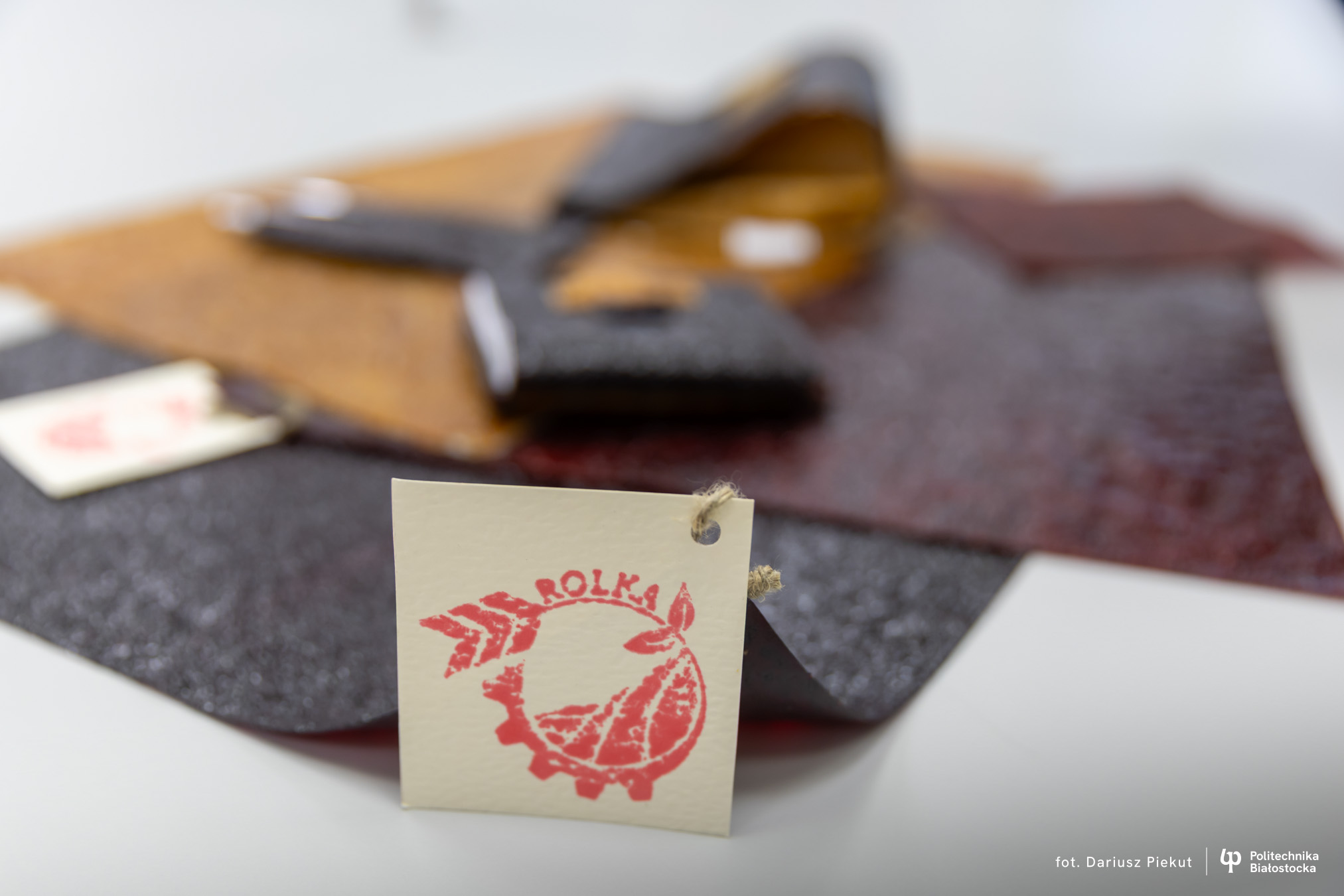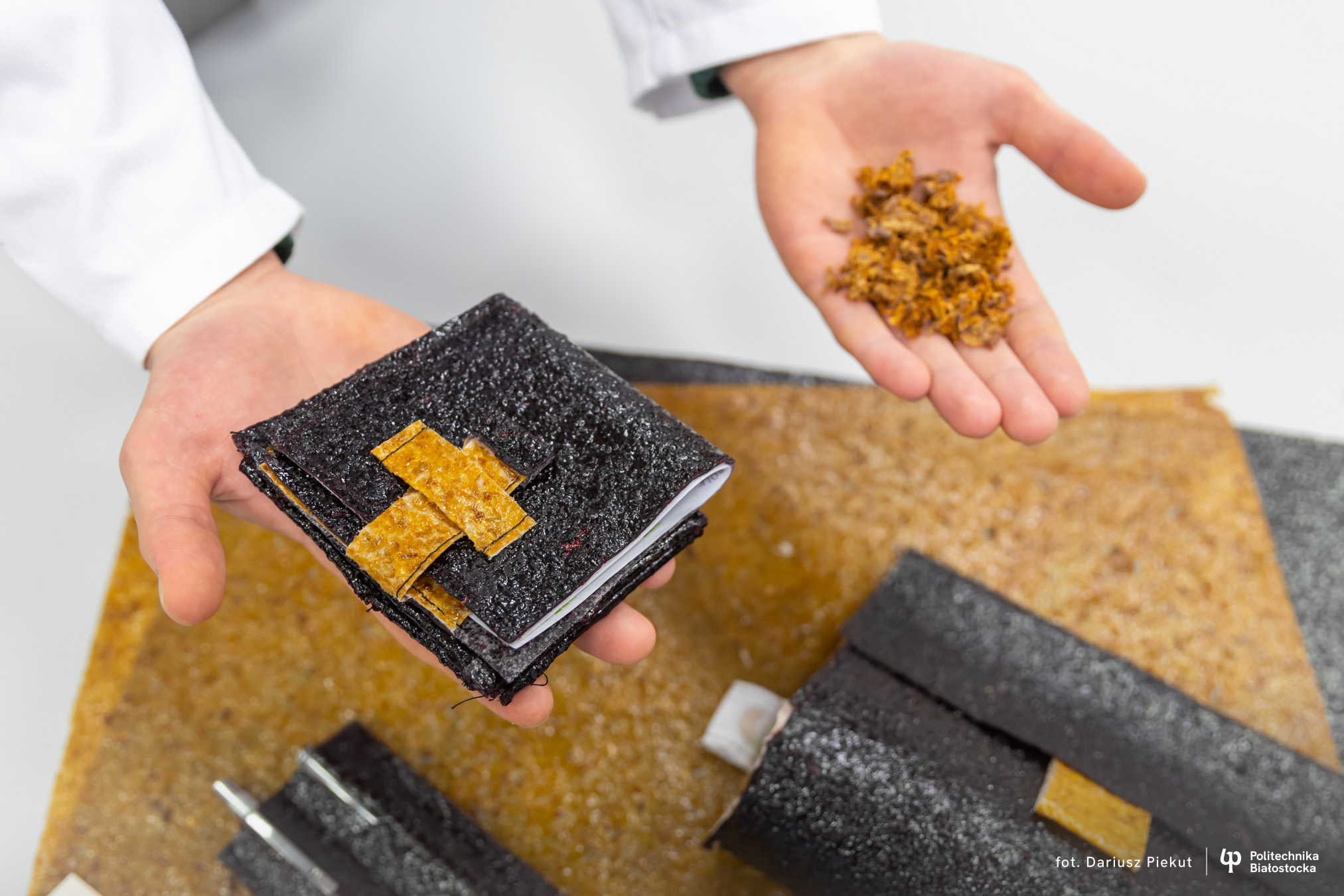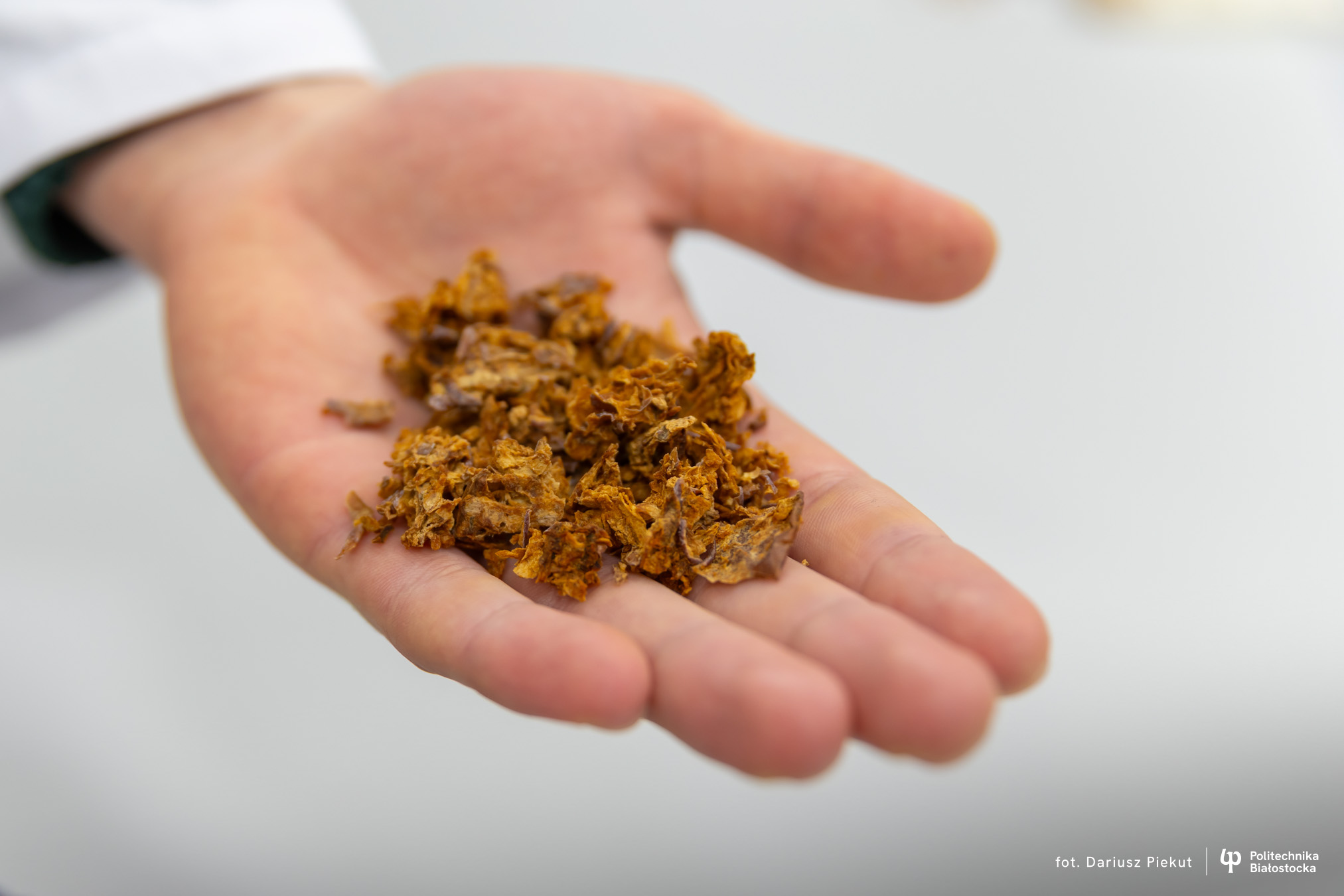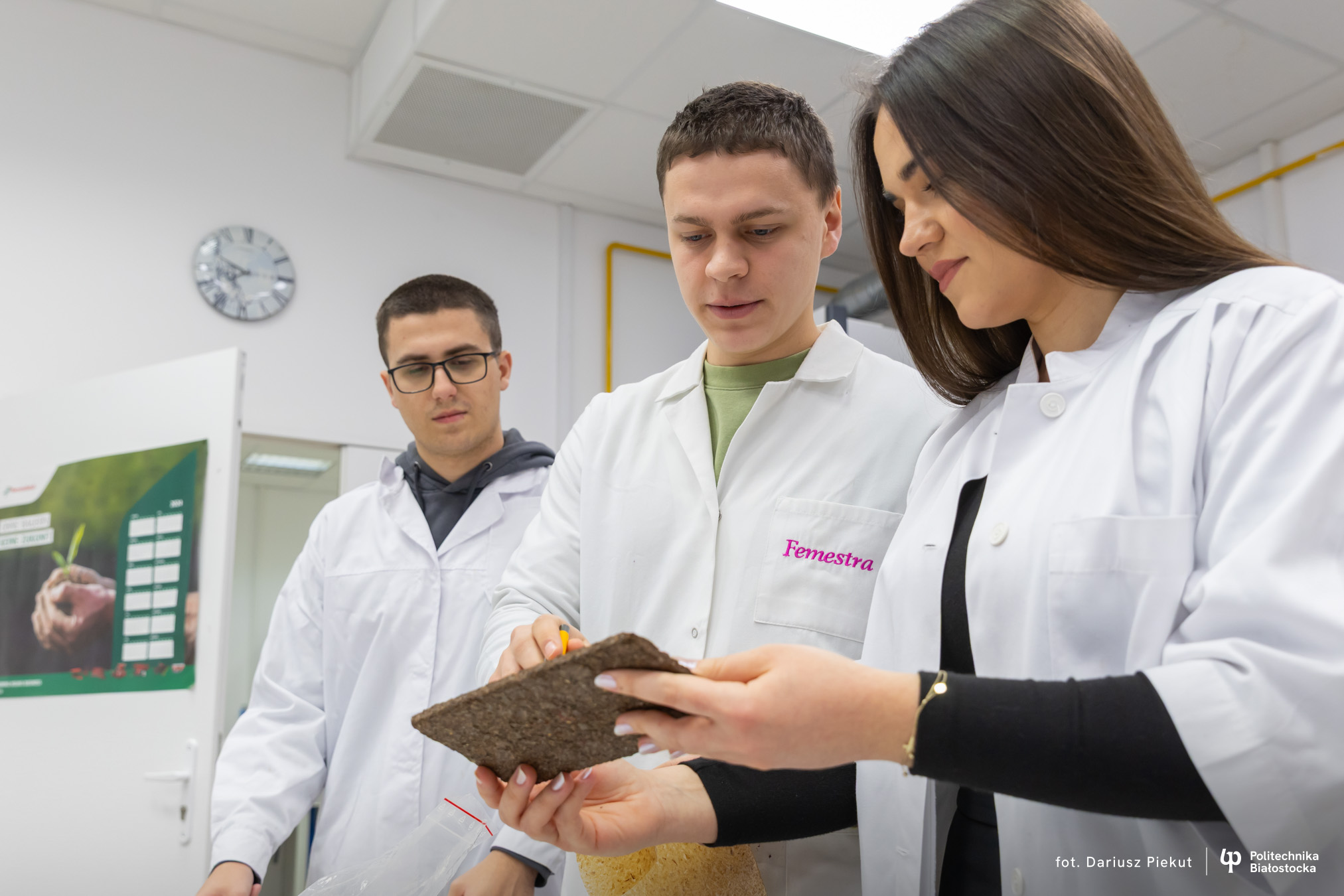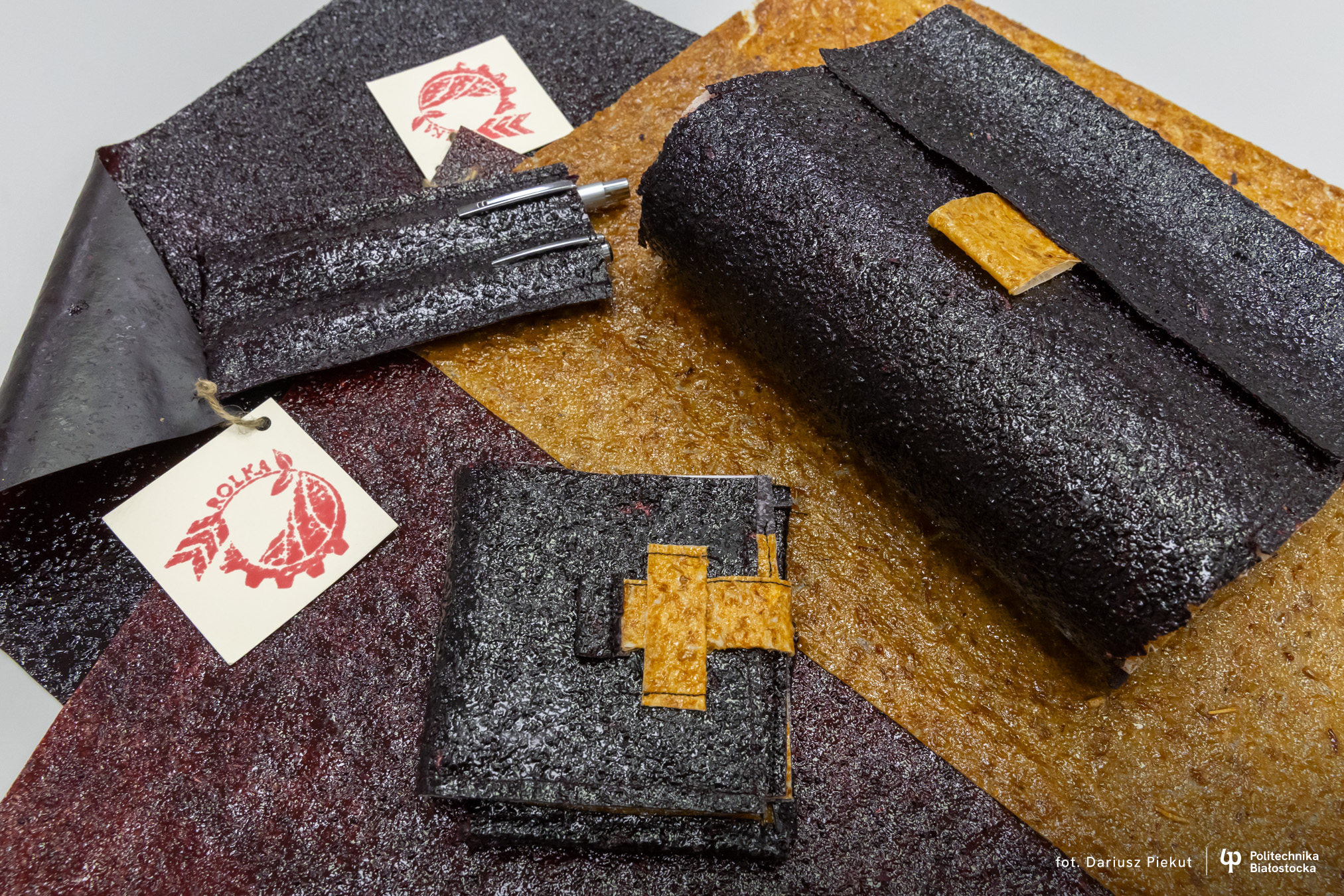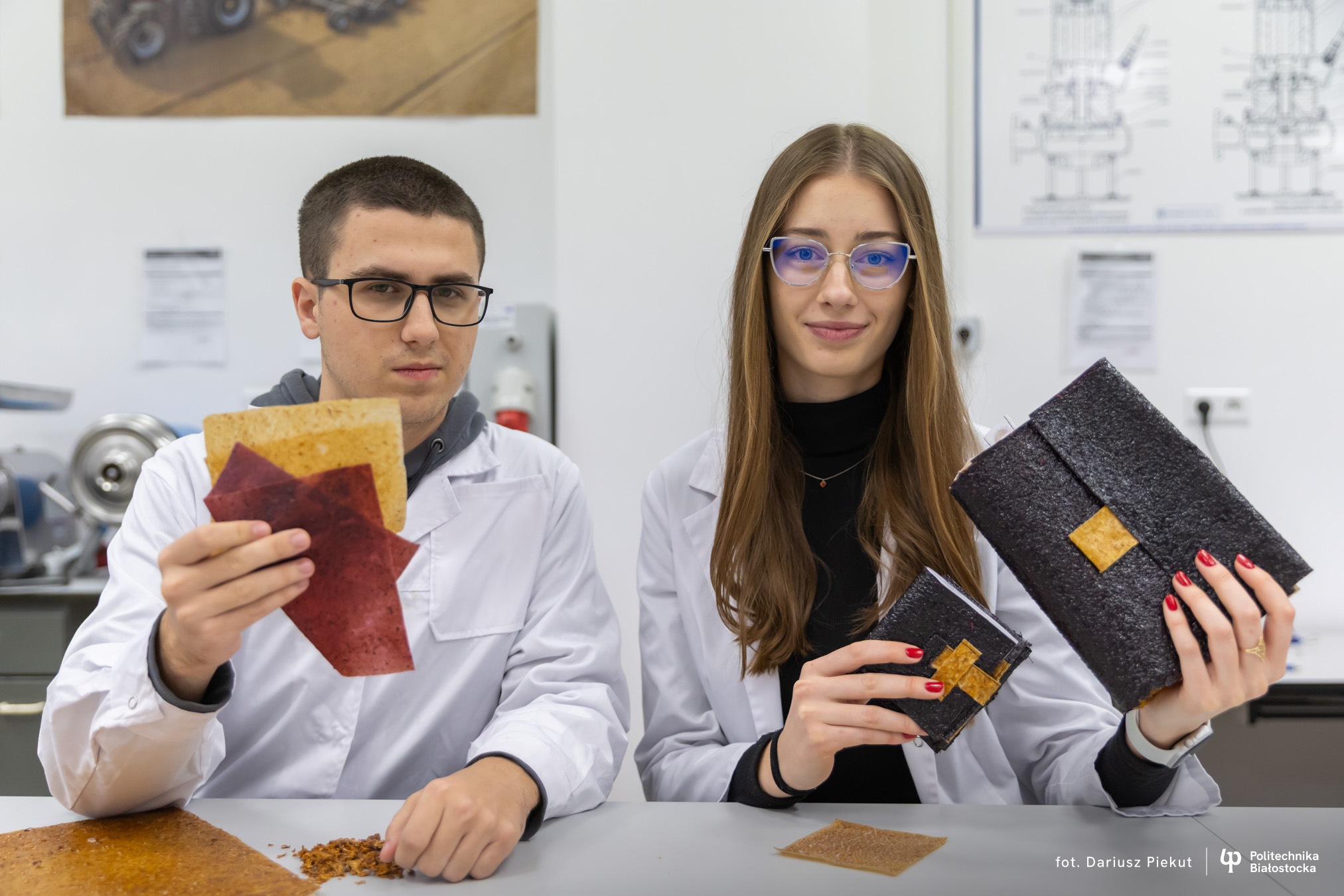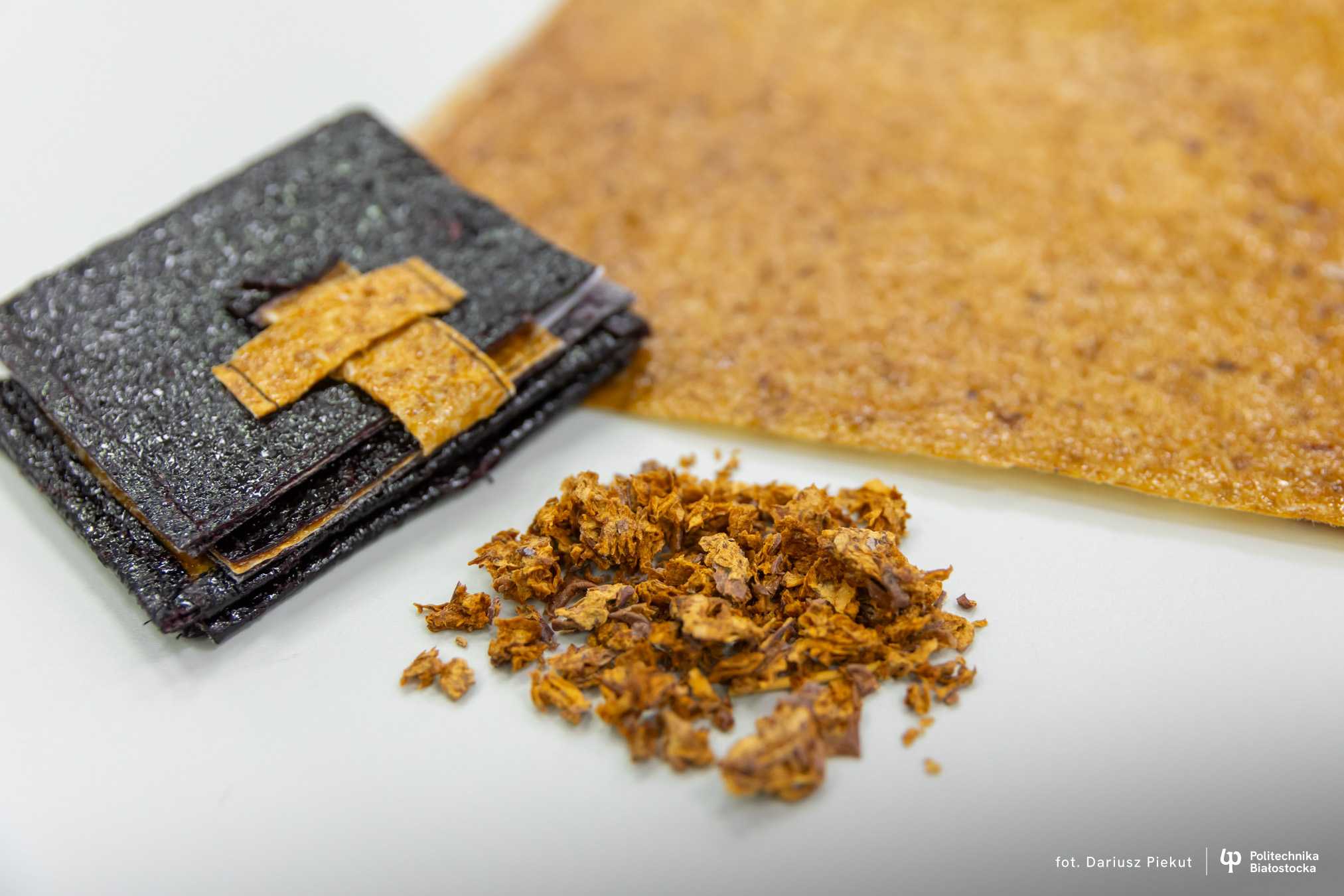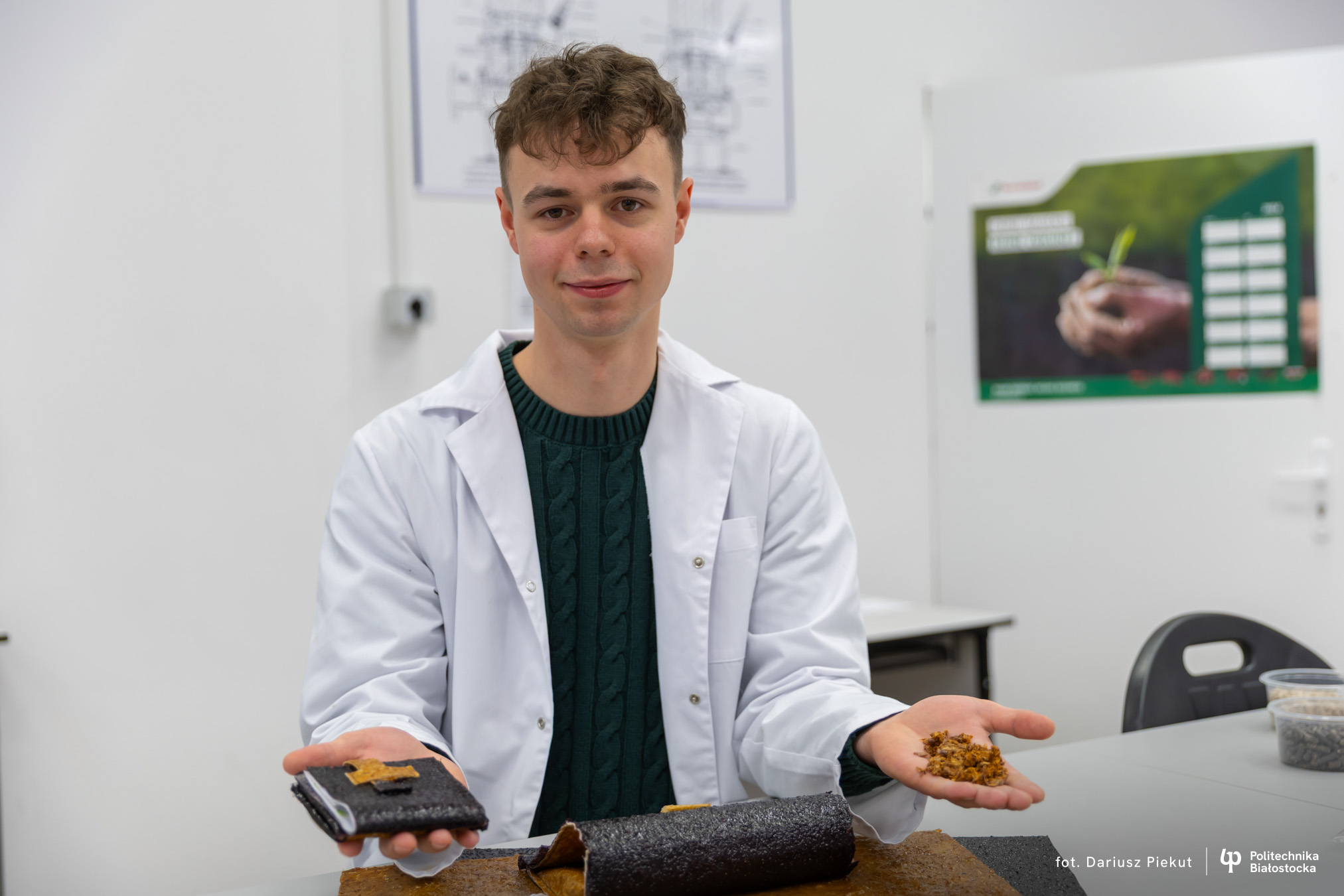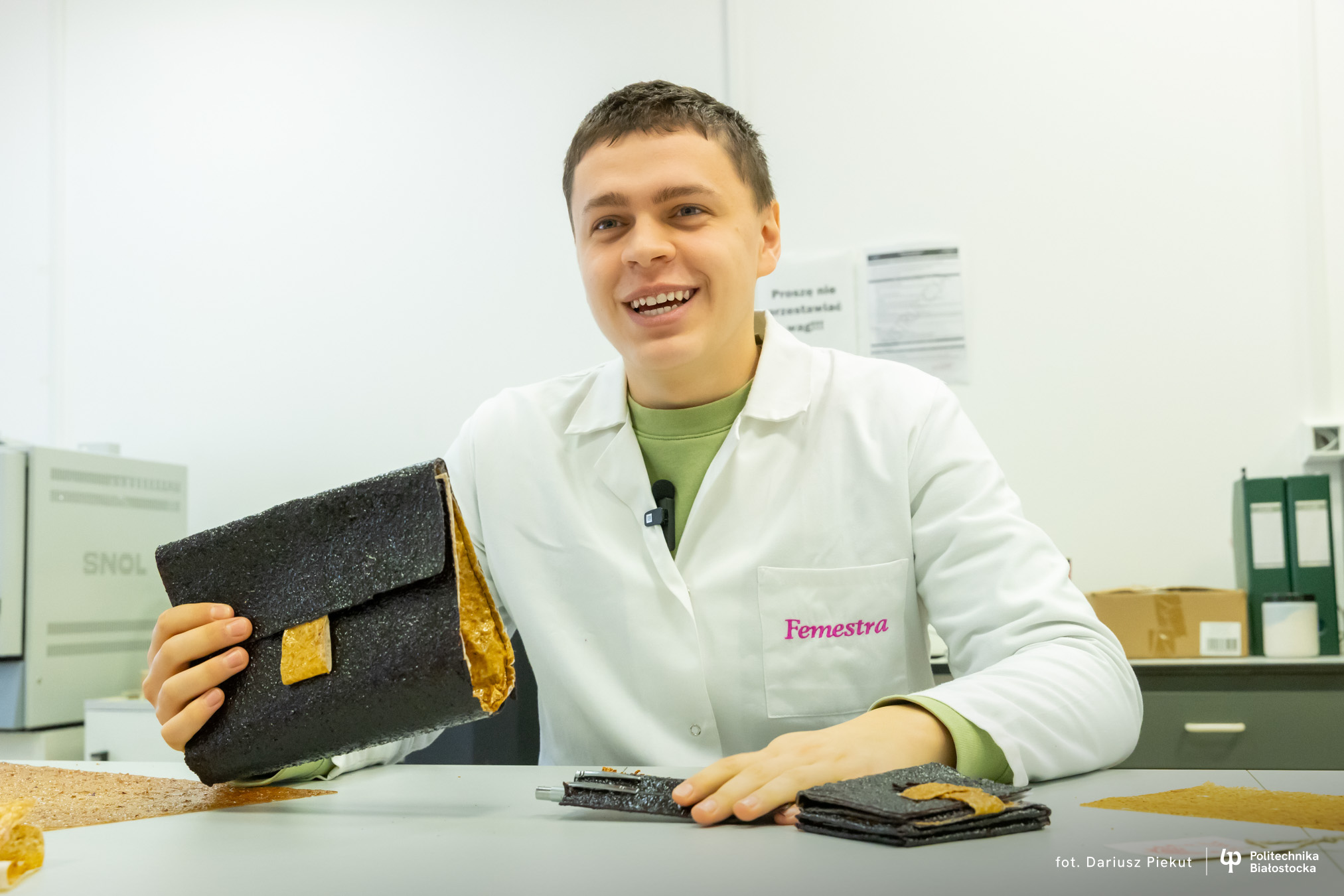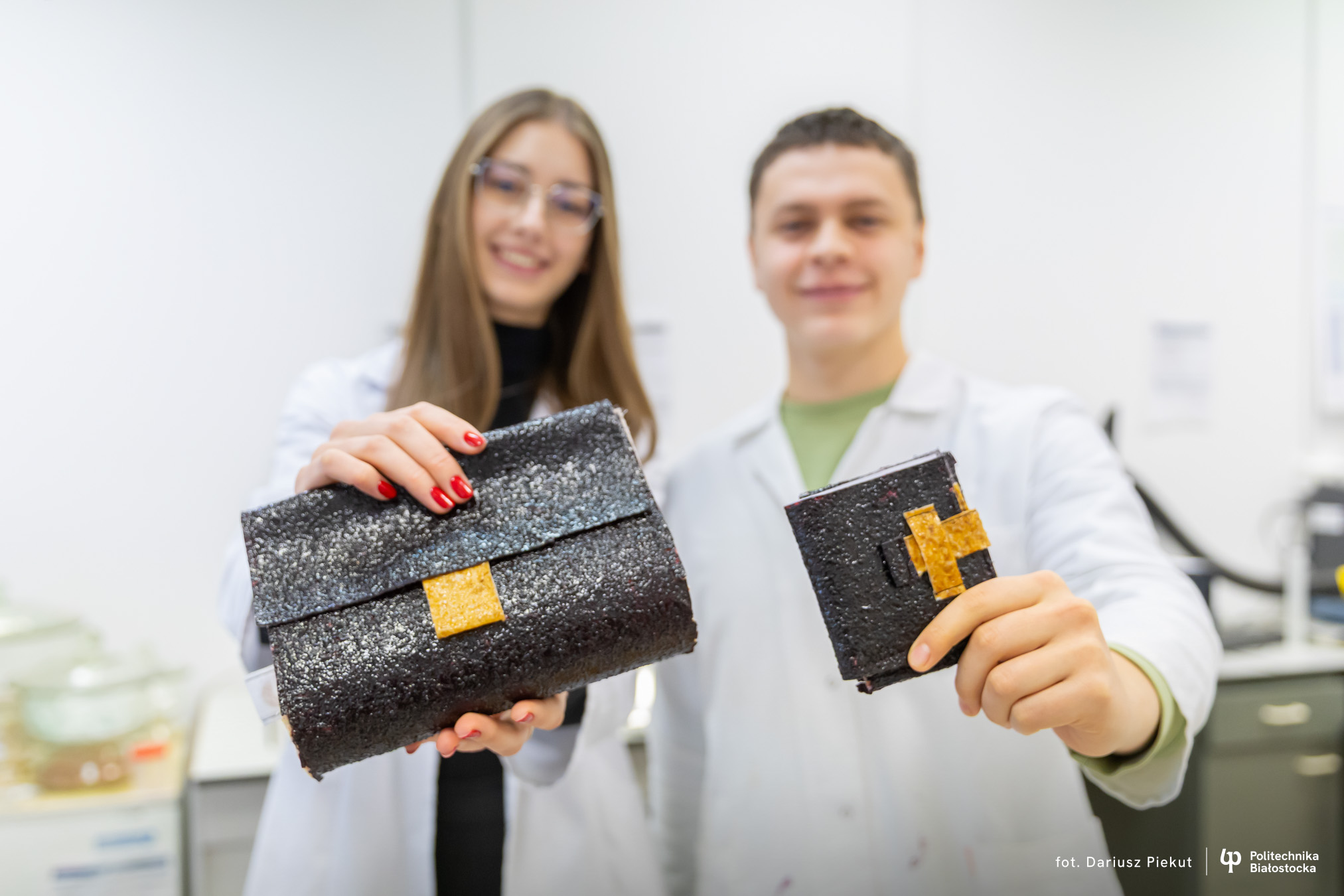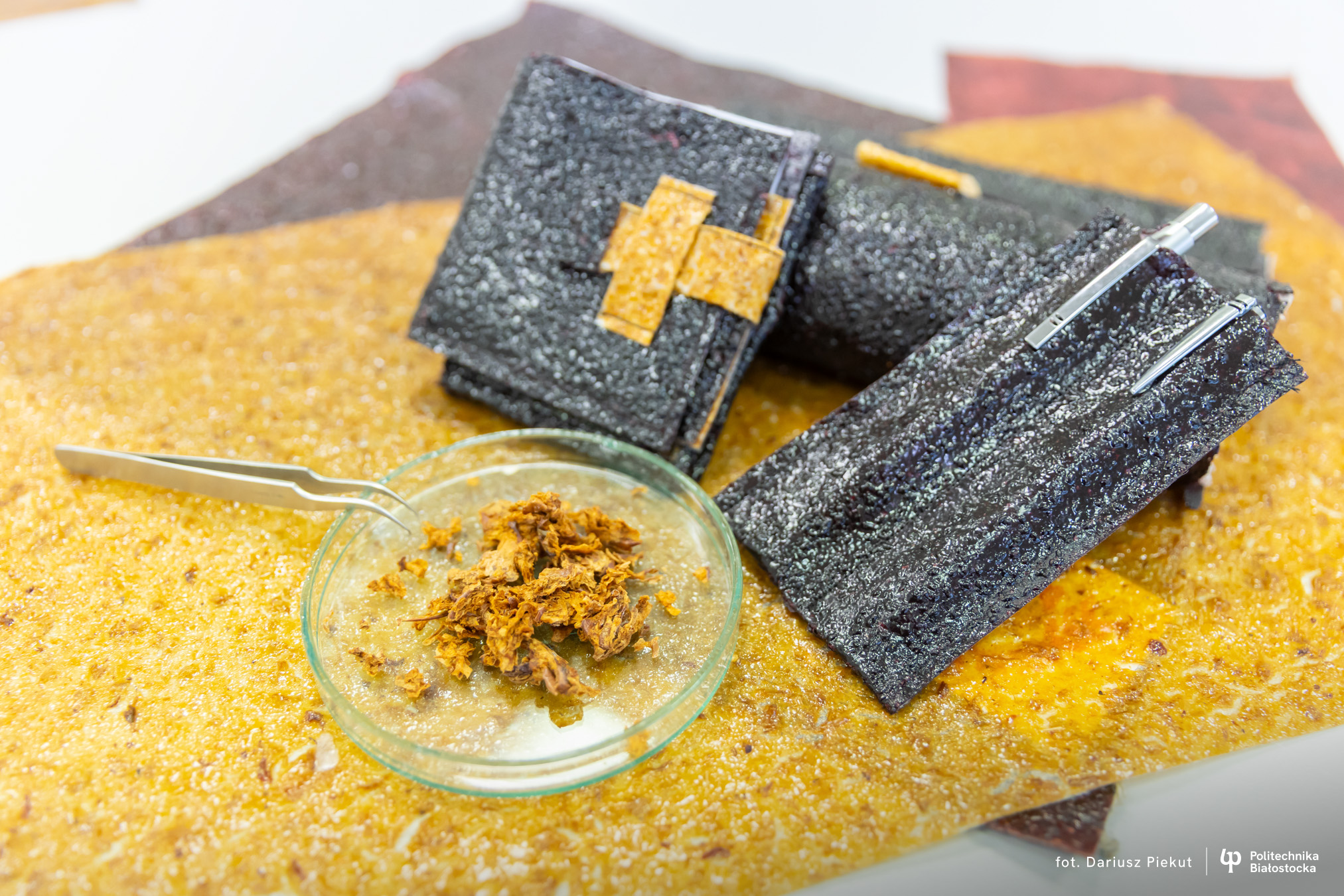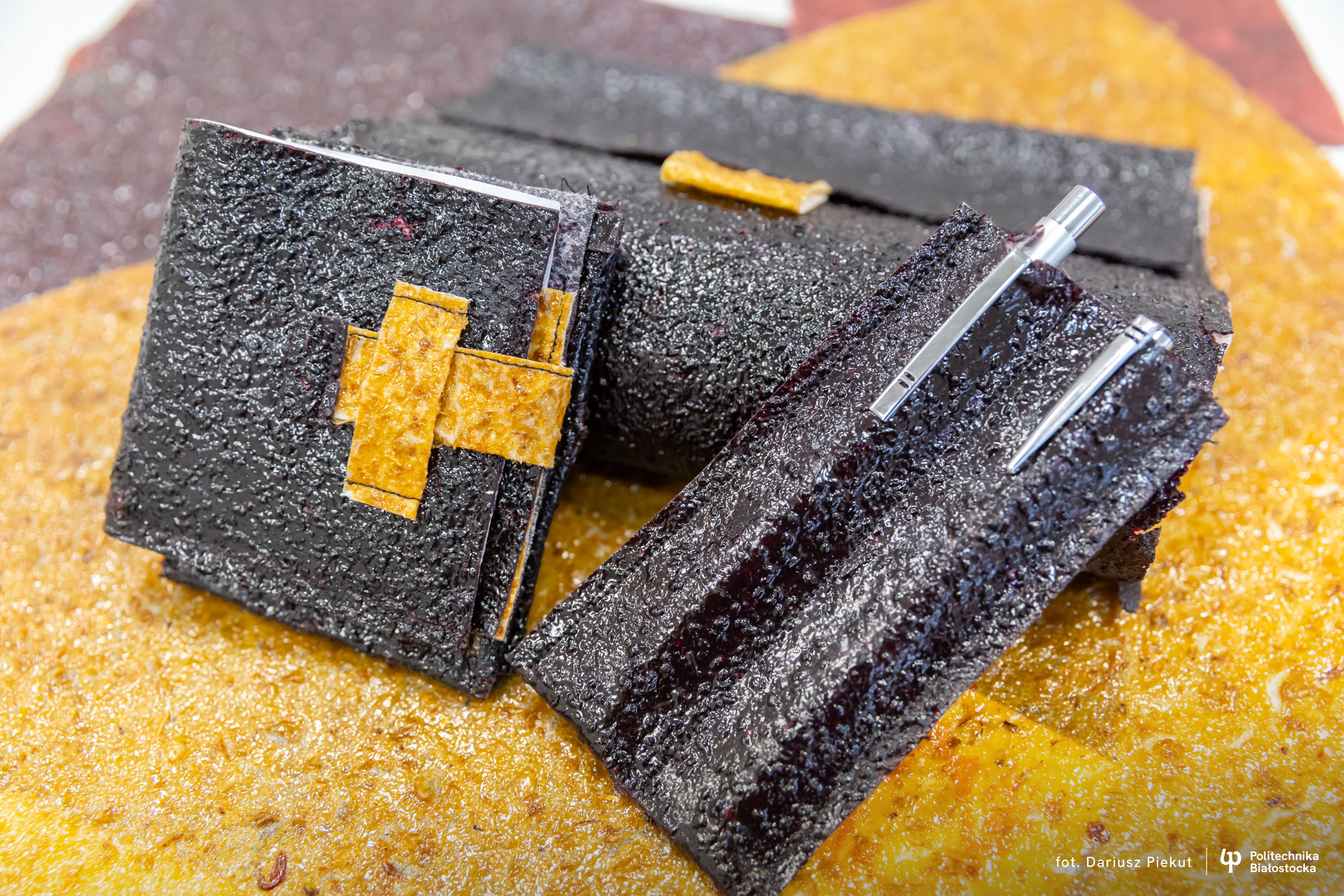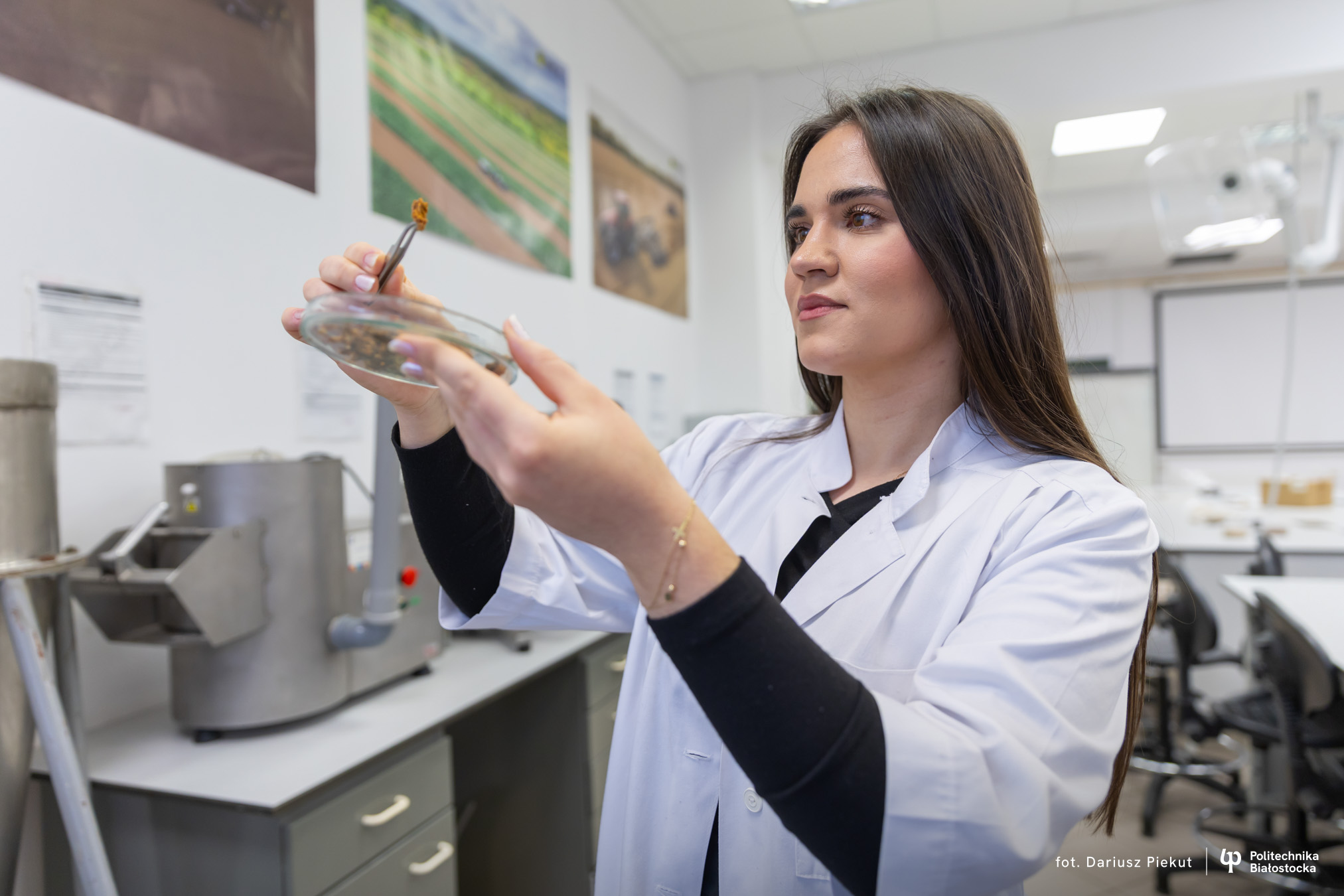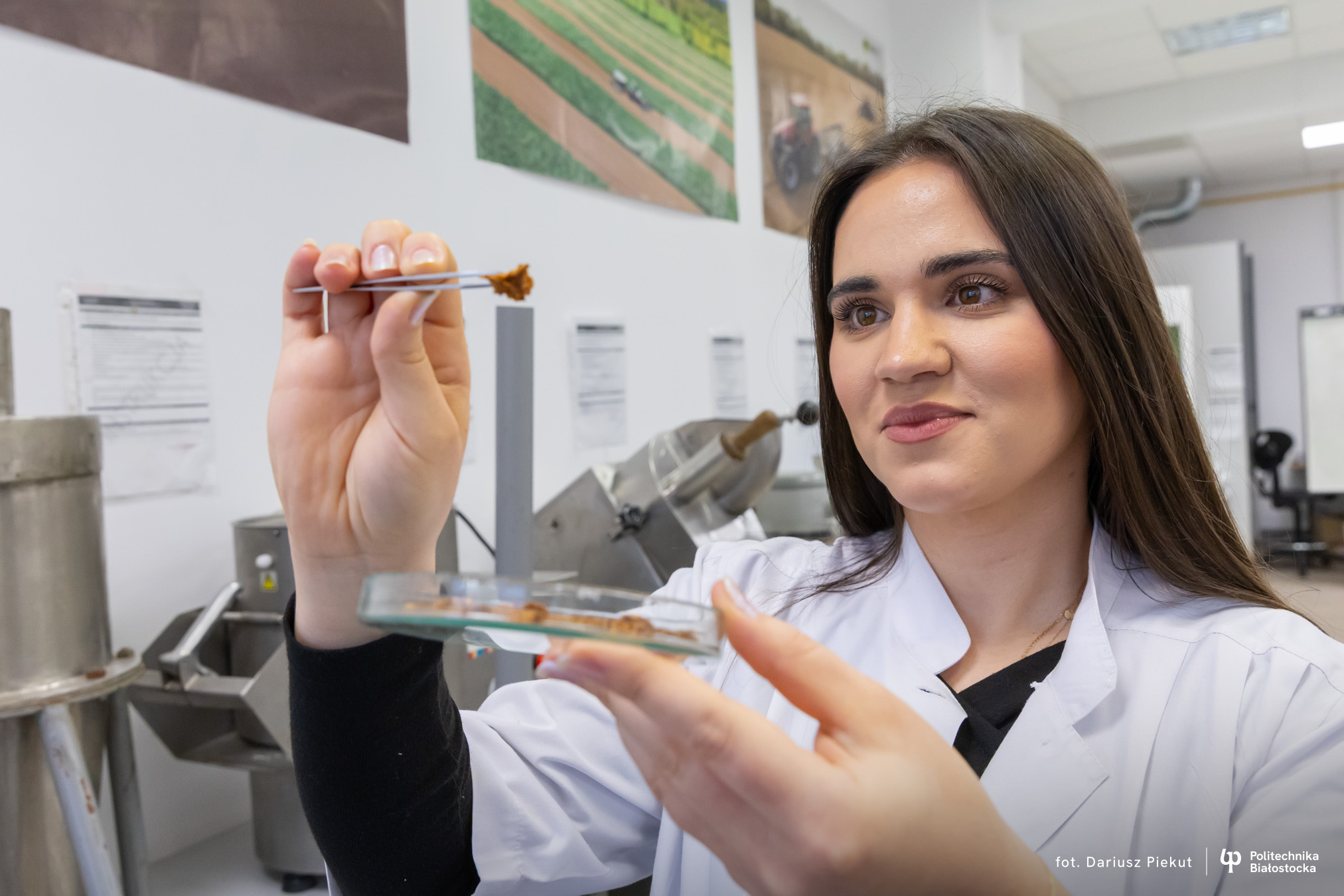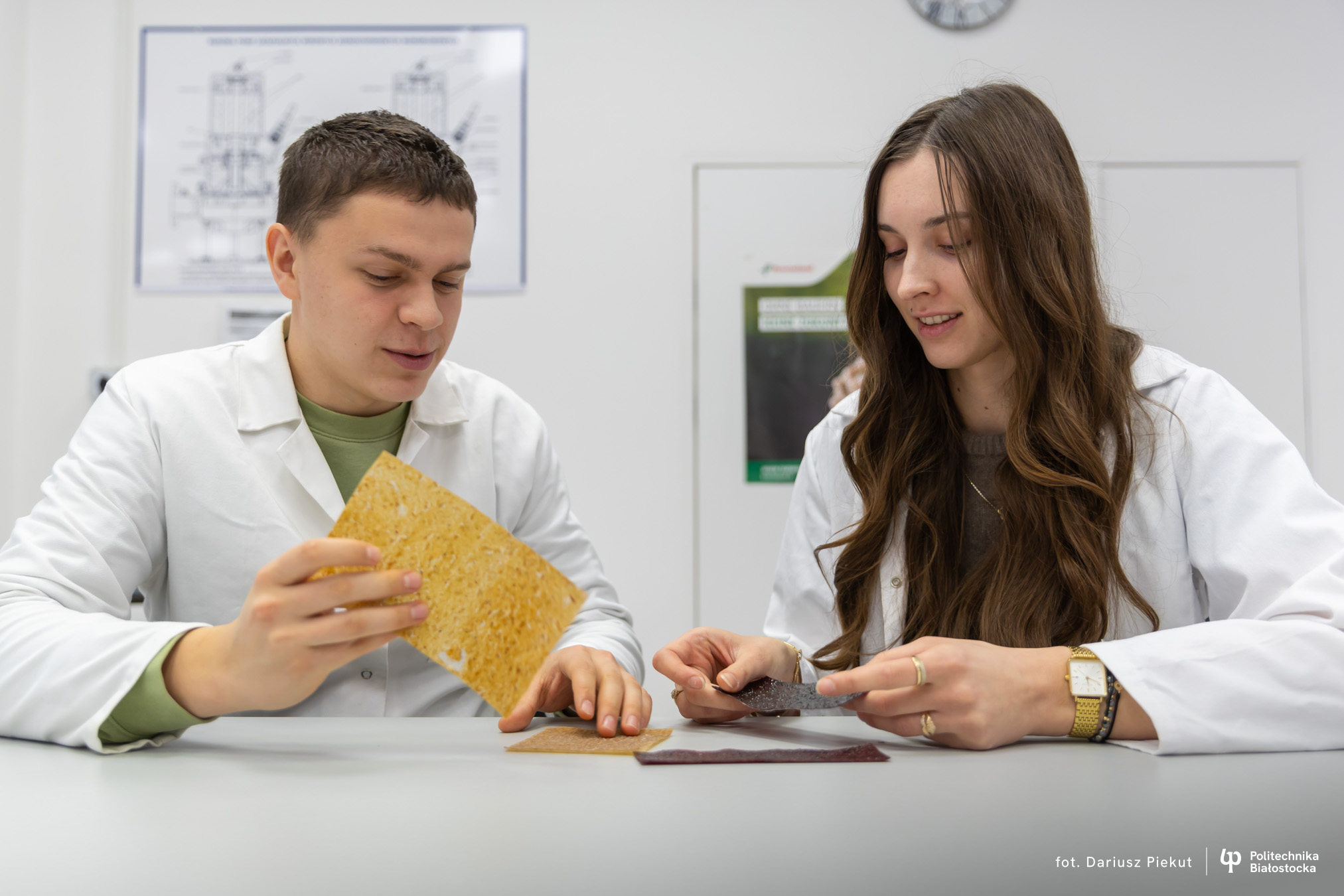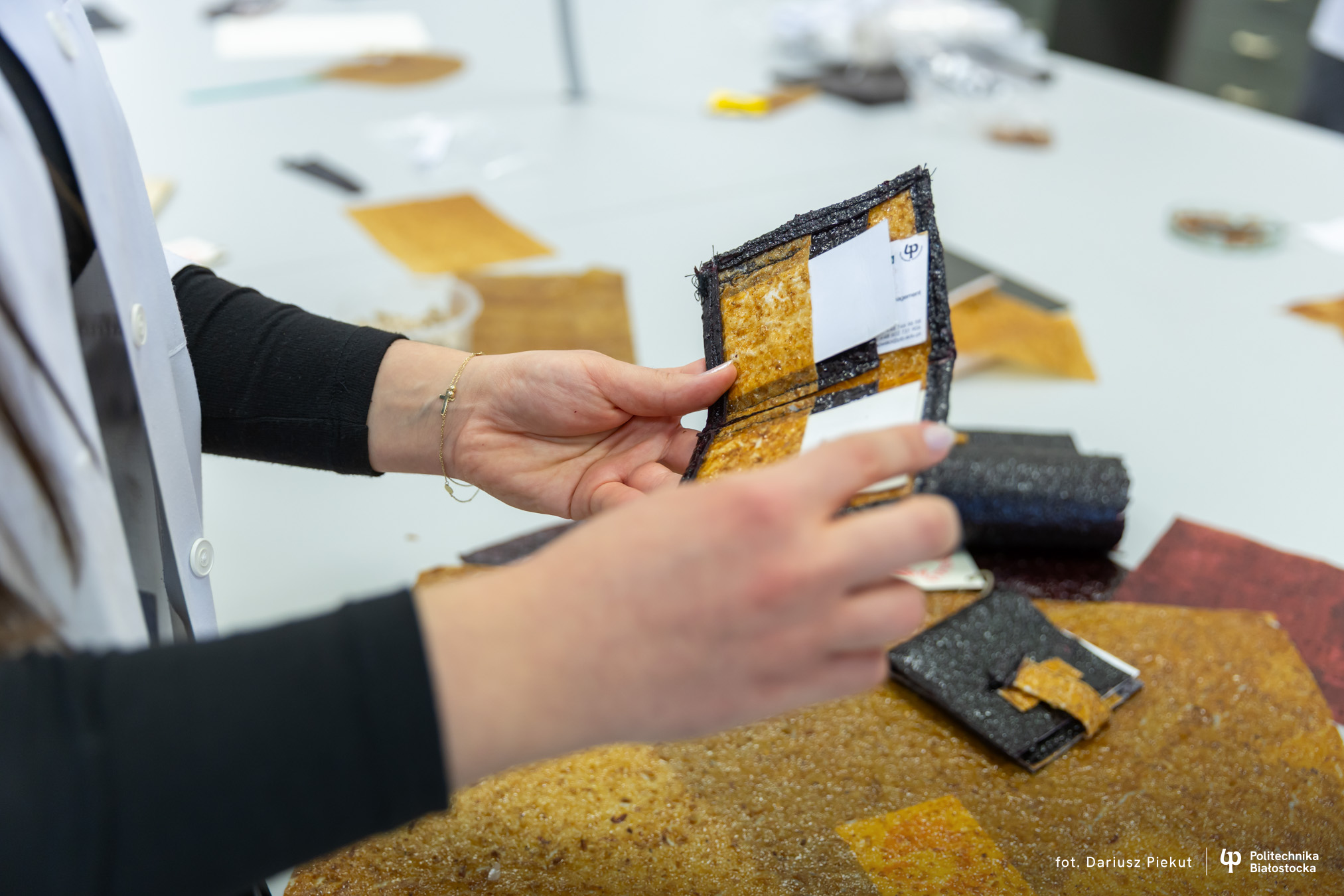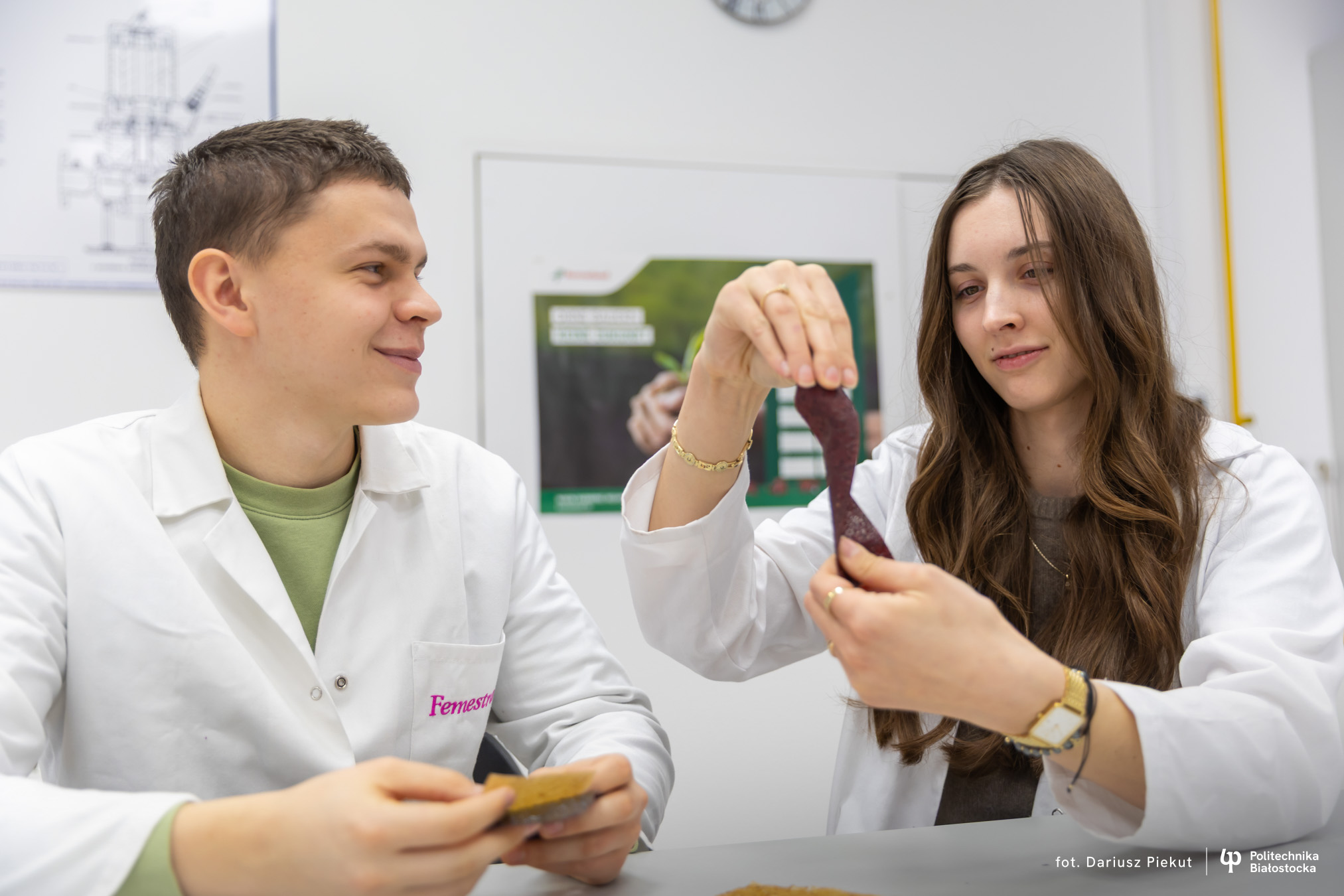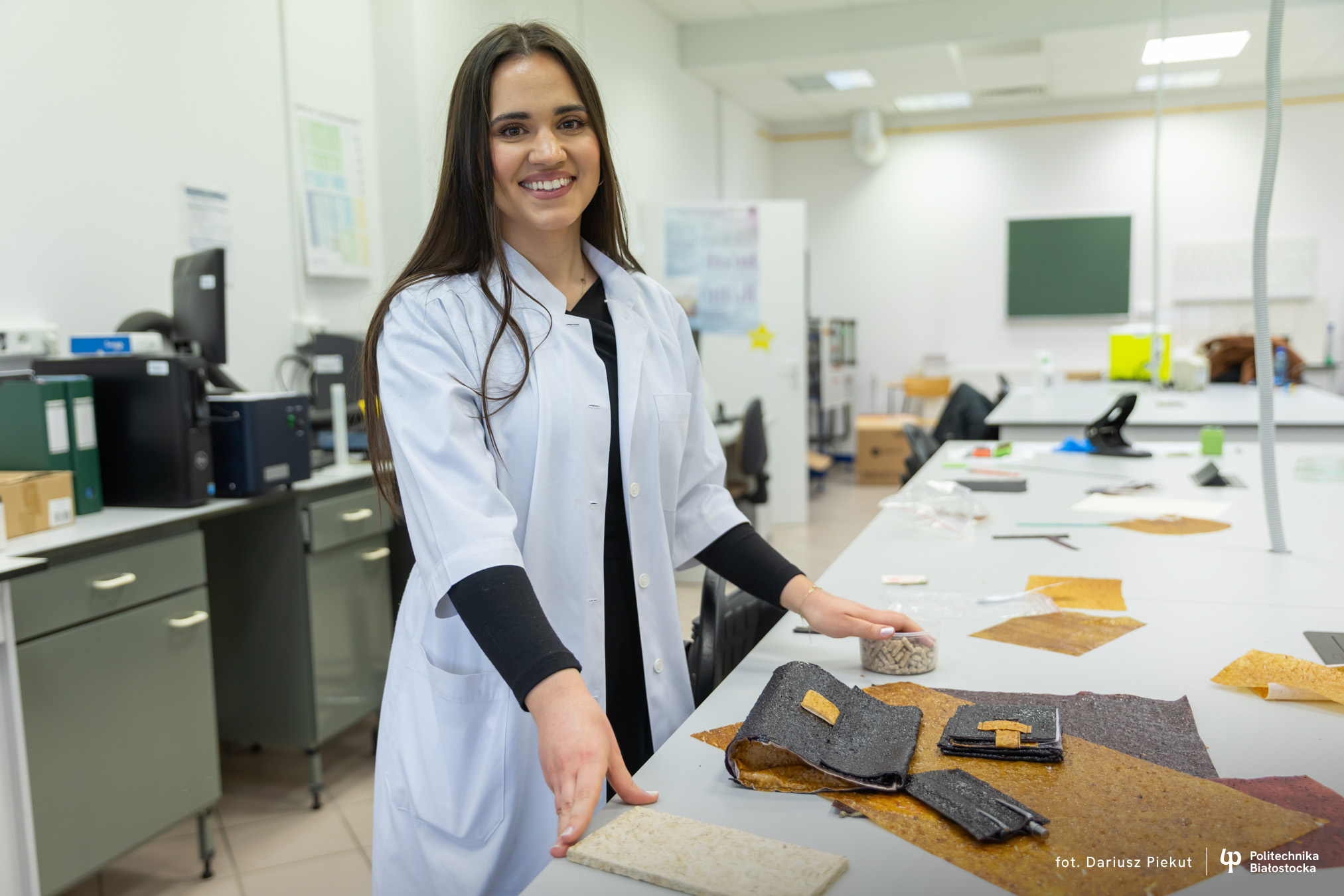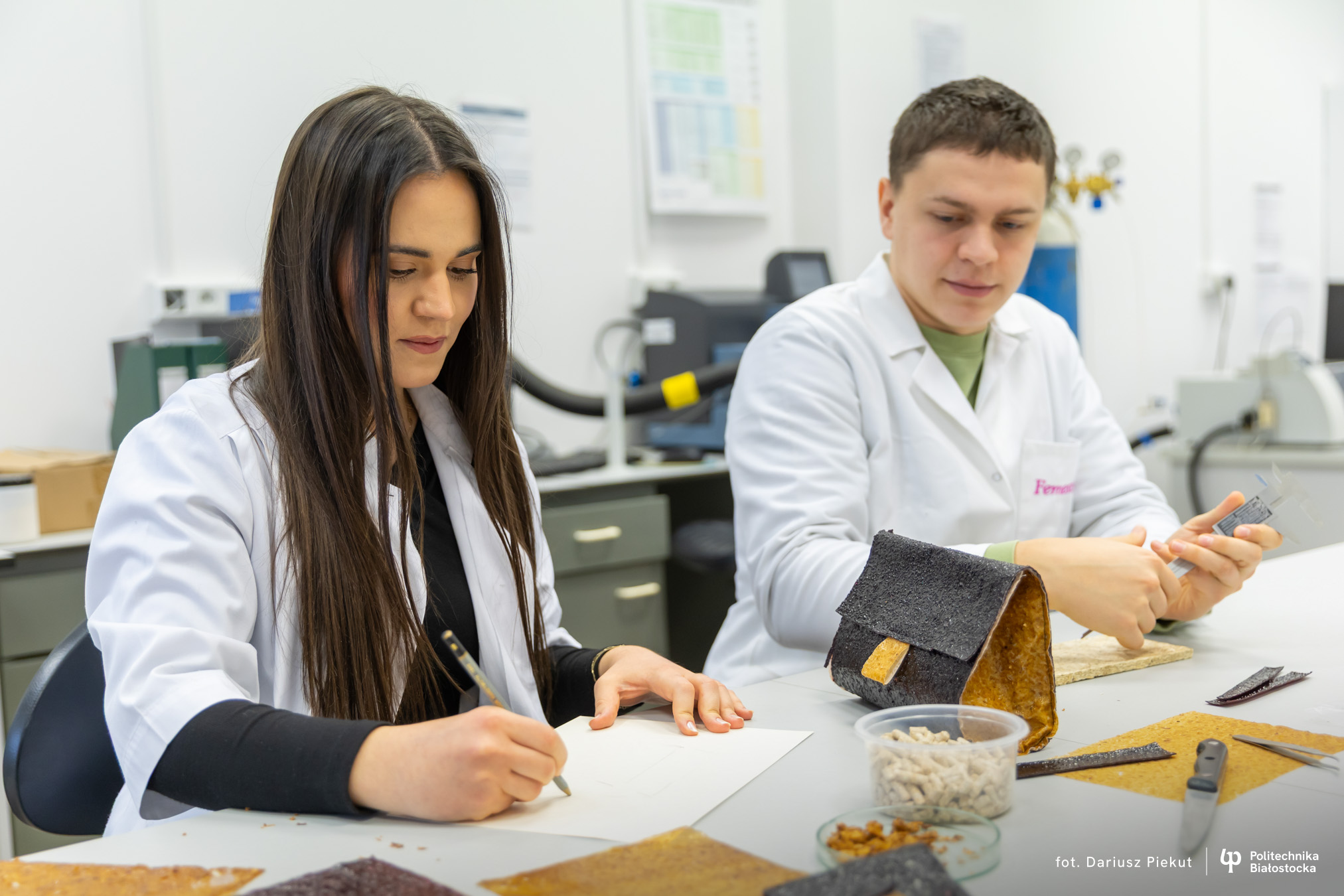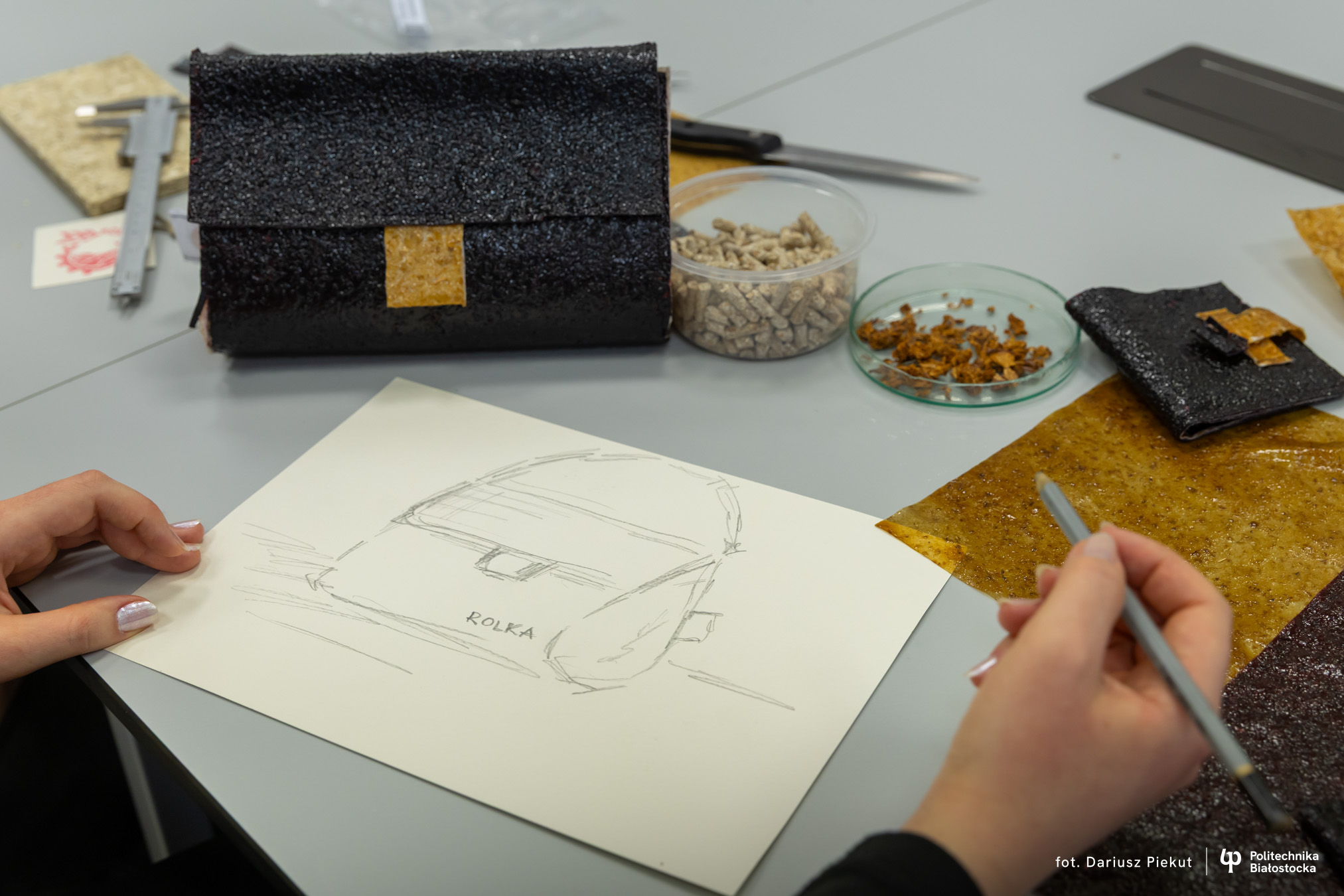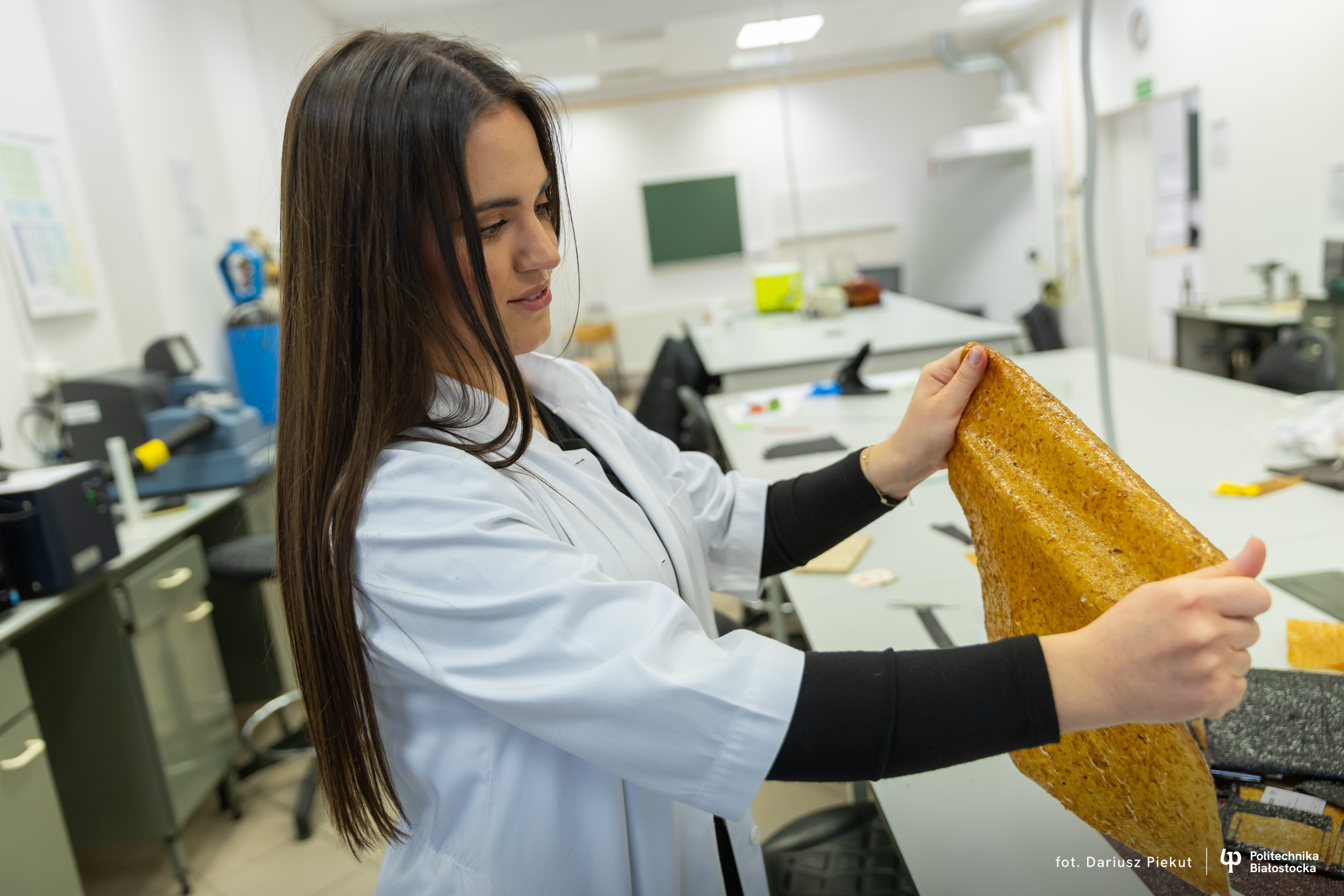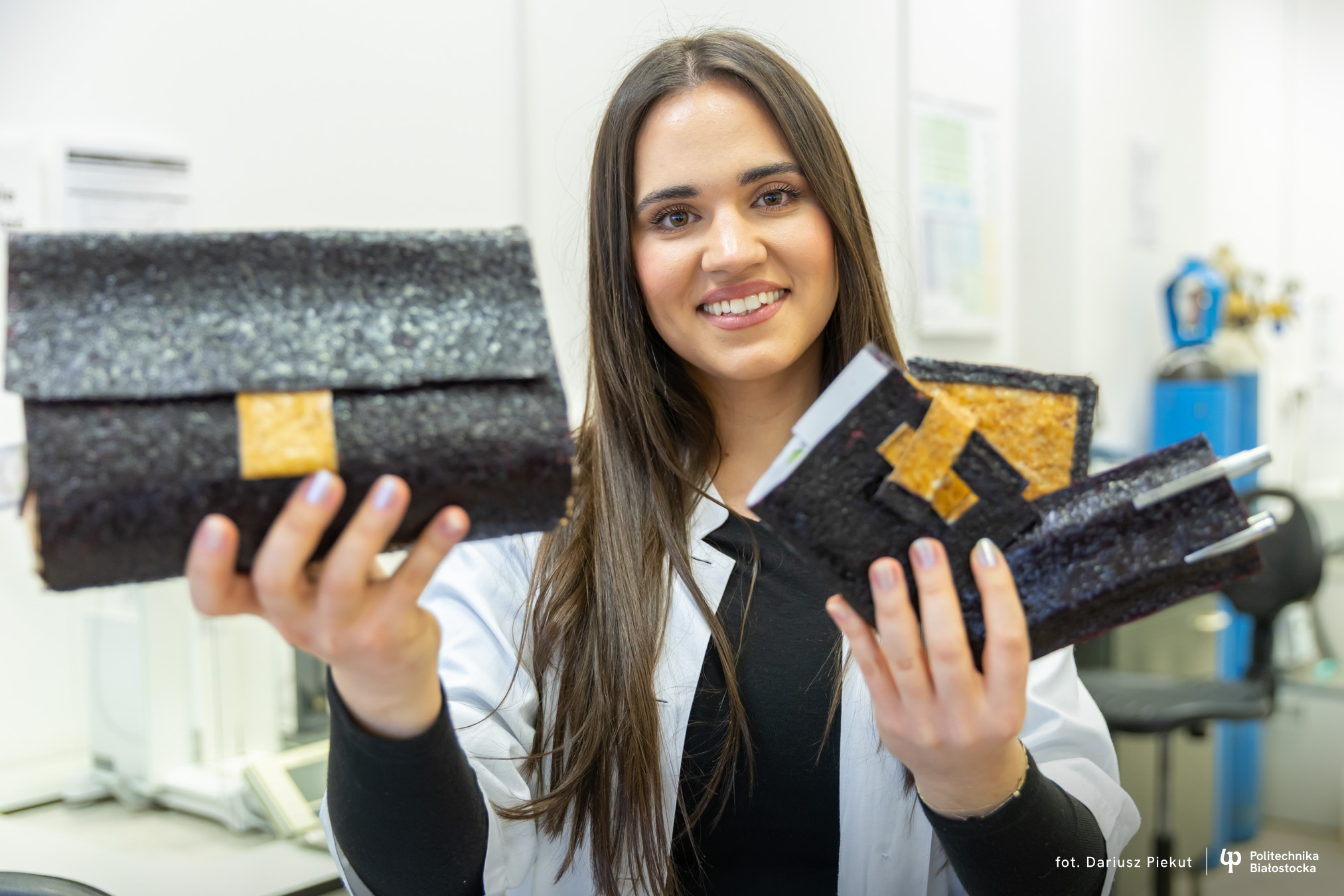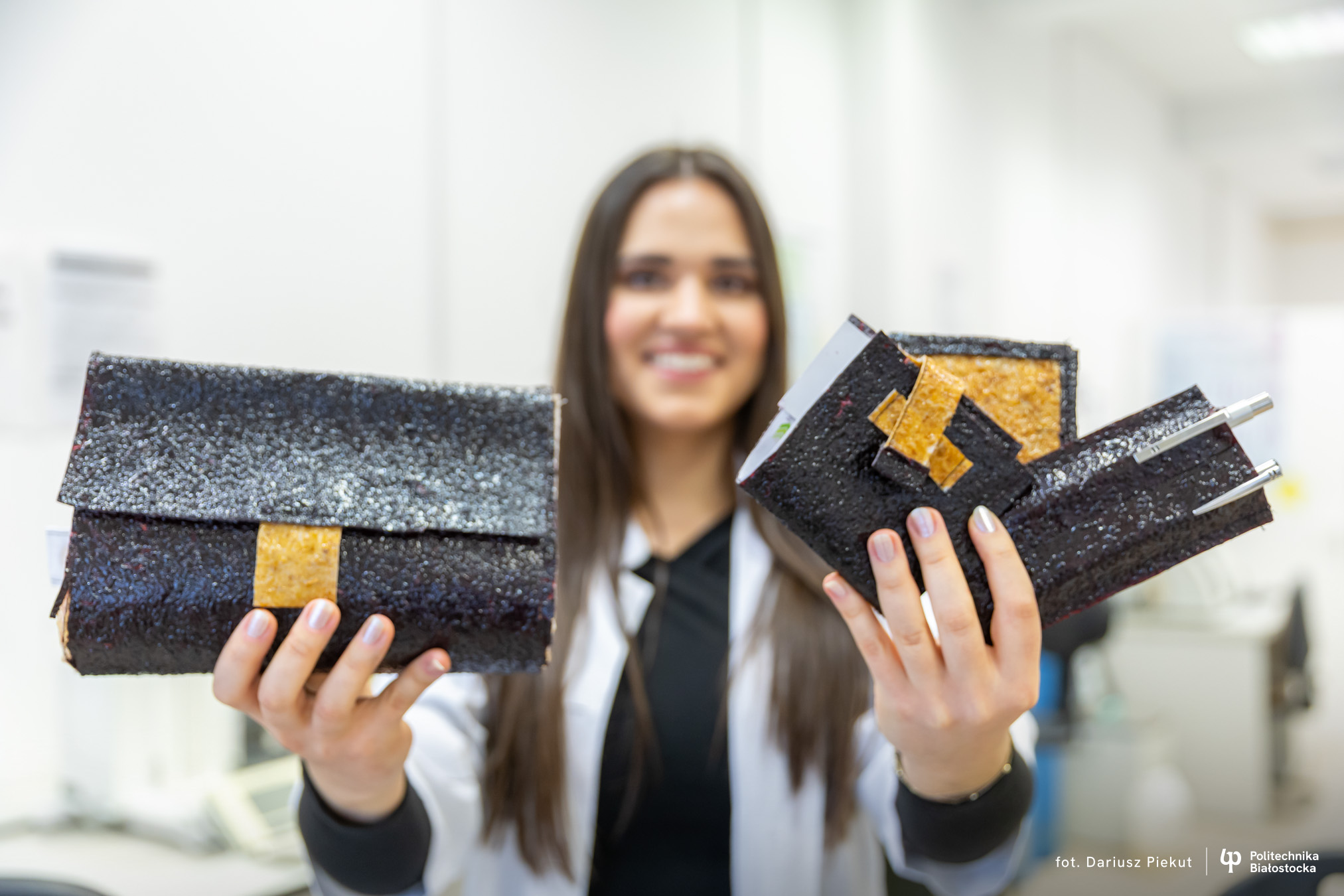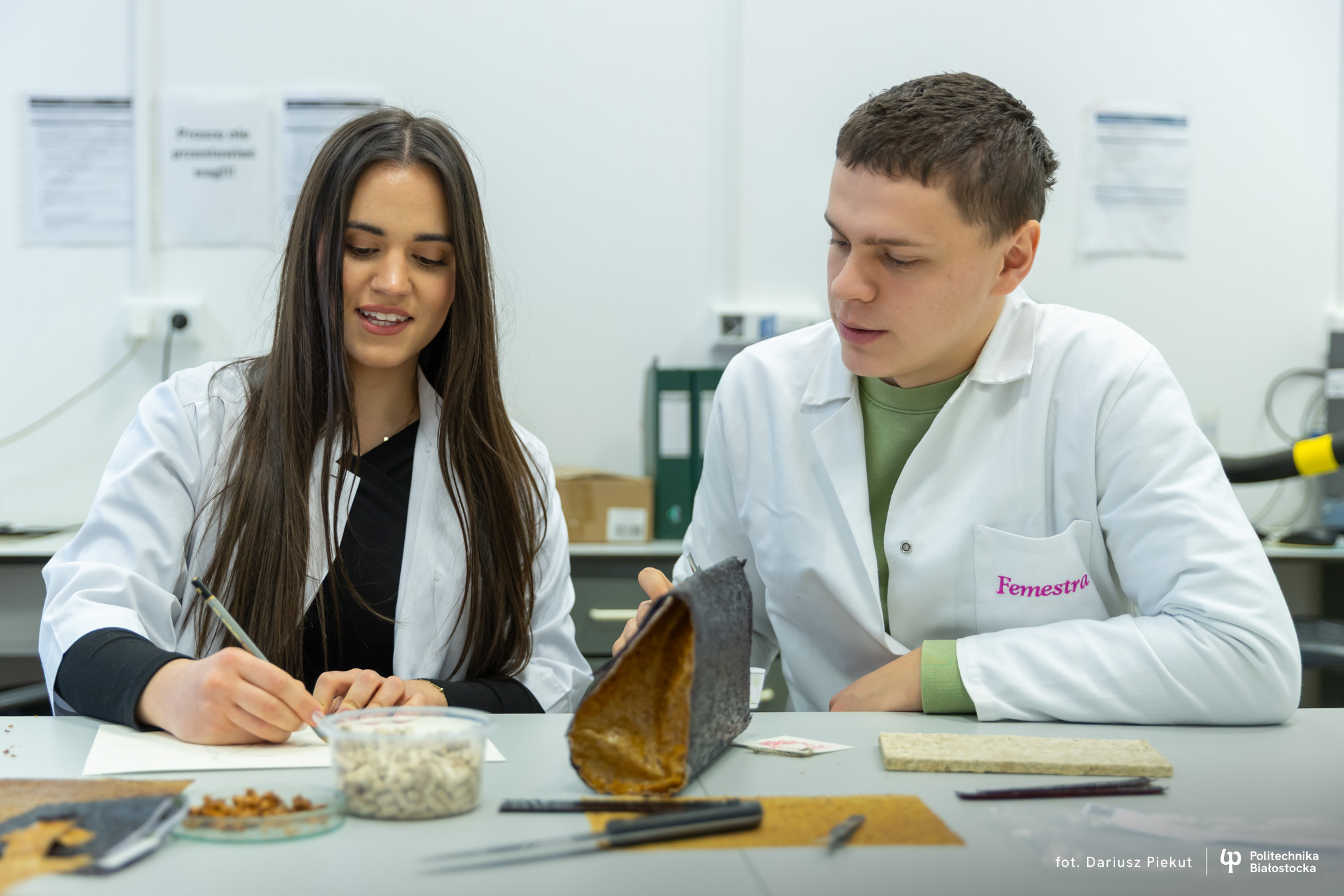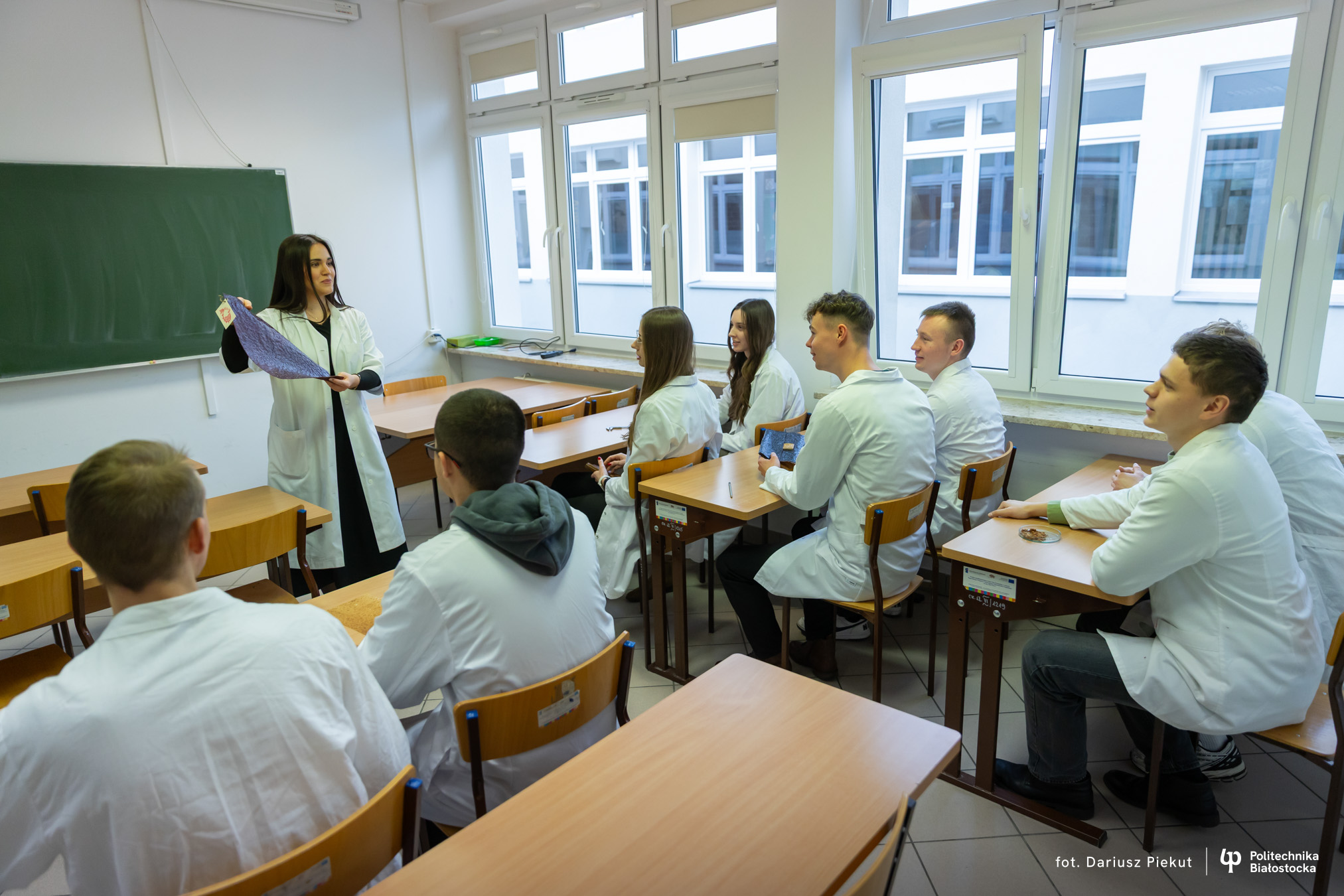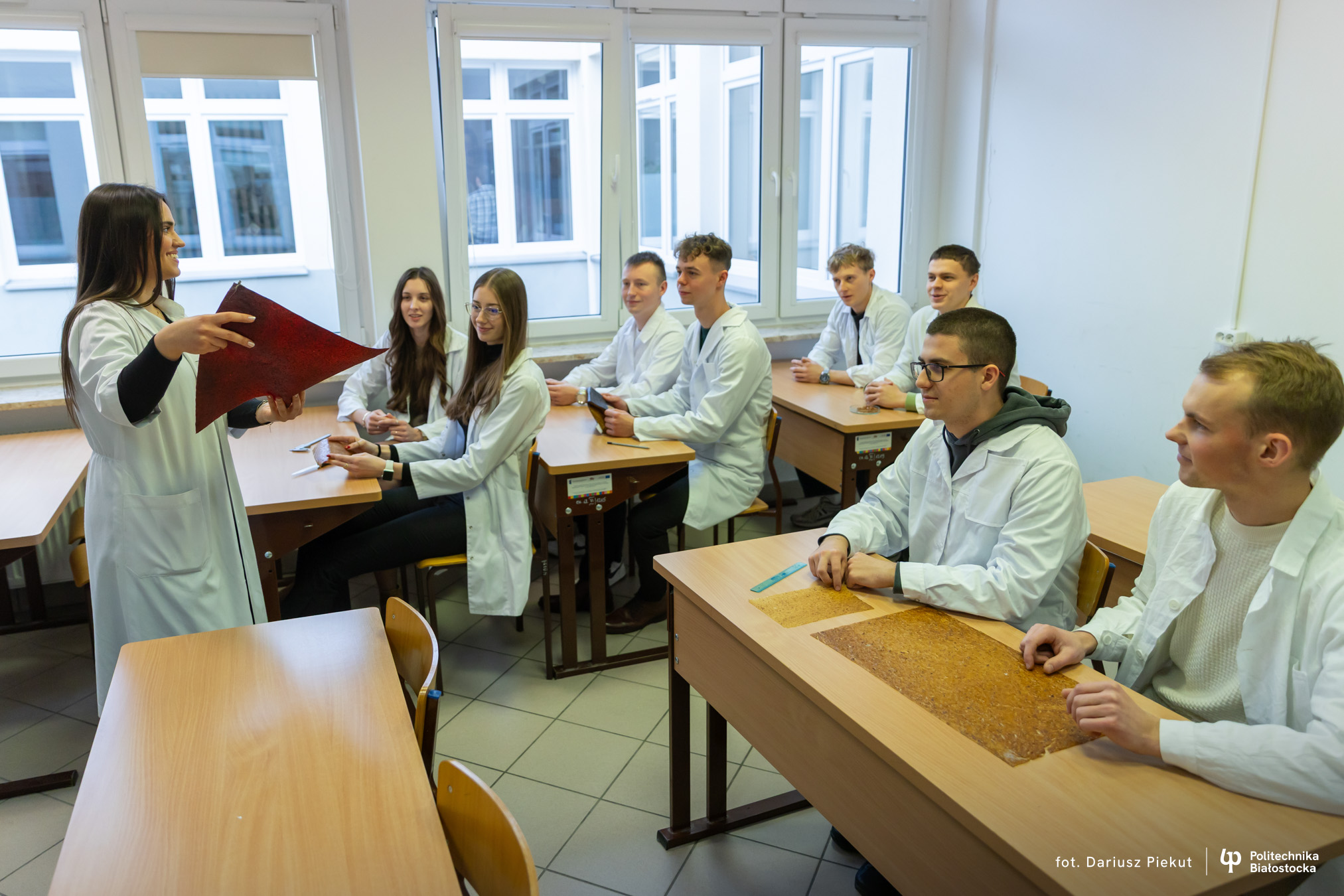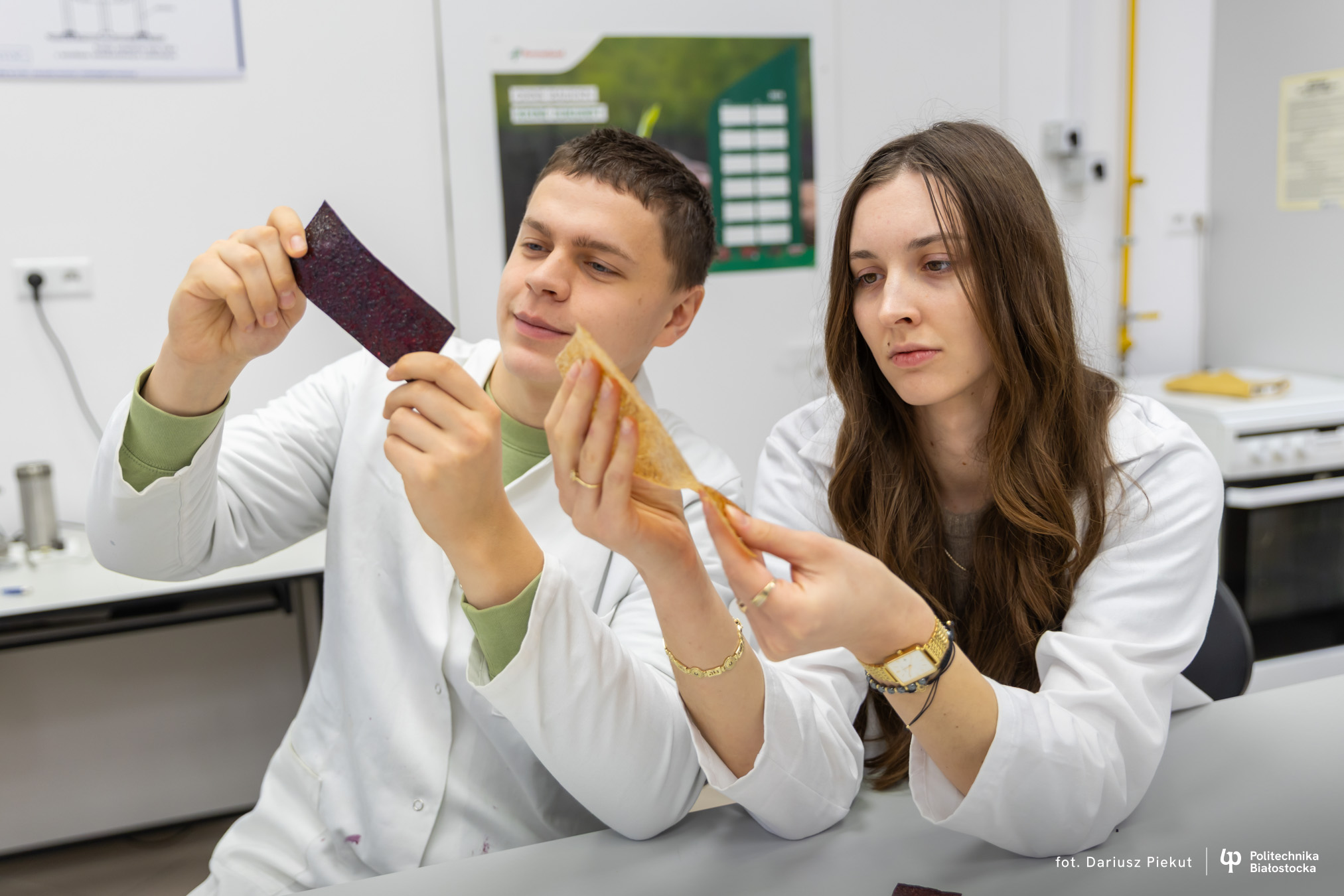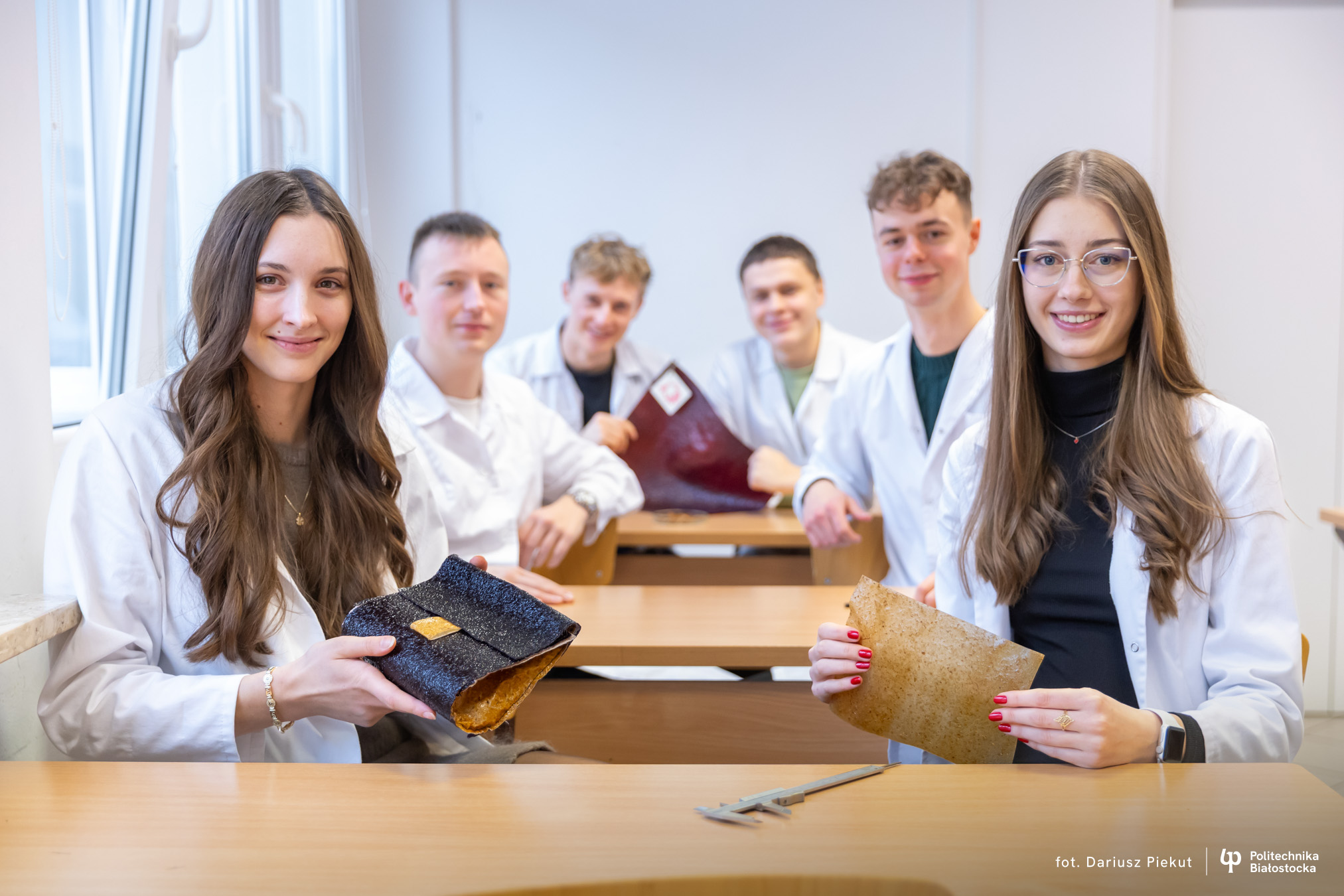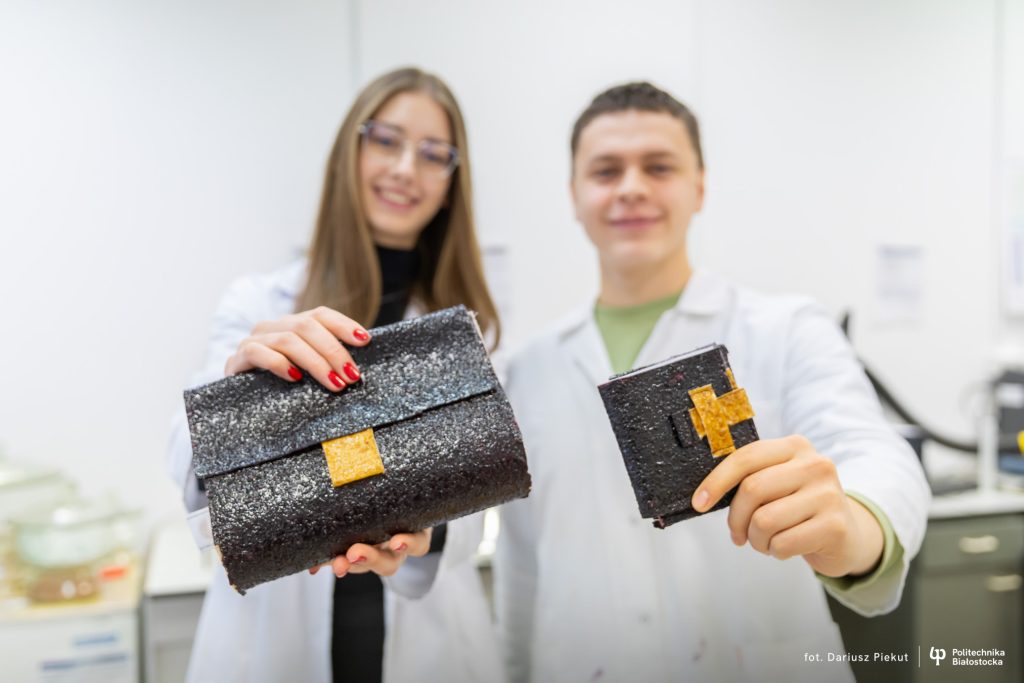
Fruit leather is an idea developed by students from the Rolka Student Scientific Association at Bialystok University of Technology, who use agri-food processing residues to create products with practical applications. Their ecological material has been used to produce designer accessories such as a handbag, a pen case and a business card holder.
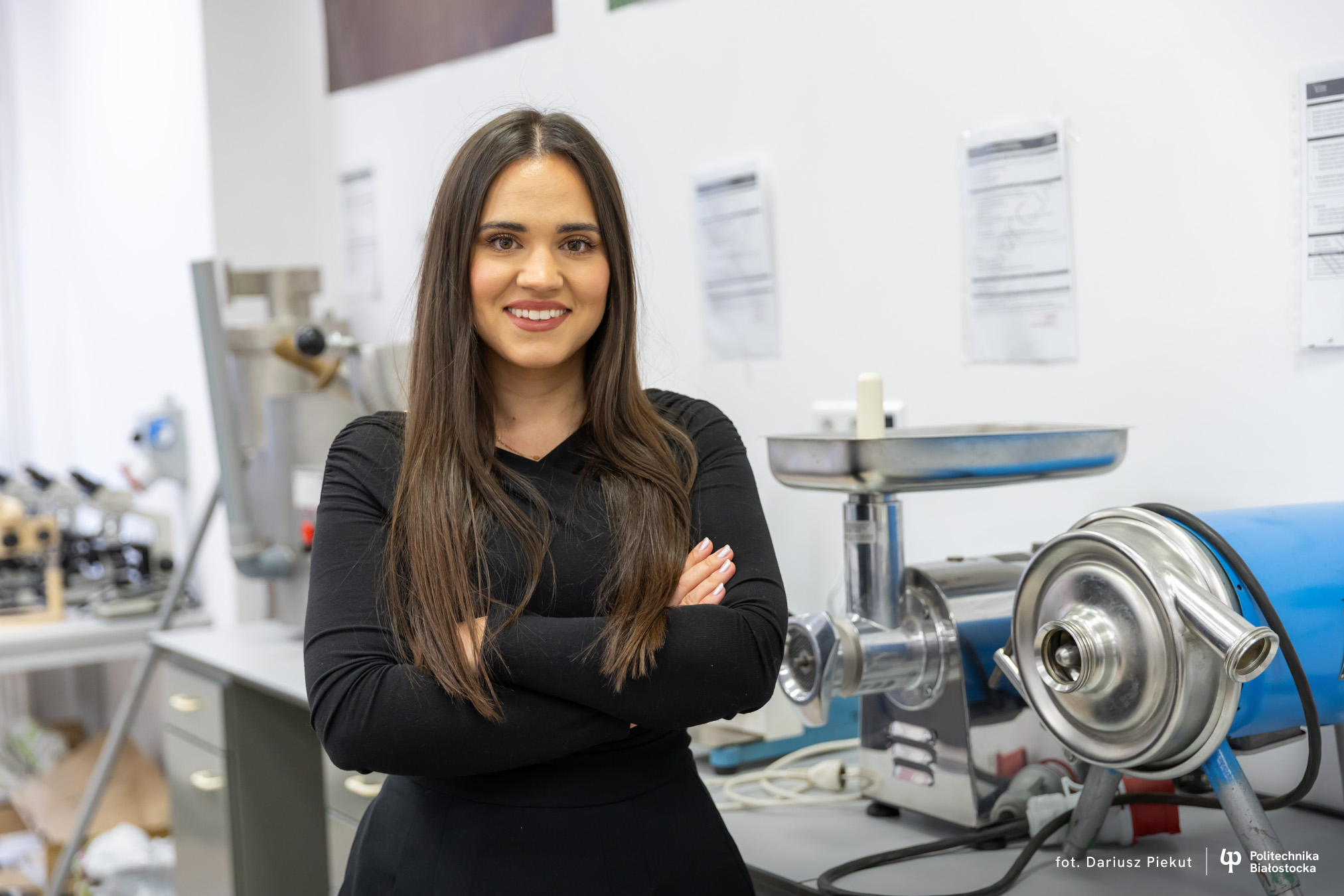
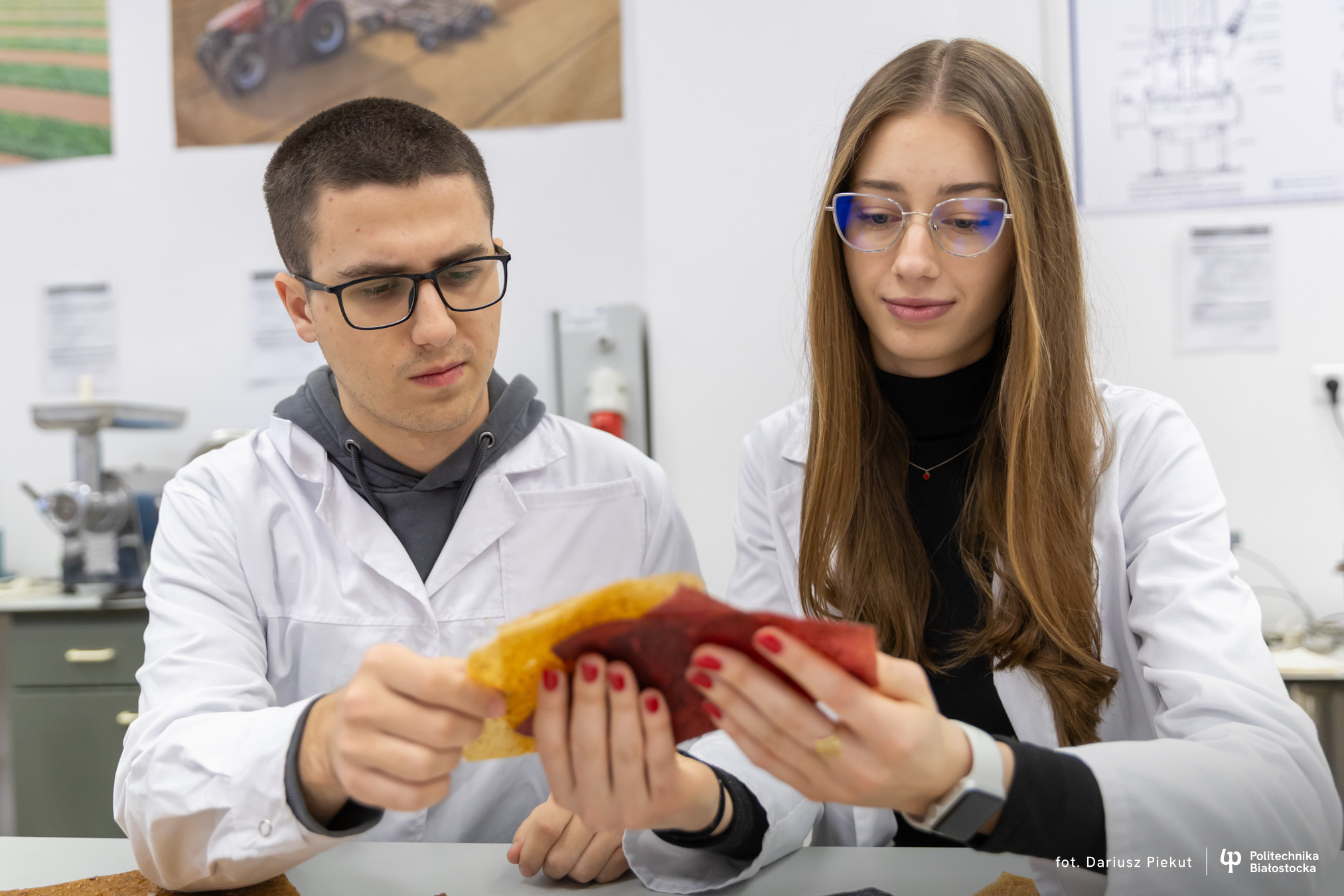
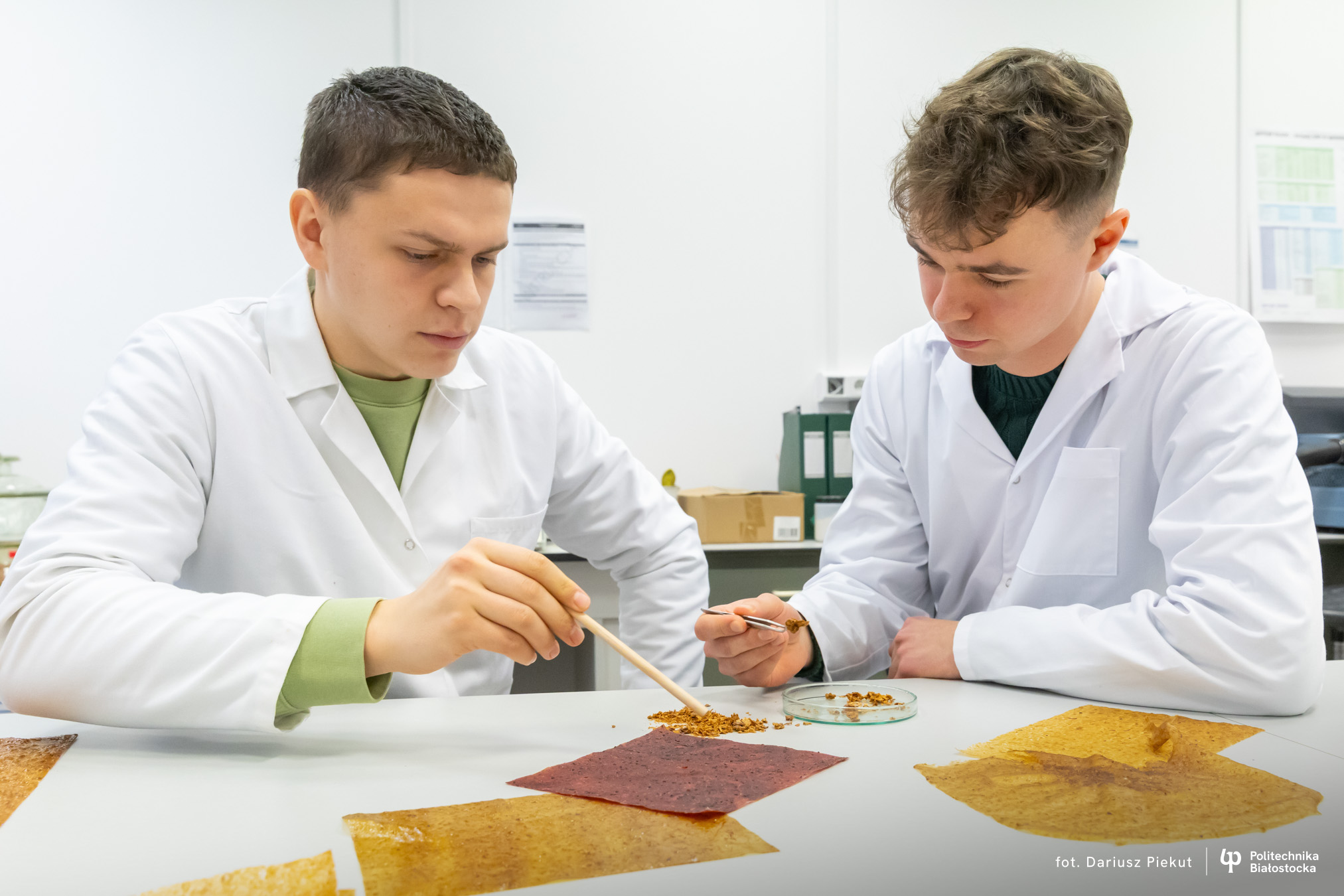
– The students carried out the EcoCorium research project, the aim of which was to develop an innovative, fully biodegradable material of plant origin, constituting an ecological alternative to traditional and synthetic leather – says Kinga Koziak, a member of Rolka and a graduate in agri-food engineering and forestry at the Faculty of Civil Engineering and Environmental Sciences of Bialystok University of Technology. – As part of the laboratory research, among others apple pomace and pulp from red and black currants were tested.
A key stage of work on the new material was the development of production technology using natural binders based on polysaccharides.
– The use of natural binders made it possible to ensure the flexibility and durability of the resulting product – says Milena Janusz, a student of agri-food engineering at the Faculty of Civil Engineering and Environmental Sciences of Bialystok University of Technology. – We successfully created a material which, instead of burdening the environment, makes use of agri-food residues. The result of our project was the production of prototypes of a handbag, a business card holder, pen cases and a wallet.
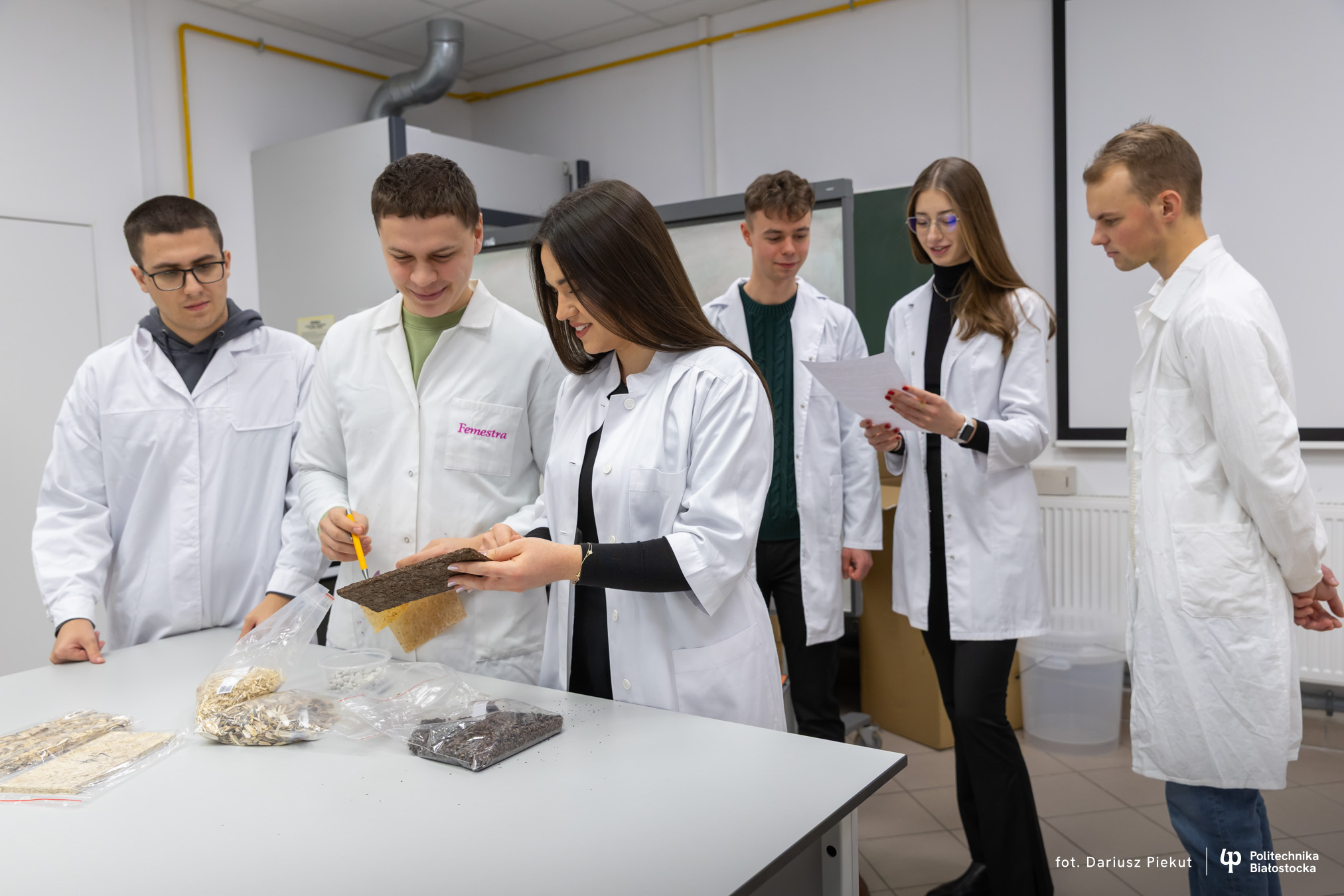
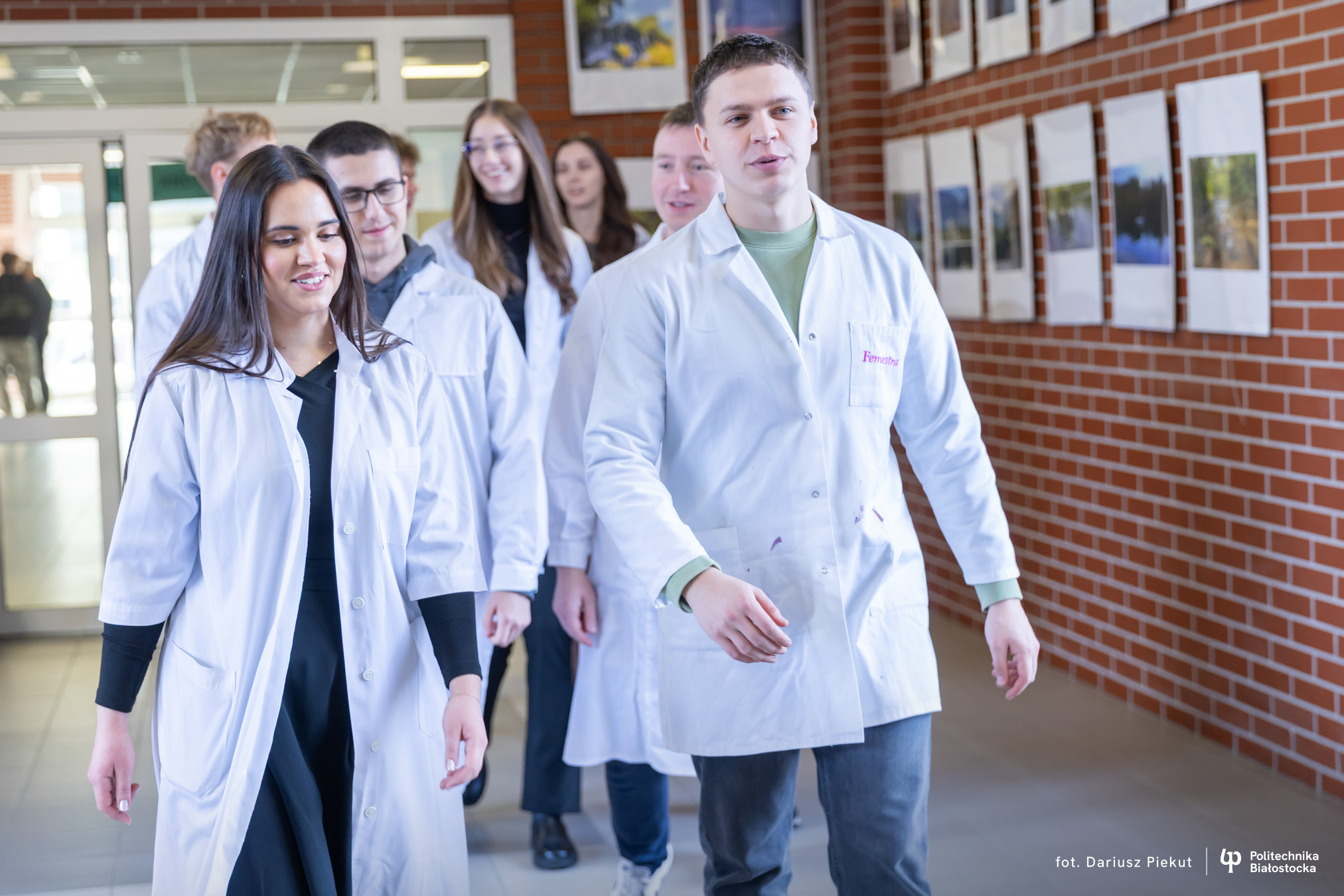
The Rolka Student Scientific Association, operating within the Department of Agri-Food Engineering and Environmental Shaping, brings together students of such study programmes as agri-food engineering, biotechnology and agro-ecobusiness* (a programme launched in the academic year 2025/2026) at the Faculty of Civil Engineering and Environmental Sciences of Bialystok University of Technology.
At Rolka, students deepen the knowledge they acquire during their studies, but also have the opportunity to implement projects for industry. Their portfolio already includes such “inventions” as, among others, fertiliser made from coffee grounds for acid-loving plants and a biodegradable board for the furniture industry made, among others, from buckwheat husks and bran. With their latest project, they have proven that residues from agri-food processing can be not only ecological, but also fashionable.
– Our eco-leather is a combination of design, technology and, above all, ecology. The material can be used both in the fashion and interior design industries – argues Milena Janusz, adding that the material can also be used to produce lampshades.
The global industry is becoming increasingly open to ecological innovations; however, it is worth emphasising that companies from the Podlaskie Voivodeship also see potential in the ideas of students from Bialystok University of Technology. In implementing the eco-leather production project, the future engineers from Rolka cooperated with the company Kuchnia Vikinga, with which Bialystok University of Technology has signed an agreement. The University will support the Białystok-based company – the largest producer and supplier of ready-made meals in Poland – among others through research into innovative products based on agri-food raw materials.
– For the production of eco-leather in our project, we used raw materials obtained from one of the local companies dealing with dietary catering – explains Mateusz Mackiewicz, a fourth-year student of agri-food engineering.
The project has enormous potential. Students are working on improving the flexibility and strength of the material.
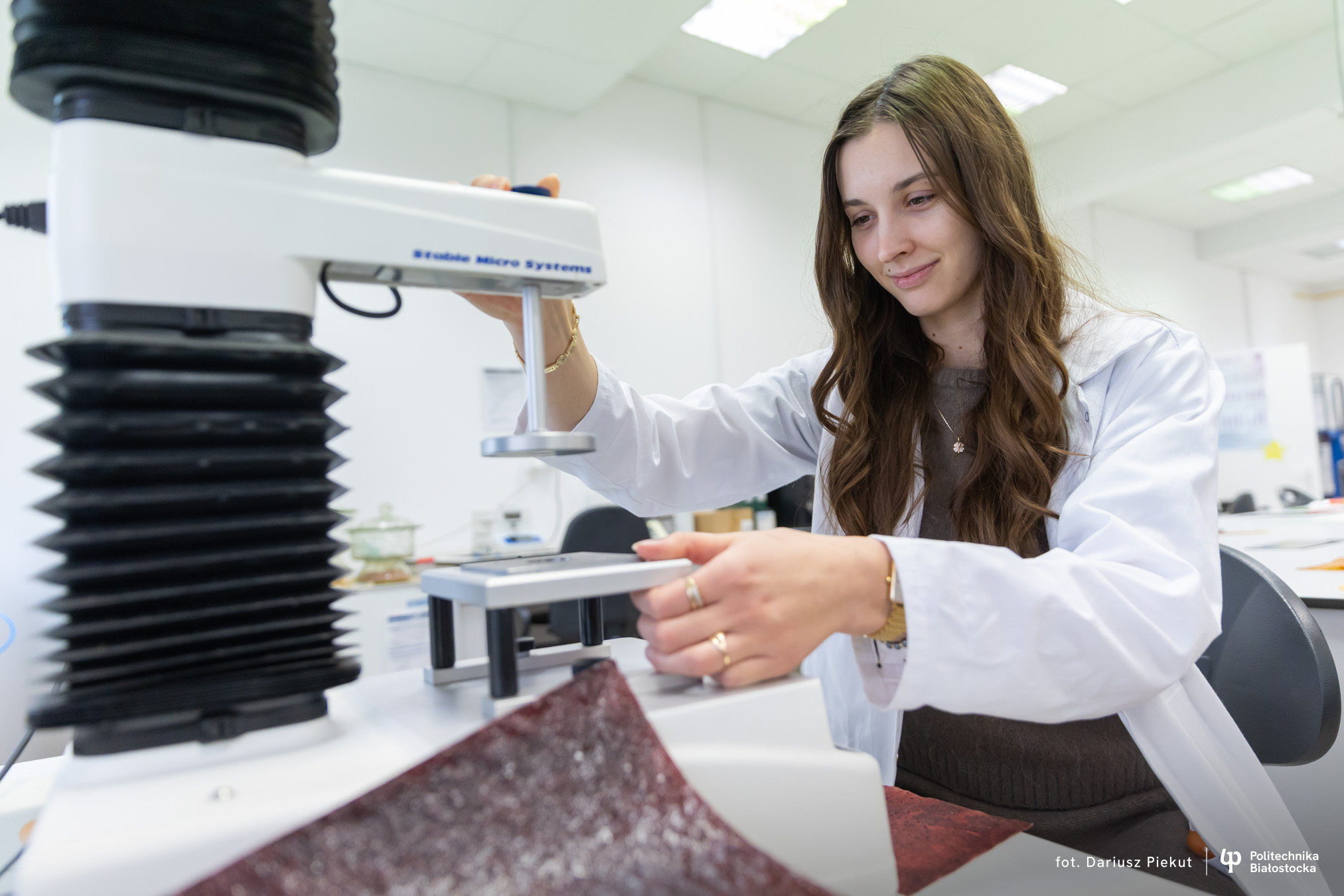
– Preliminary tests have shown that material made from currant pulp is characterised by higher durability compared to that made from apple pomace – argues Kinga Koziak, a doctoral student in the discipline of environmental engineering, mining and energy at the Doctoral School of Bialystok University of Technology. – However, it should be emphasised that the material produced, although at the current stage it has too low strength for widespread use, has significant potential for implementation in the production of clothing and accessories. Therefore, it is necessary to conduct further, advanced research using other residues from the agri-food industry, improving the functional properties of the accessories produced.
The efforts of the students from Bialystok University of Technology have been recognised. The EcoCorium project won a grant of PLN 10,000 in a competition organised by the Bank Ochrony Środowiska Foundation. The project was ranked among the top 5 out of 60 submissions in the student scientific associations category!
Will eco-leather conquer the fashion and interior design markets in the future? Time will tell. What is certain, however, is that students pursuing their passions within the Rolka Student Scientific Association can enter the professional world with a wealth of experience, valuable business contacts and practical skills, which they will use for companies in the region and throughout Poland.
The Rolka Student Scientific Association combines creativity with innovation for business! Would you like to join them?
Send your application to: knrolka@gmail.com
or visit the Faculty of Civil Engineering and Environmental Sciences, Department of Agri-Food Engineering and Environmental Shaping, room 73B
The academic supervisors of the Rolka Student Scientific Association are PhD, Eng. Aneta Sienkiewicz and PhD Małgorzata Kowczyk-Sadowy from the Department of Agri-Food Engineering and Environmental Shaping.
* The study programme is financed under the project “PB 5.0 – adapting the educational offer of Bialystok University of Technology to the needs of the modern economy as well as green and digital transformation”, implemented within the European Funds for Social Development 2021–2027 programme.

Author: Magdalena Grzęda-Zajkowska
See the photo gallery: