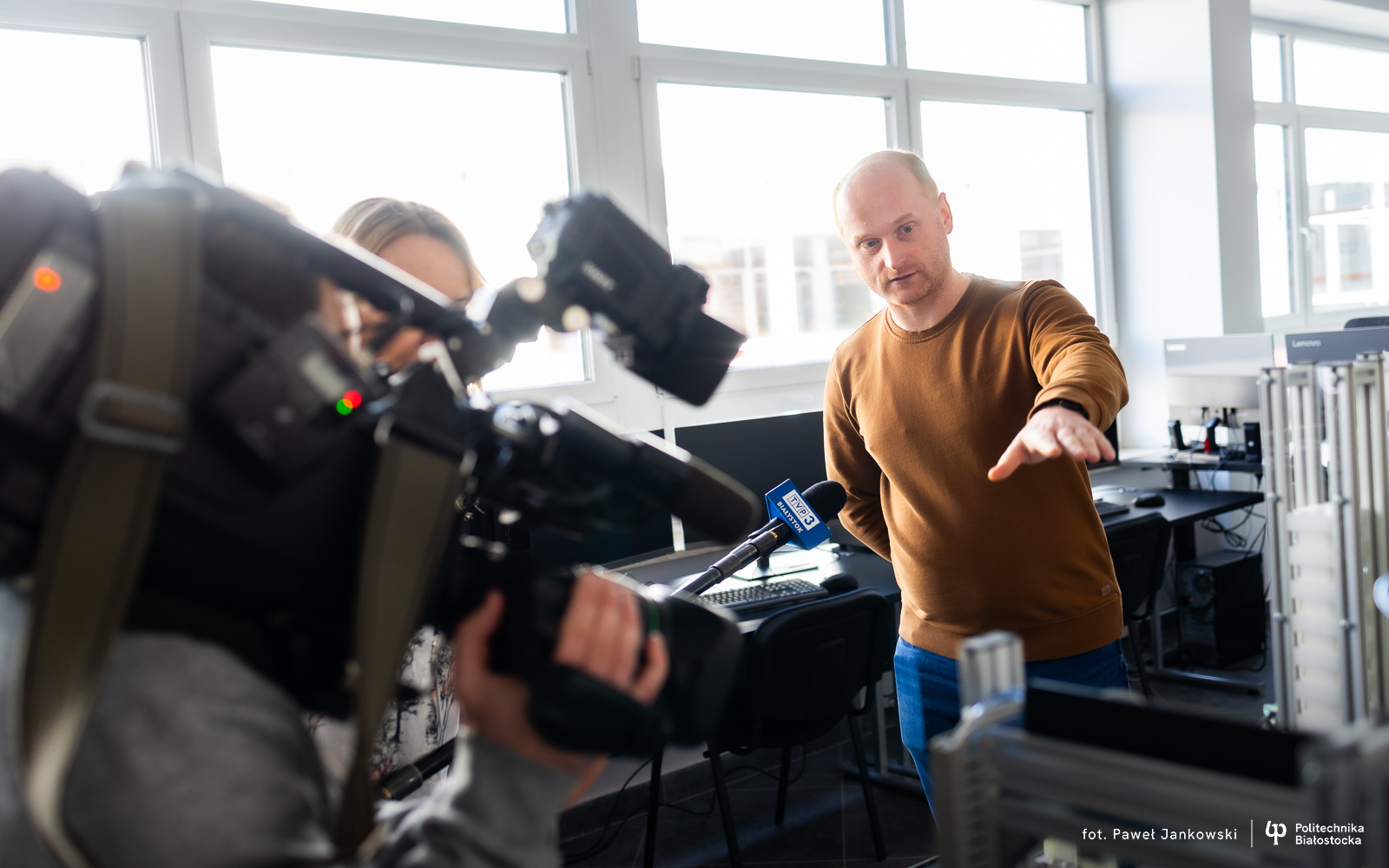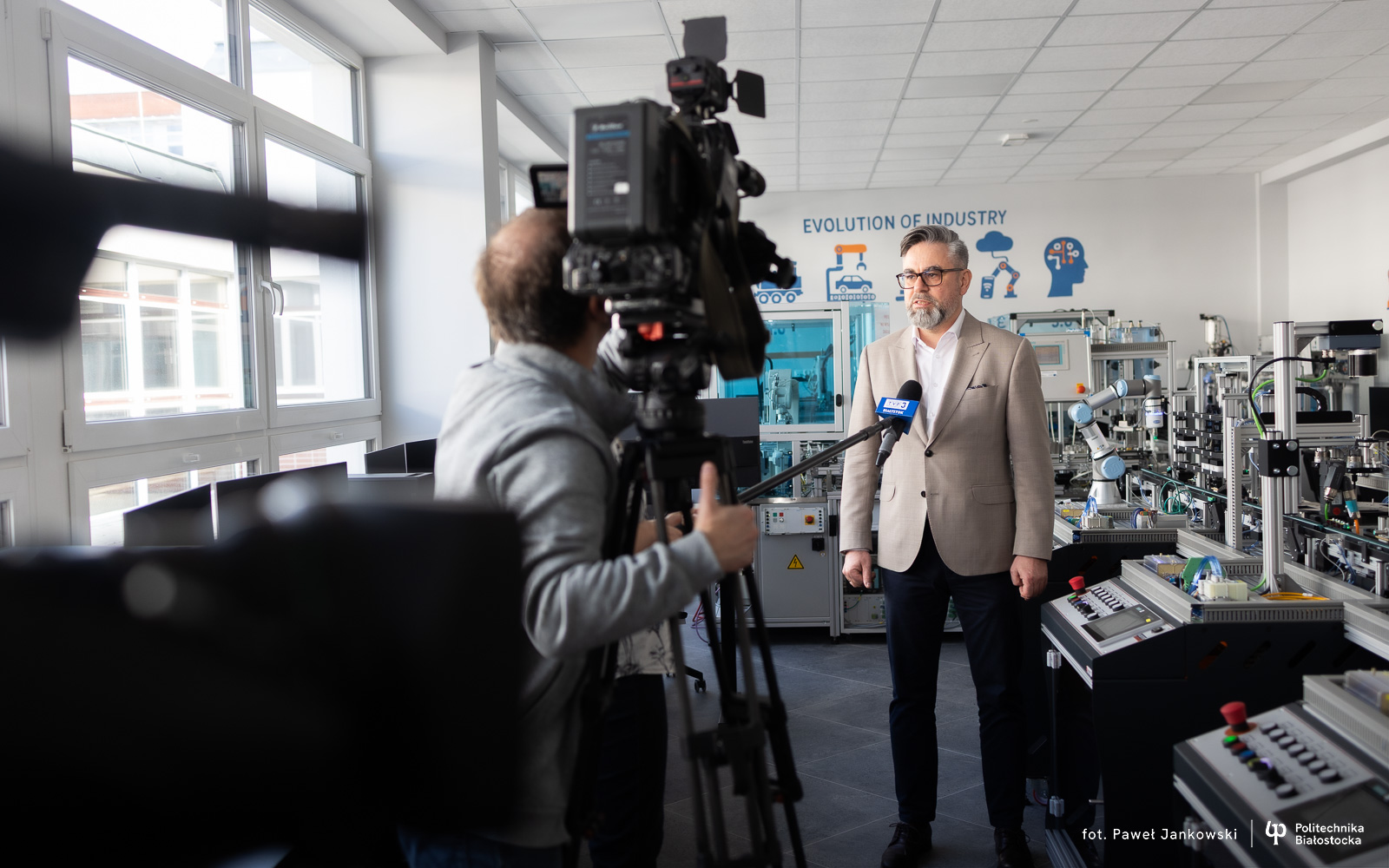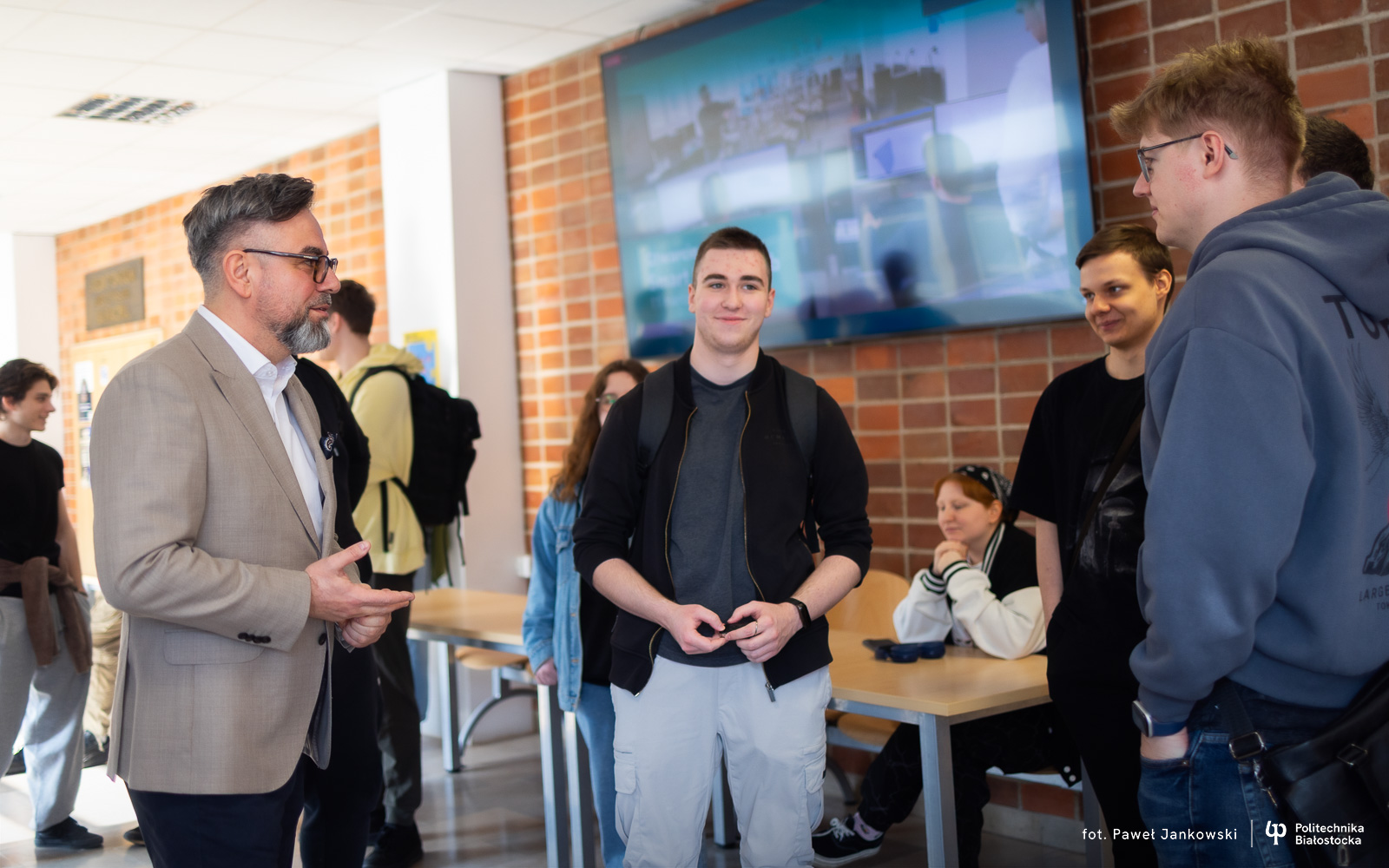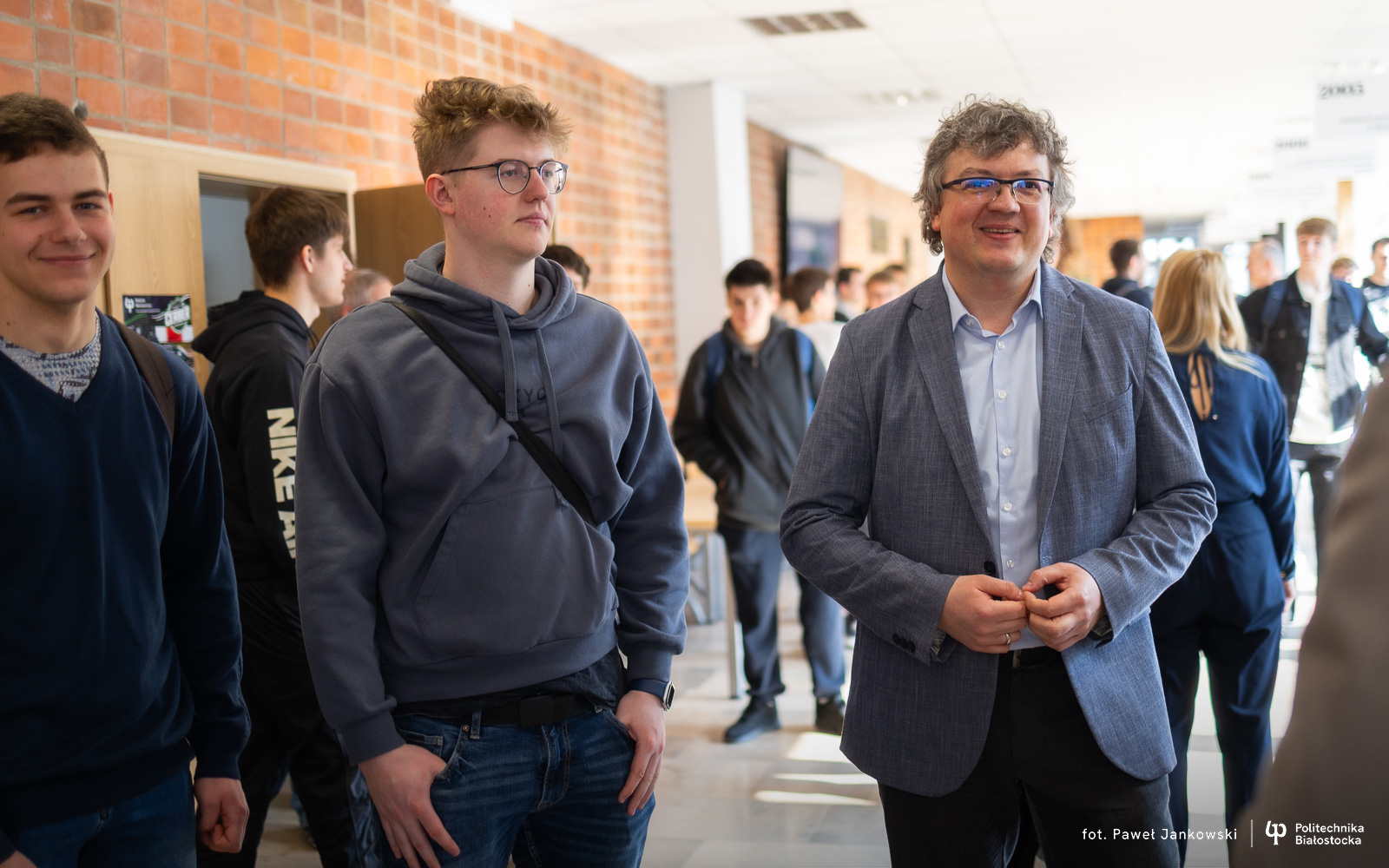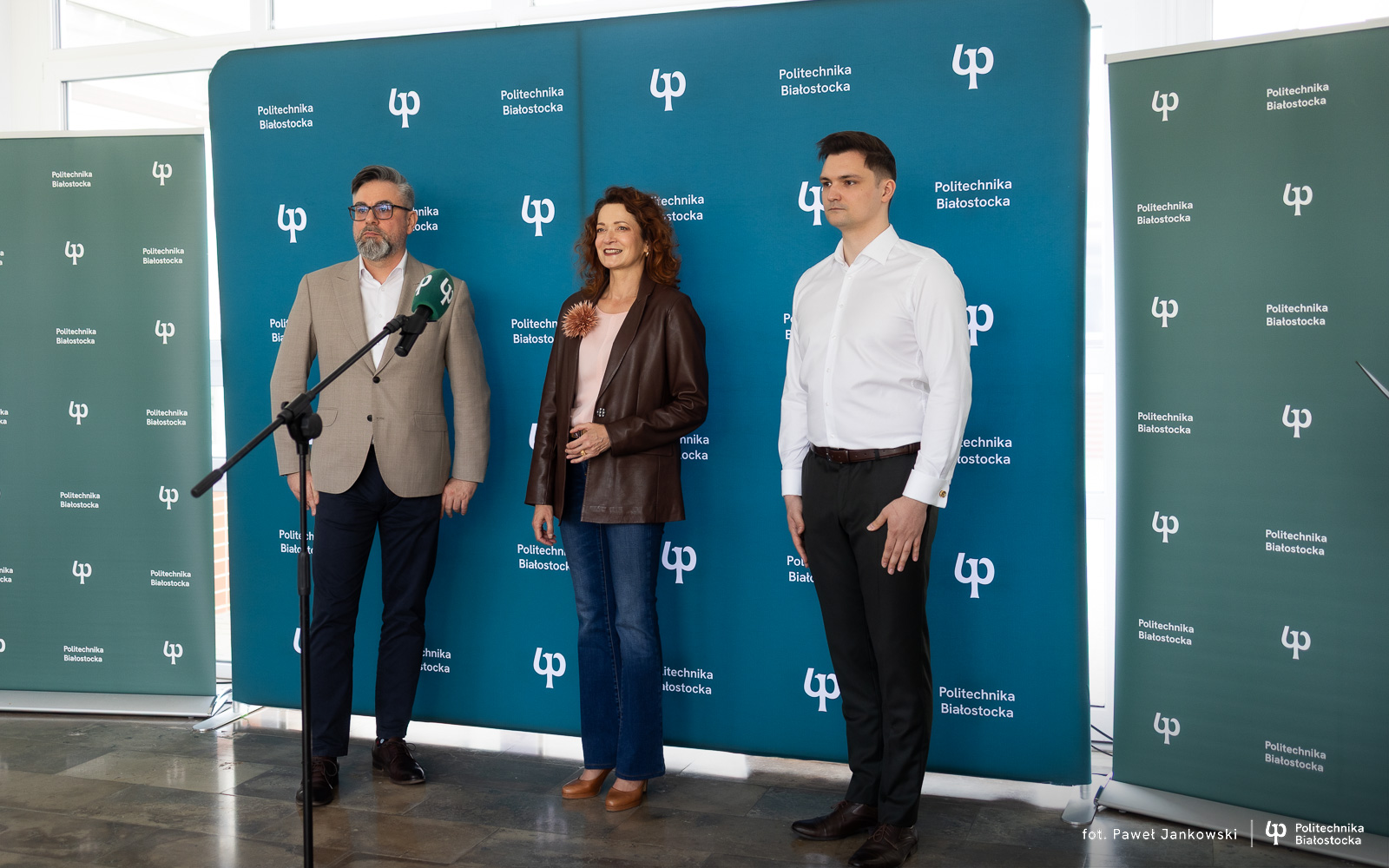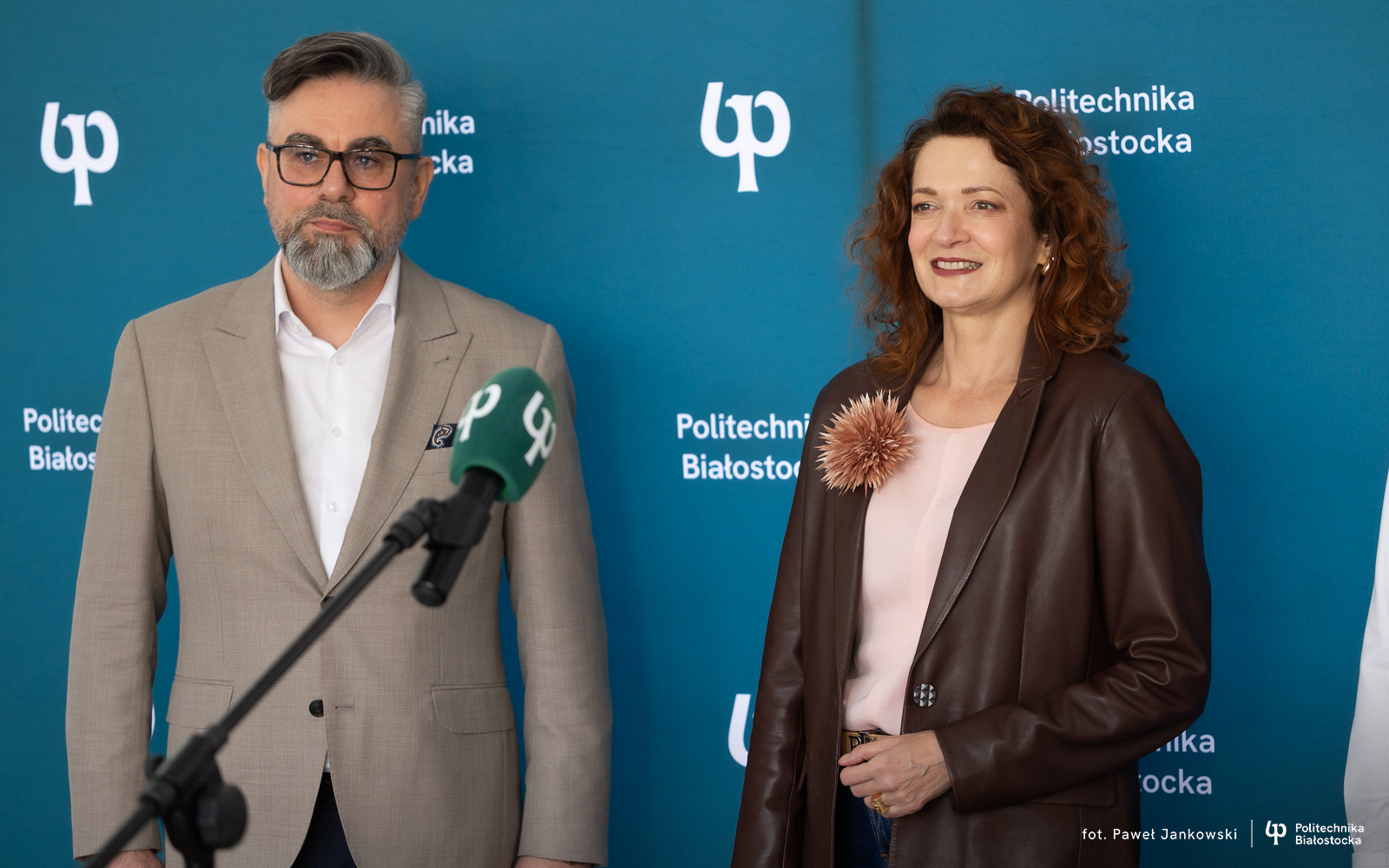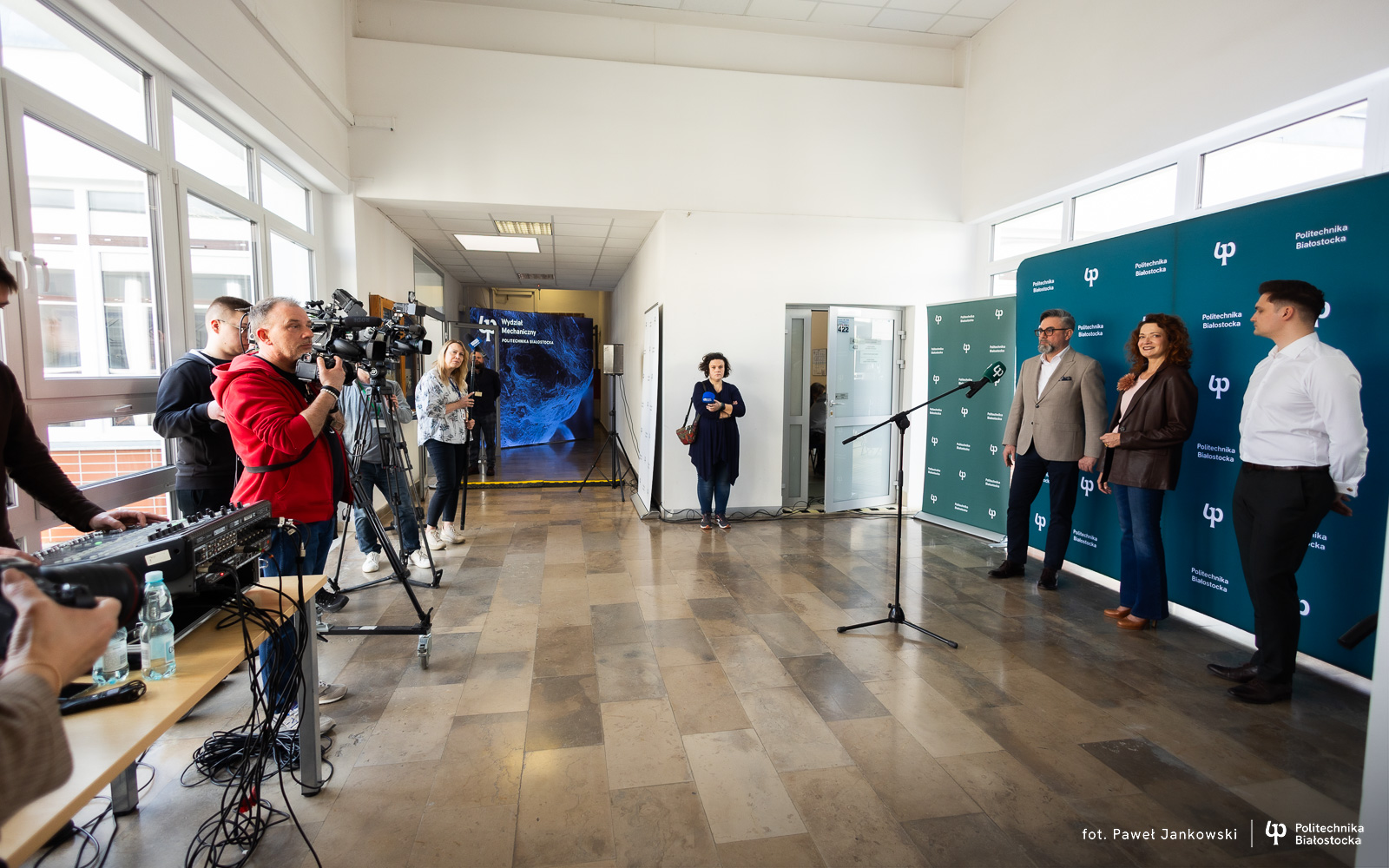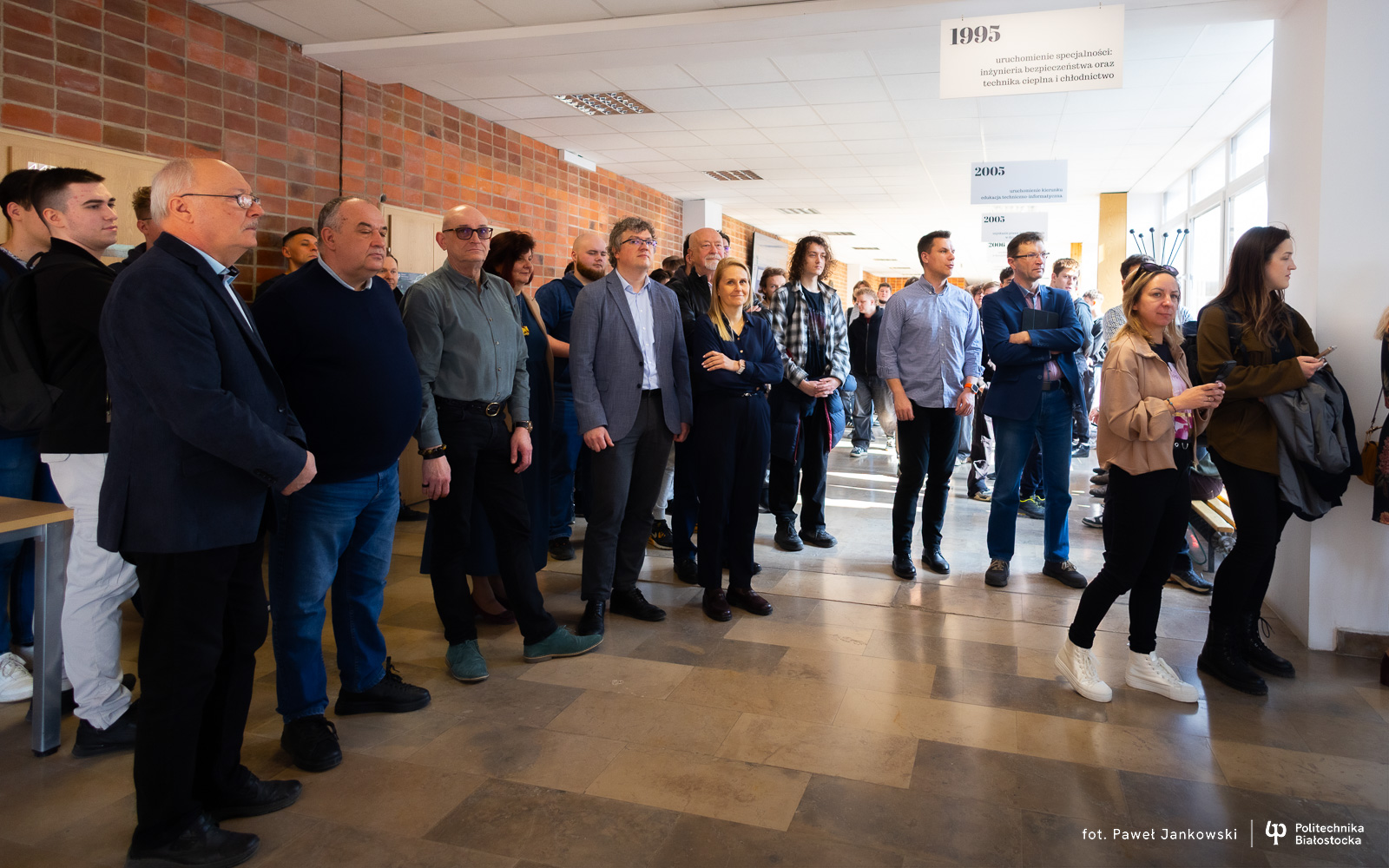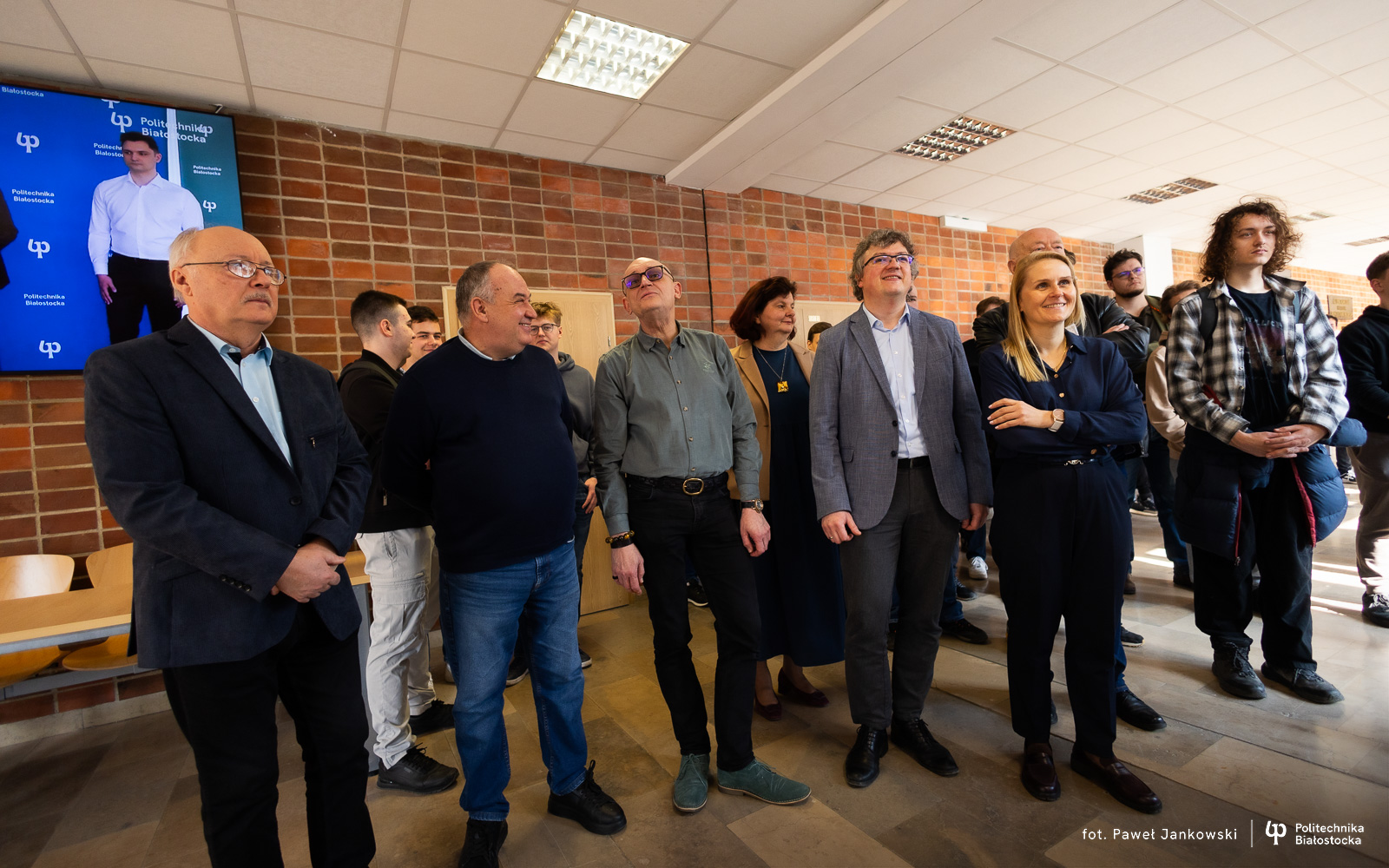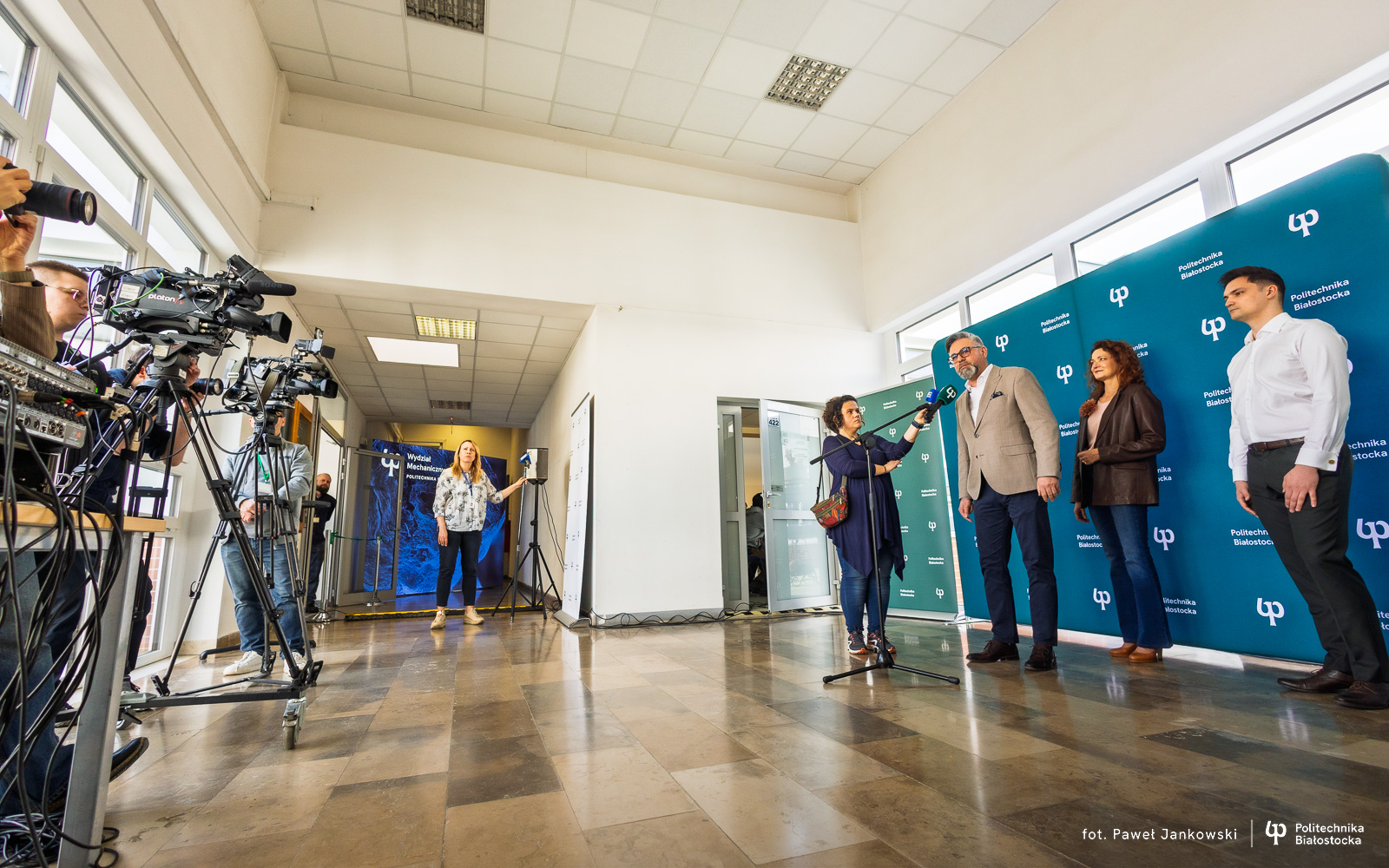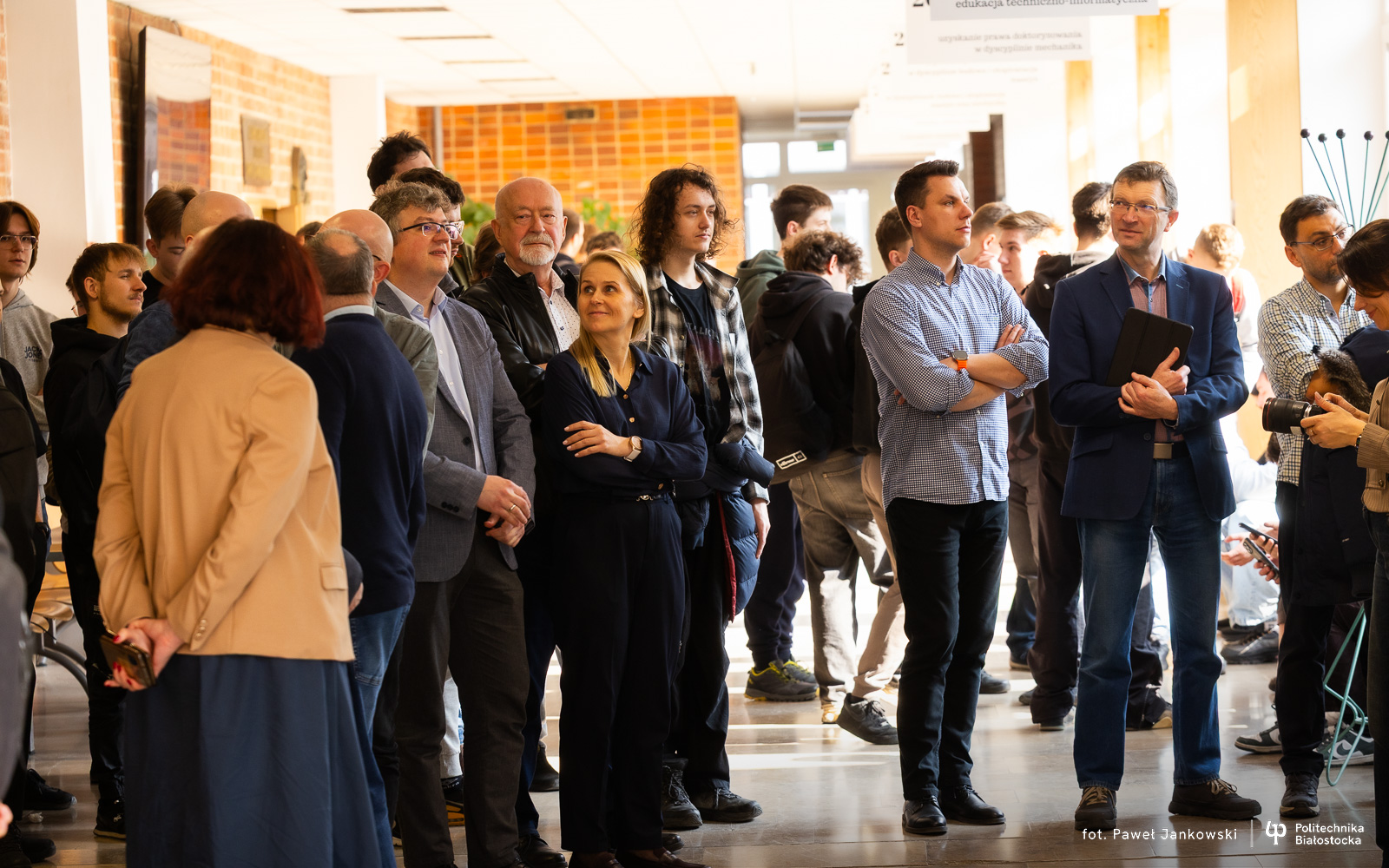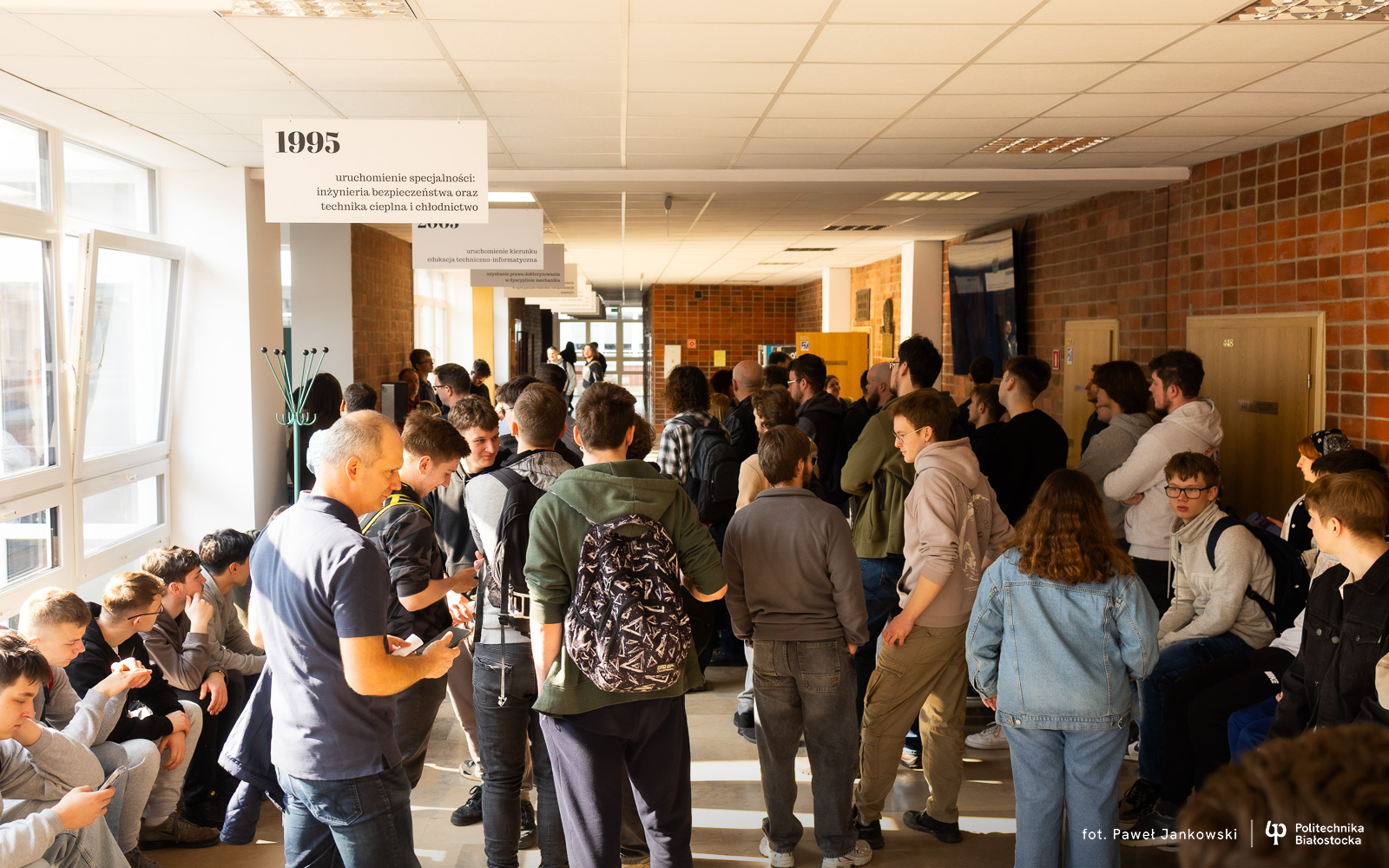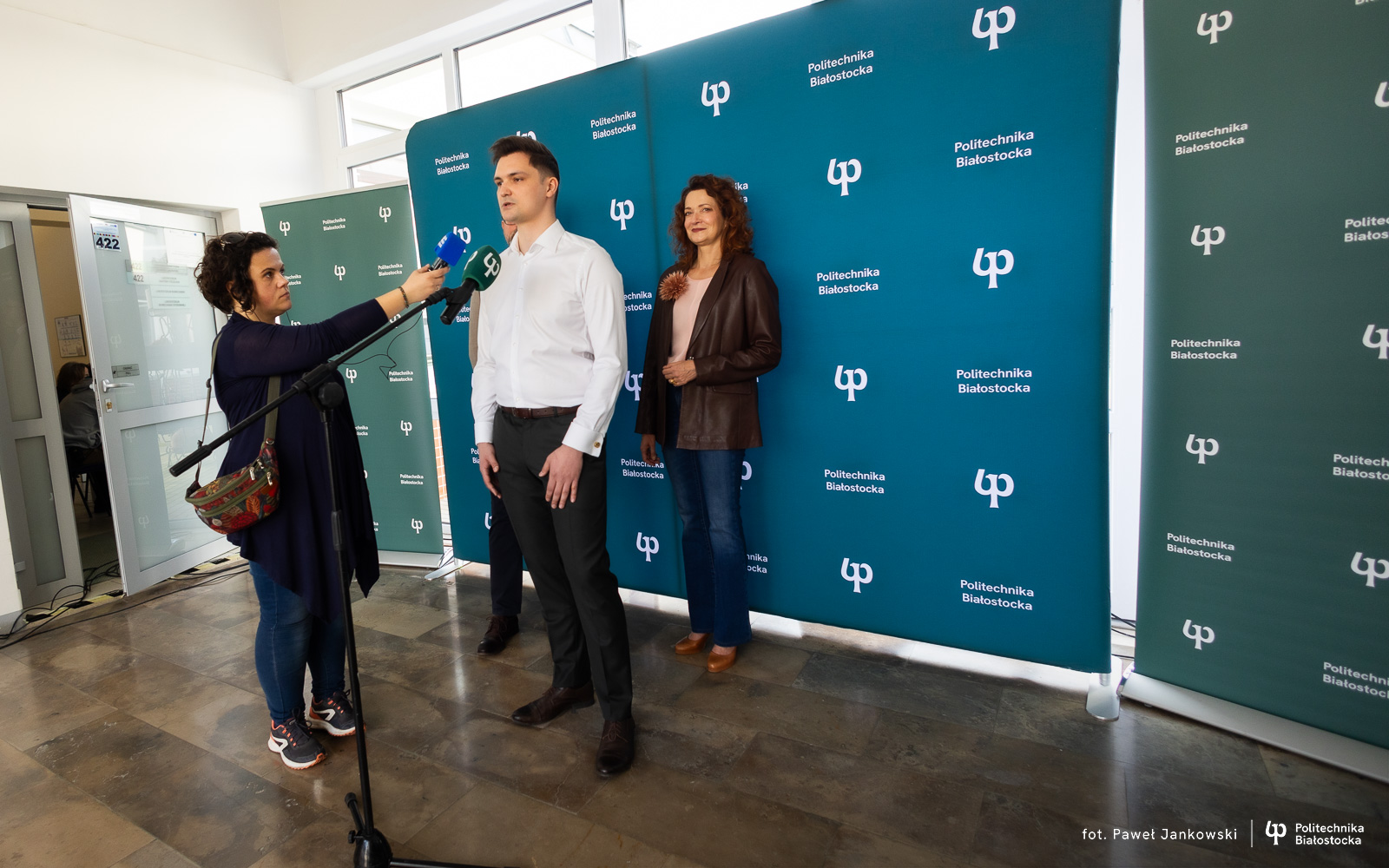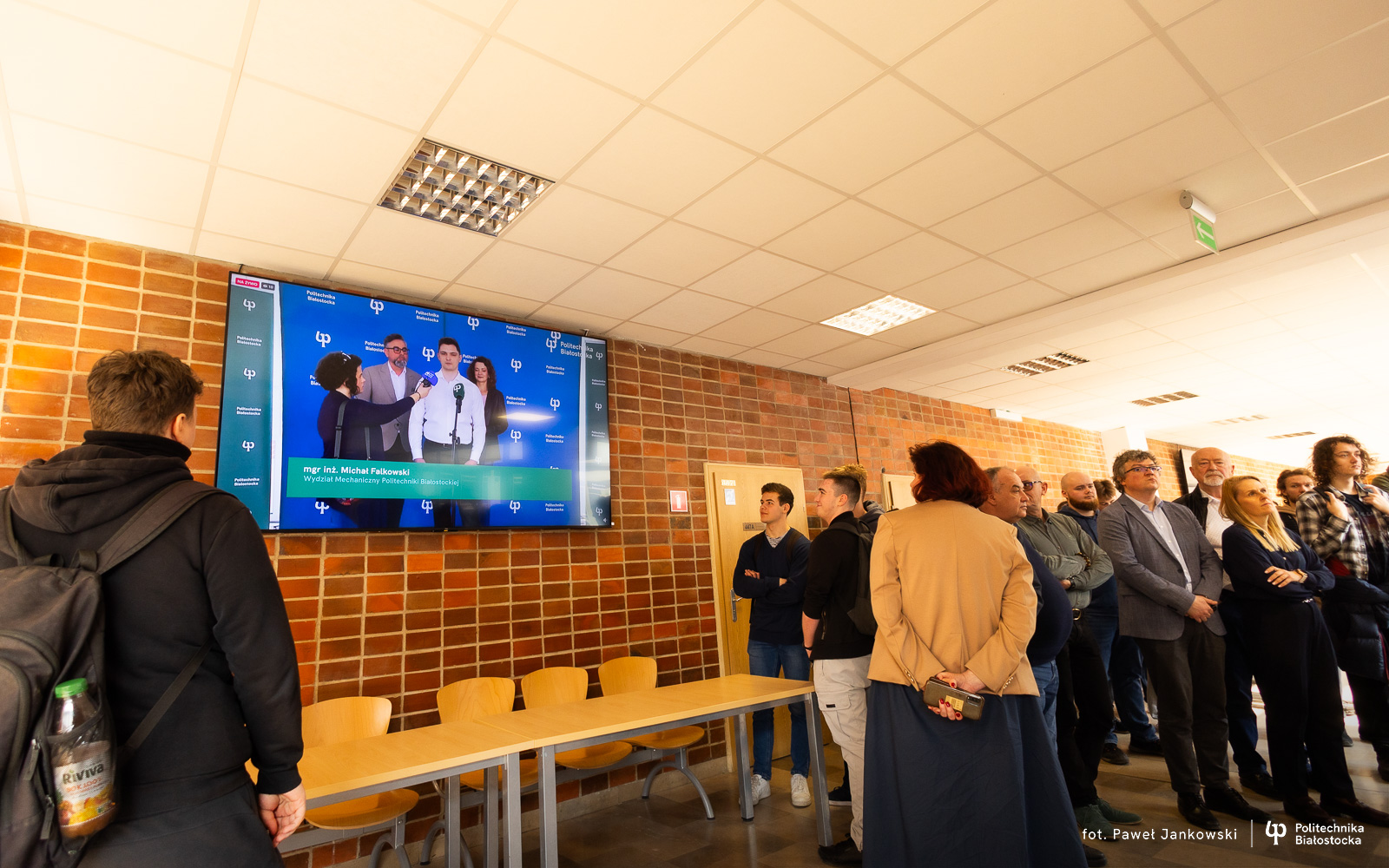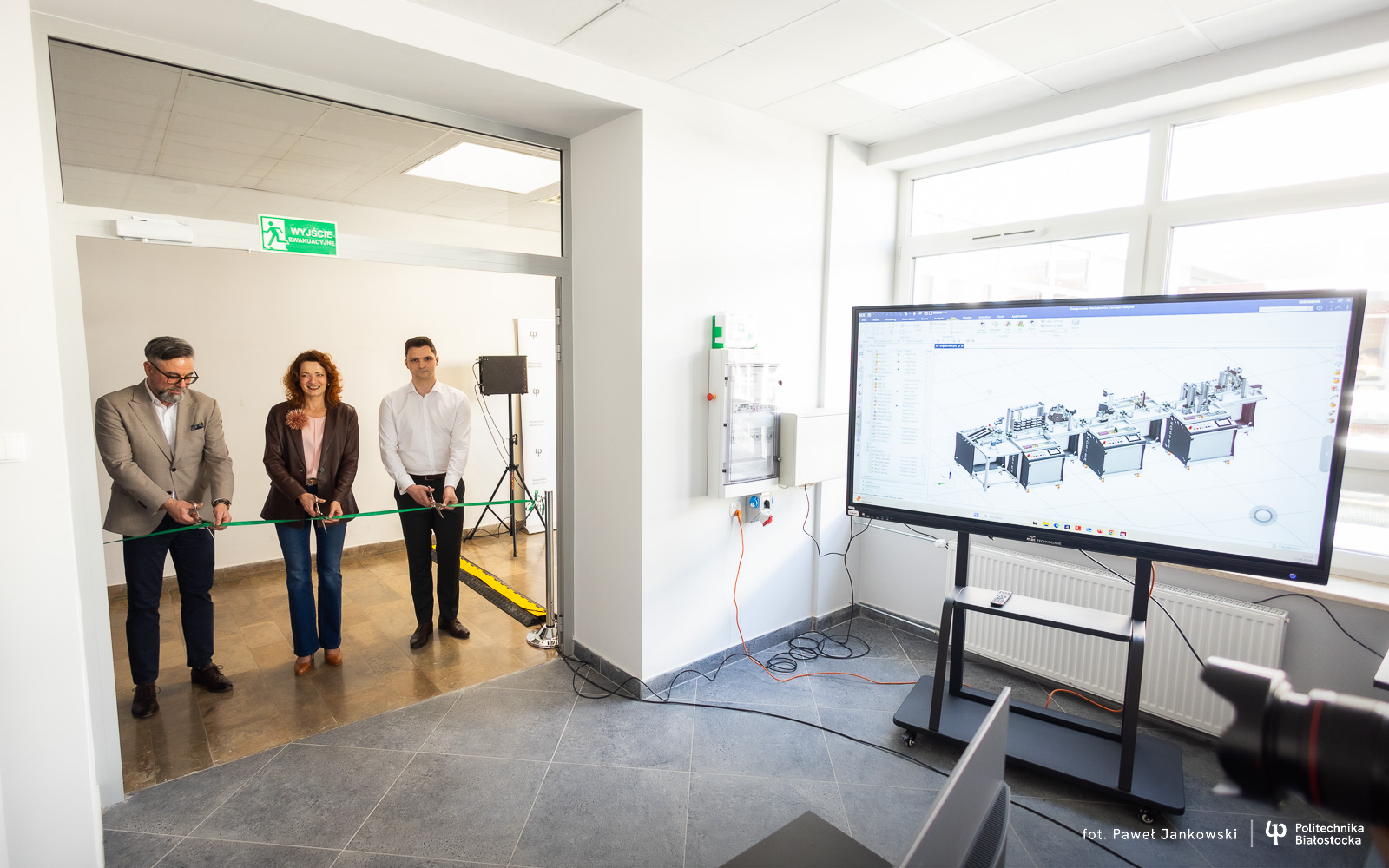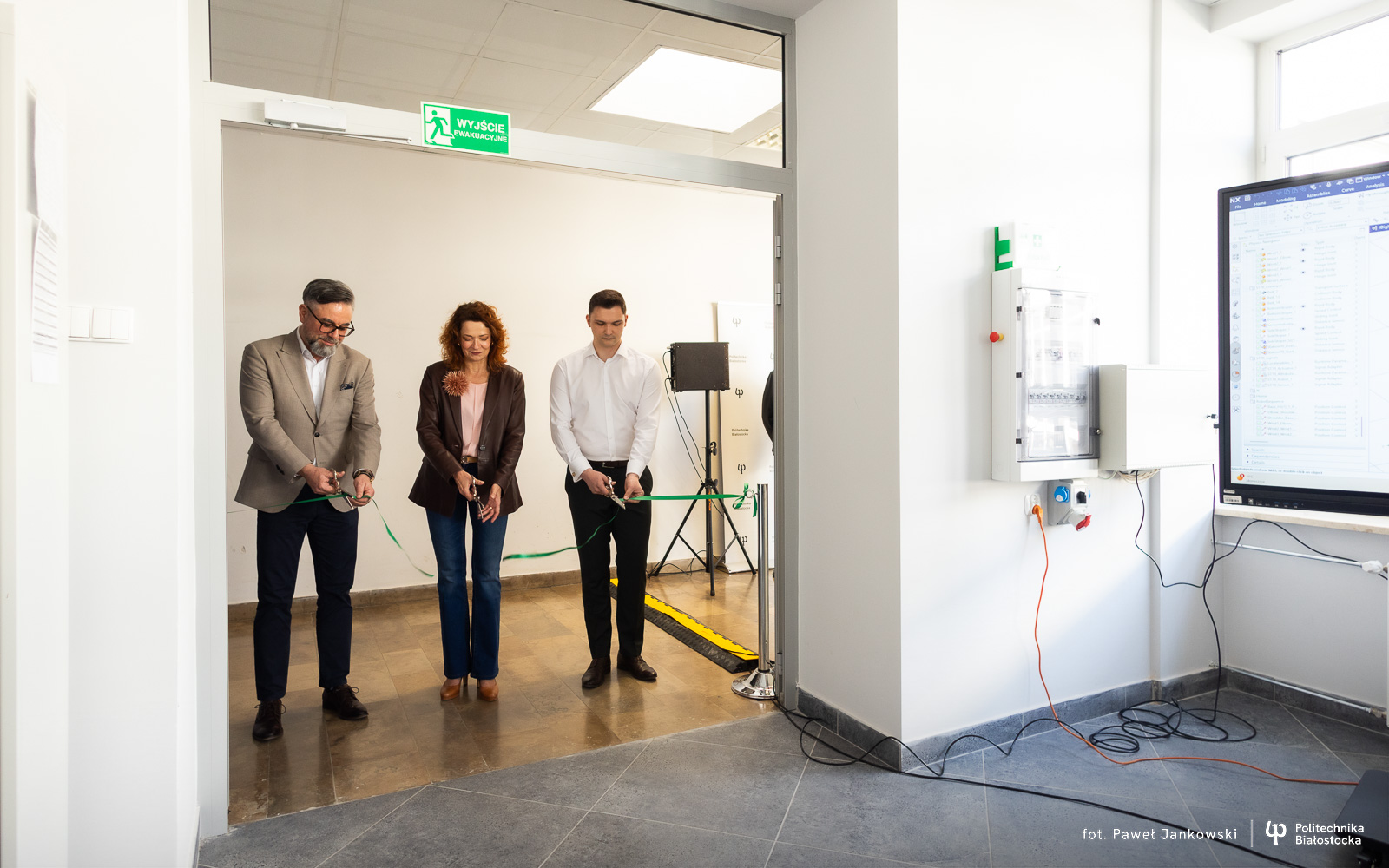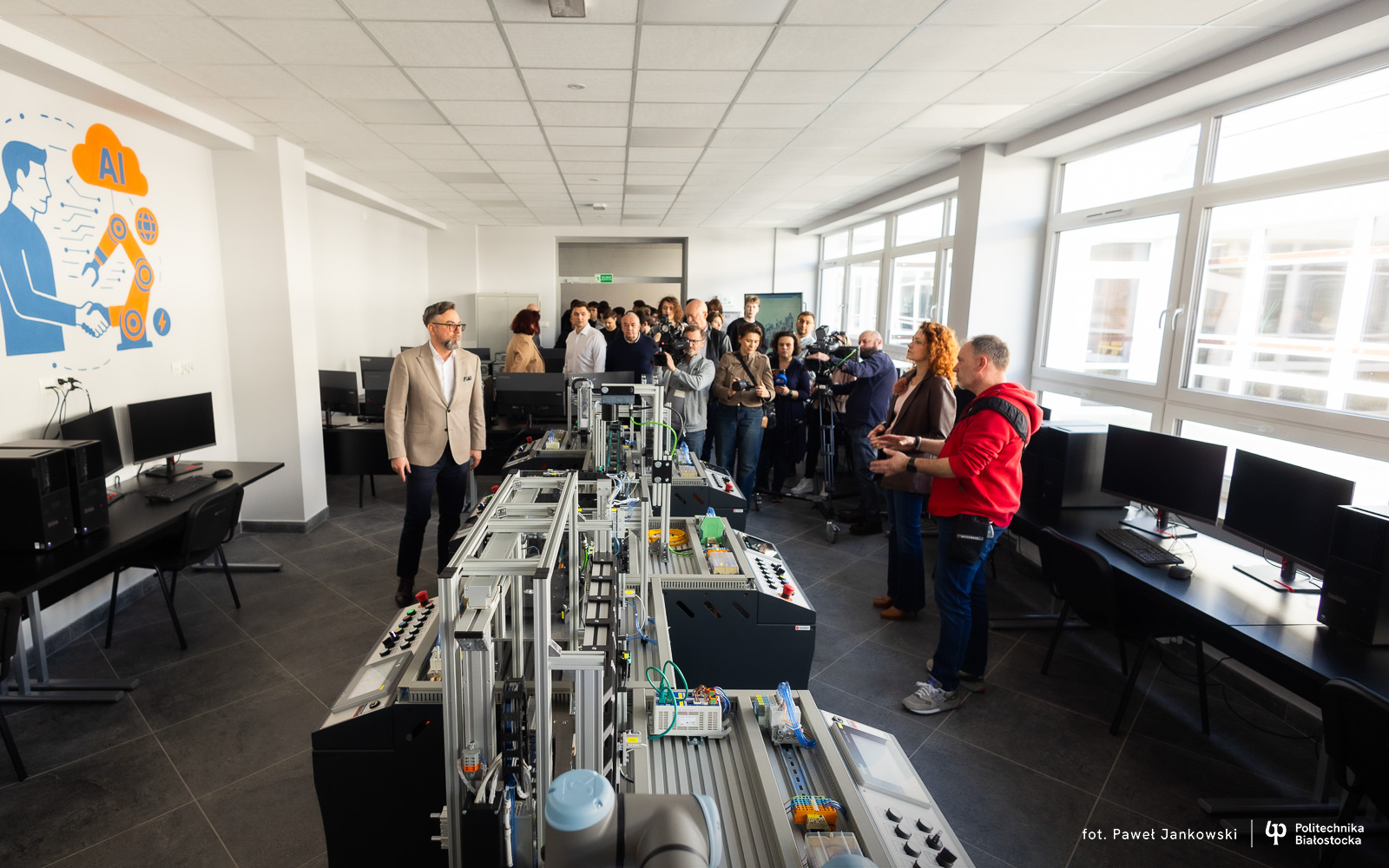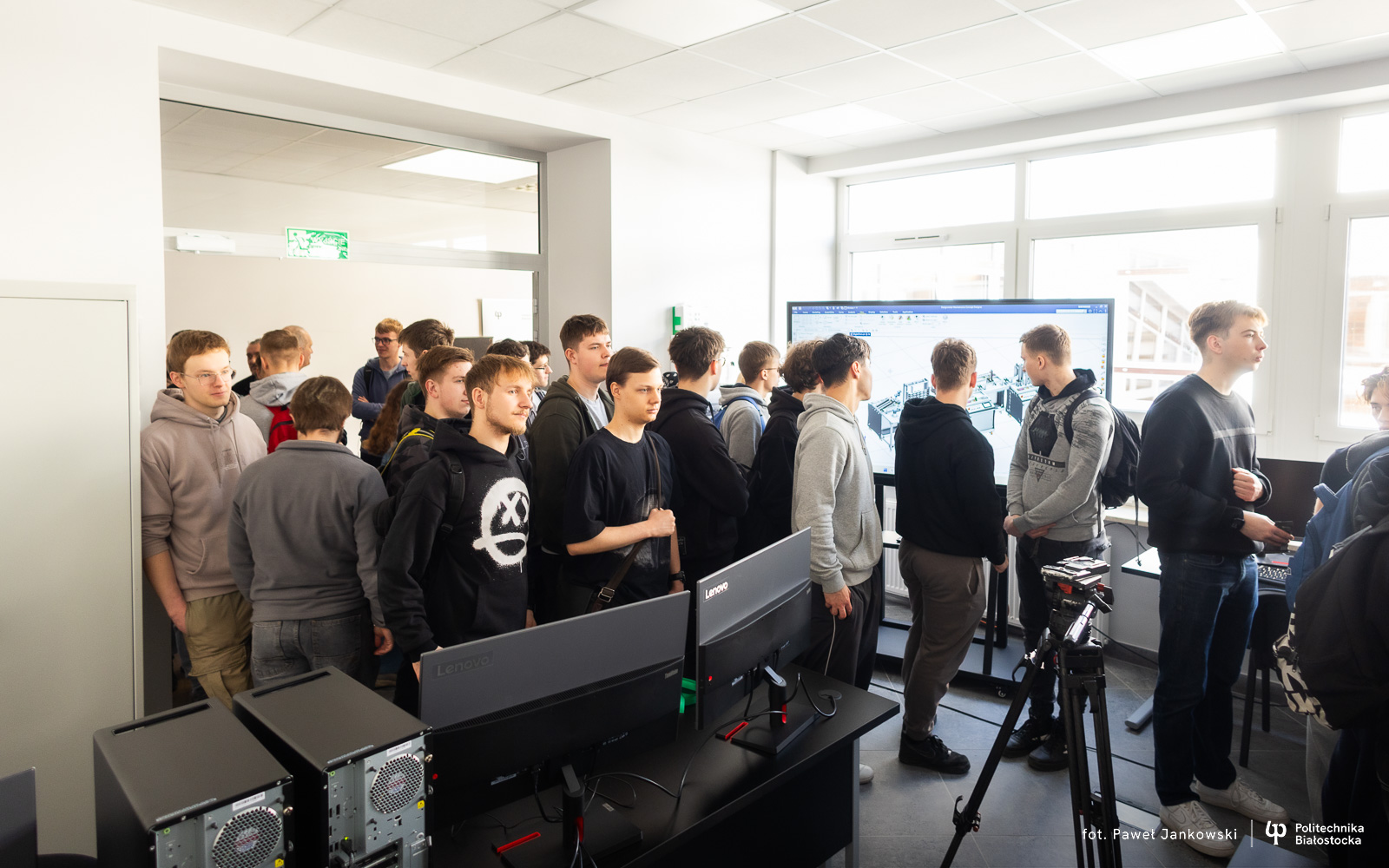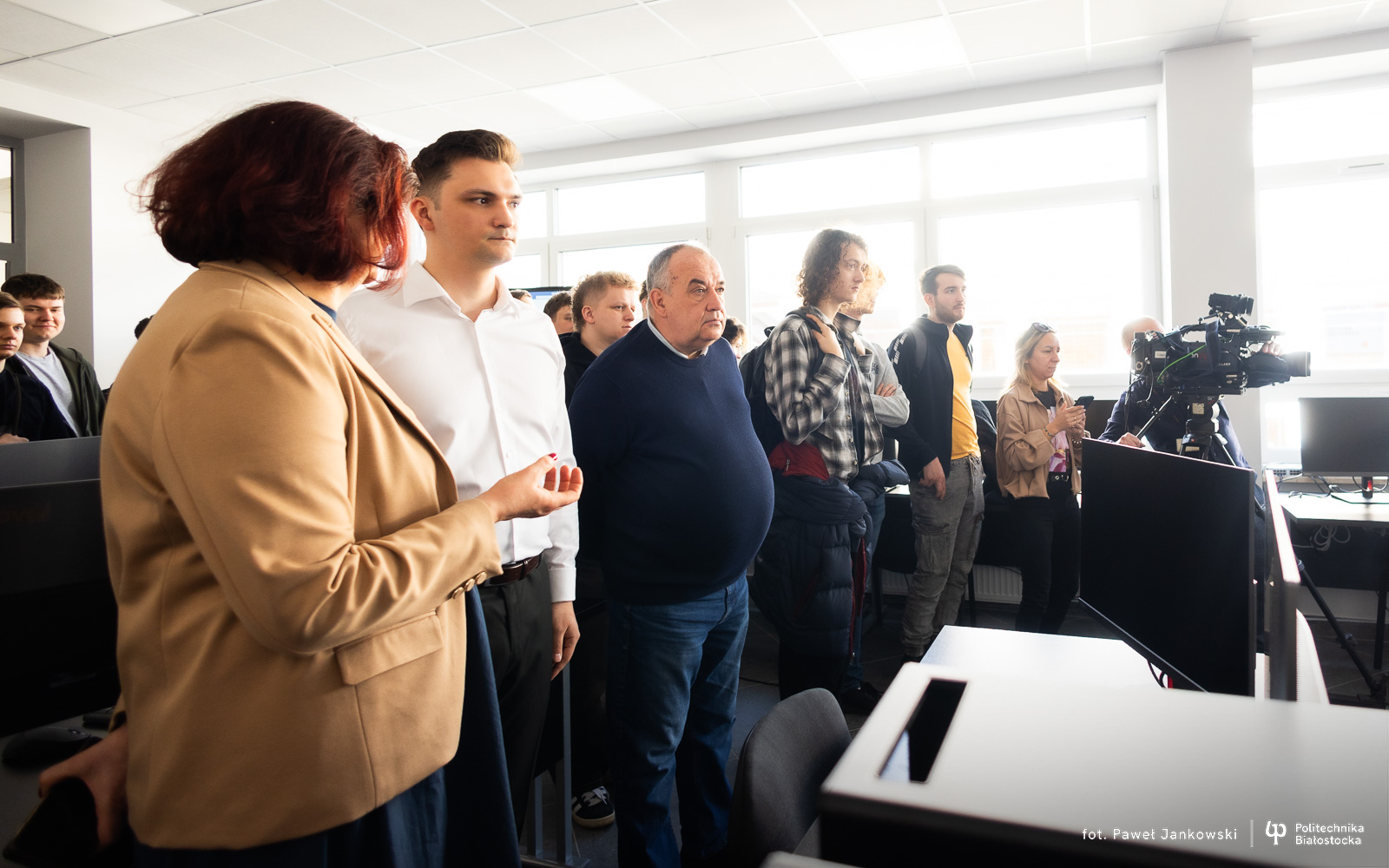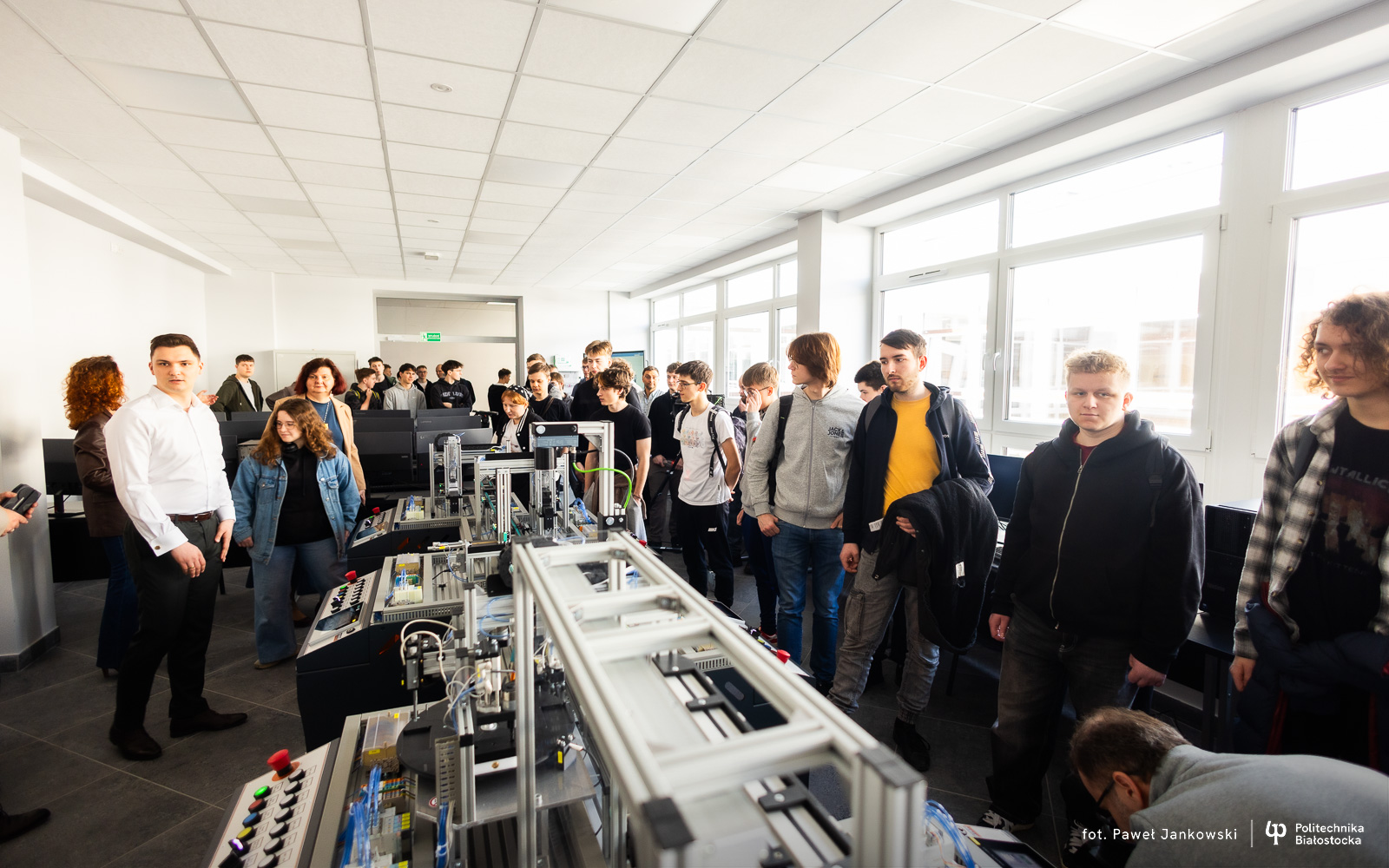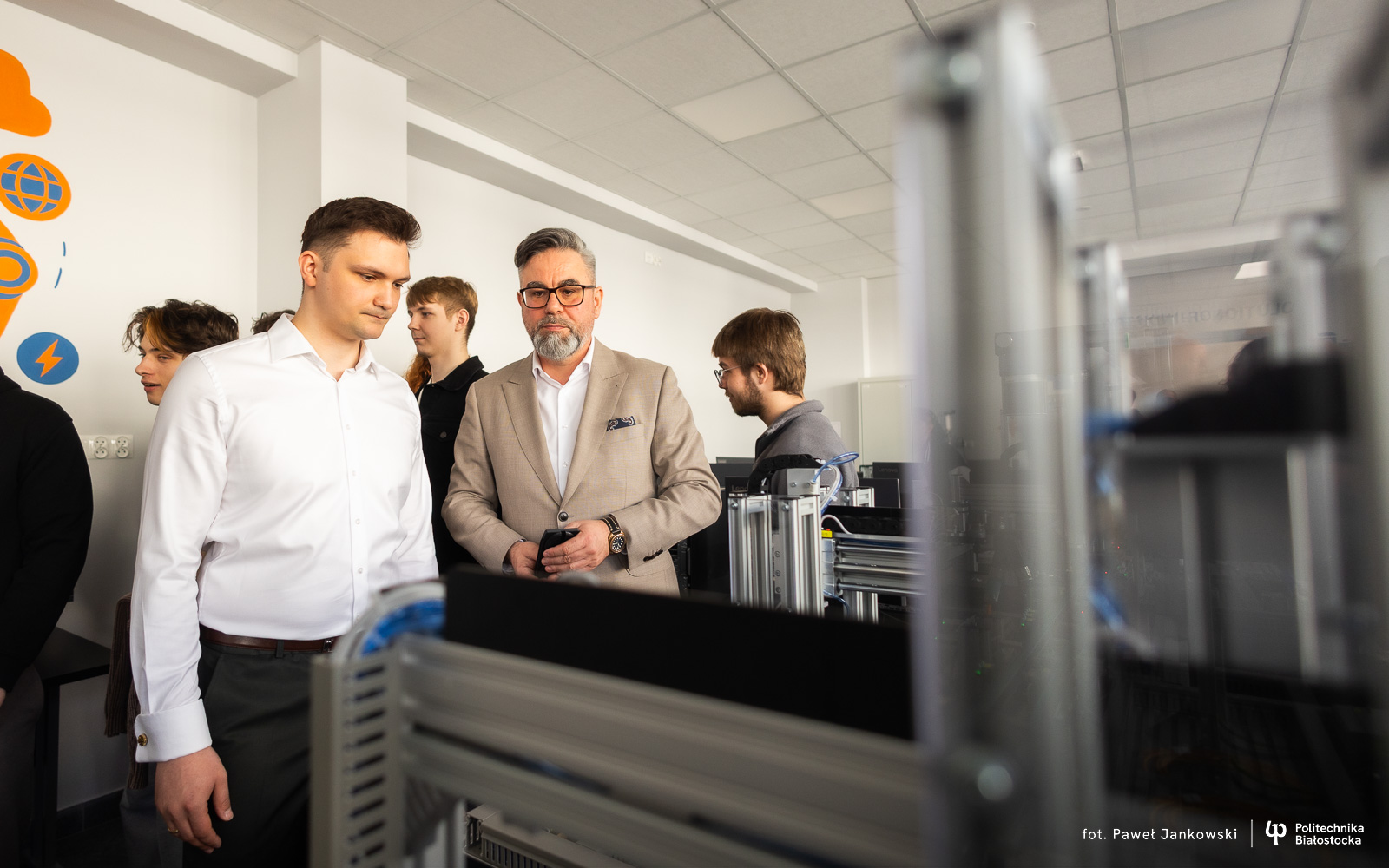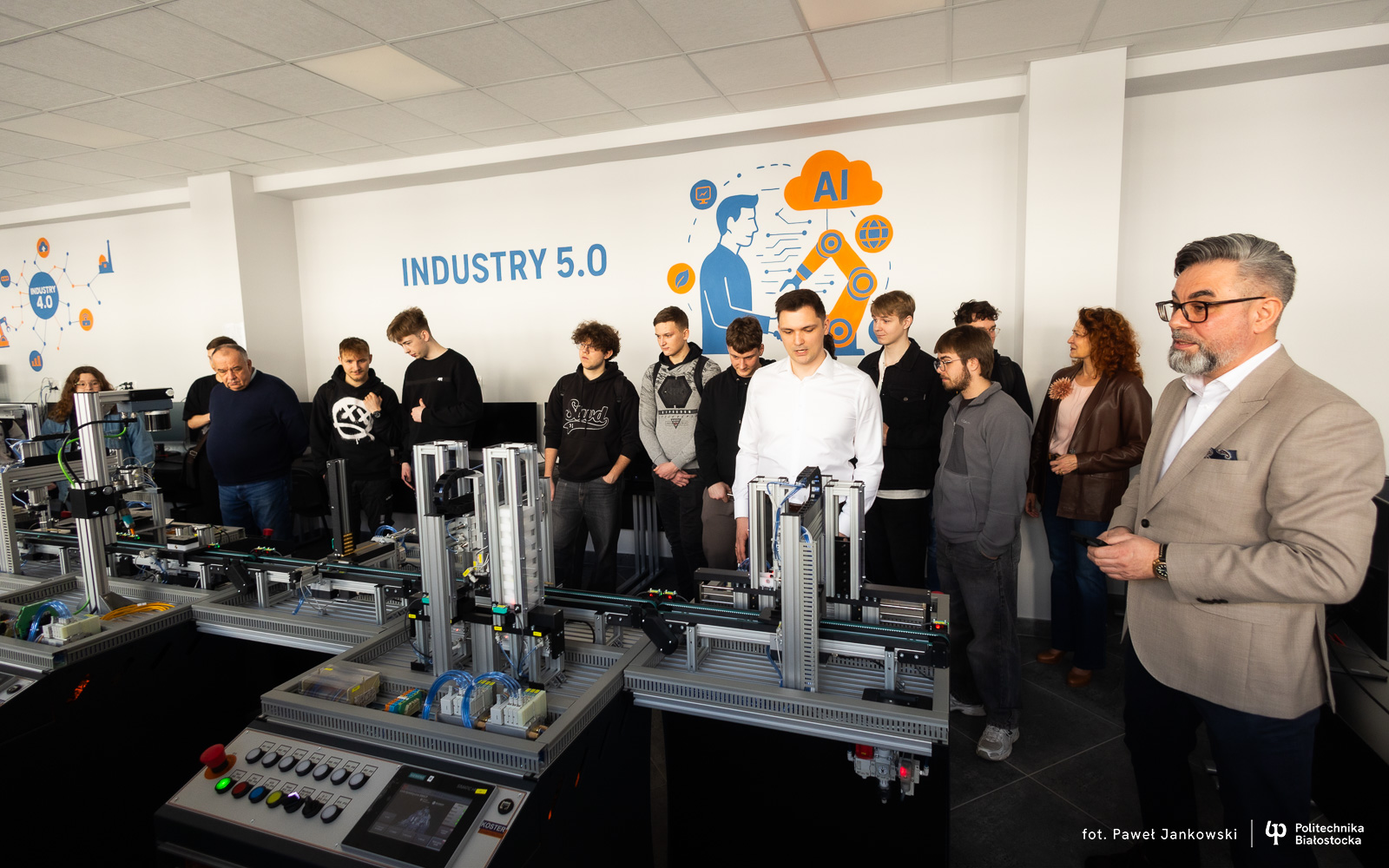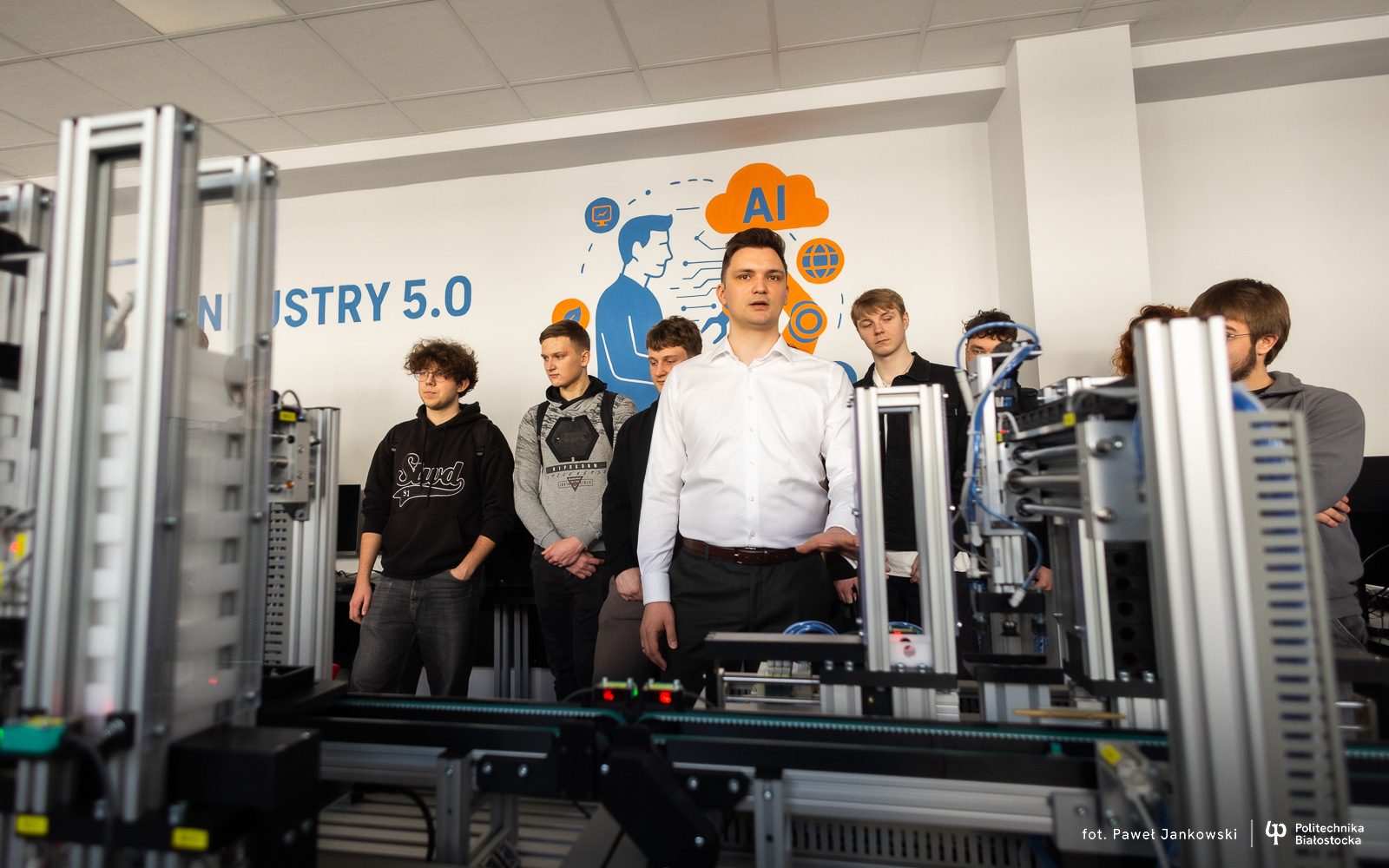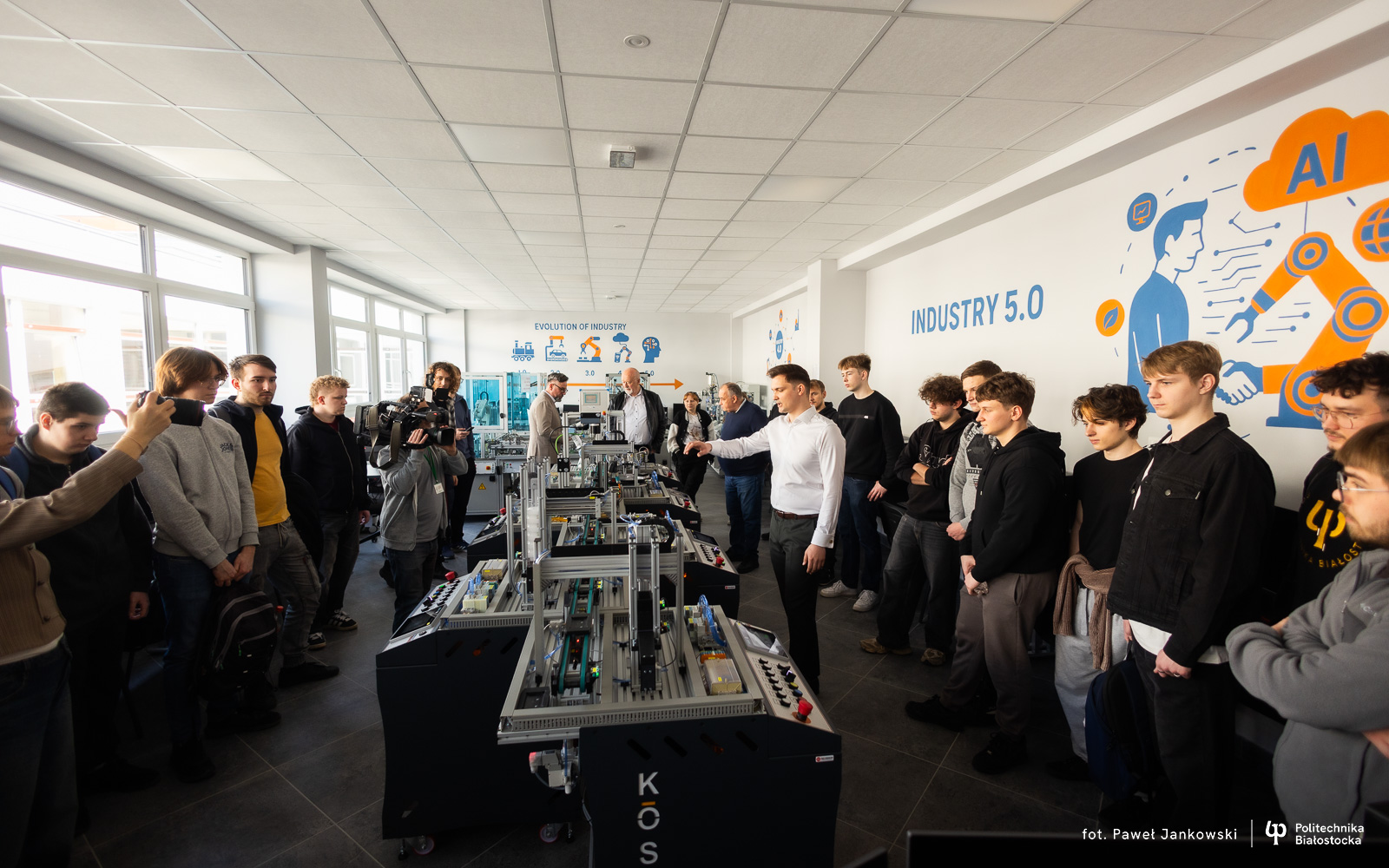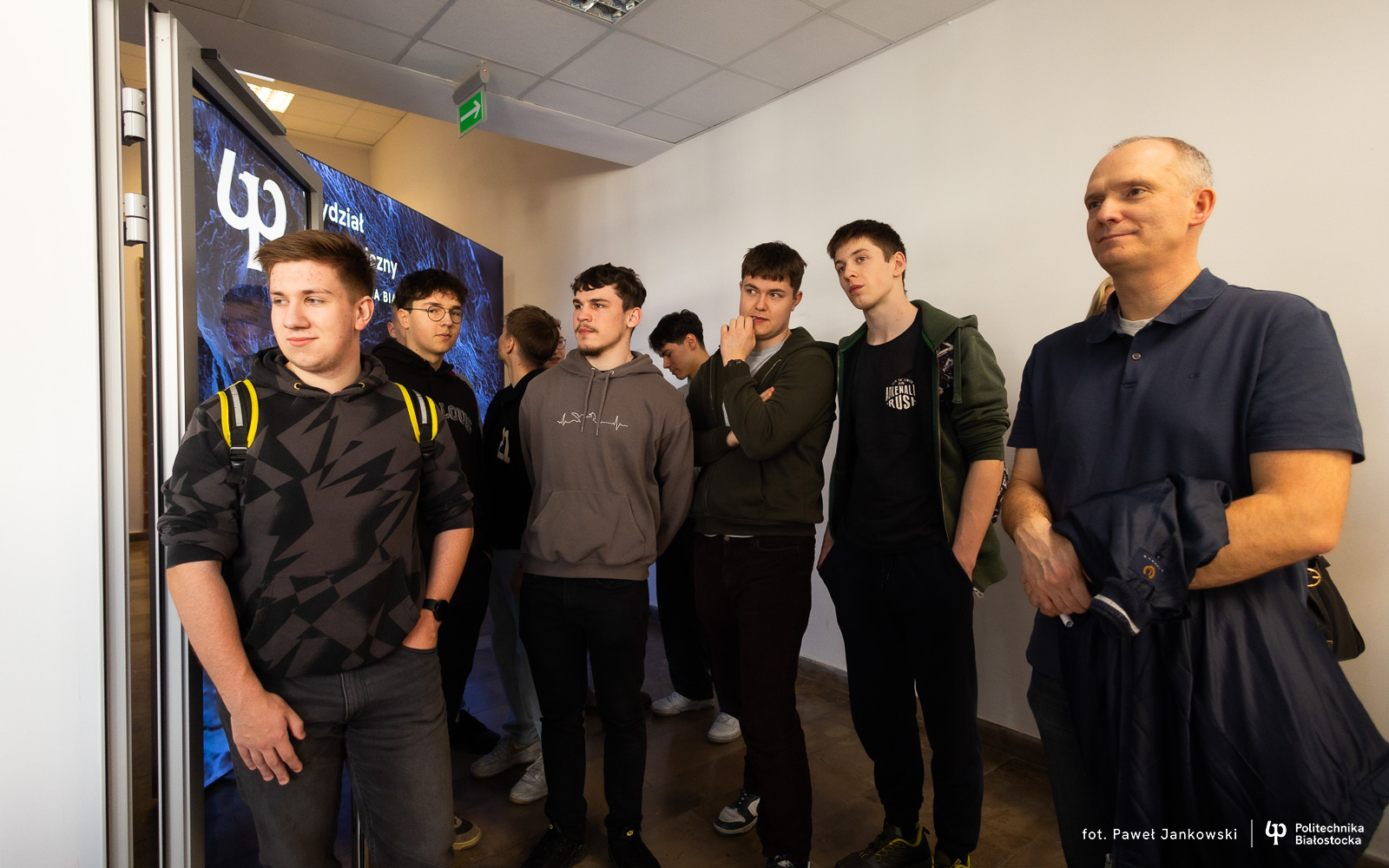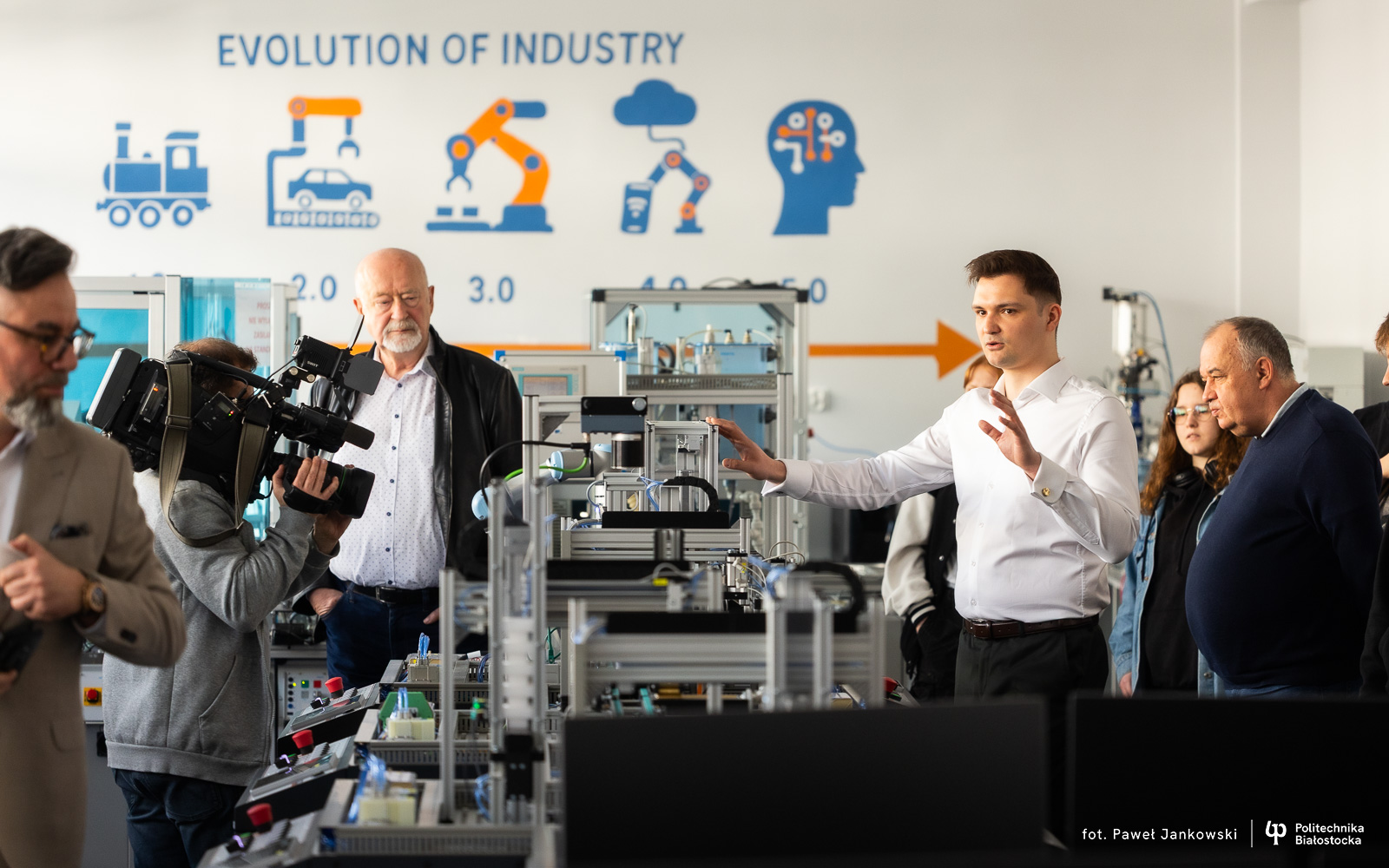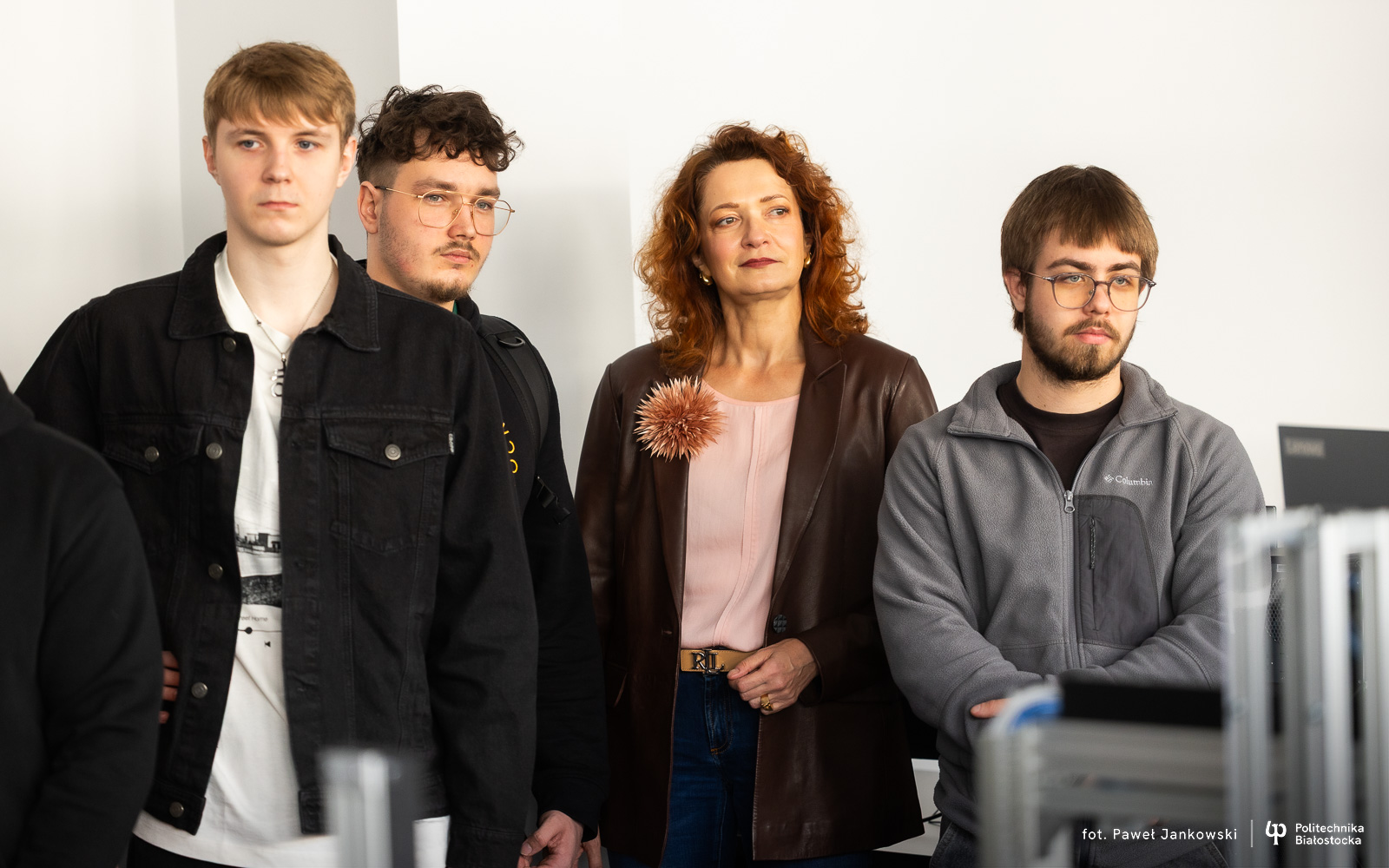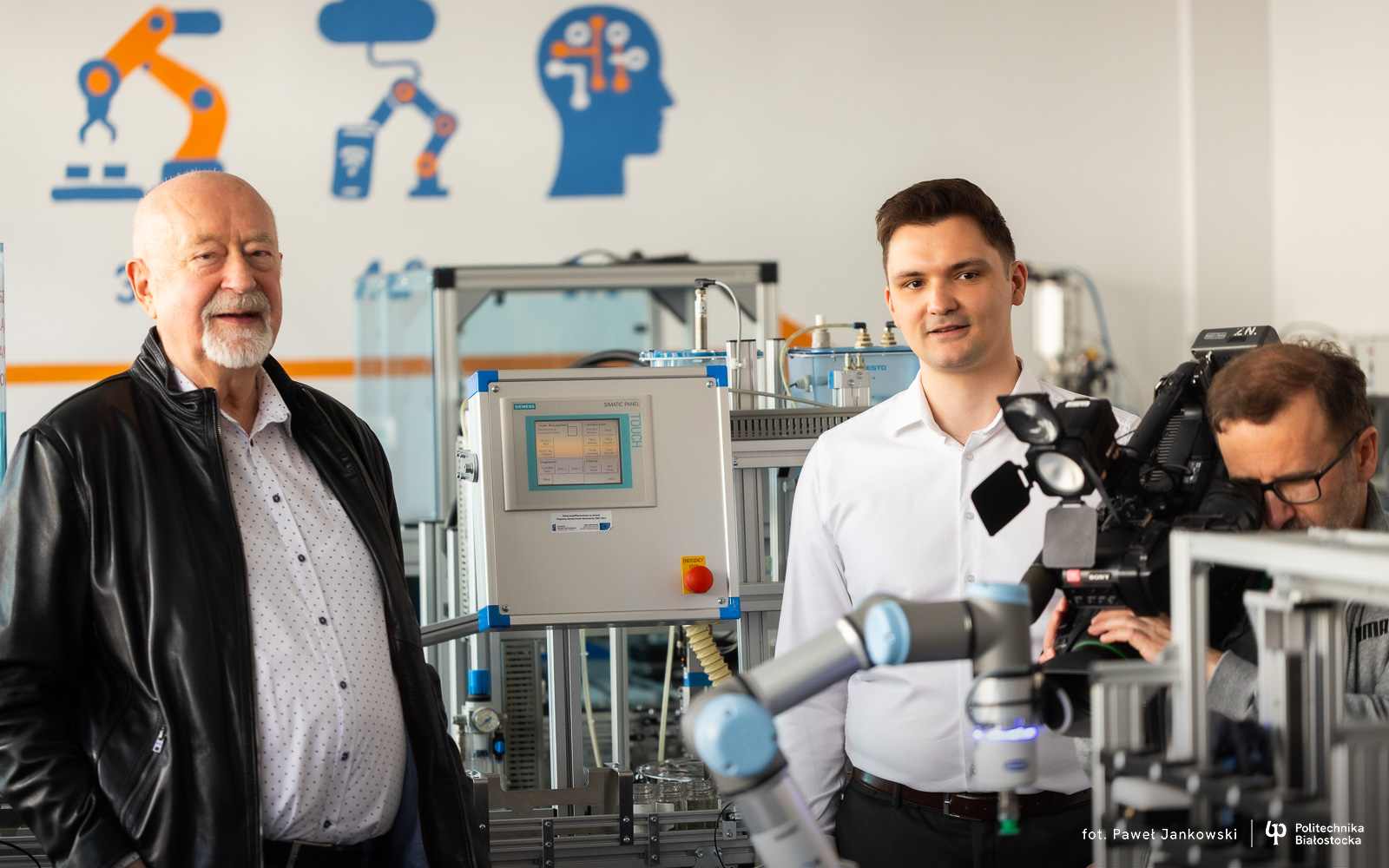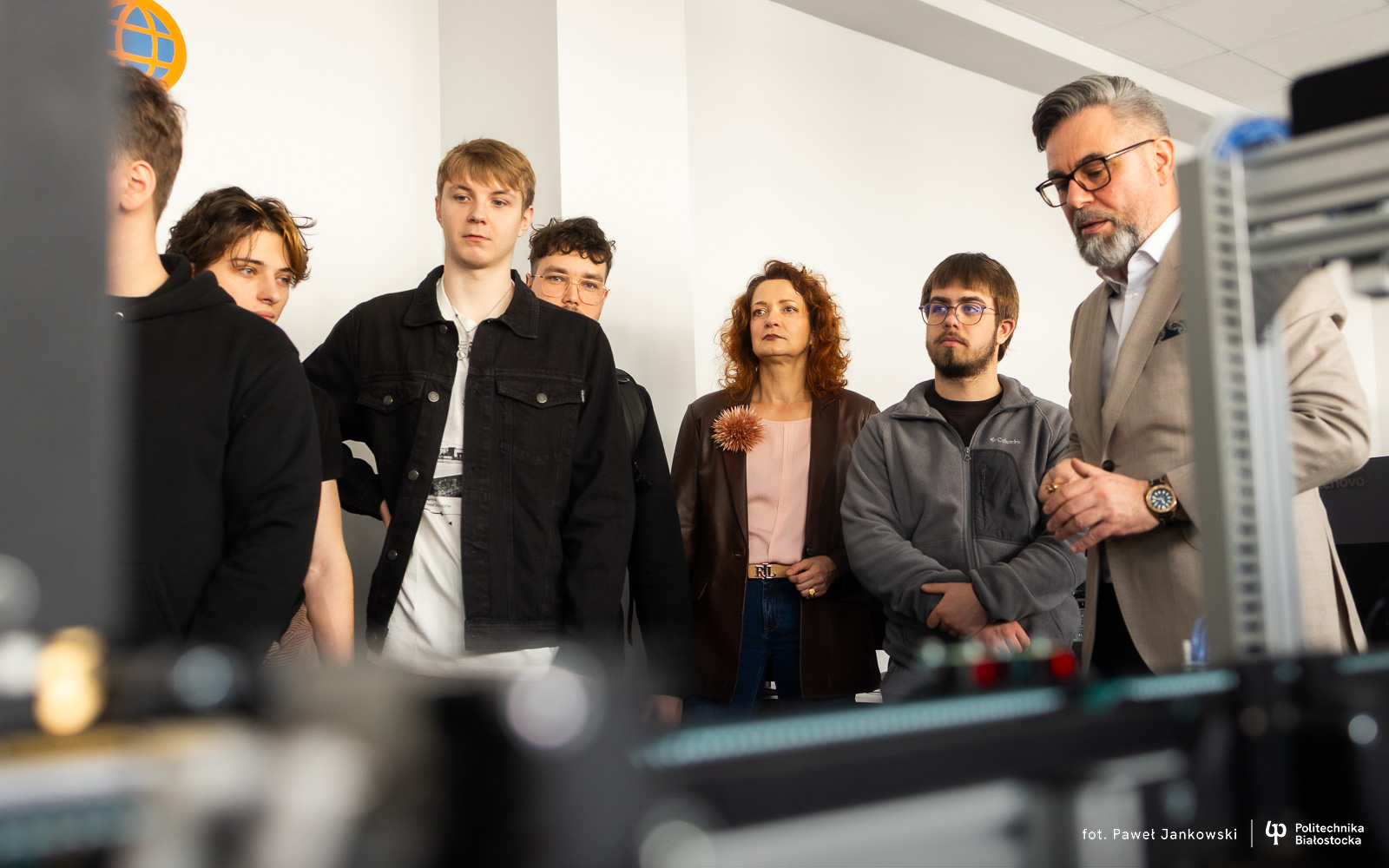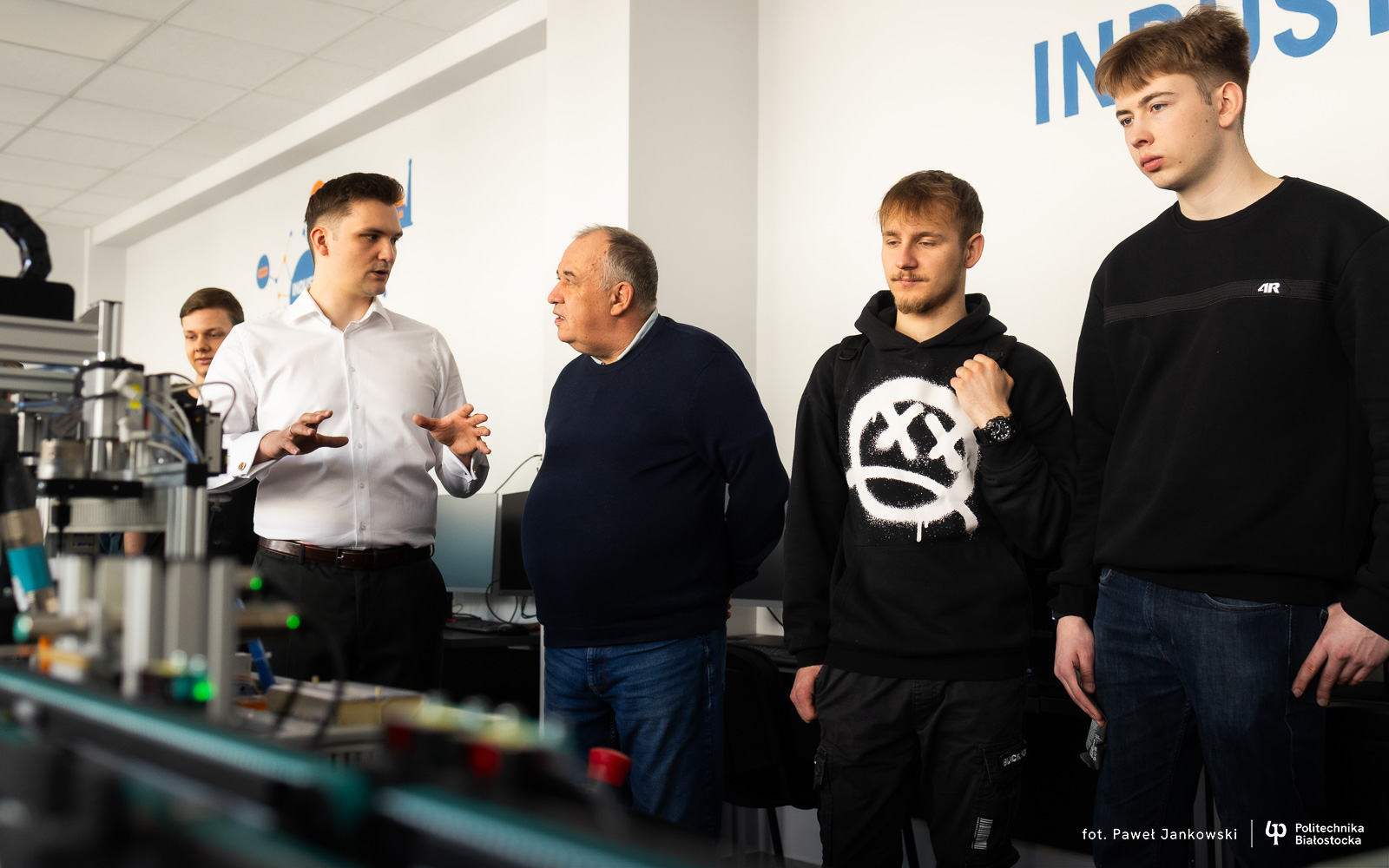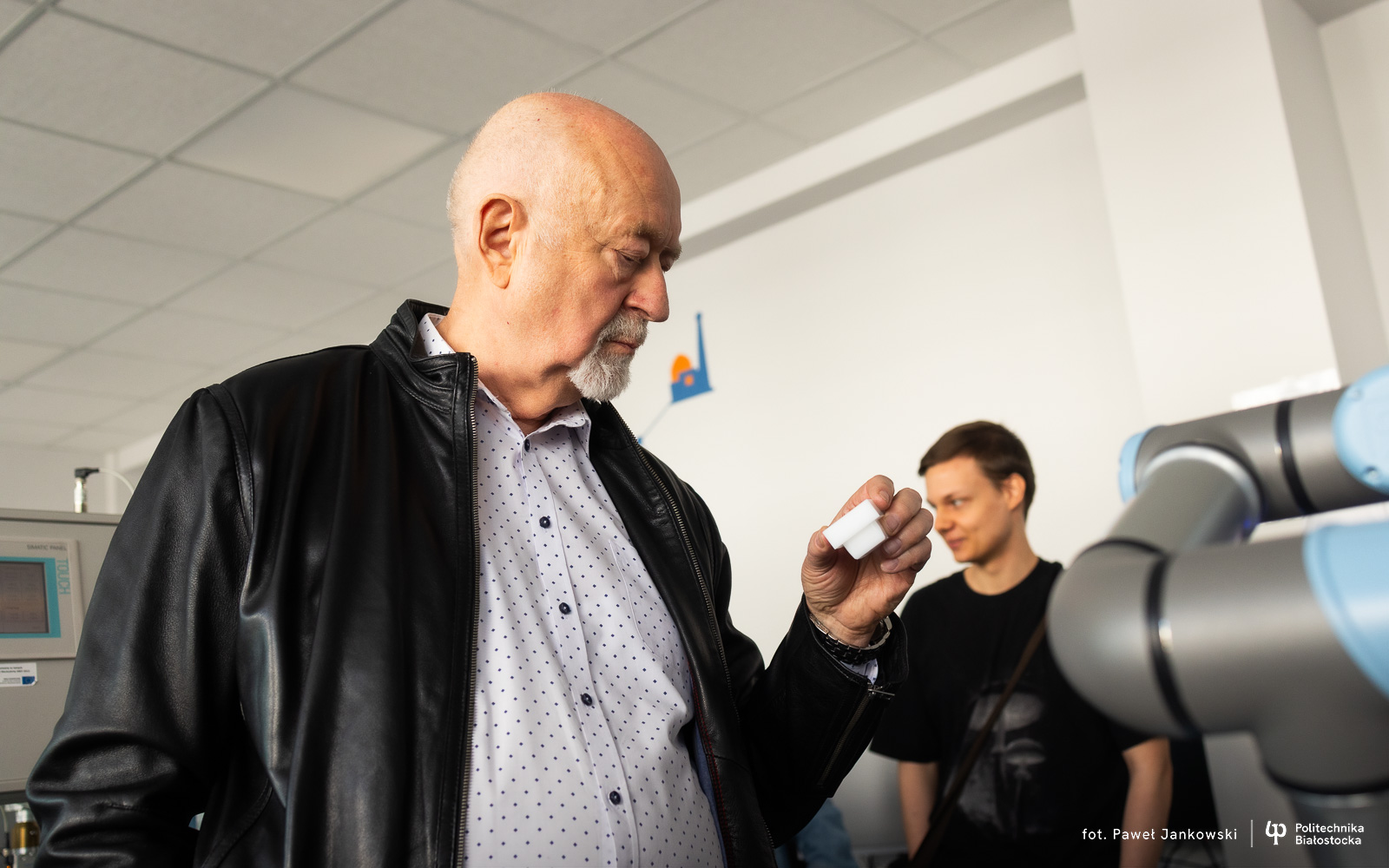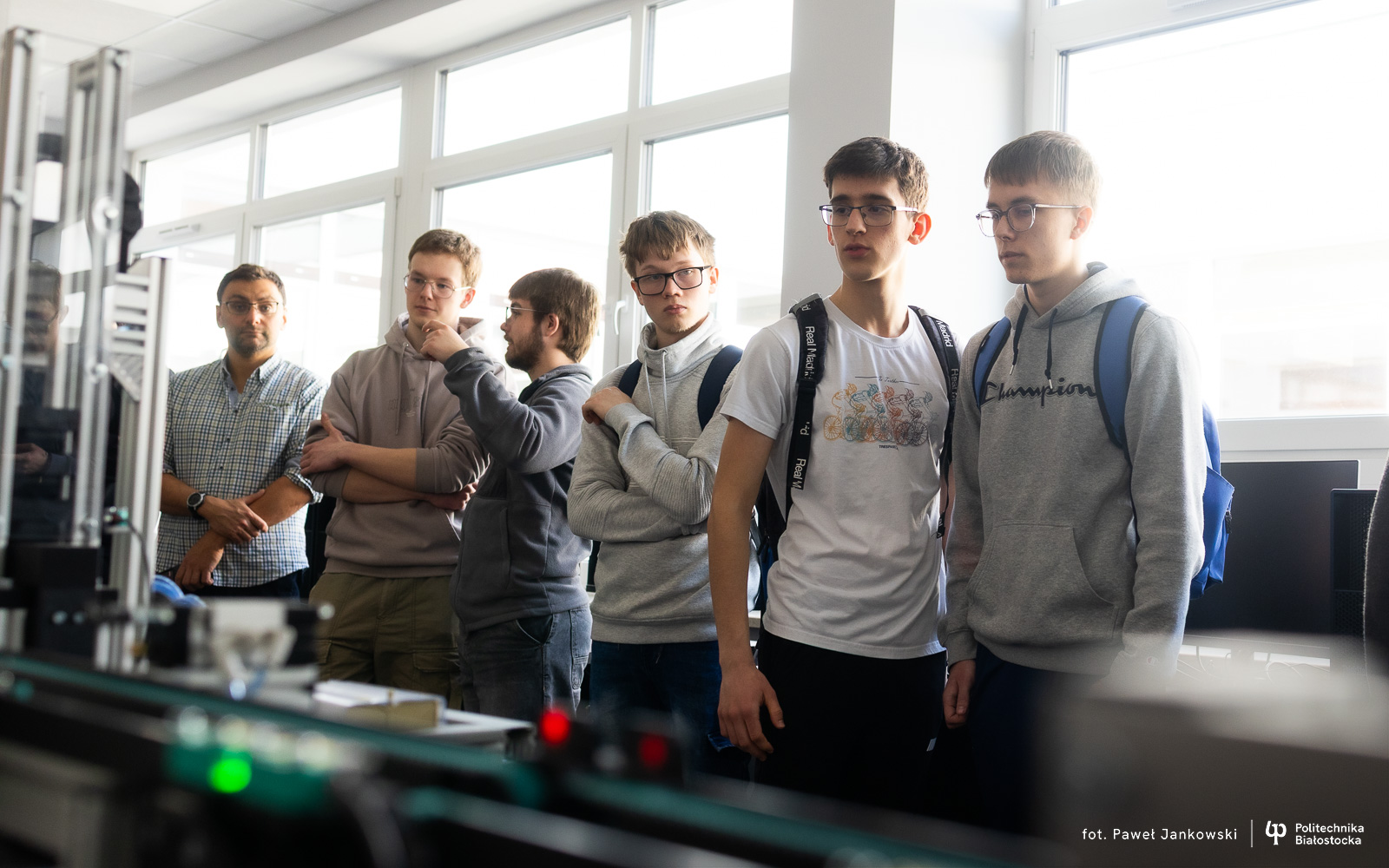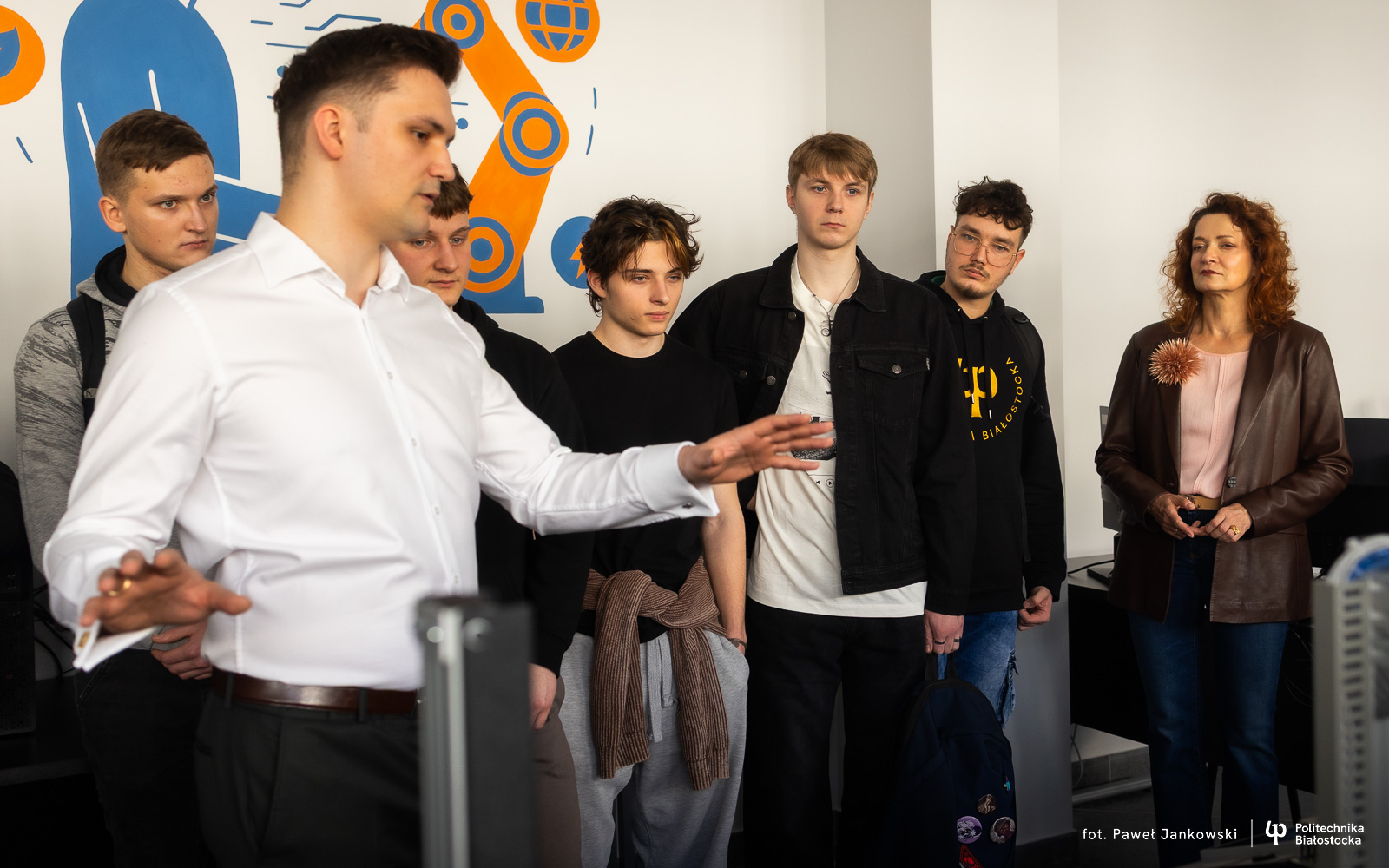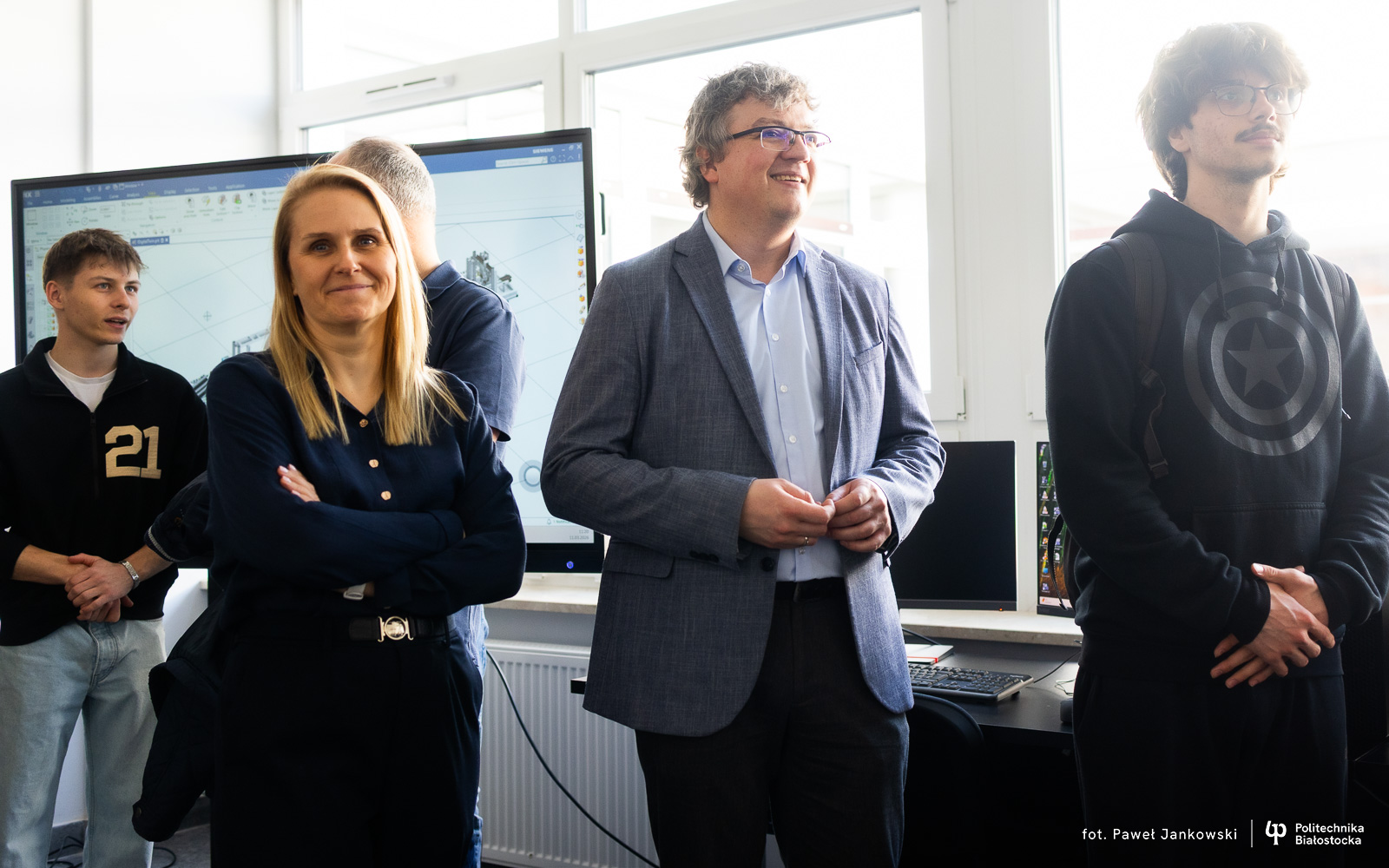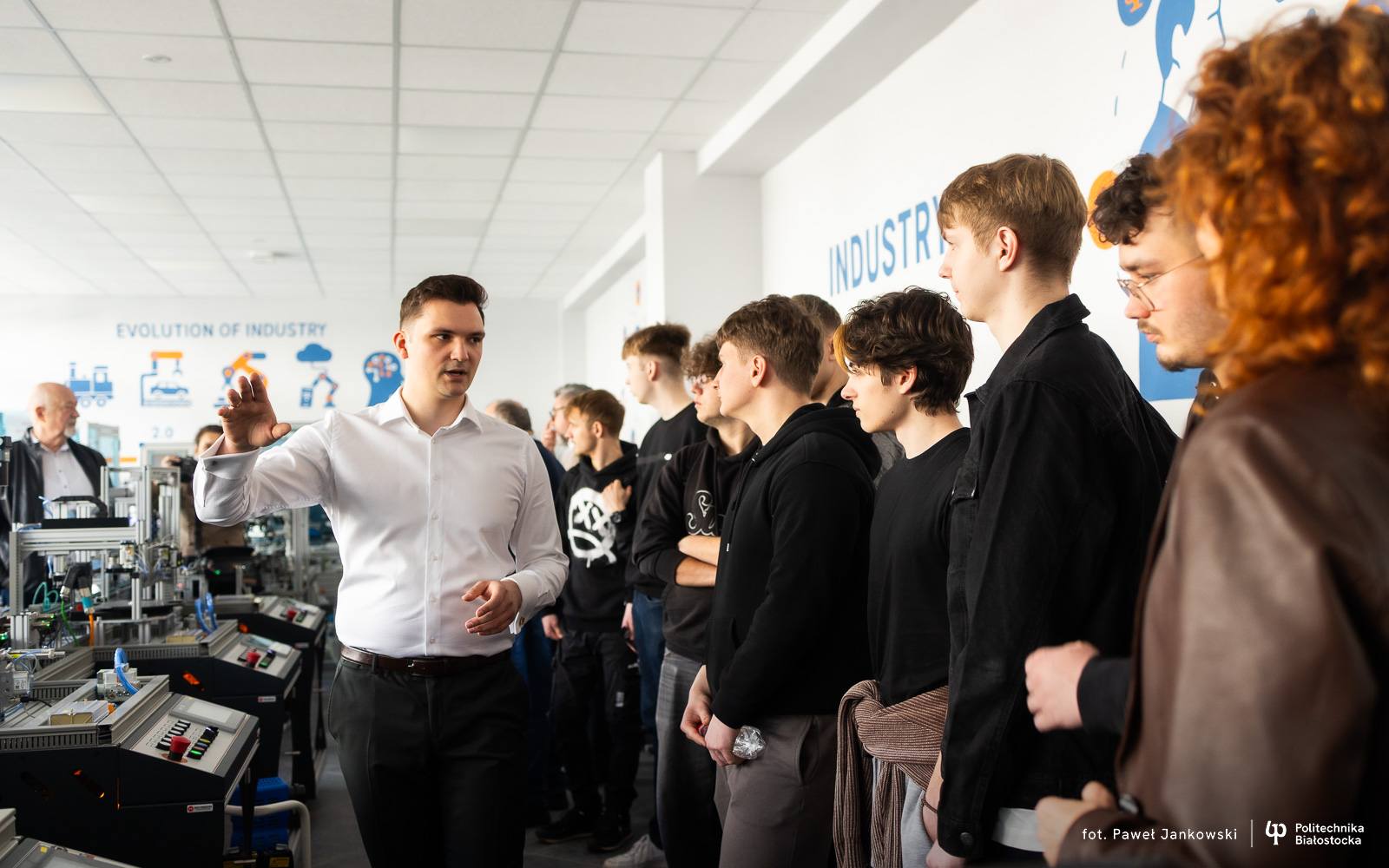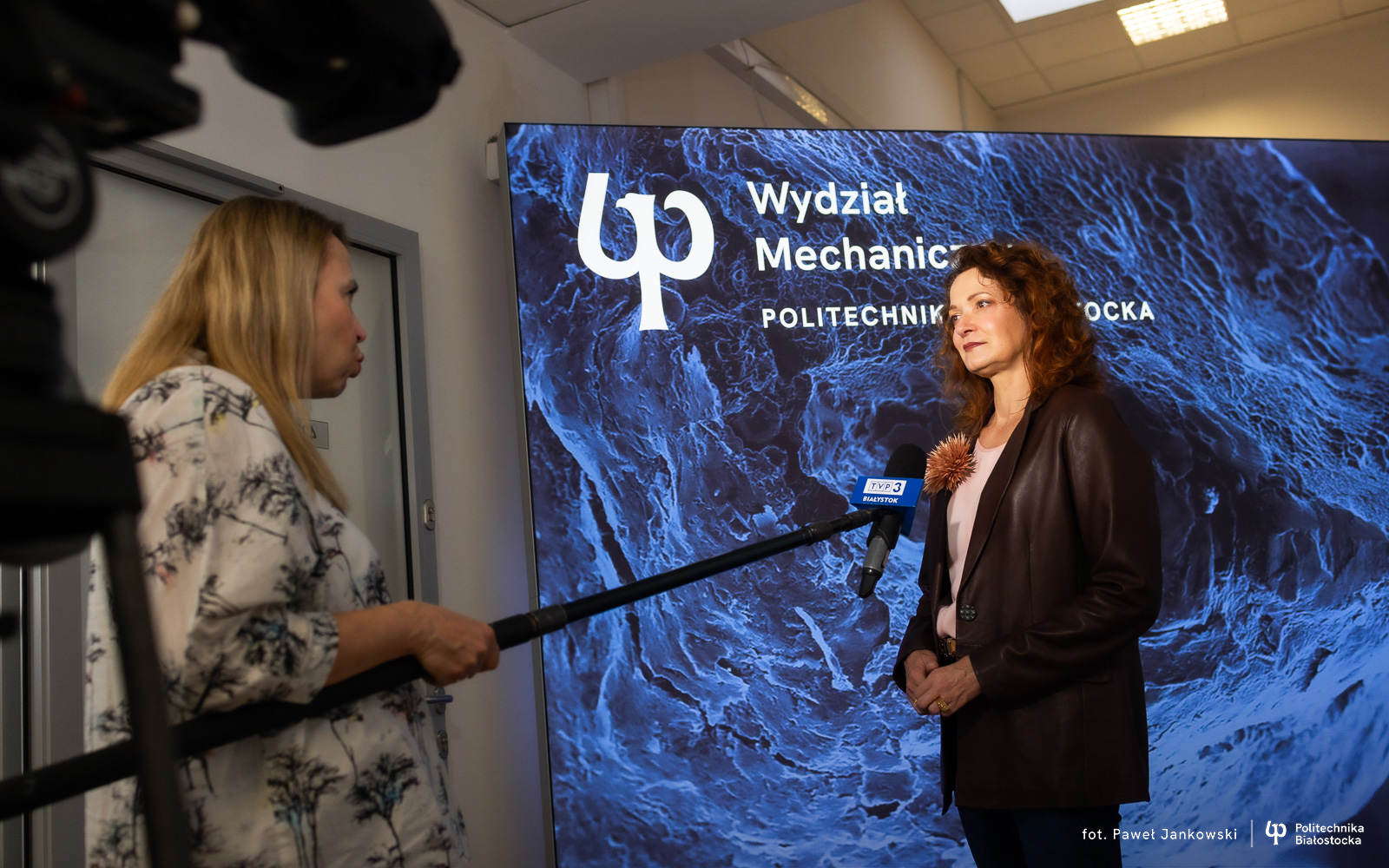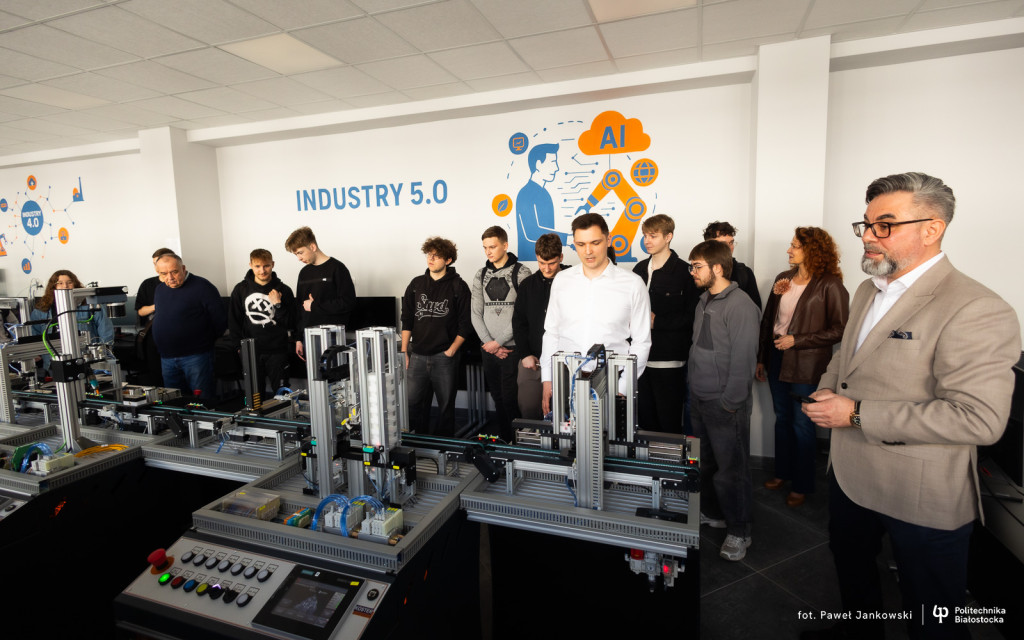
Smart Factory Lab – Intelligent Manufacturing Systems Laboratory at the Faculty of Mechanical Engineering of Bialystok University of Technology combines physical educational workstations (control systems, robotics, machine vision) with modern CAD/CAM/CAE software and Digital Twin technology. The opening was attended by fourth-year mechatronics students from the St Joseph Mechanical School Complex in Białystok, students of mechatronics as well as automation and robotics at the Faculty of Mechanical Engineering of Bialystok University of Technology, and numerous journalists interested in new technologies.
– I am very pleased that so many people are taking part in the opening of yet another remarkable place at the Faculty of Mechanical Engineering of Bialystok University of Technology – says Assoc. Prof. Marta Kosior-Kazberuk, DSc, PhD, Eng., Rector of Bialystok University of Technology. – Another place where knowledge meets practice, and does so in the most effective and modern way. A place designed to foster creativity, openness to new ideas, innovation and, above all, to broaden young people’s minds and support their development. It is also a place that requires entirely new teaching methods from us, and therefore also a space for the professional development of academic staff. Just like the entire Bialystok University of Technology, we are also opening this laboratory to our industry partners and to our partners from secondary schools.
Bialystok University of Technology, together with nine partner universities, forms the European University Across.
– We are introducing European standards into our education – emphasises the Rector of Bialystok University of Technology. – We educate engineers, and therefore place particular emphasis on ensuring they have opportunities to pursue their passions, develop creativity, and learn interdisciplinary and innovative approaches to solving engineering problems. Facilities such as the Smart Factory Lab serve this purpose, offering both an educational concept and equipment at a world-class level.
Smart Factory Lab – Intelligent Manufacturing Systems Laboratory is a state-of-the-art teaching facility preparing future engineers to work in line with Industry 4.0 and 5.0 standards.
– Ladies and gentlemen, let us imagine two worlds. One real, the other virtual – in fact digital – says Prof. Michał Kuciej, DSc, PhD, Eng., Dean of the Faculty of Mechanical Engineering of Bialystok University of Technology. – This production line, composed of controllers, conveyors, storage systems, robotic arms and robots themselves, along with its digital counterpart defined by algorithms and operating essentially in real time – just like the system in our laboratory – will be used to support the operation of modern factories. Mechatronics students, from as early as the third semester, will use this line to test various production processes, design and programme controllers, and also simulate various failures related to the management and operation of such a production line.
The greatest innovation of the Smart Factory Lab – Intelligent Manufacturing Systems Laboratory, however, is what cannot be seen with the naked eye – the Digital Twin.
– The digital twin is a virtual copy of the real production line and, thanks to the bidirectional exchange of data between sensors and the digital production line, we are able to monitor the actual condition of the production line in real time – says Michał Falkowski, MSc Eng., from the Department of Dynamic Systems at the Faculty of Mechanical Engineering of Bialystok University of Technology. – Thanks to the digital twin, we can begin programming work even before the real production line is built. Students at each of the 15 computer stations can work simultaneously, developing control programmes for the production line in parallel, and later, once most of the programme has been verified, they can test it on the real production line located in the same laboratory without interrupting the work of their fellow students. This approach allows, in a professional context, for programmes to be developed at an early stage based on the digital twin, before the actual production line is installed on the factory floor. At an early stage, a mechatronics engineer can begin working with the line, while designers can simultaneously refine the details of the models, and ultimately these two paths can be integrated, with the programme from the digital twin uploaded to the target production line, rather than starting work only after the physical line has been built. This makes the work much faster, and both the implementation and commissioning of such a production line are significantly more efficient.
Classes in the laboratory will be conducted by qualified academic staff who, from spring onwards, will undergo specialised tutoring training in order to professionally prepare students for Siemens certification processes.
– I am planning to apply to Bialystok University of Technology and I am still deciding between automation and robotics and mechatronics – says Brunon Klimowicz, a fourth-year mechatronics student at the St Joseph Mechanical School Complex in Białystok. – In my opinion, the digital twin will be a good way to save both money and resources when testing a production line.
The introduction of the Smart Factory Lab into the curriculum (mandatory for mechatronics students from the 2026/2027 academic year) brings a number of tangible benefits:
- Obtaining international certifications: Students have the opportunity to prepare for the Siemens Mechatronic Systems Certification Program exams (levels 1, 2 and 3), which are recognised in the global industry.
- Access to industry standards
- Working in a virtual environment without limitations: Thanks to the digital twin, a larger group of users can simultaneously programme and test processes on virtual models, including working independently from home.
- Practical problem-solving skills: Students learn to design processes, programme controllers, simulate failures and manage their resolution.
- Ability to adapt quickly
Read also: Microscopy Research Centre at Bialystok University of Technology opens
Author: Jerzy Doroszkiewicz