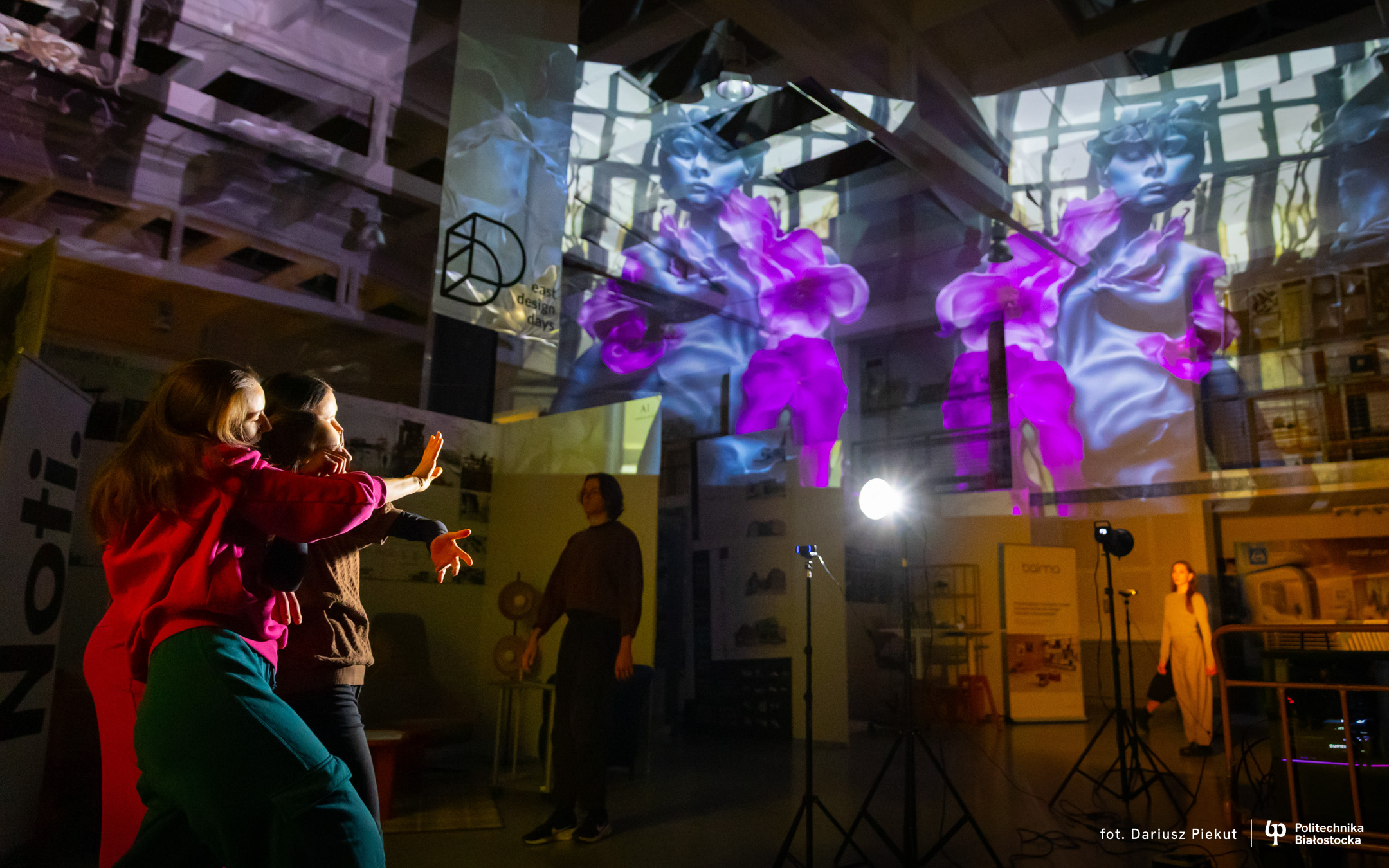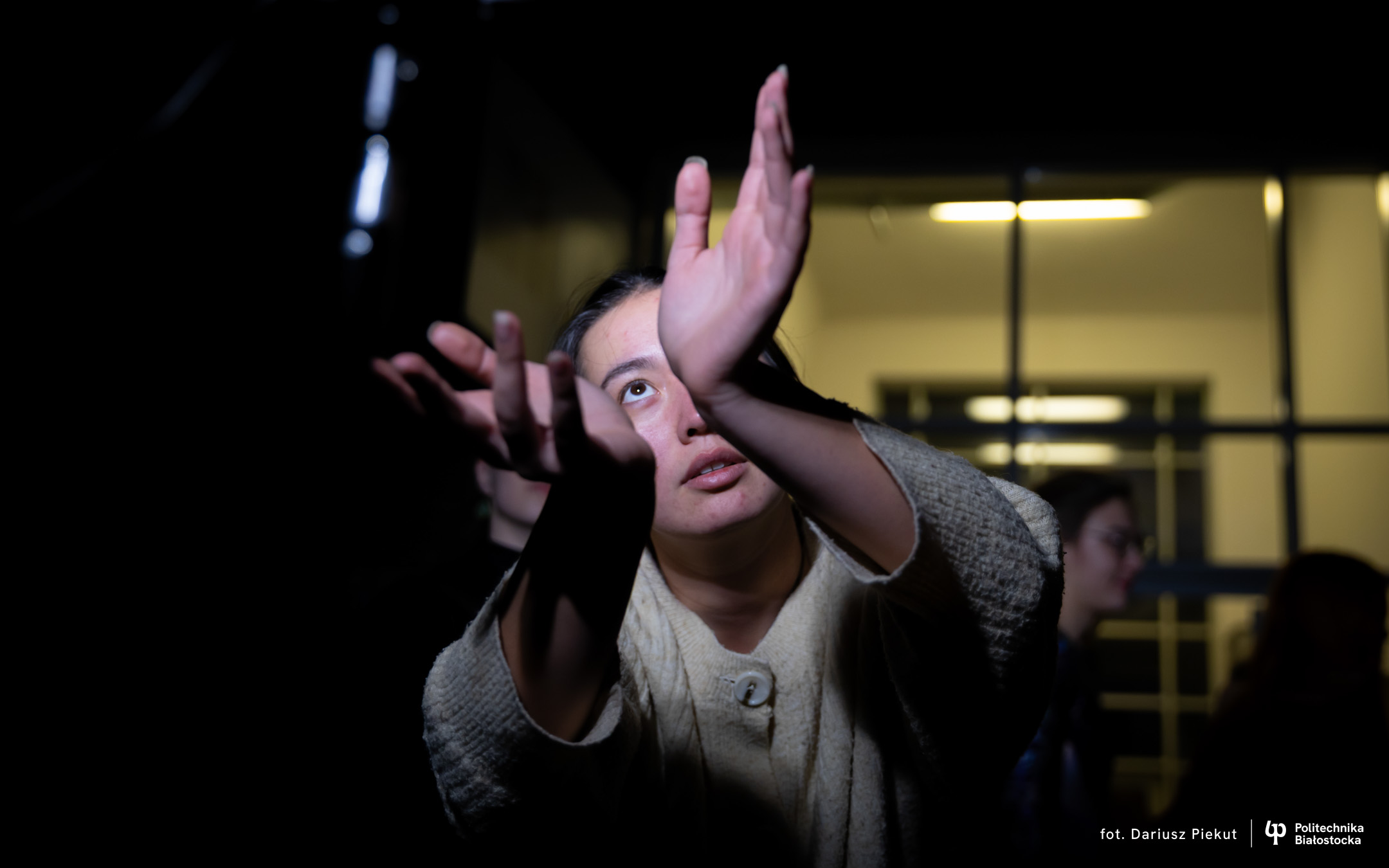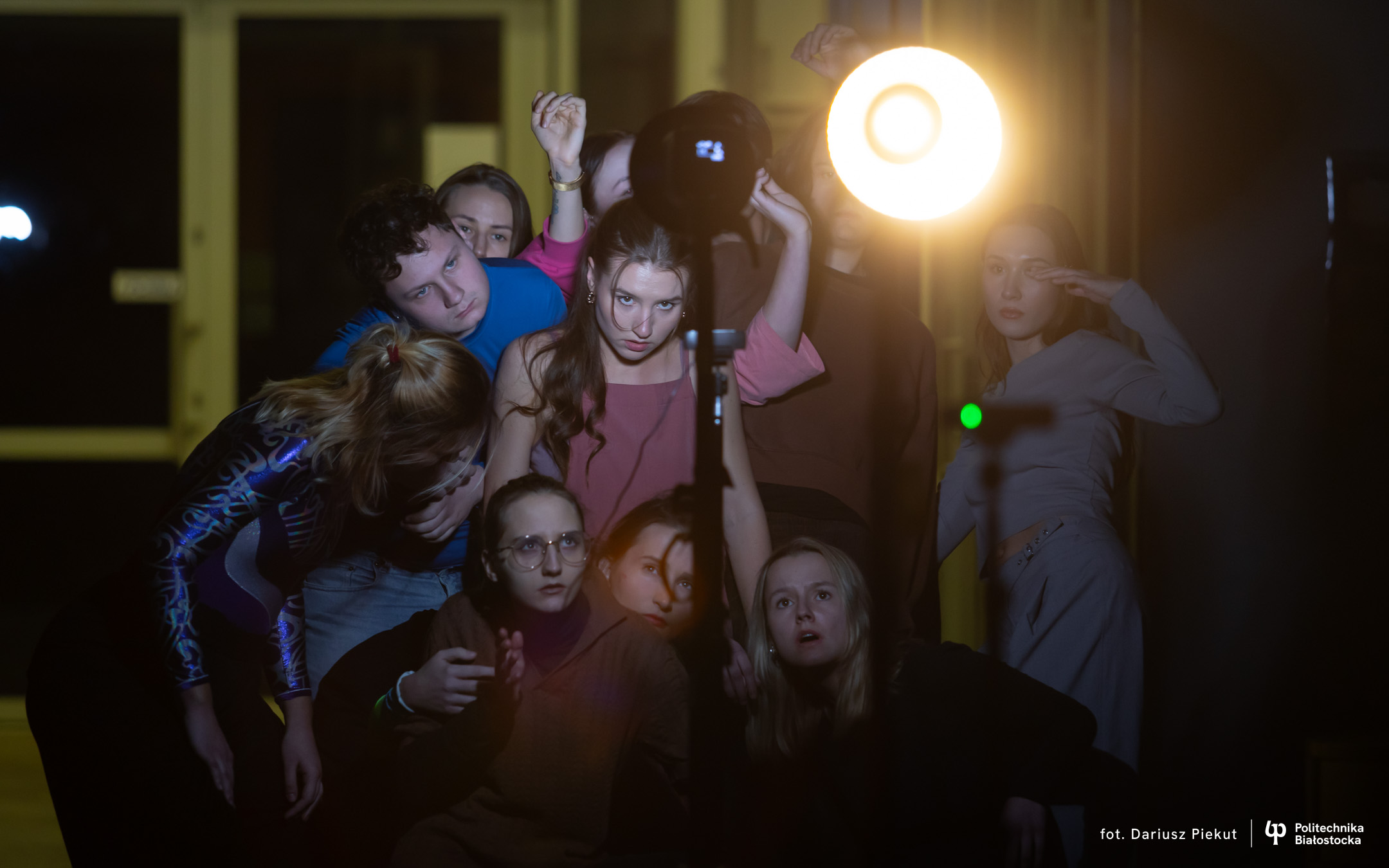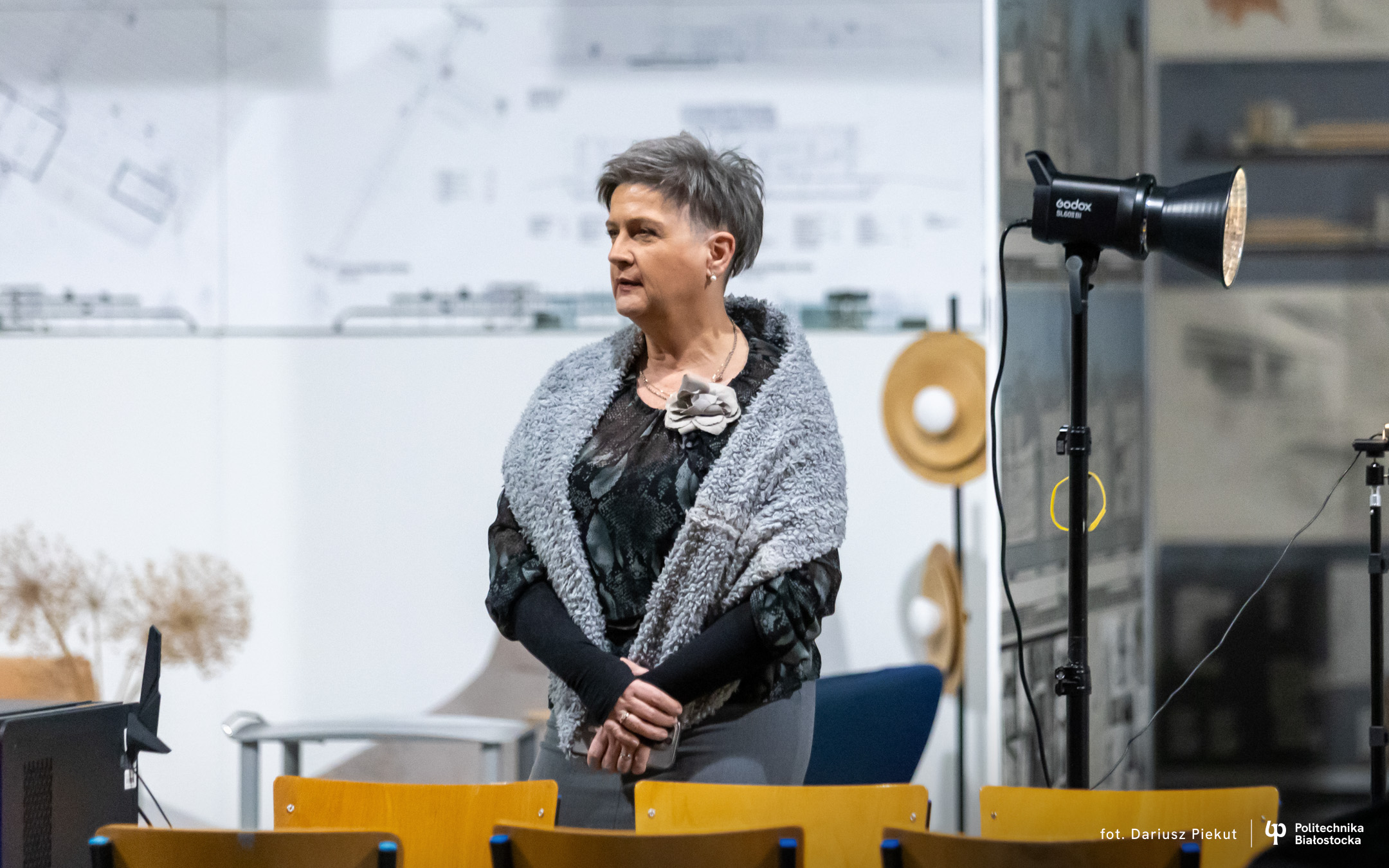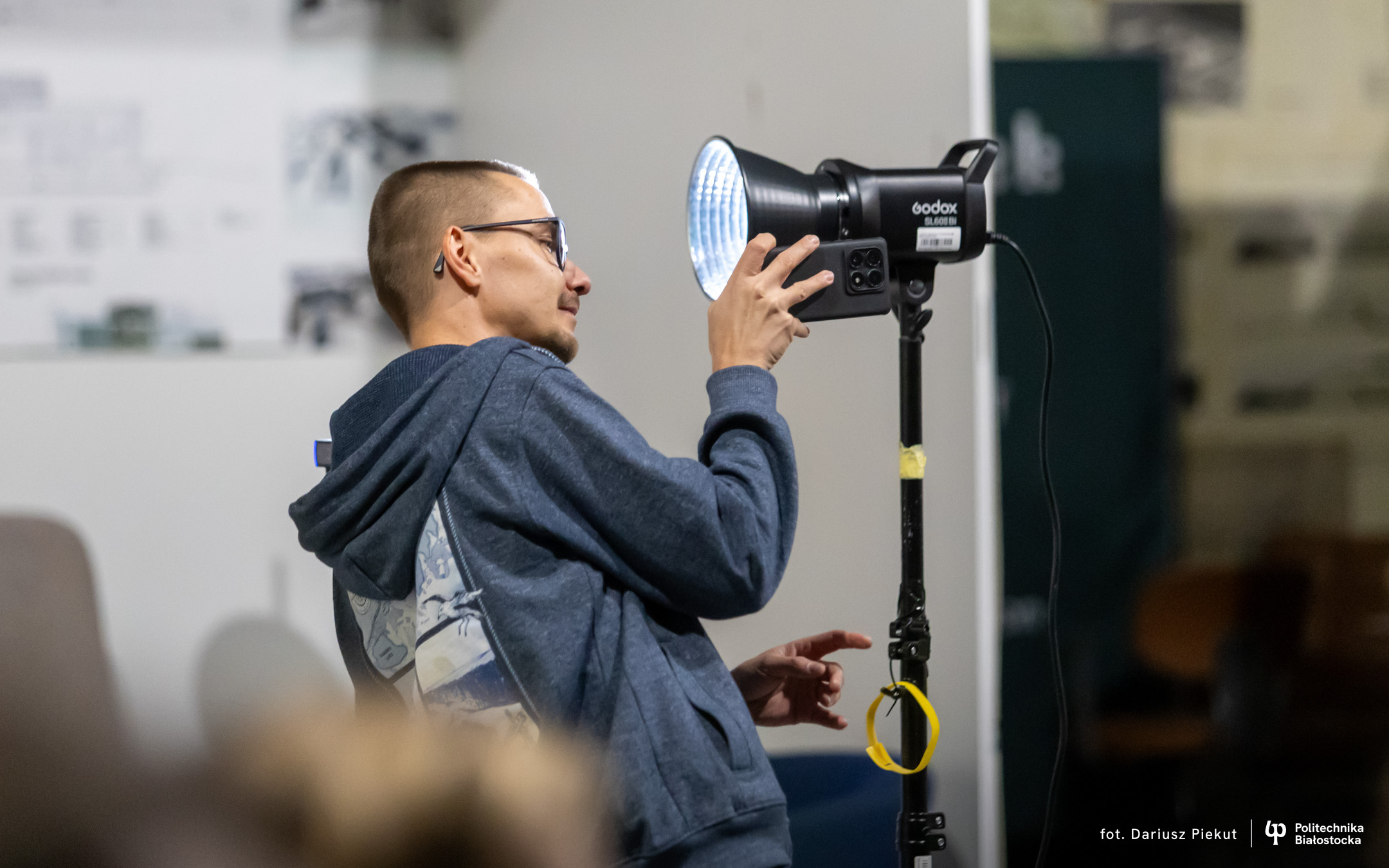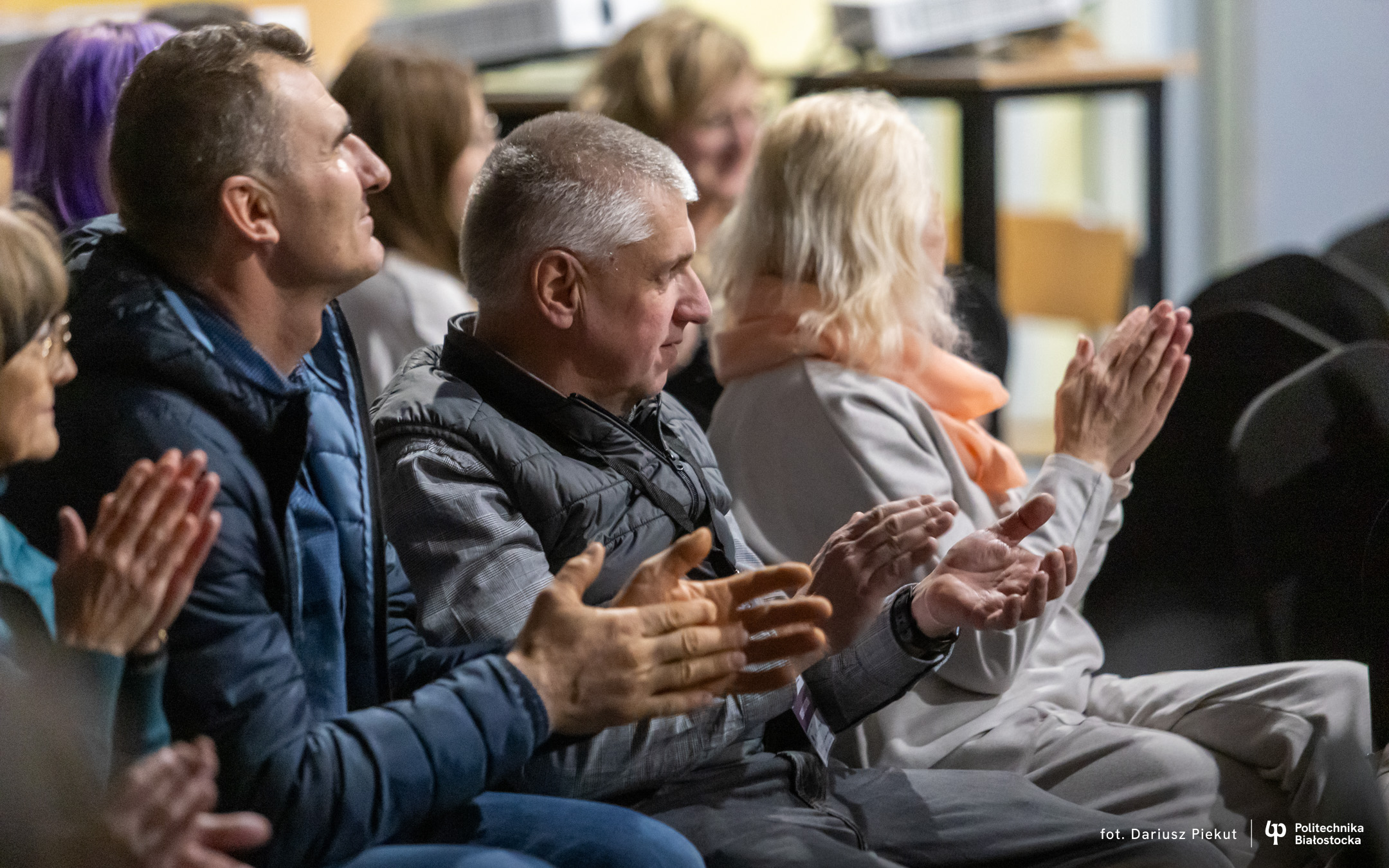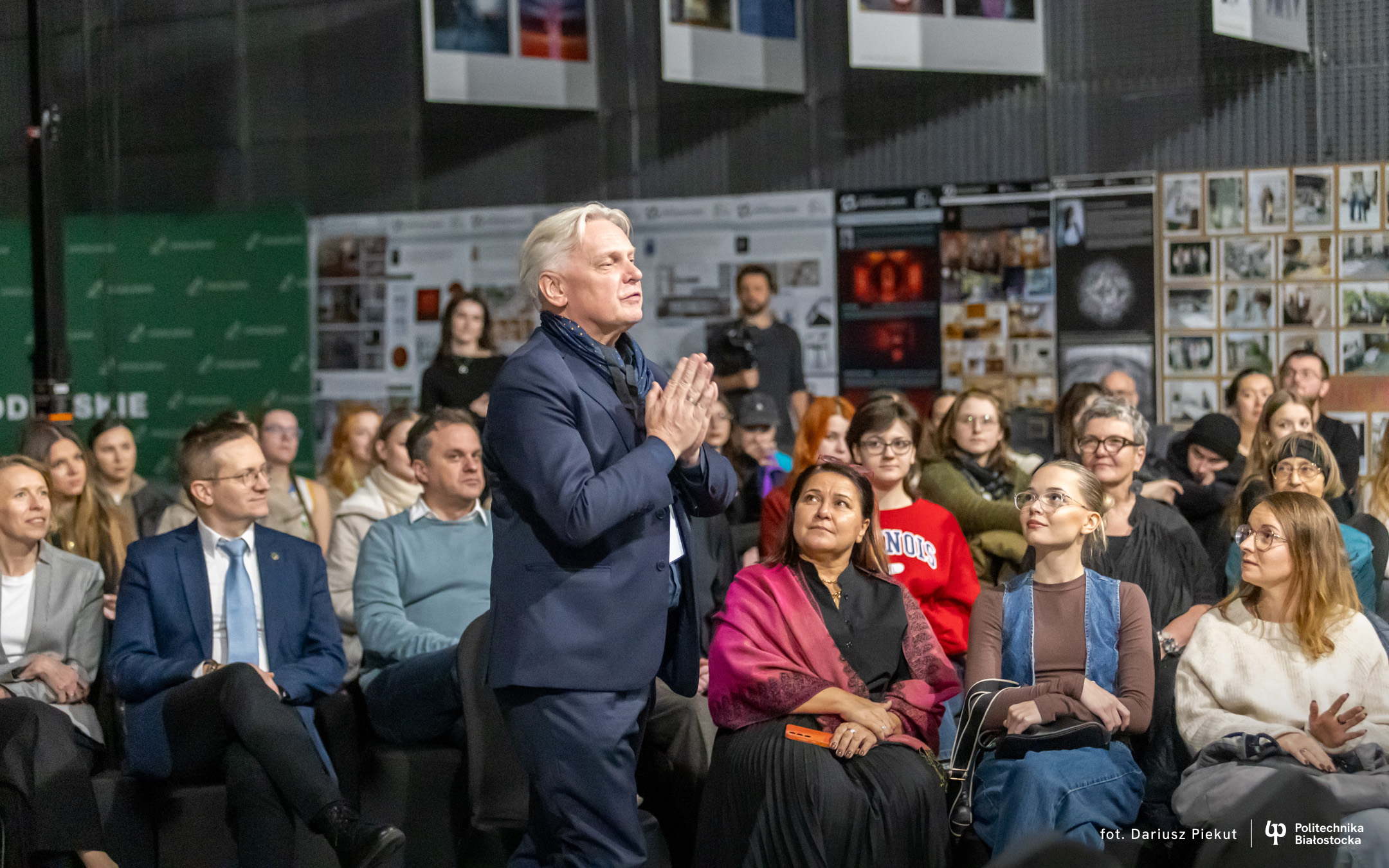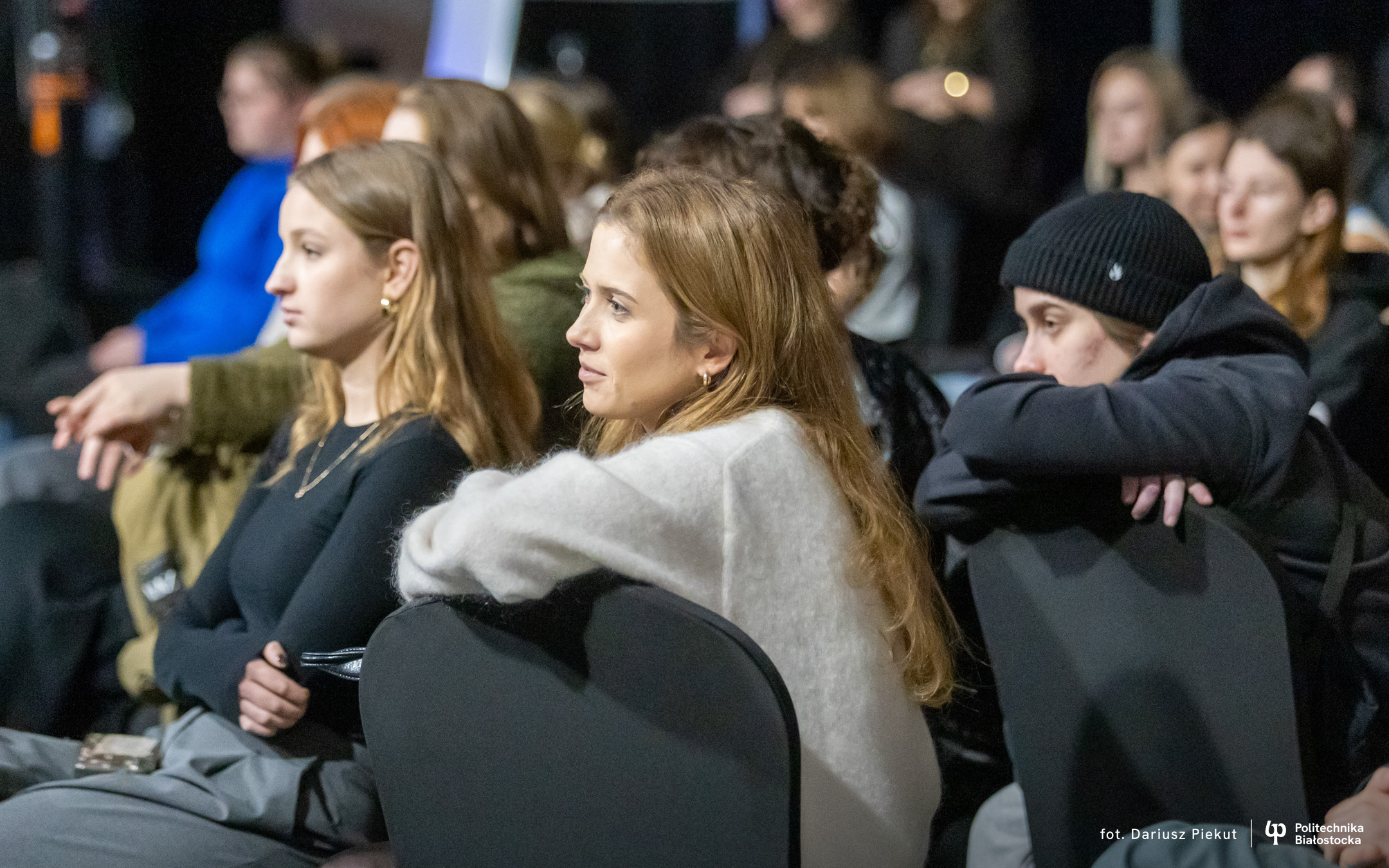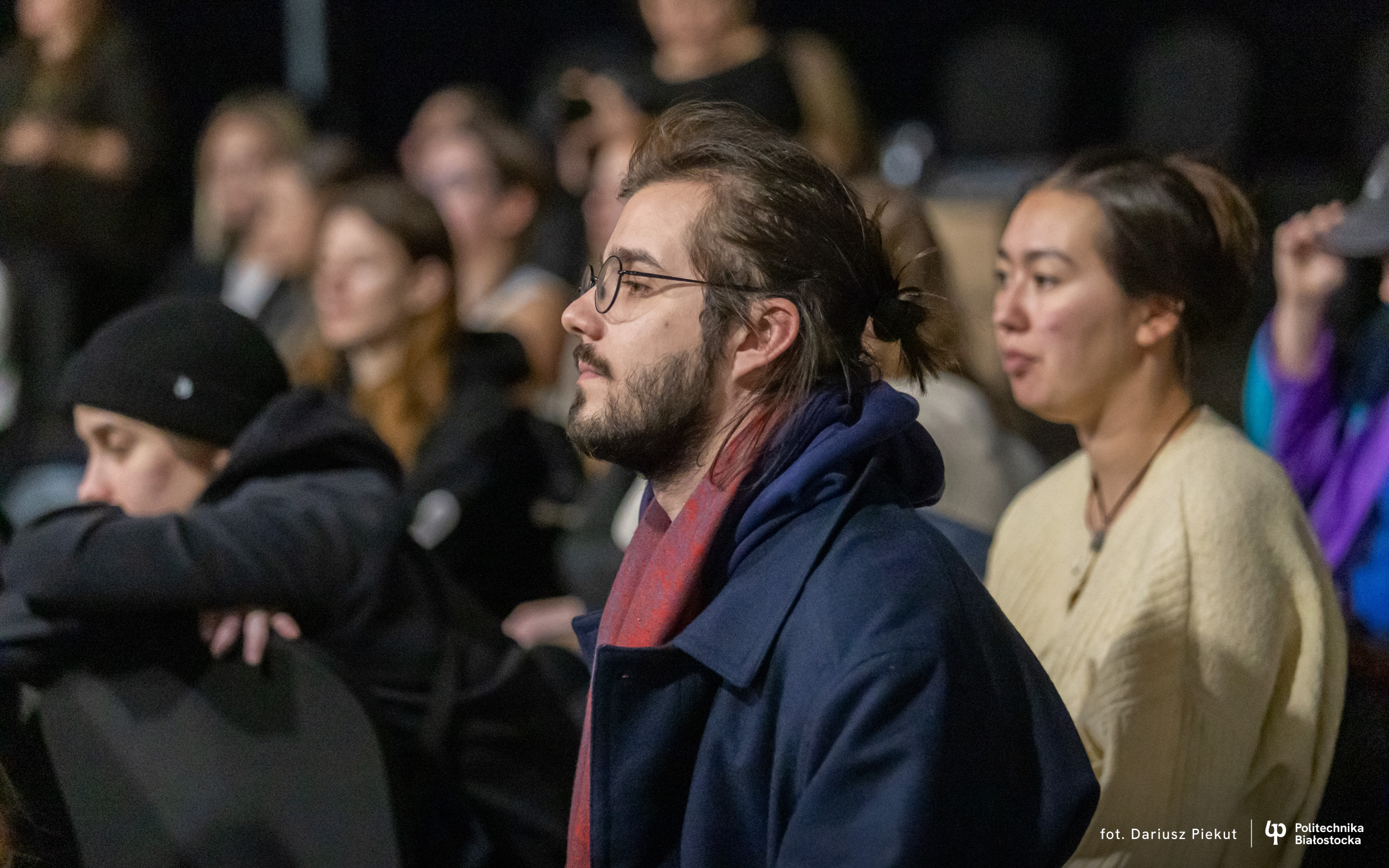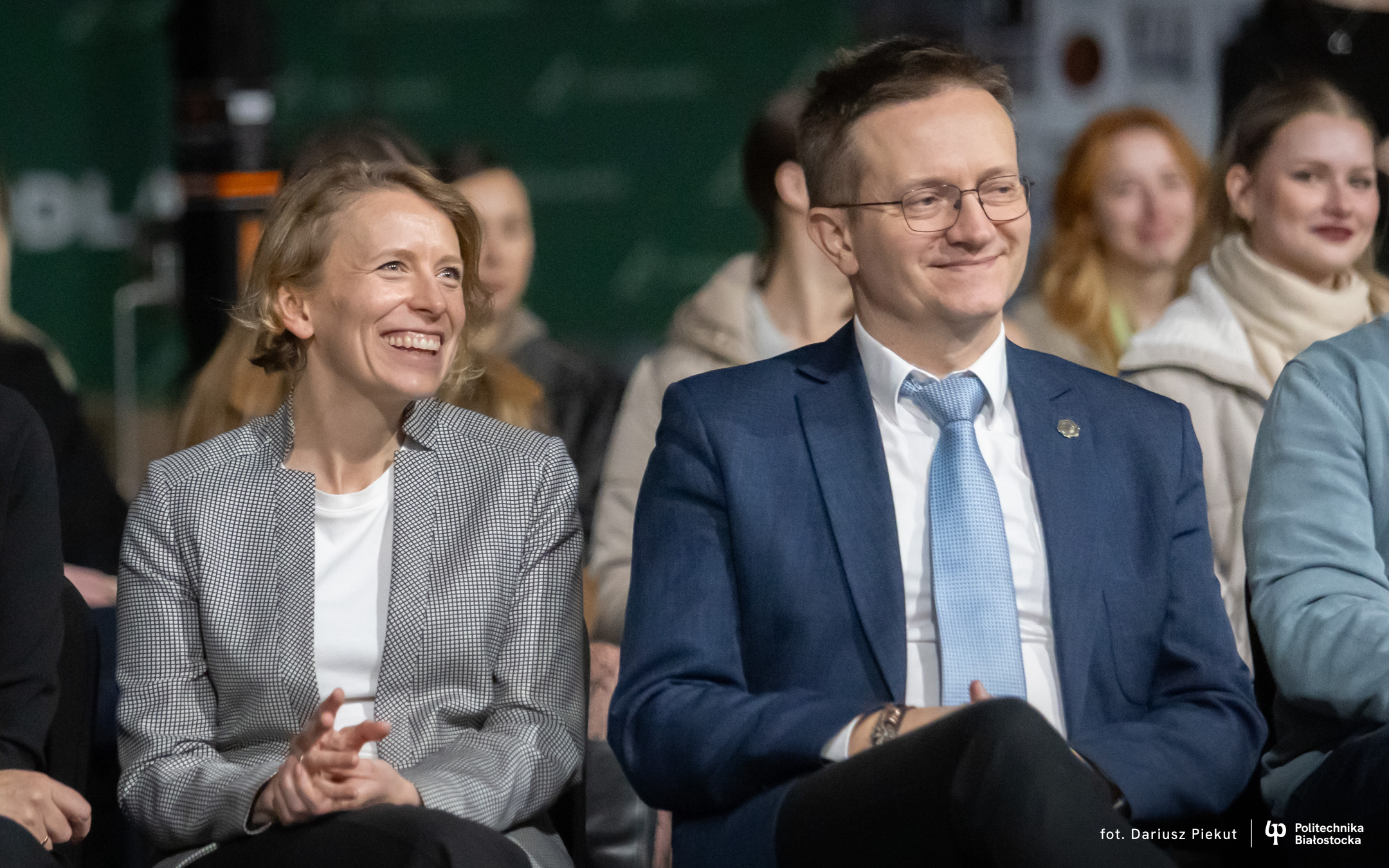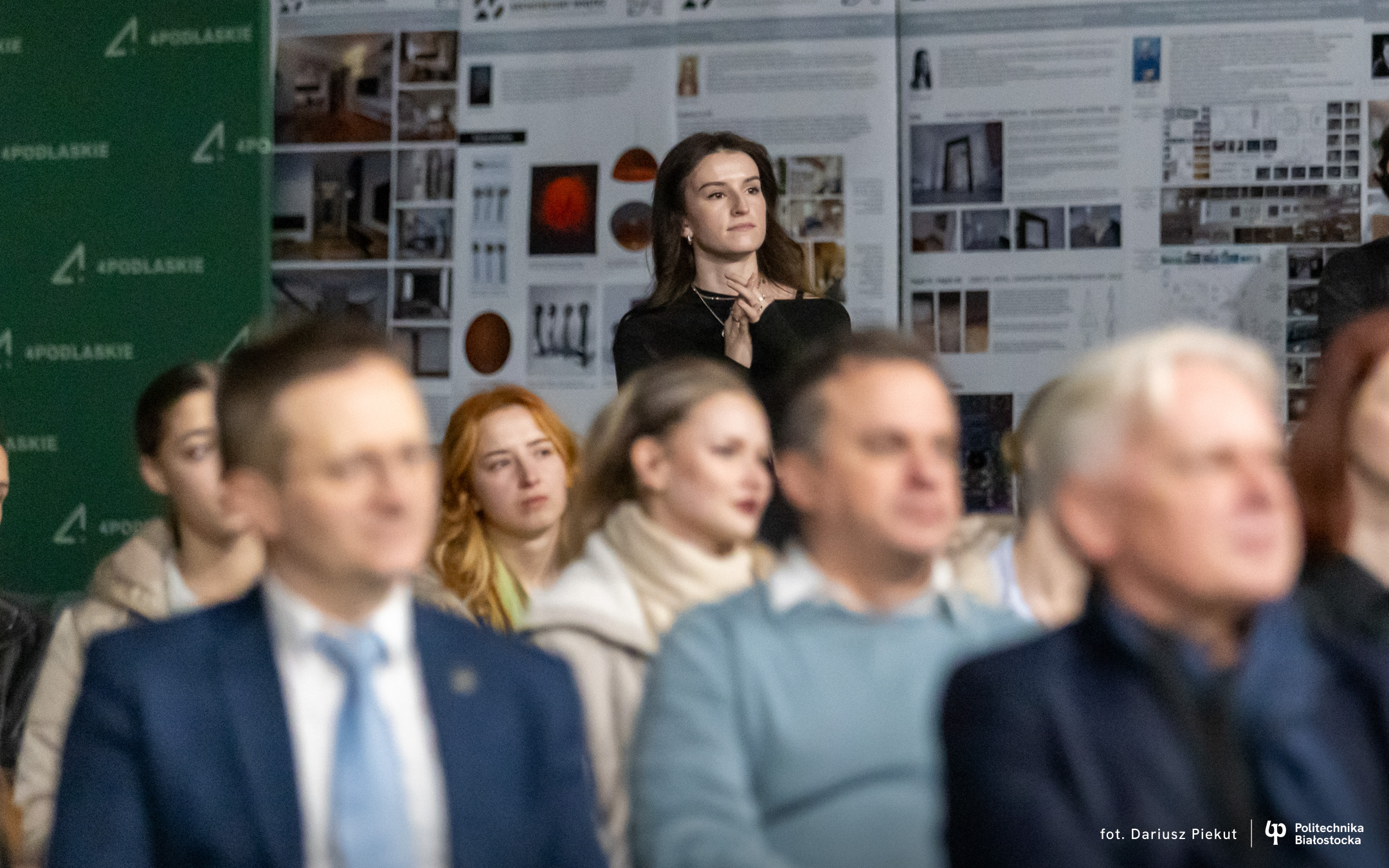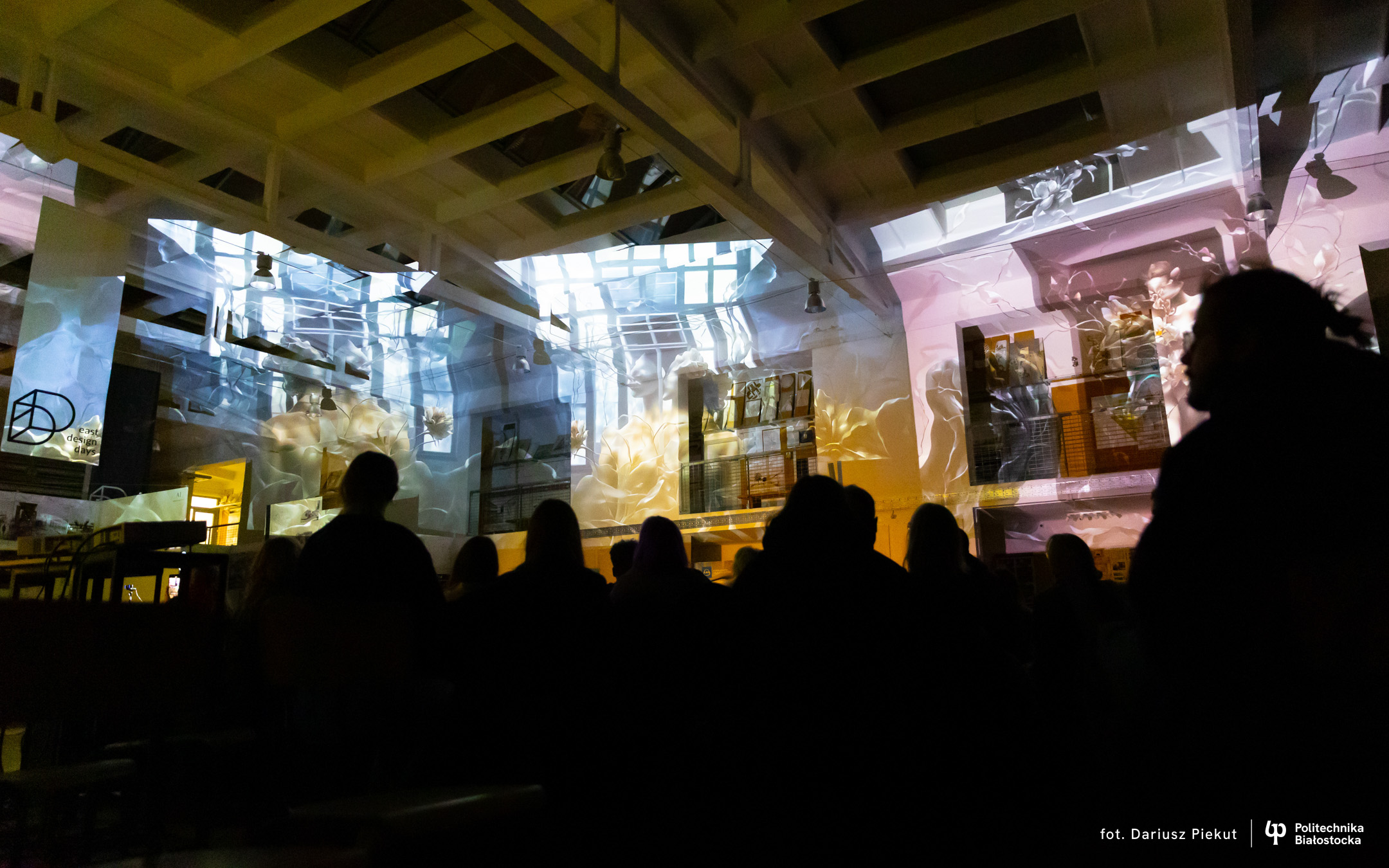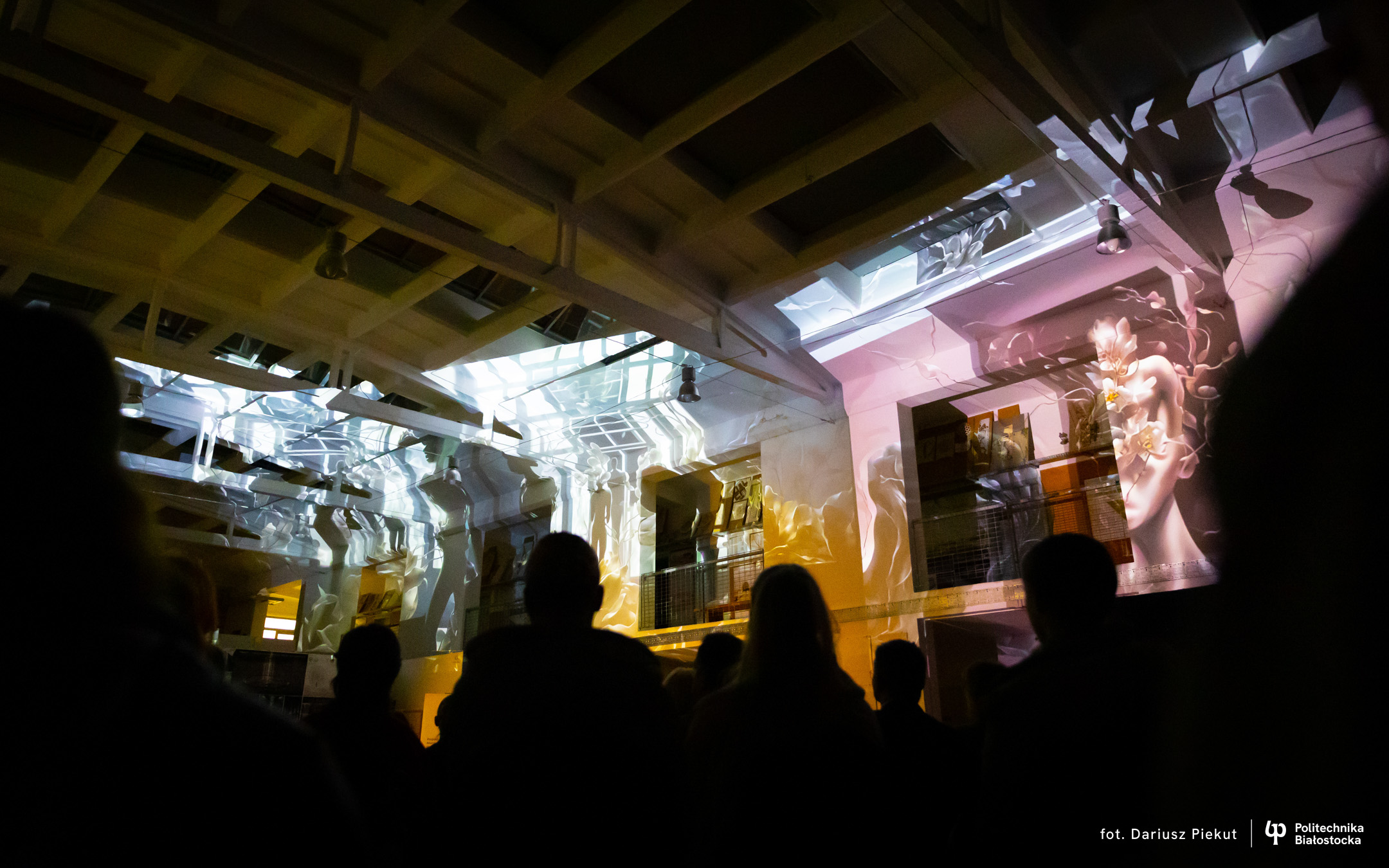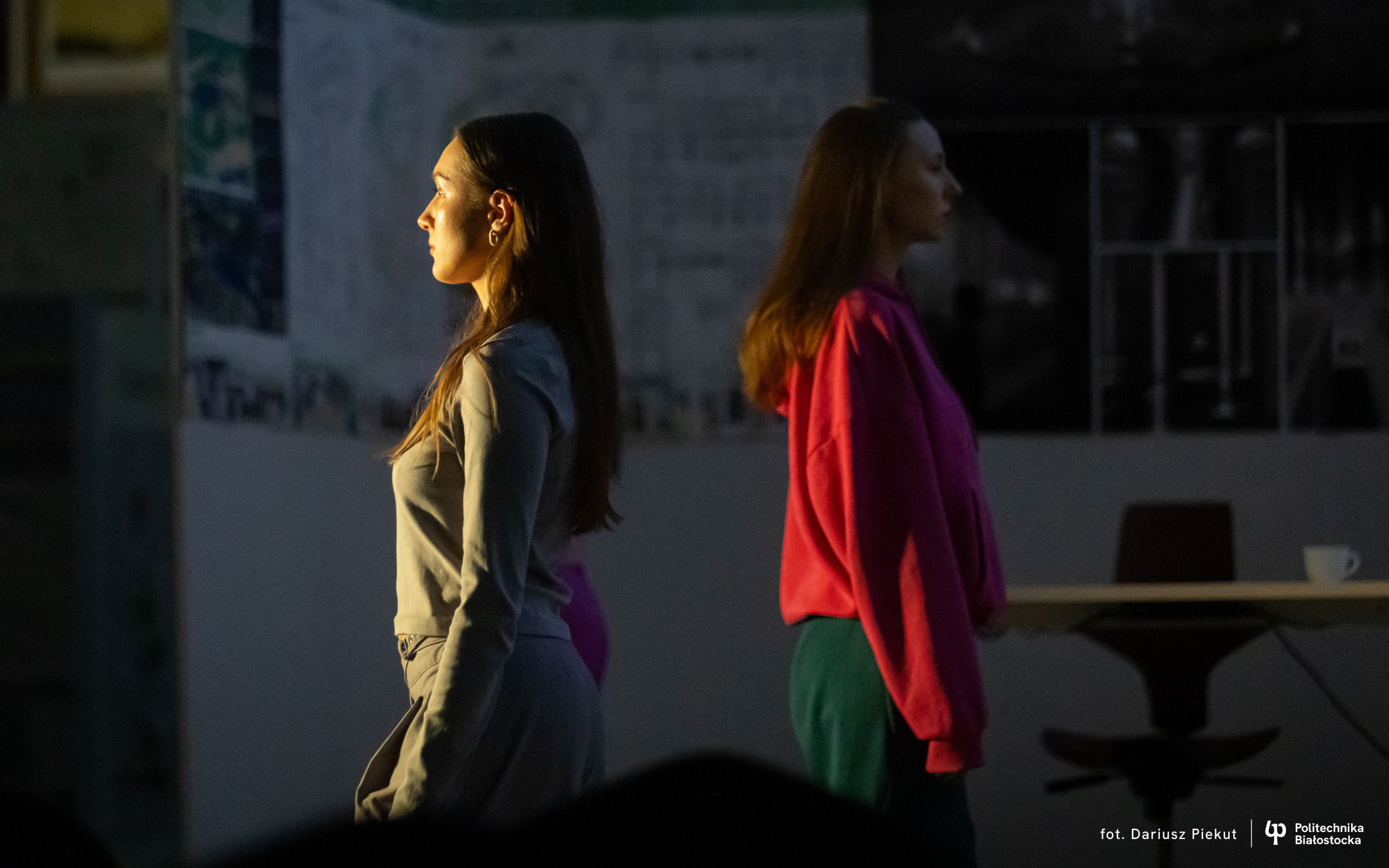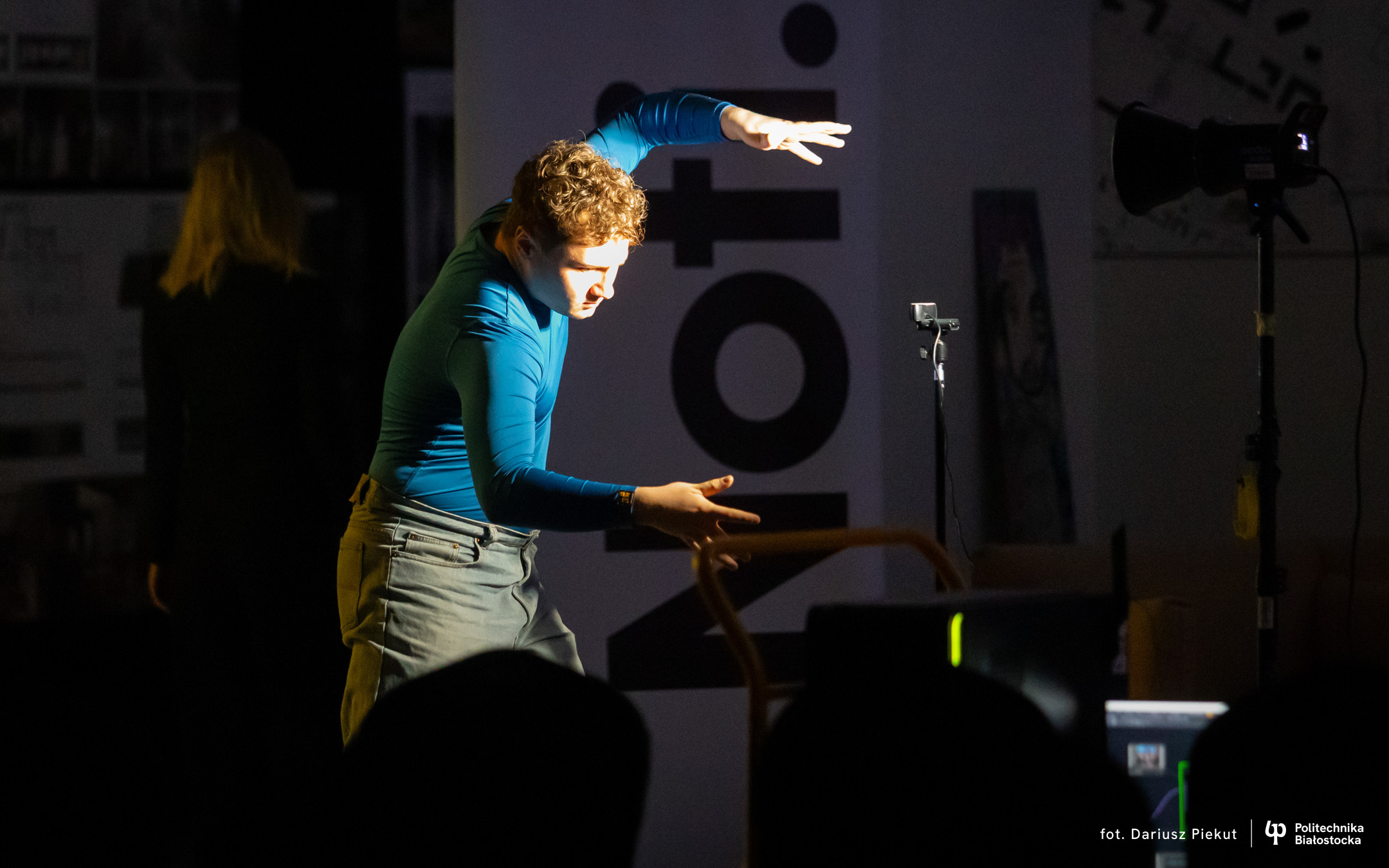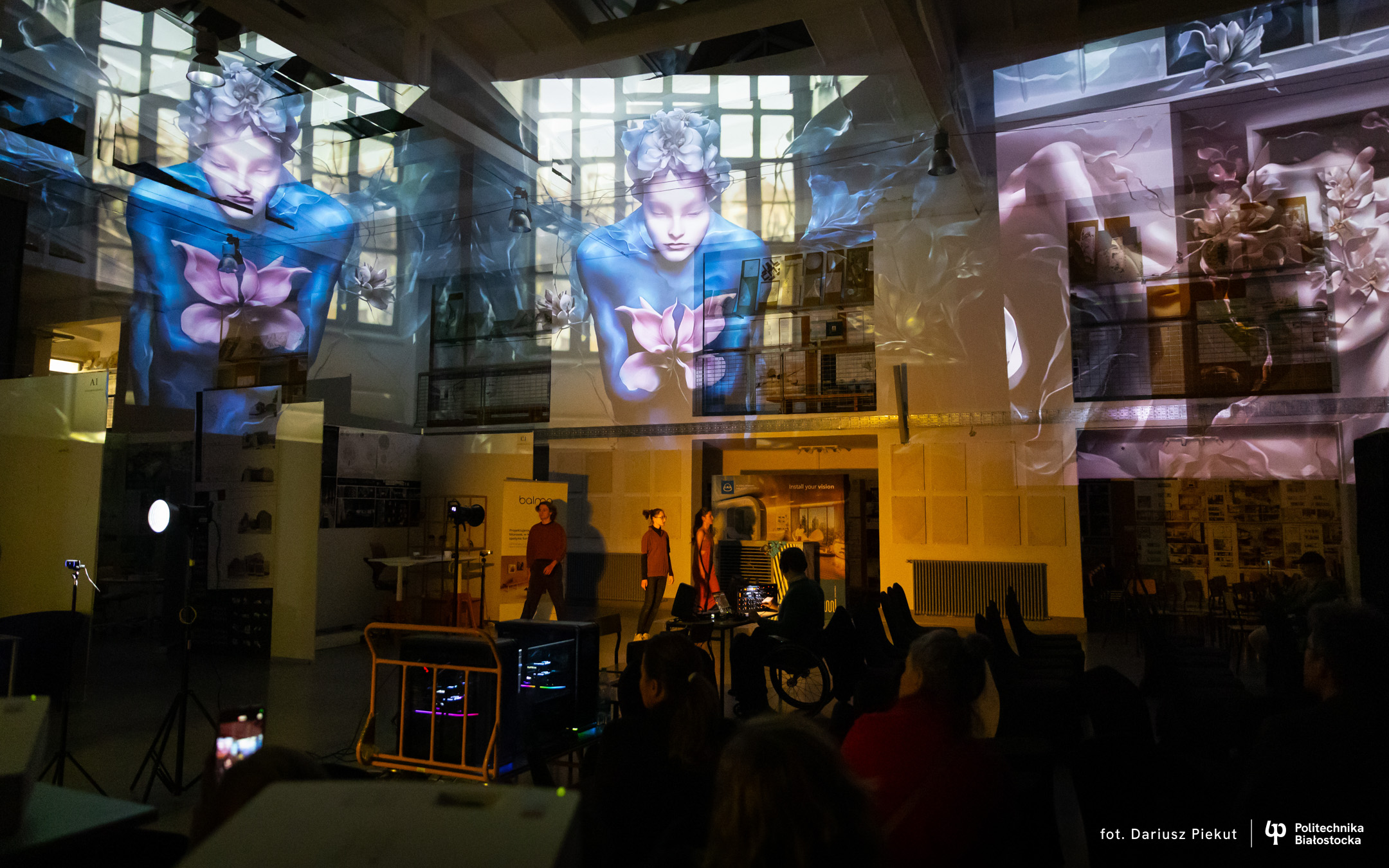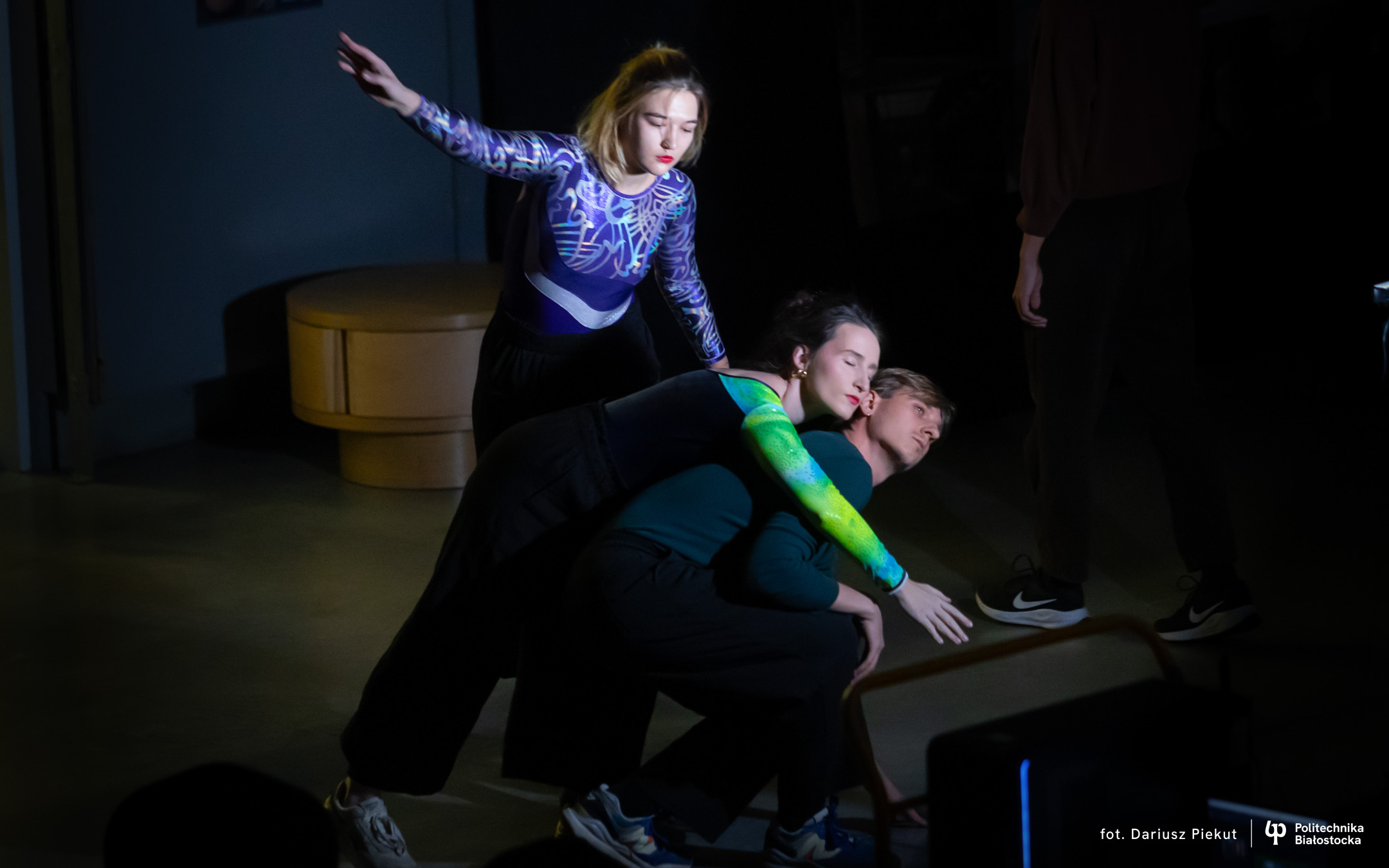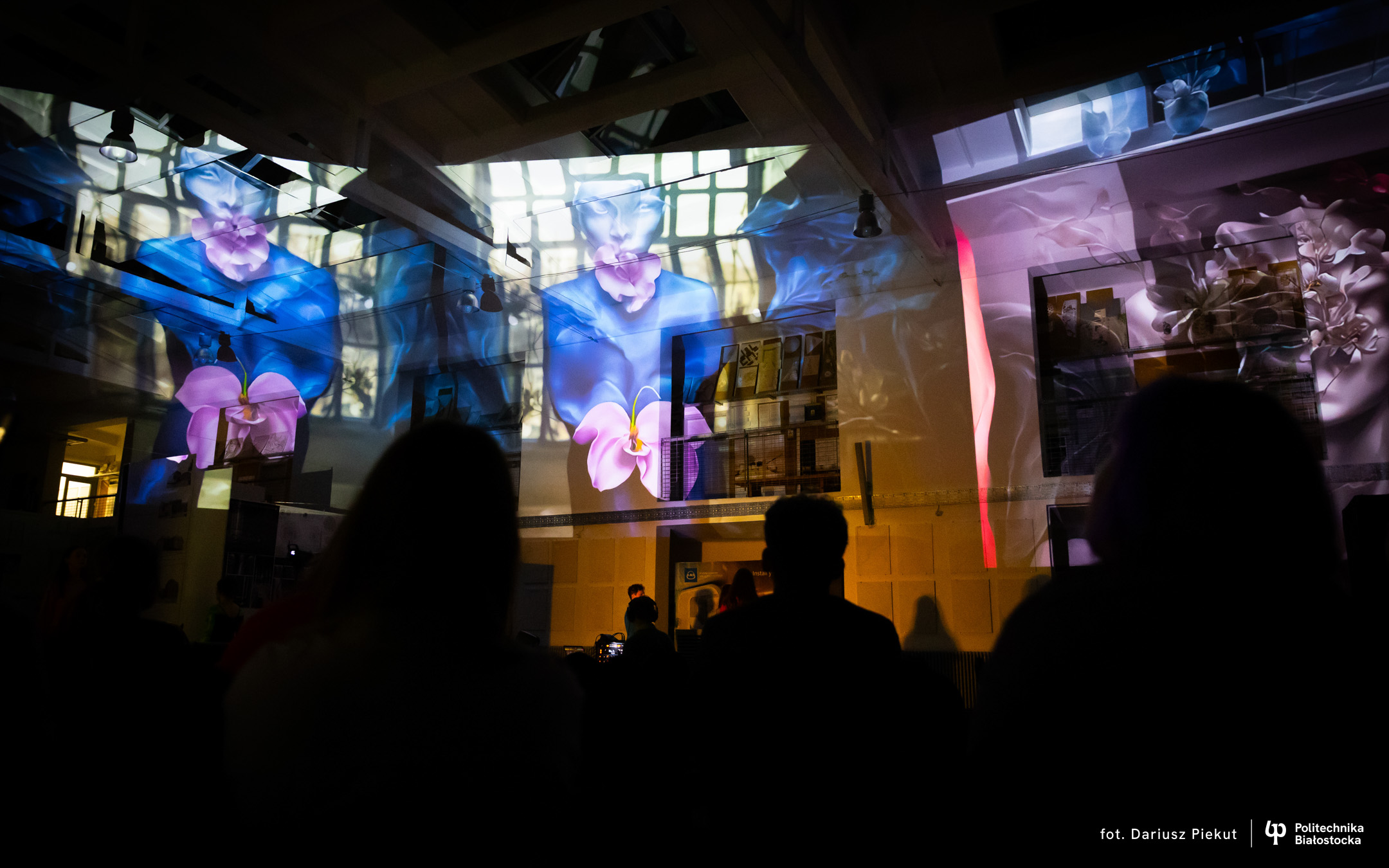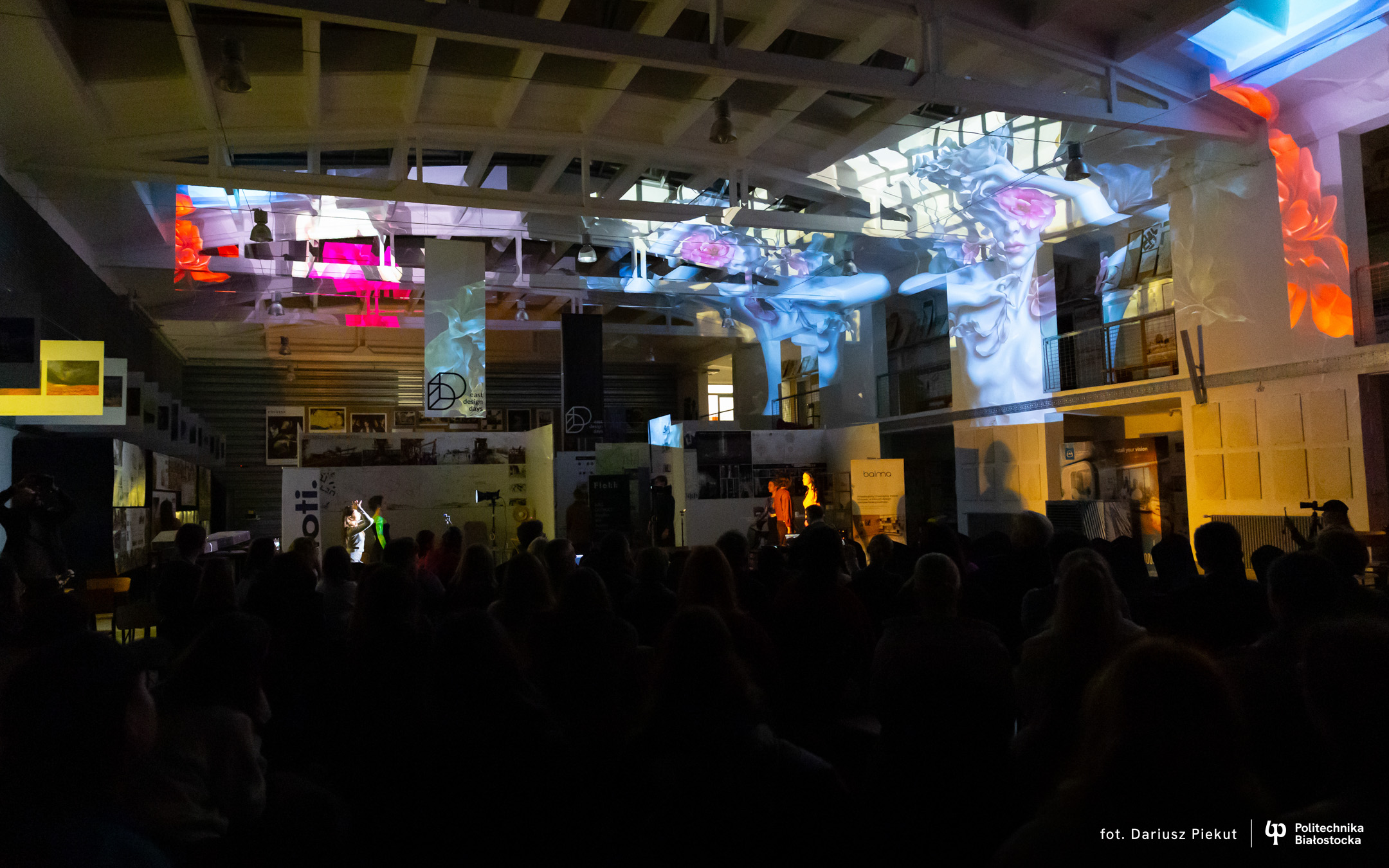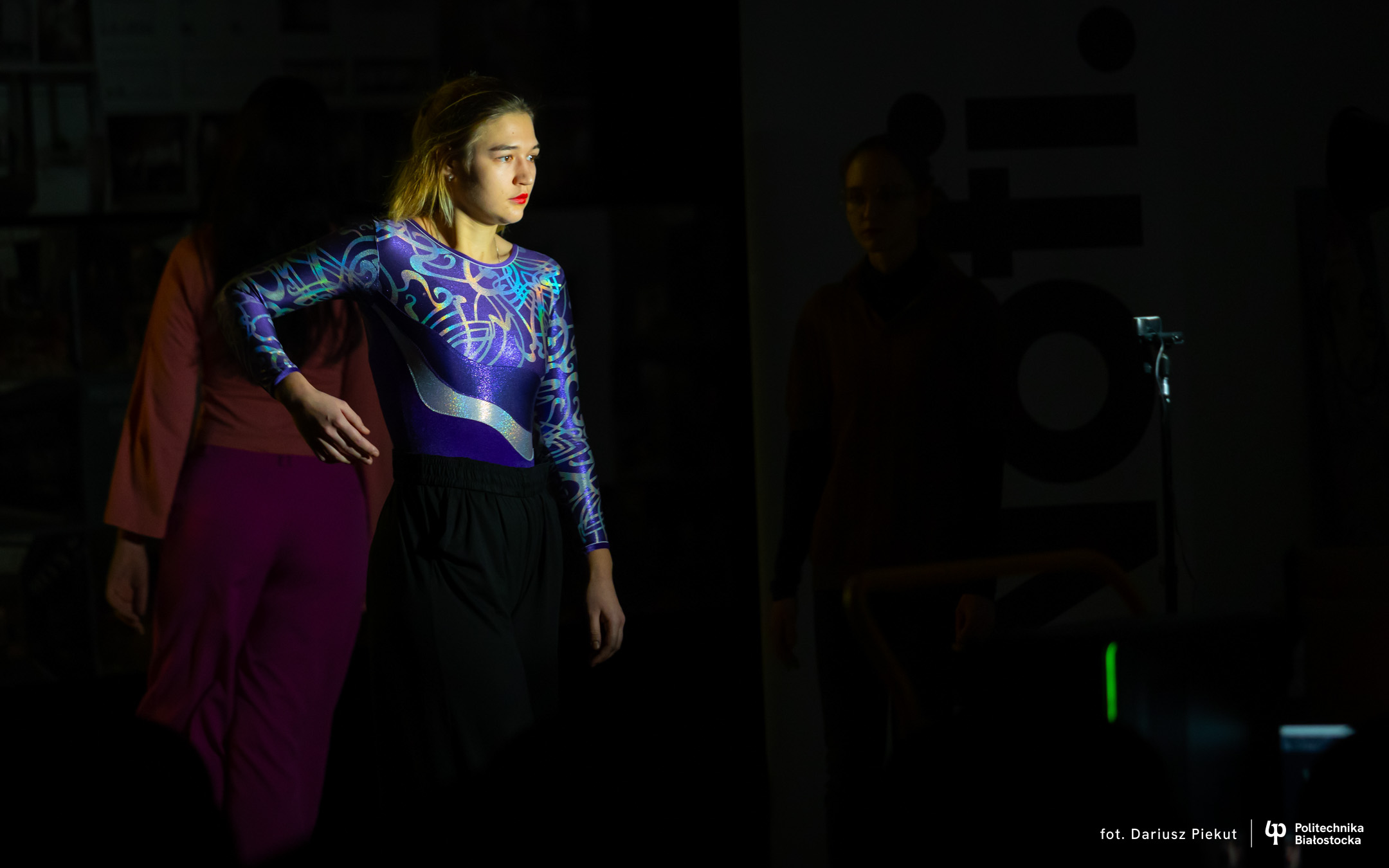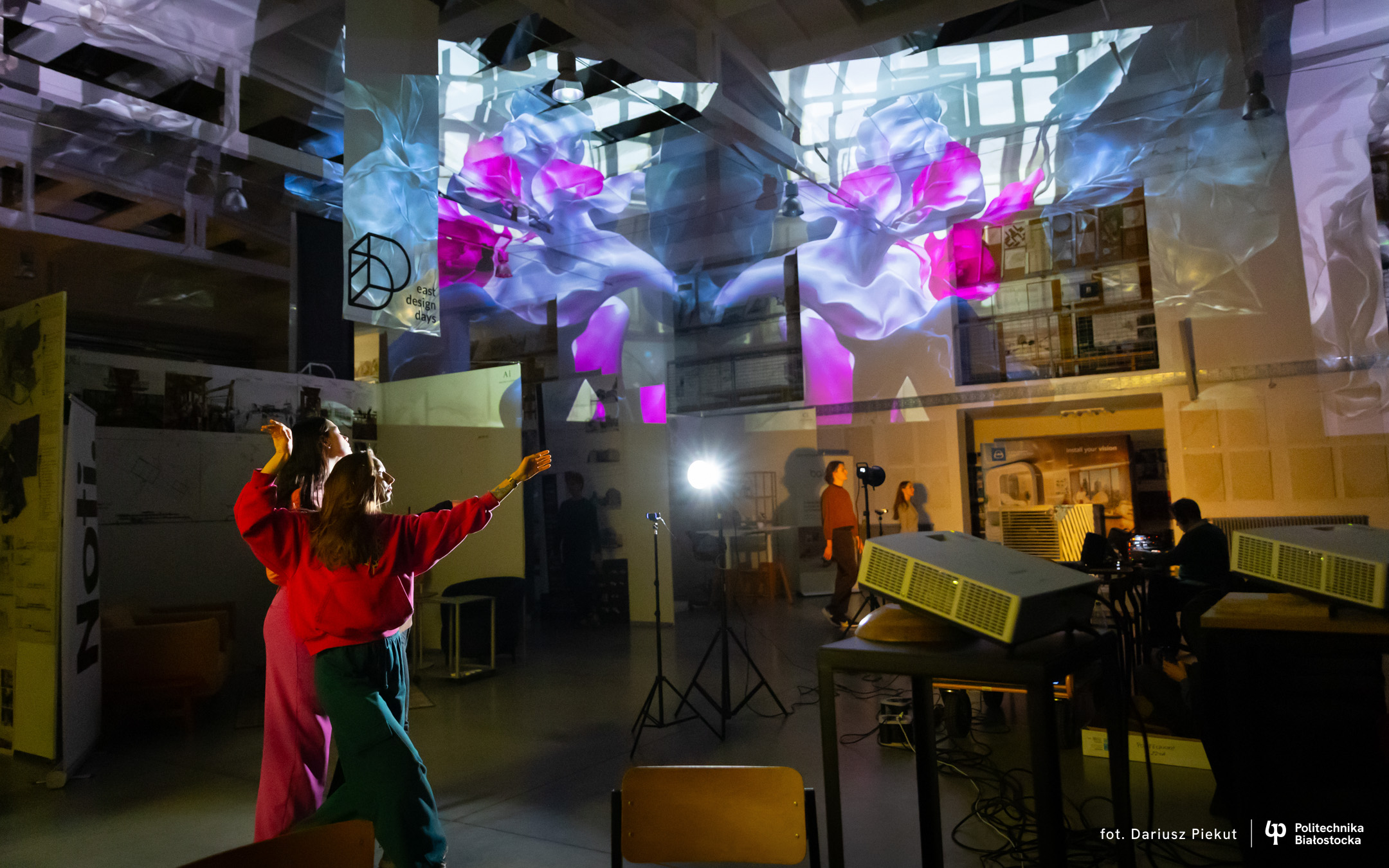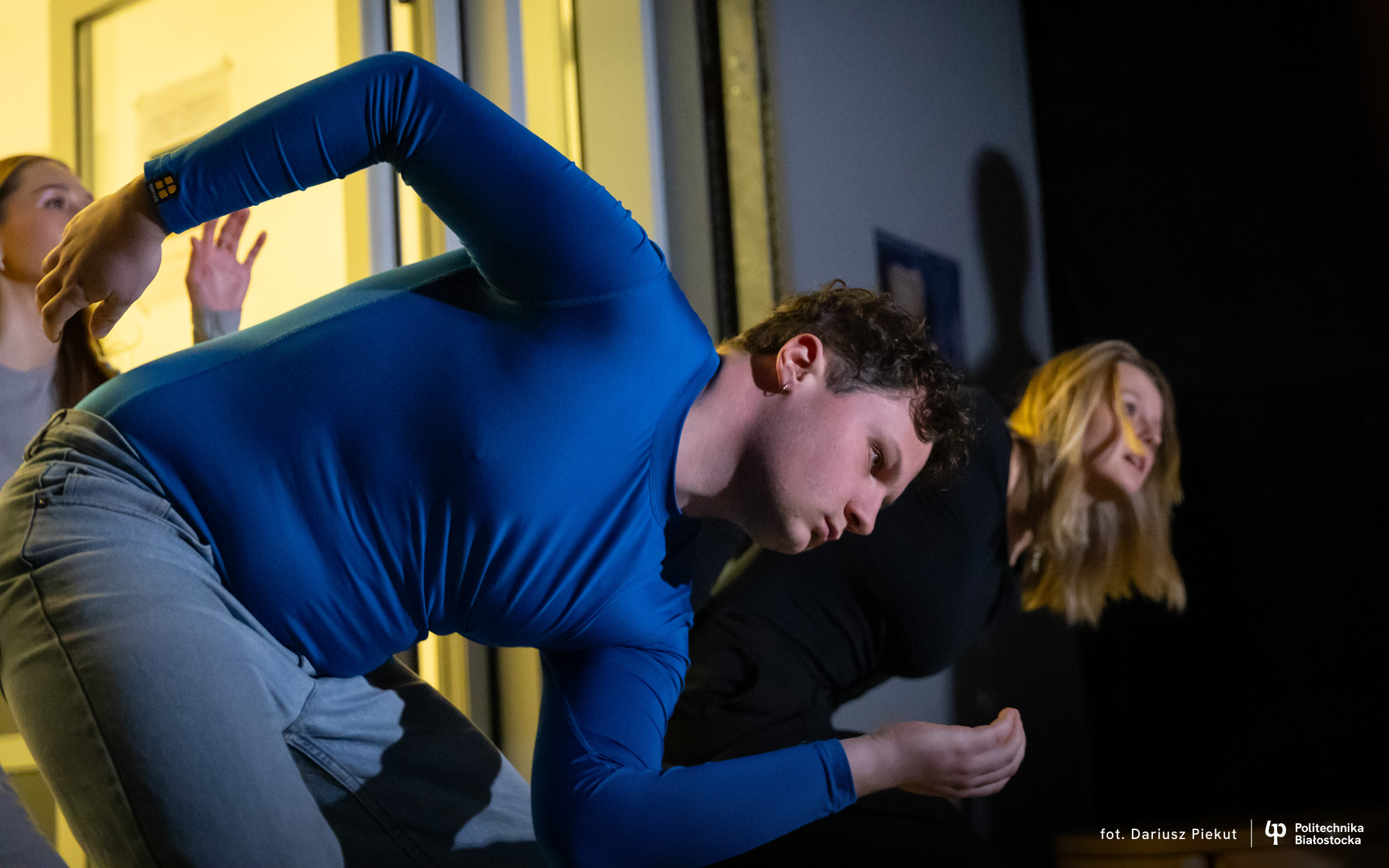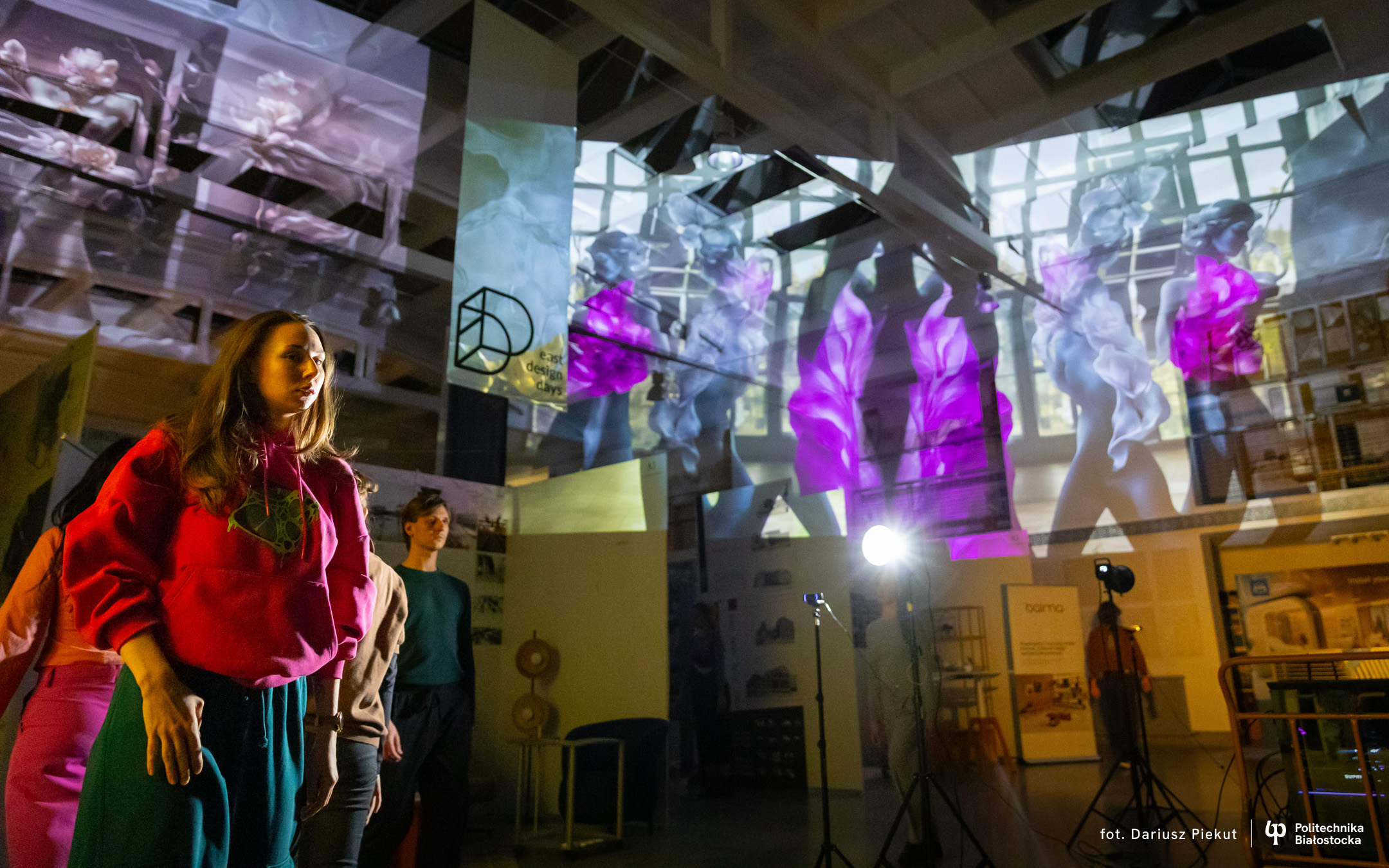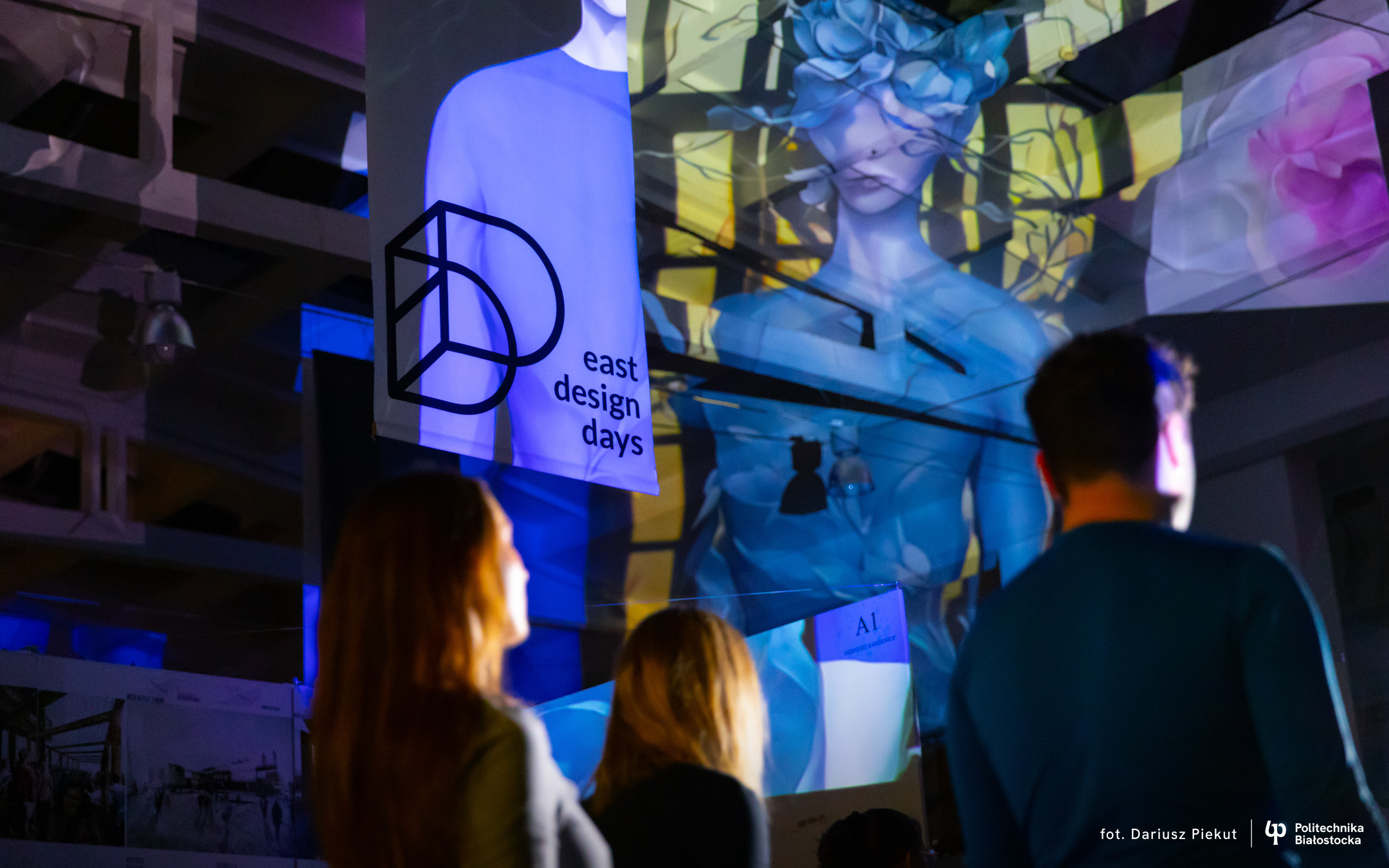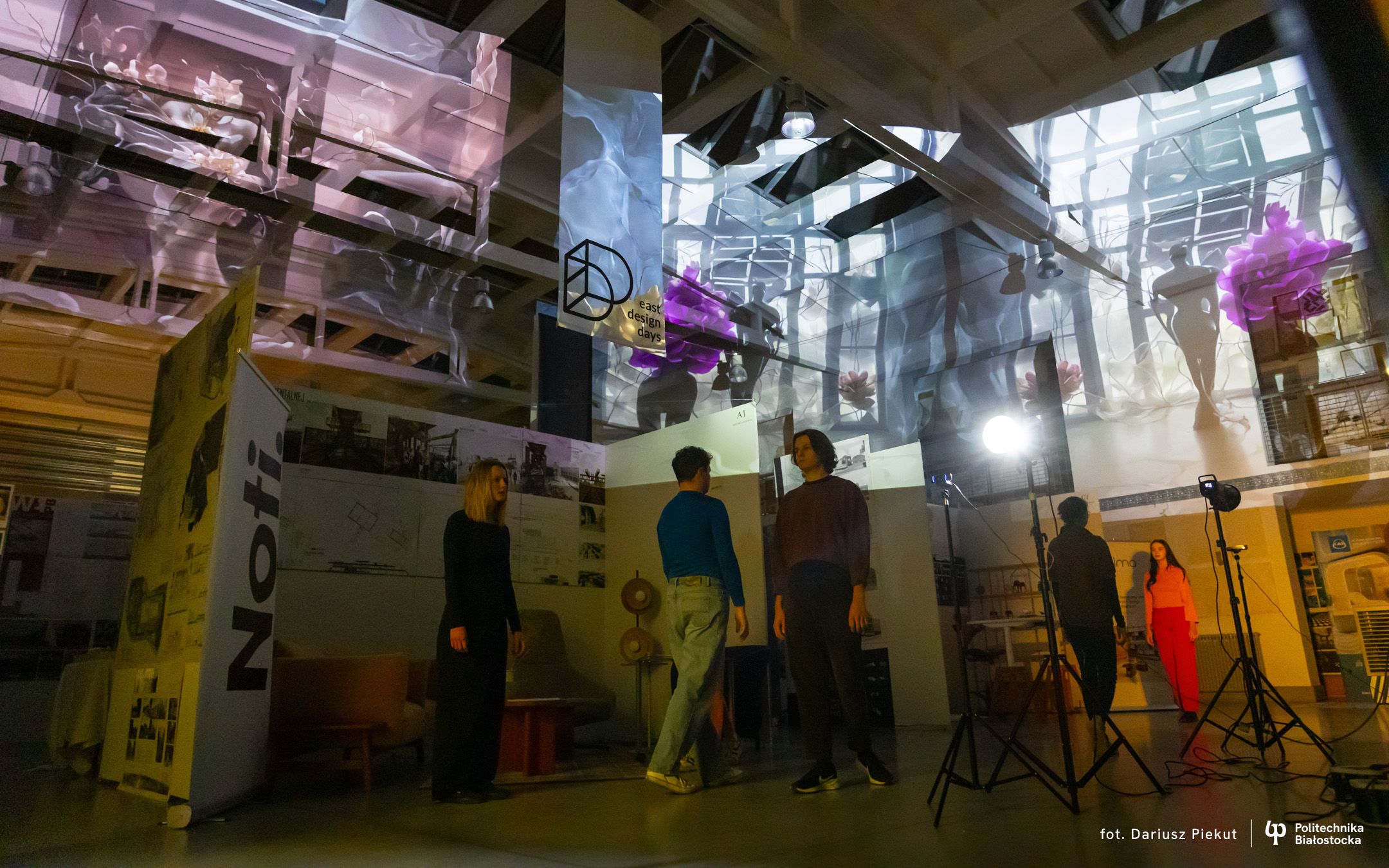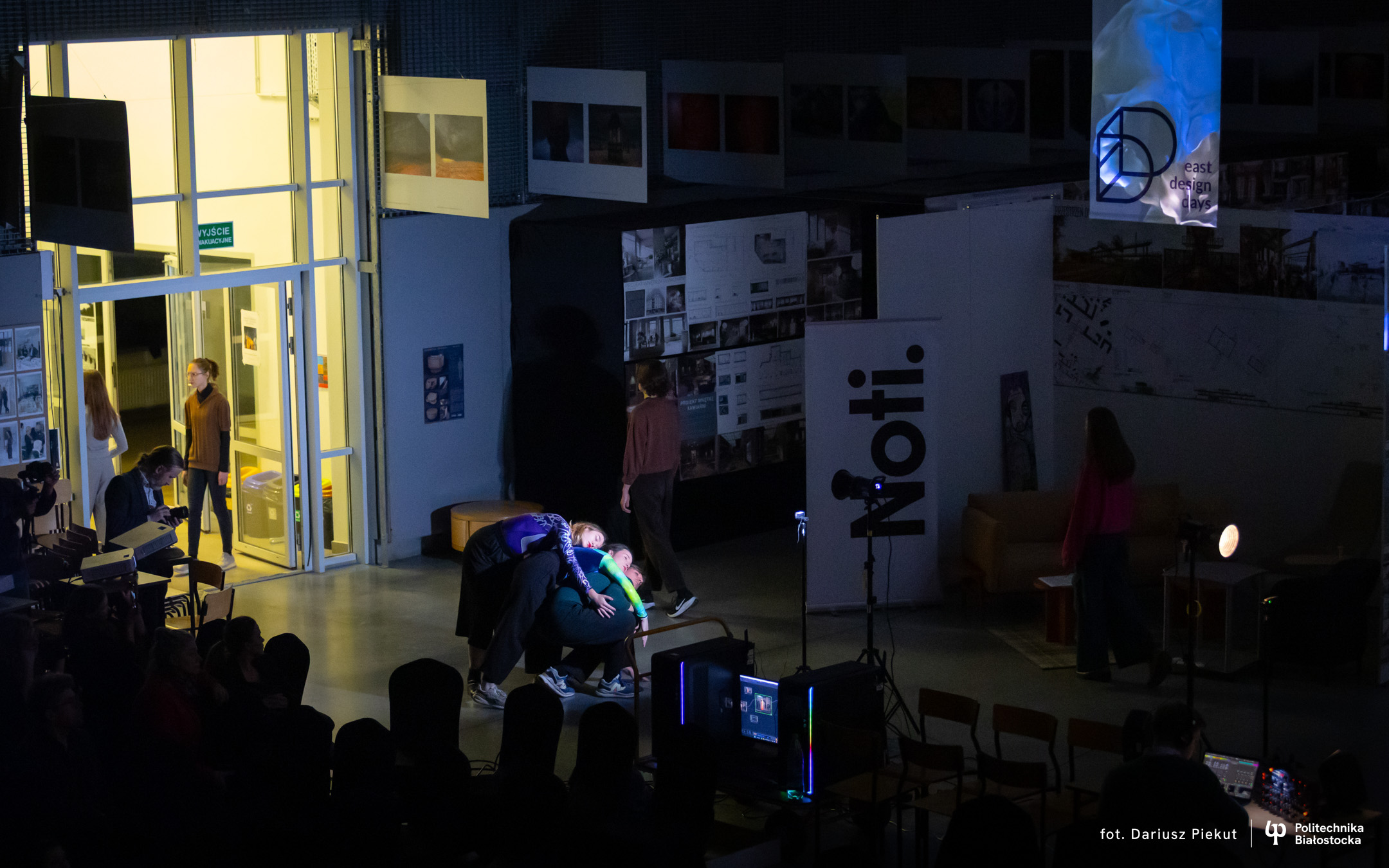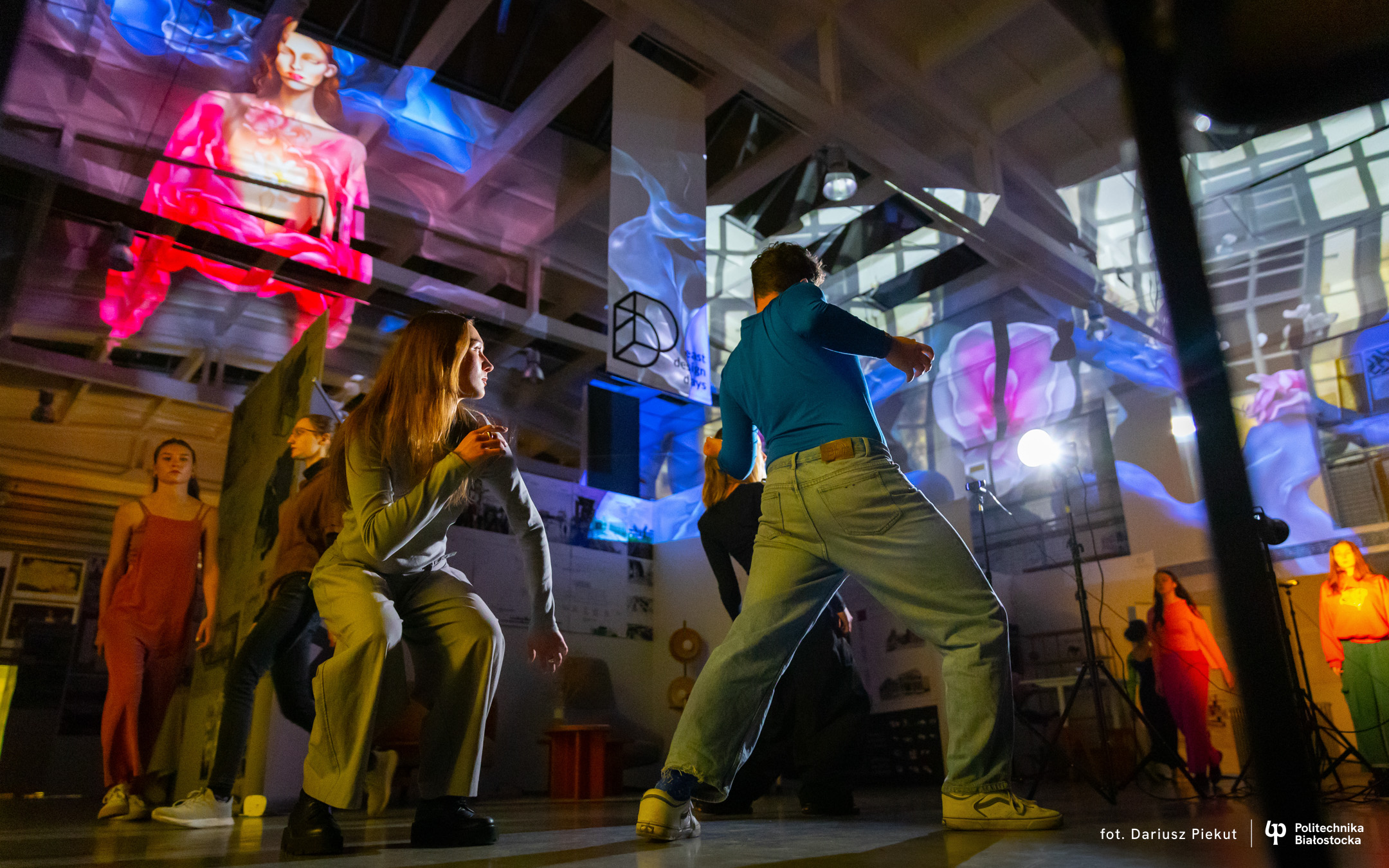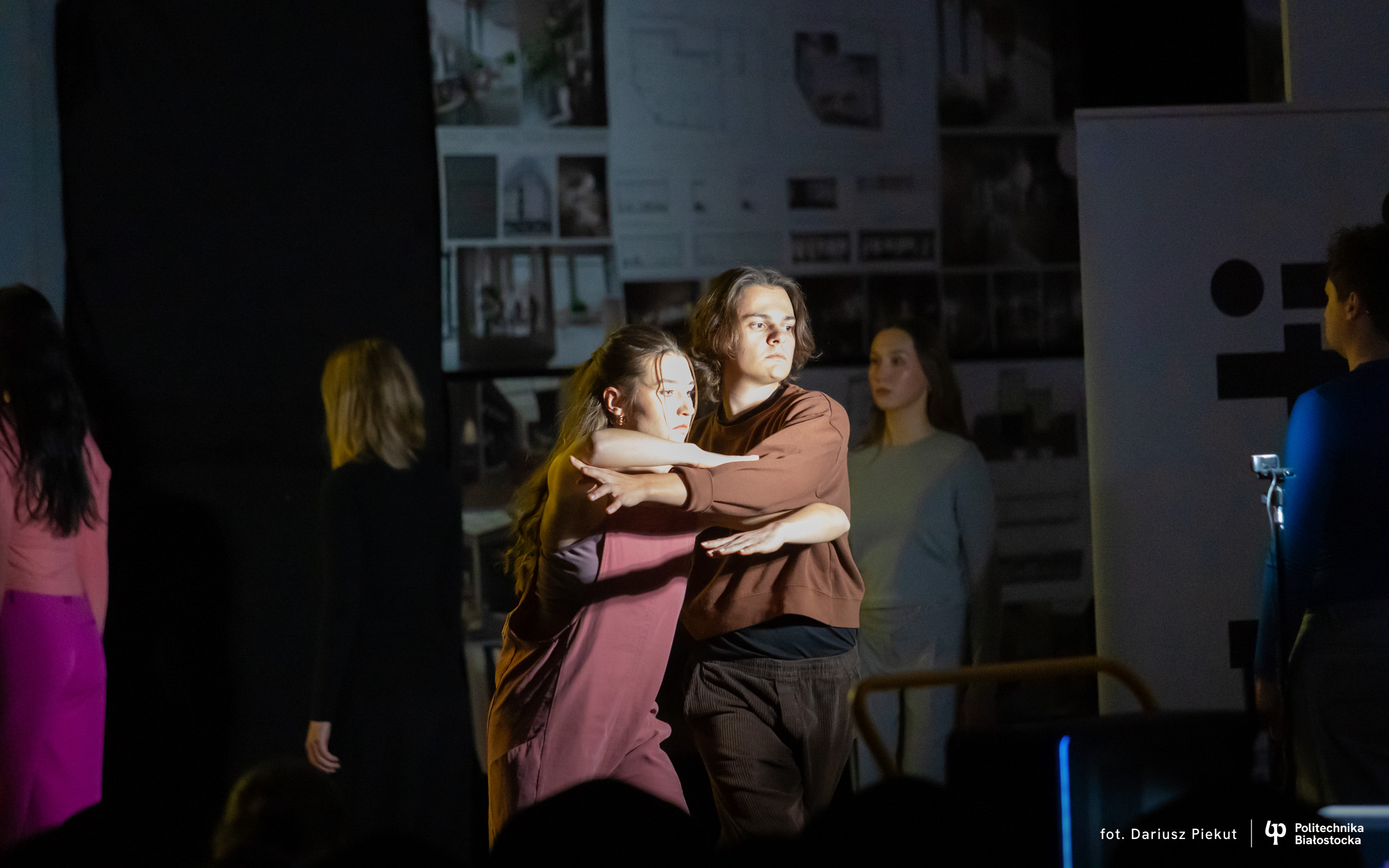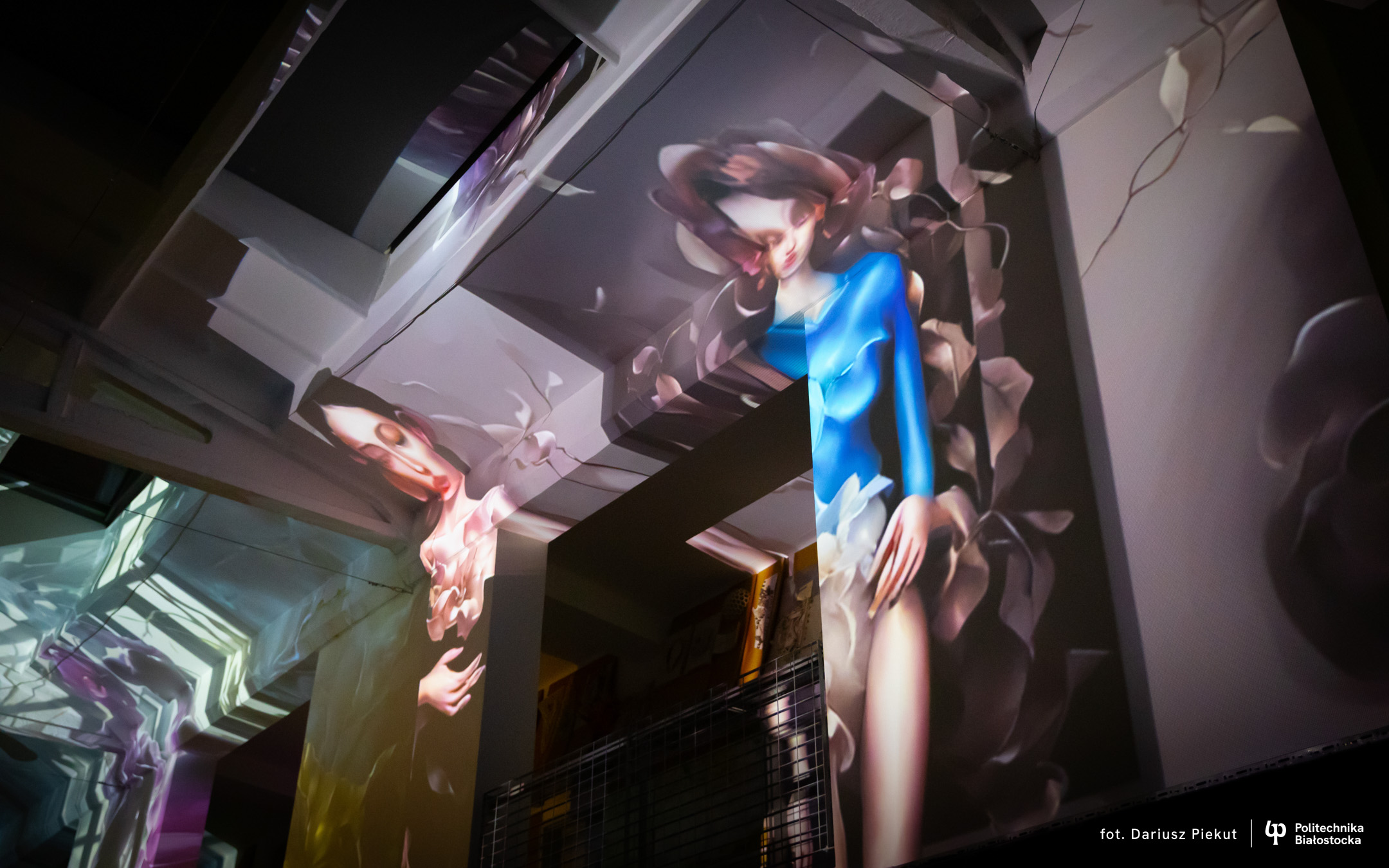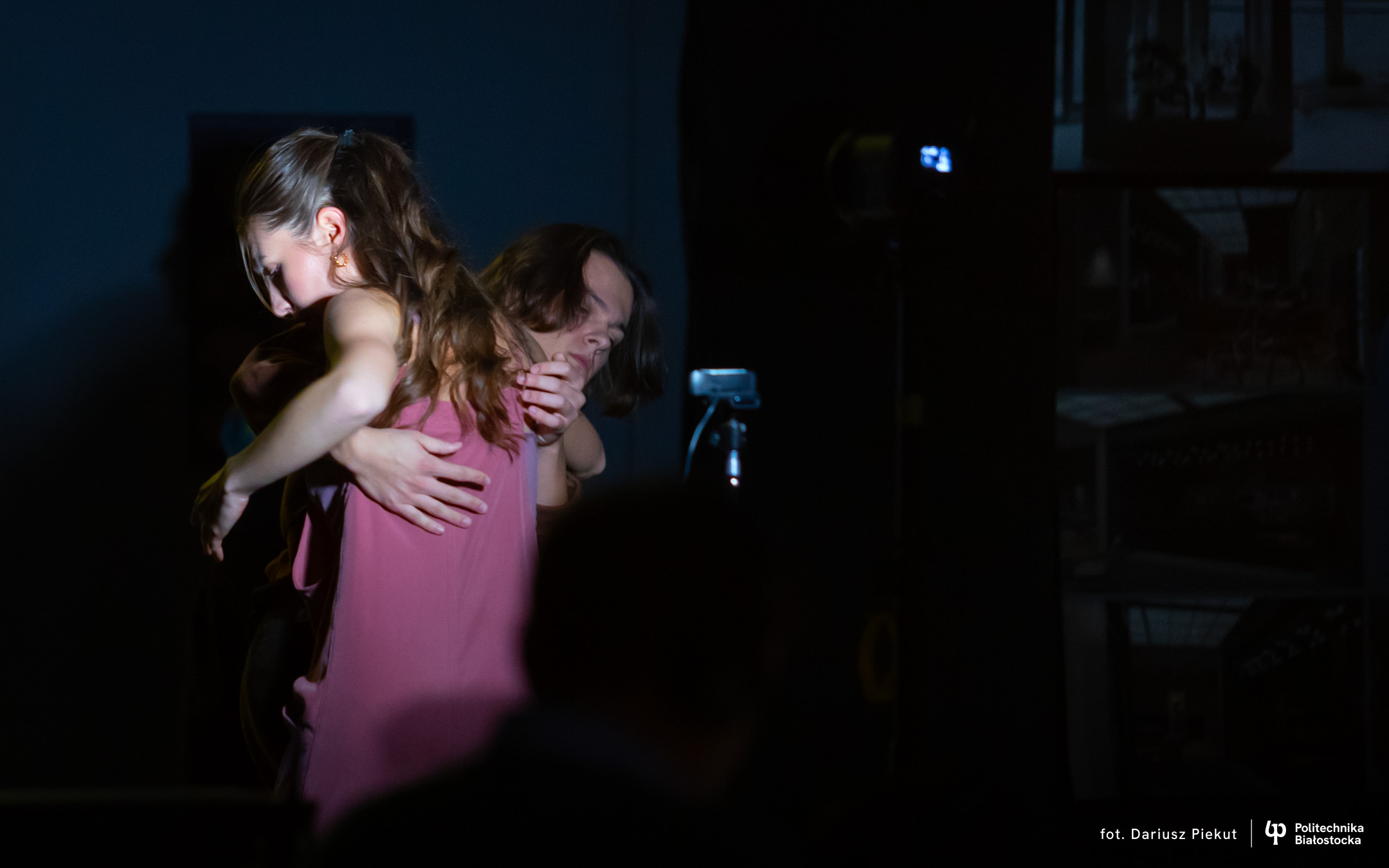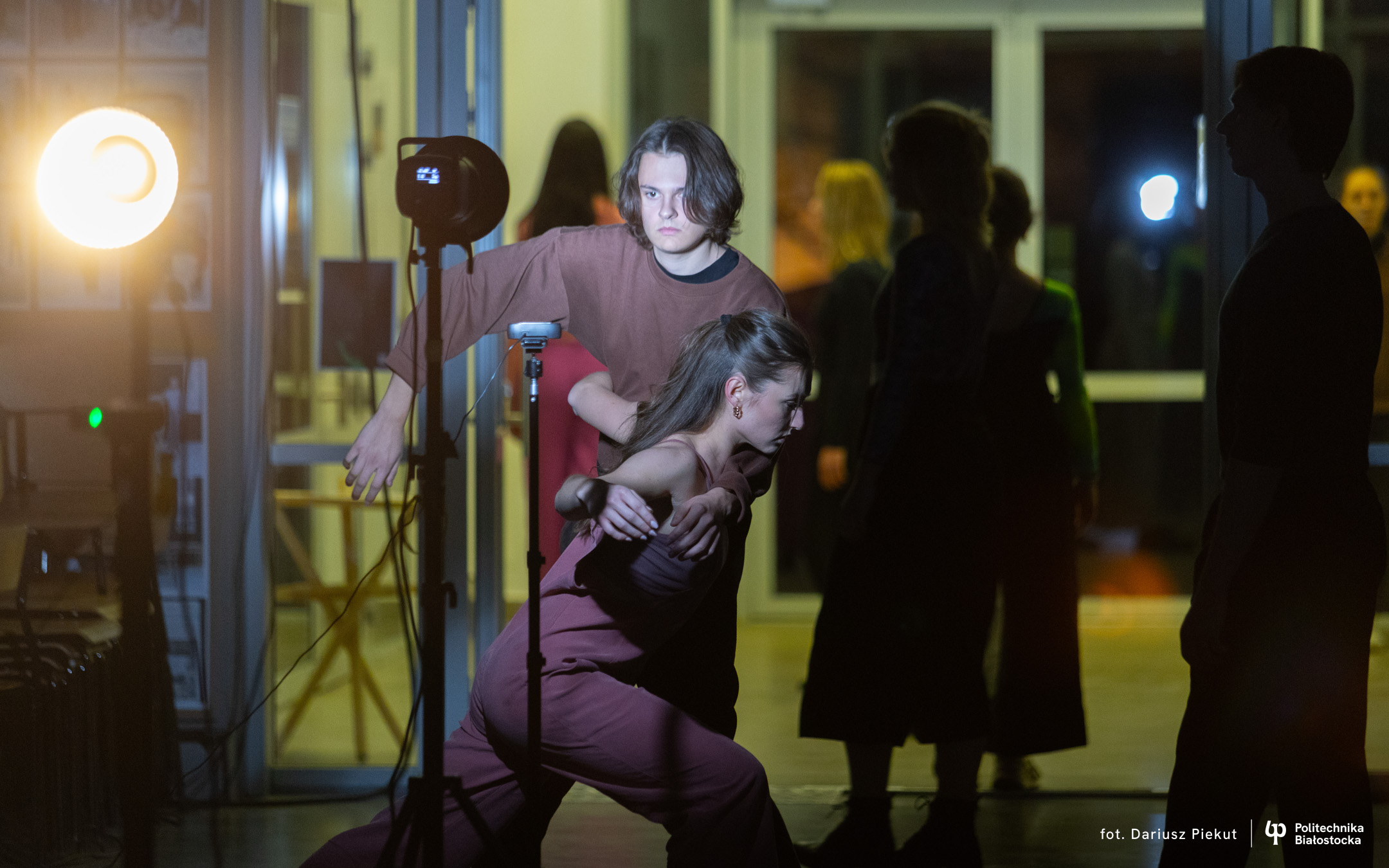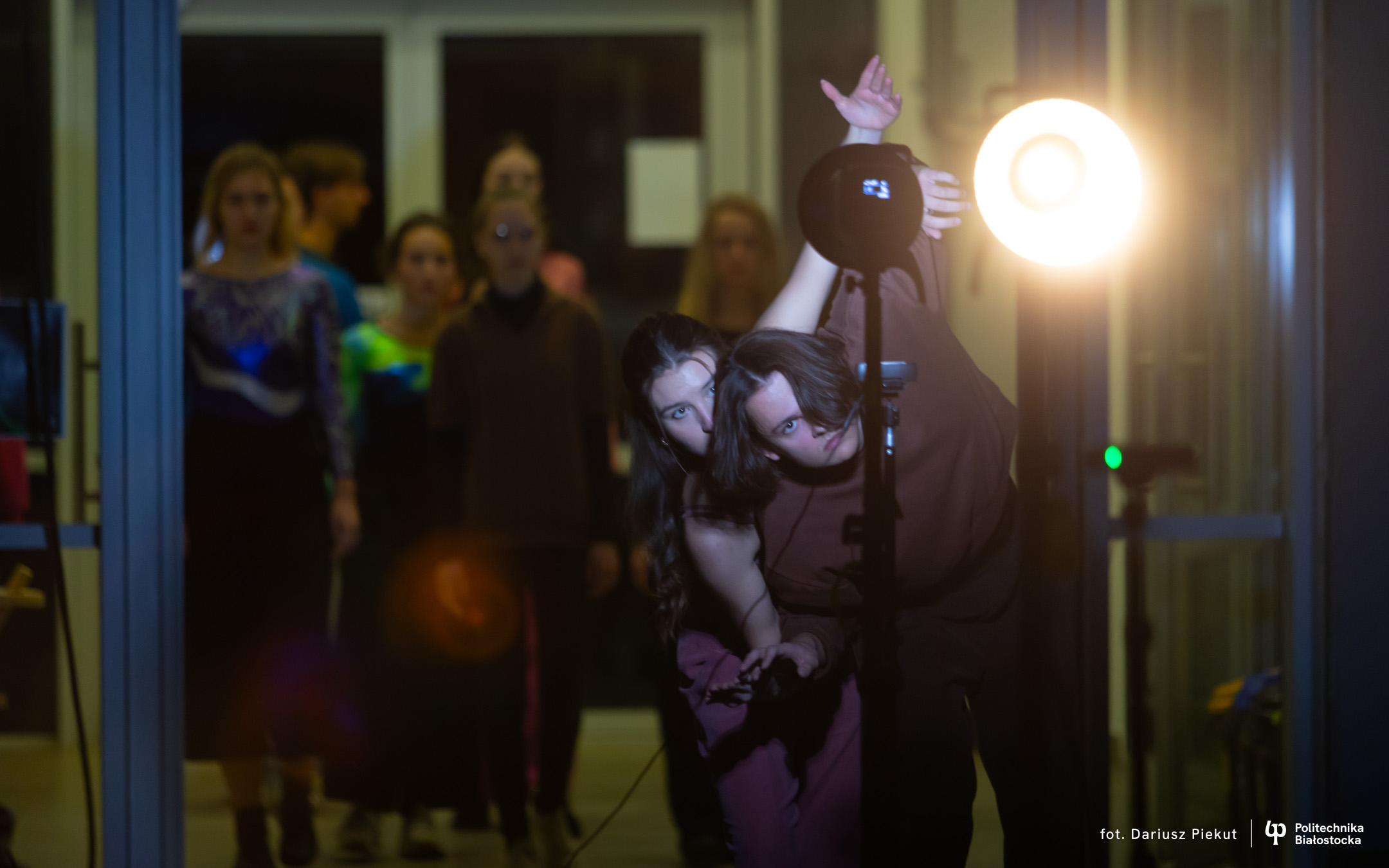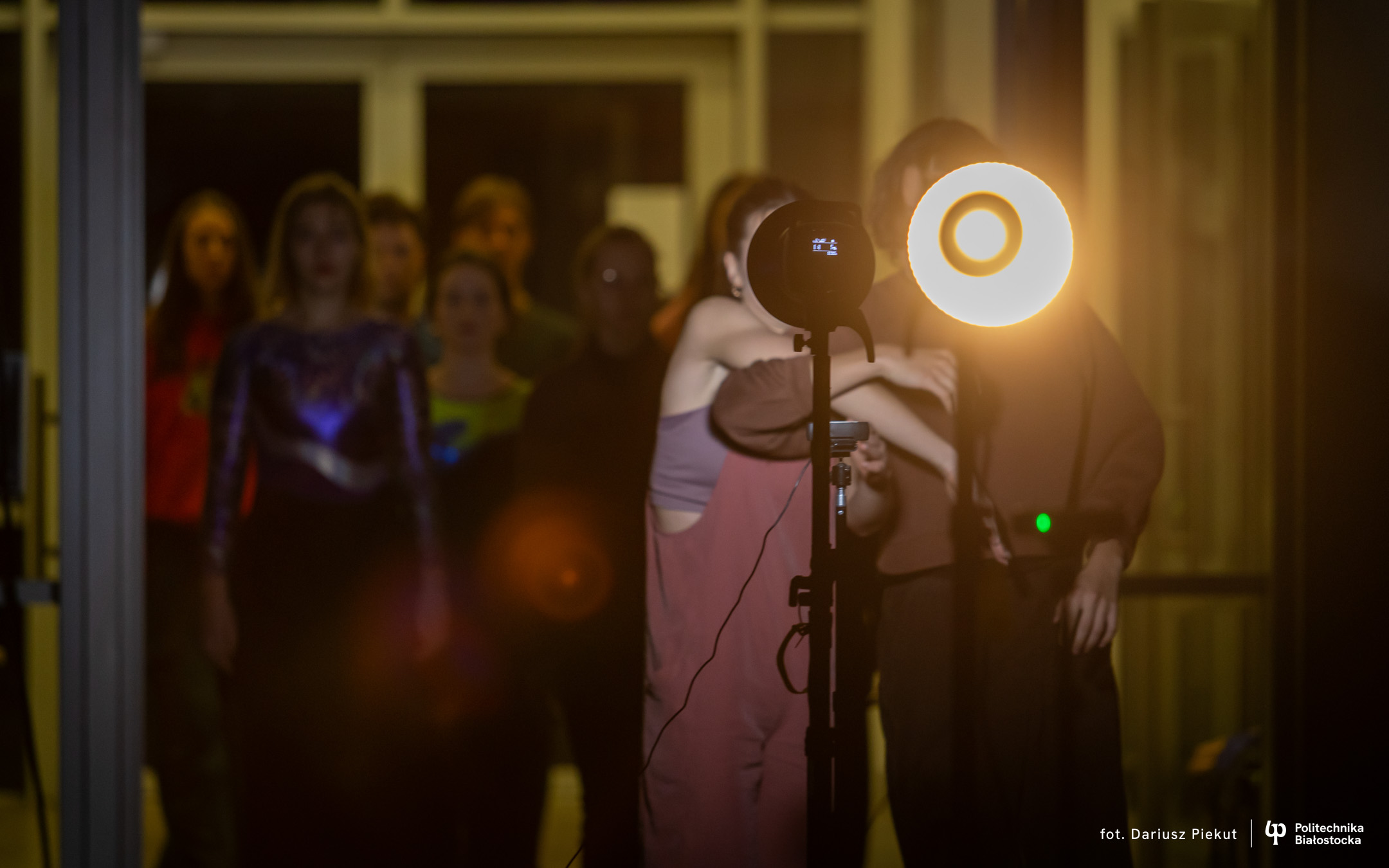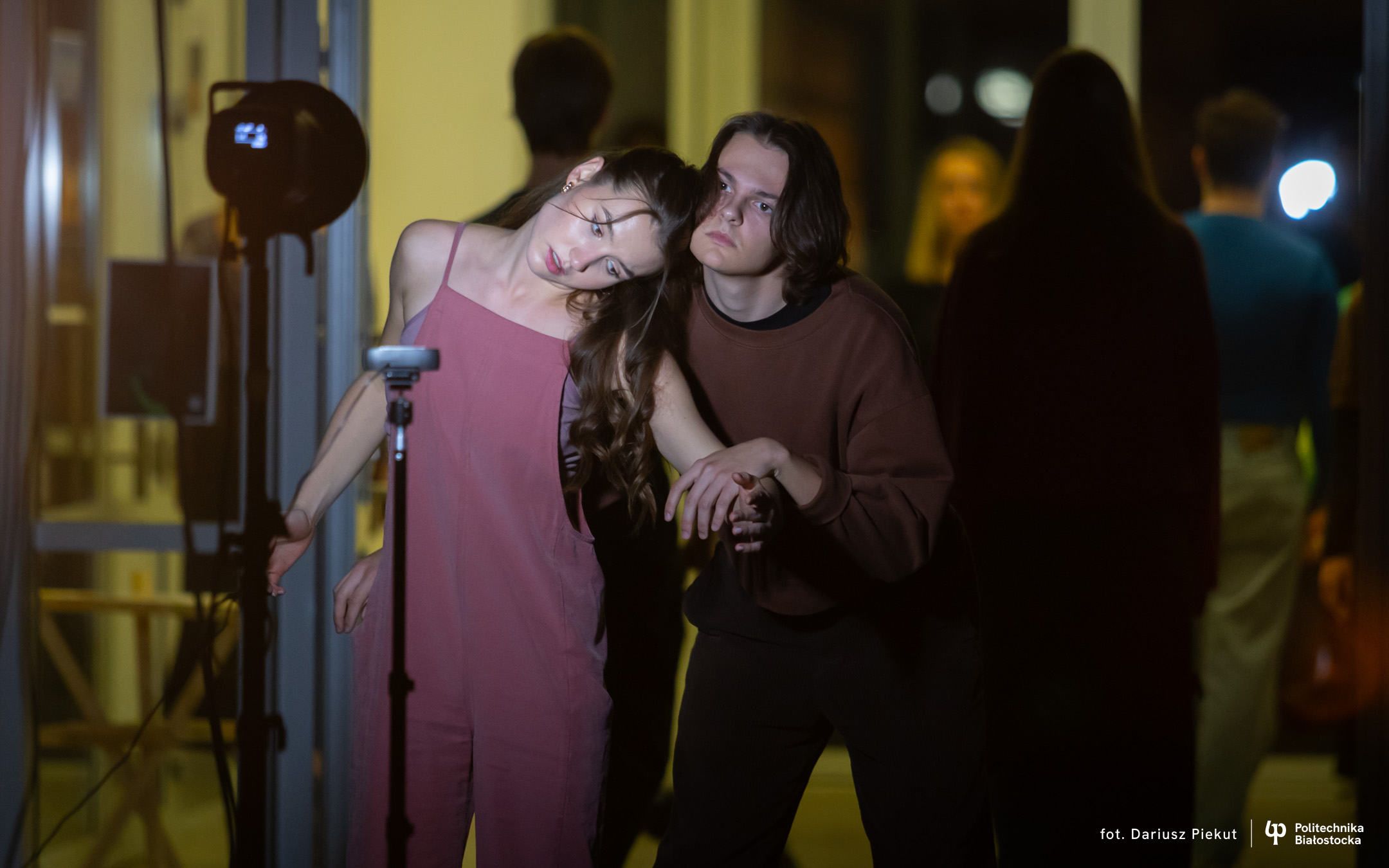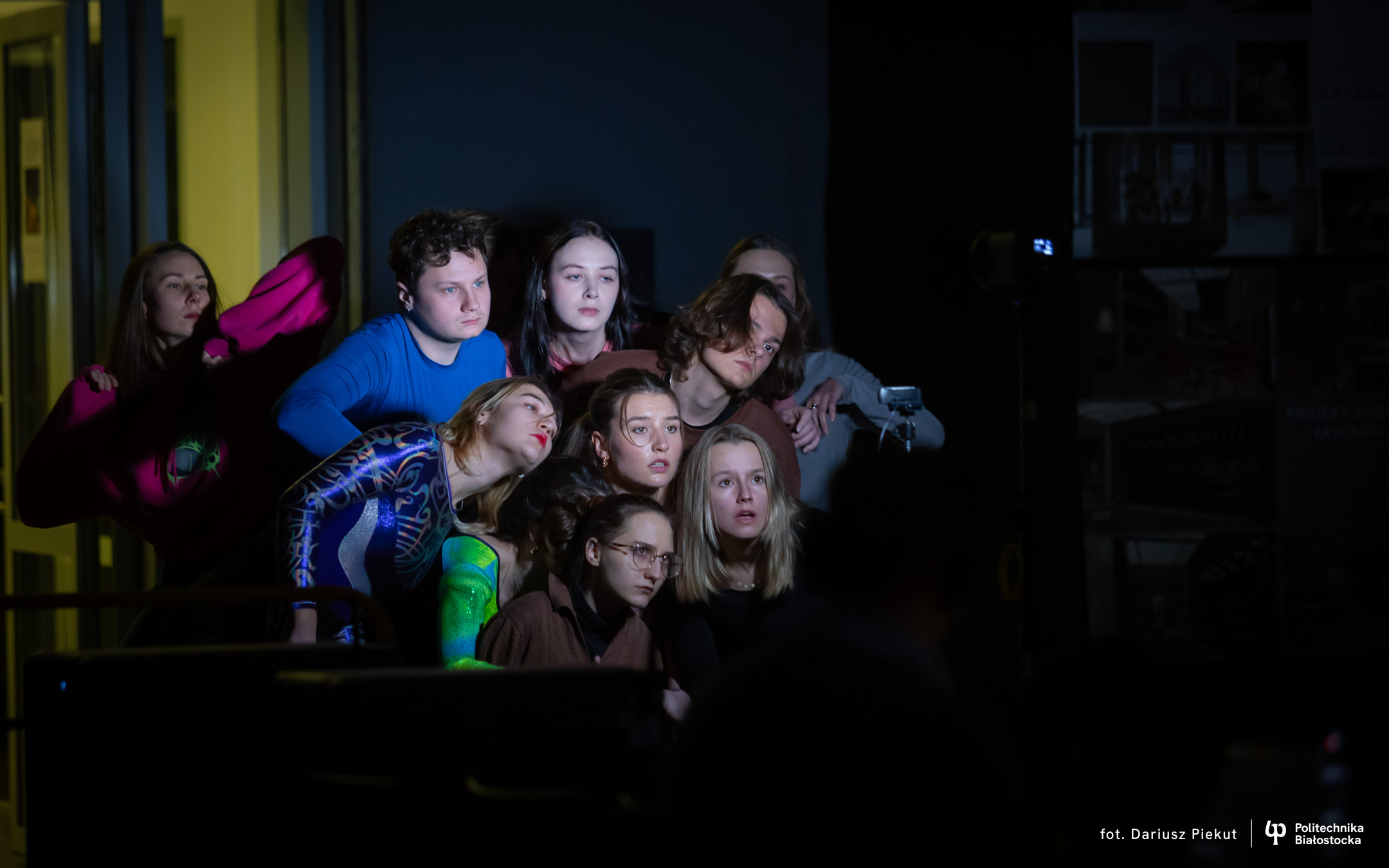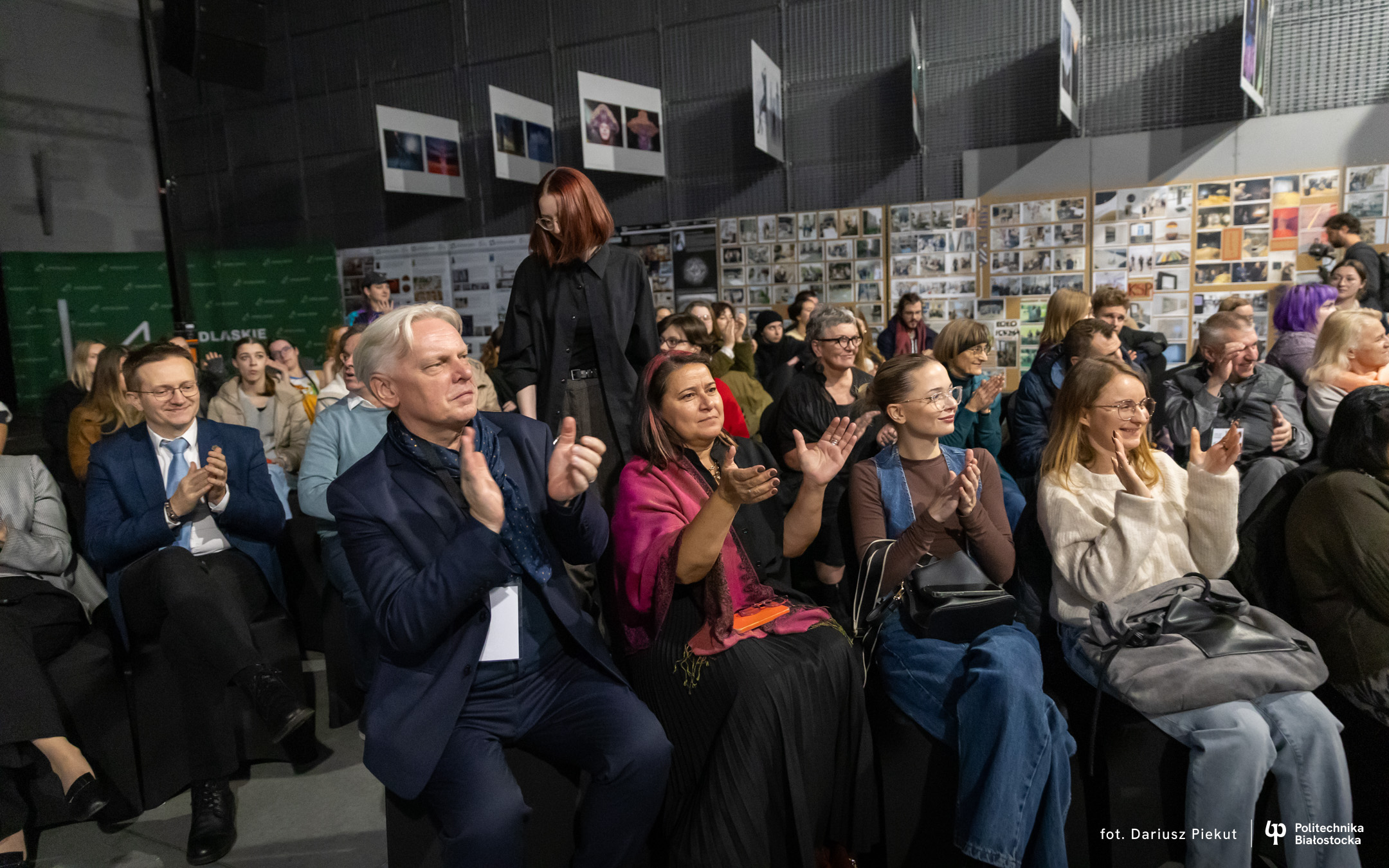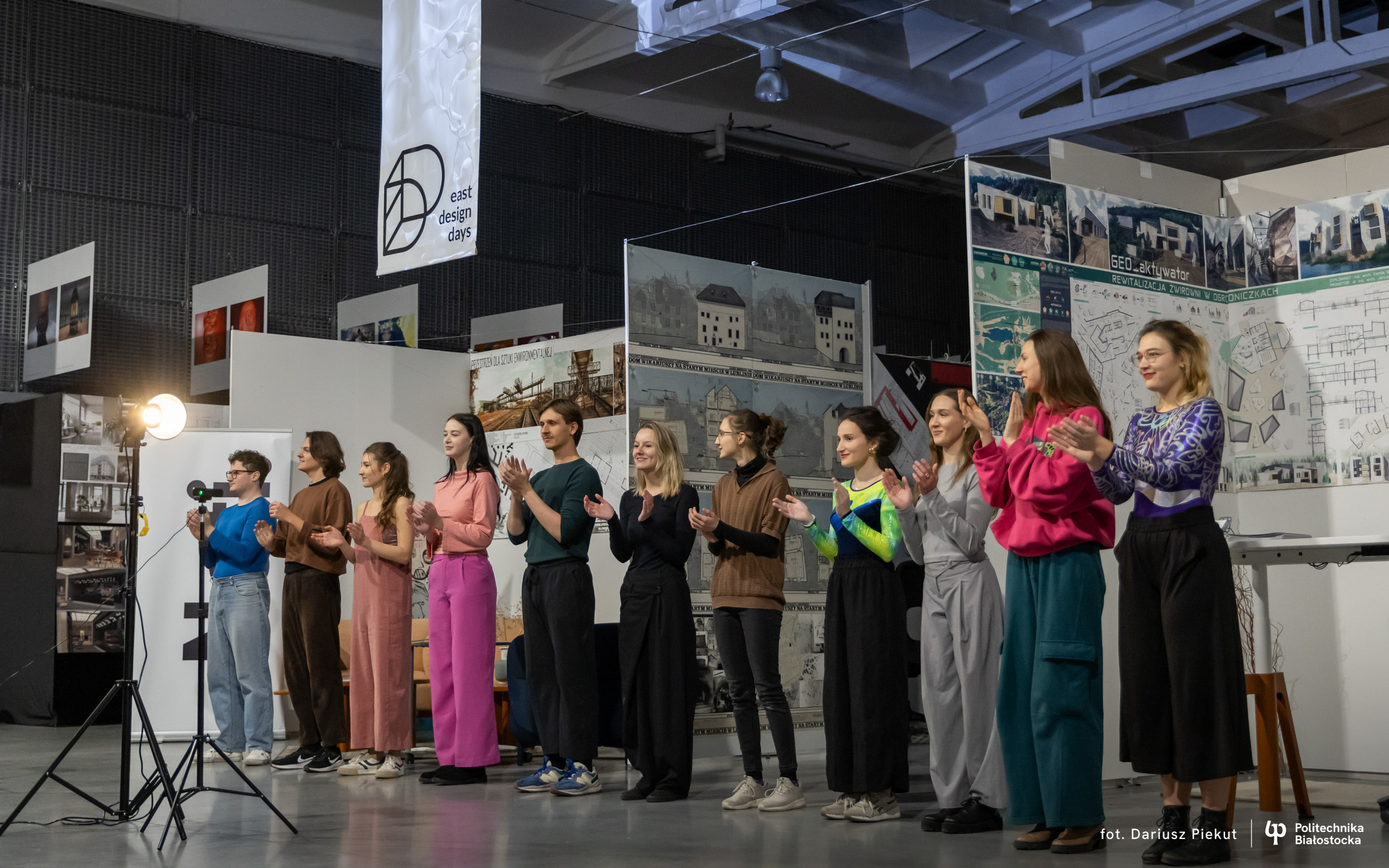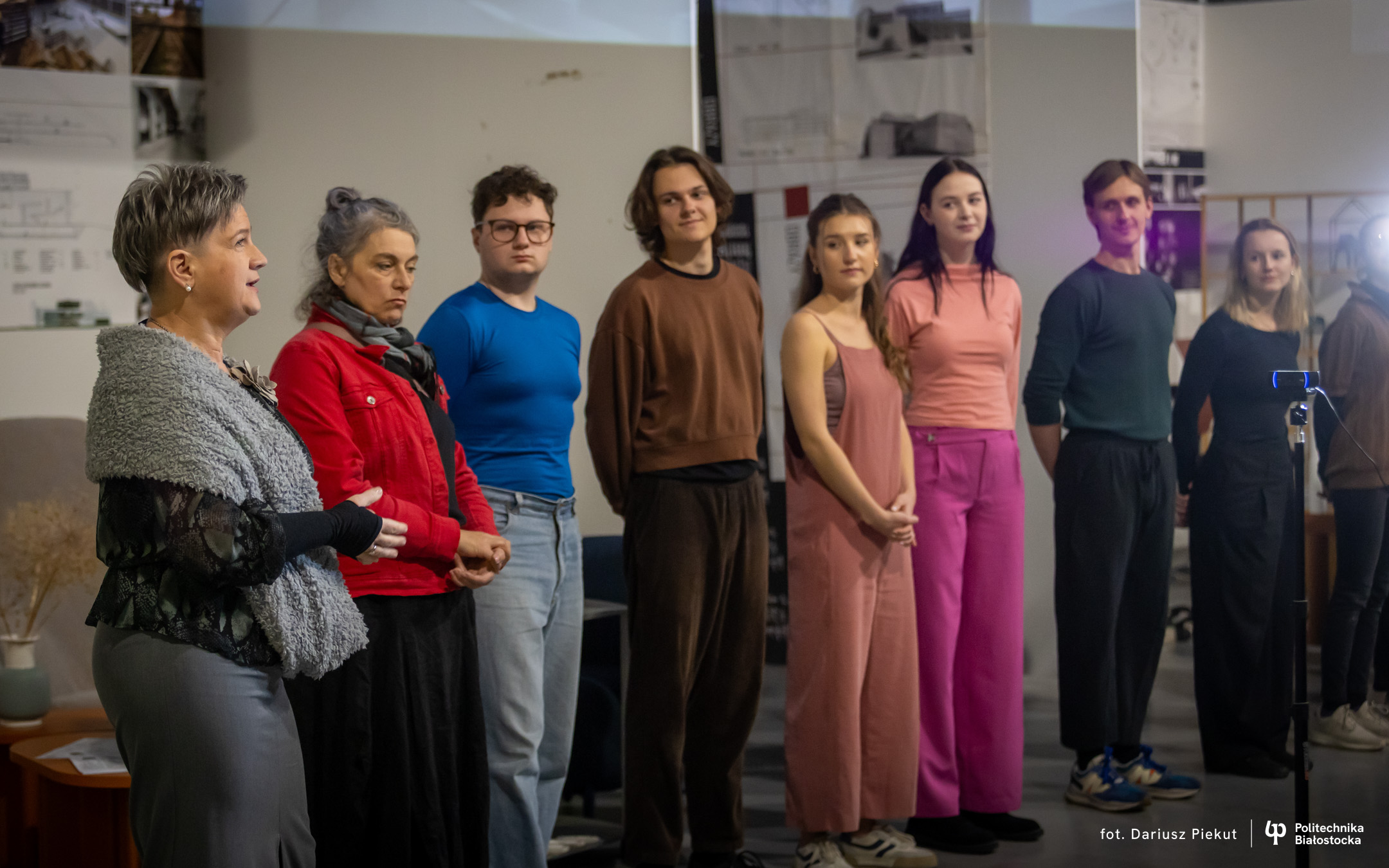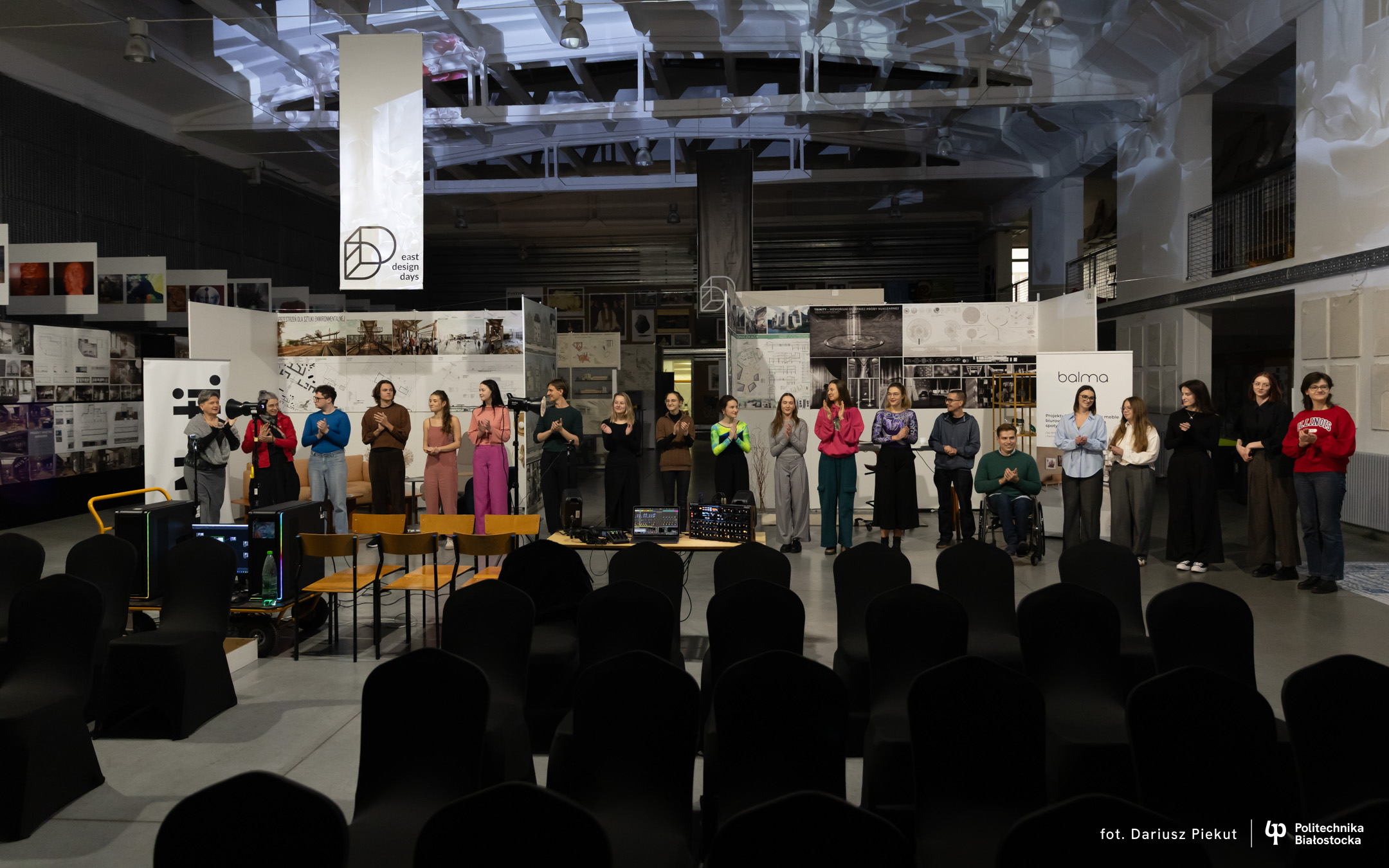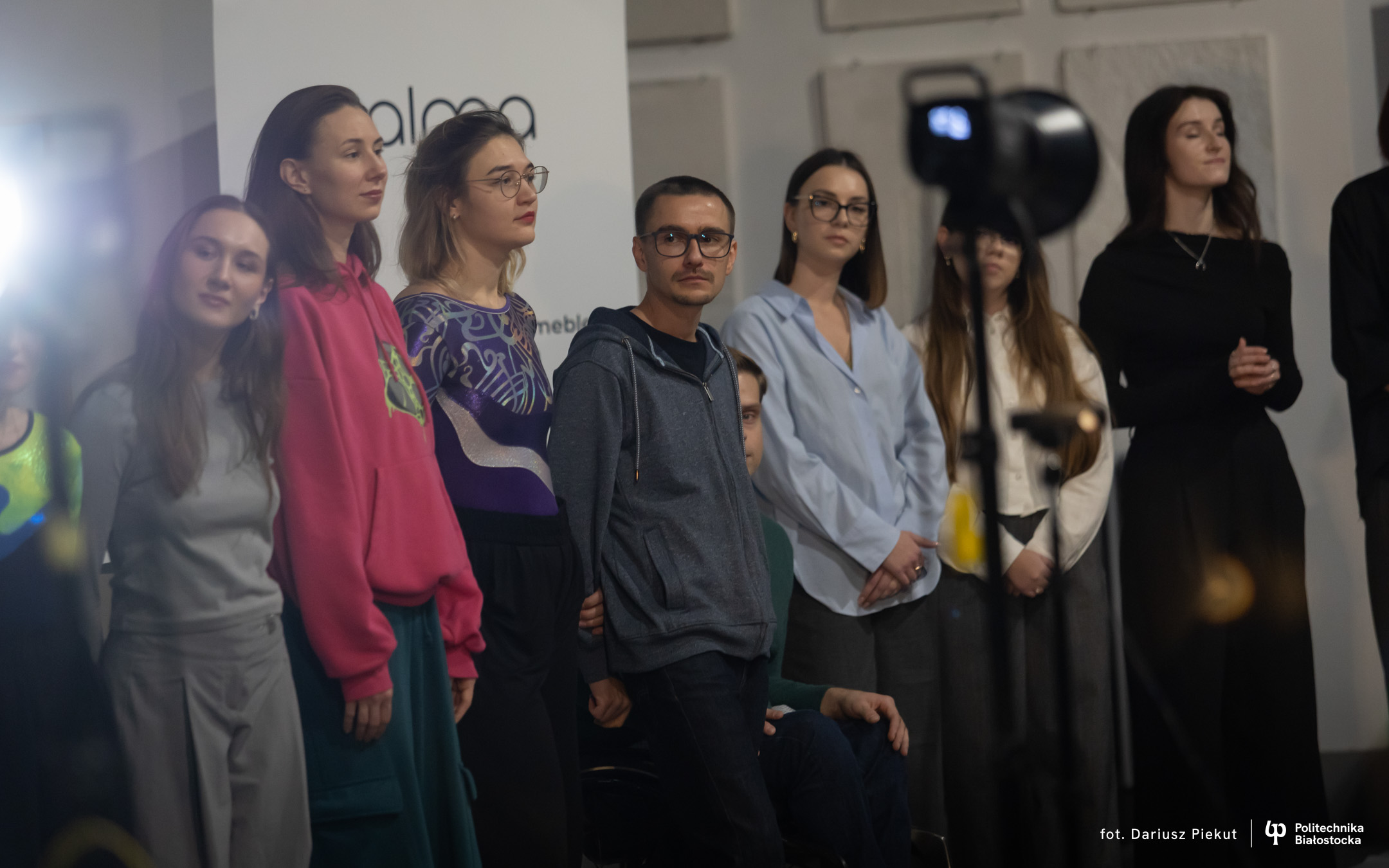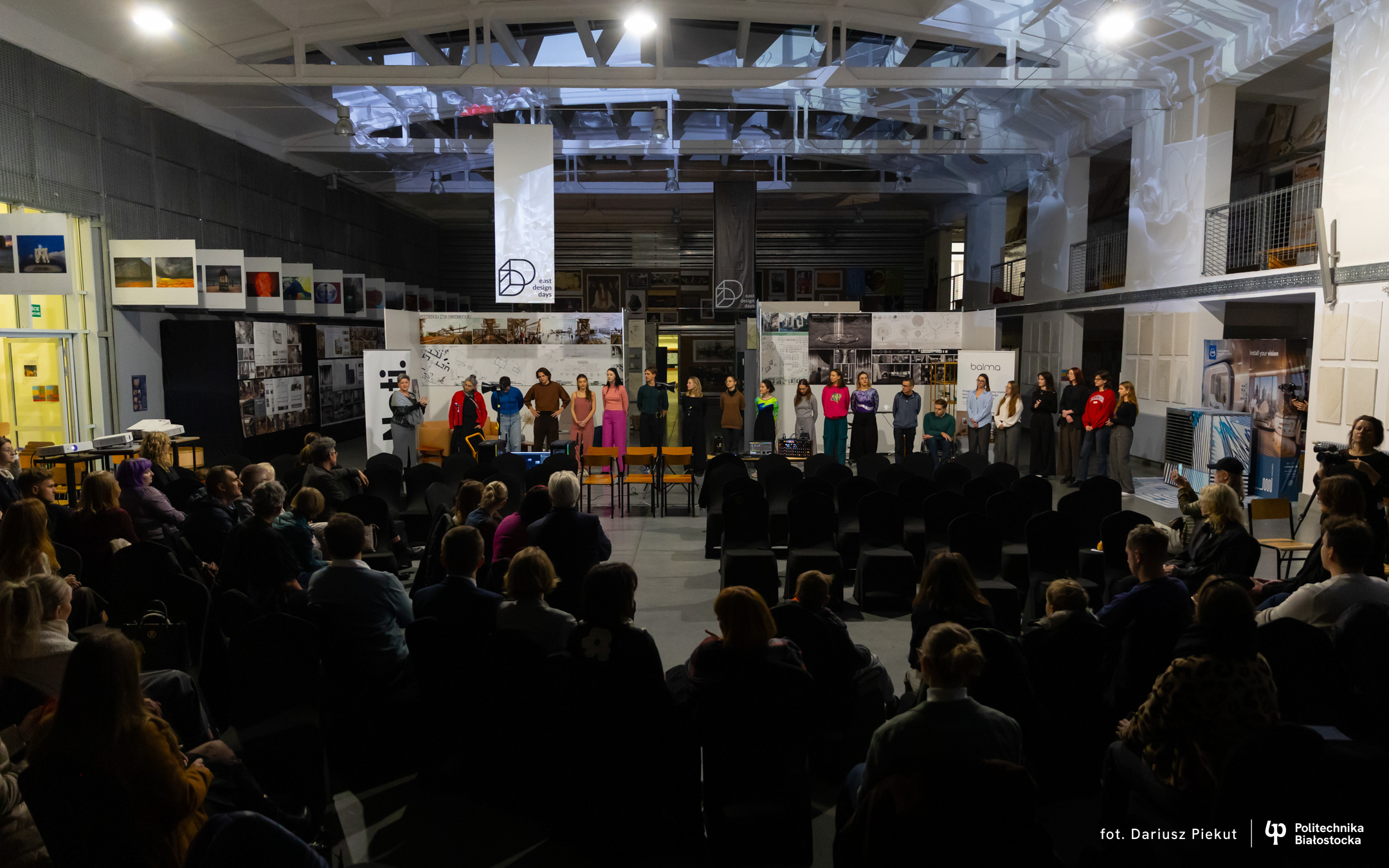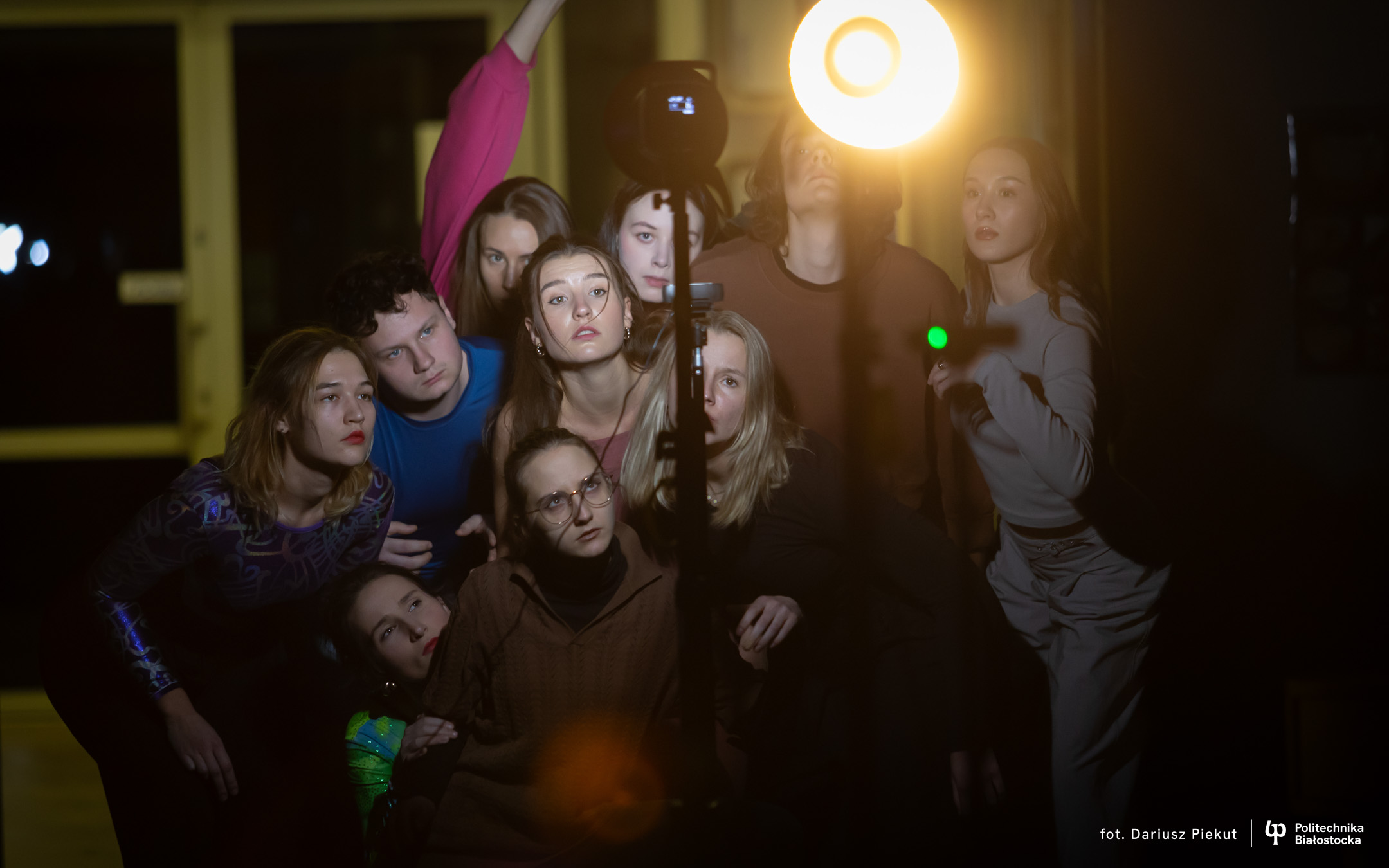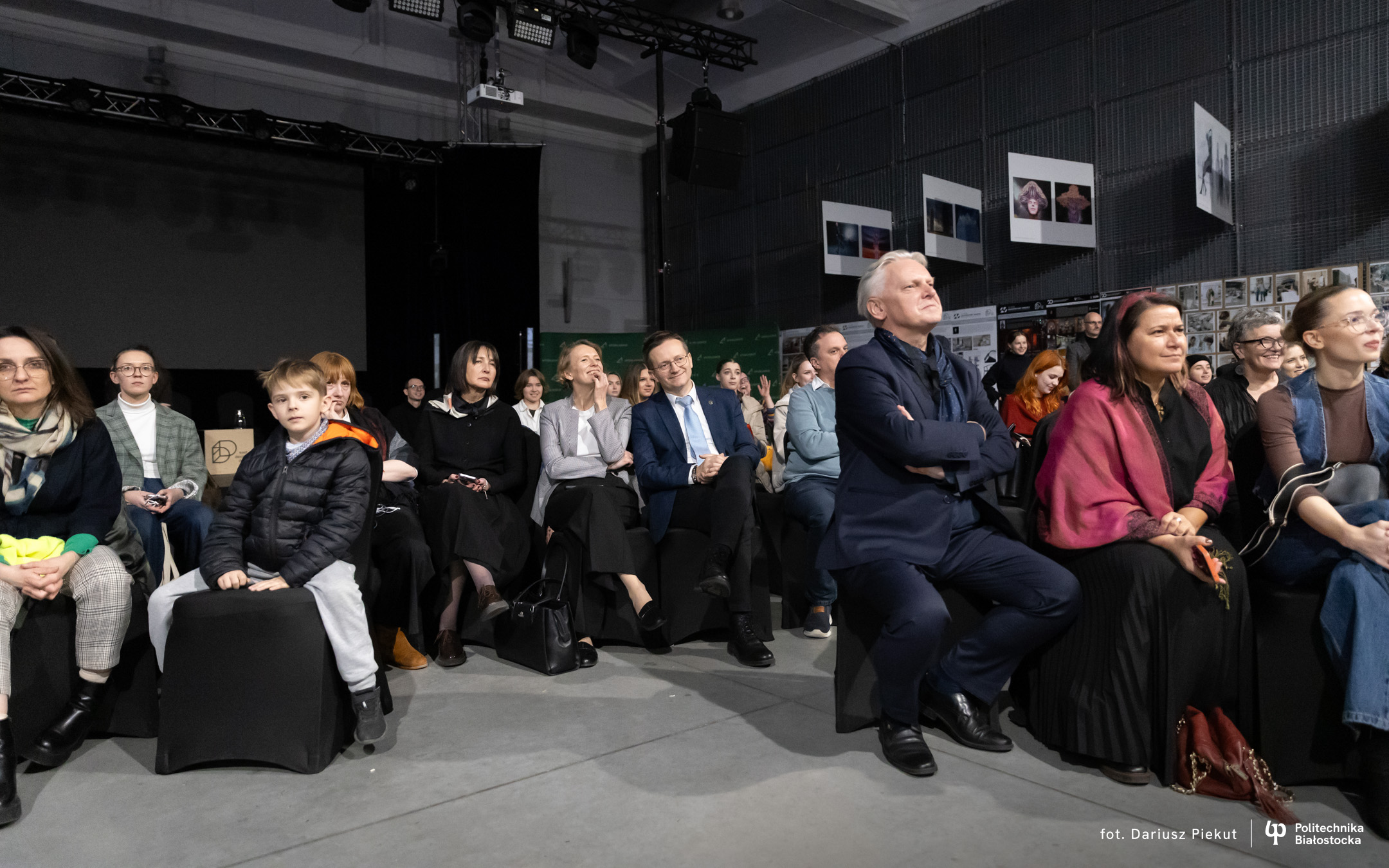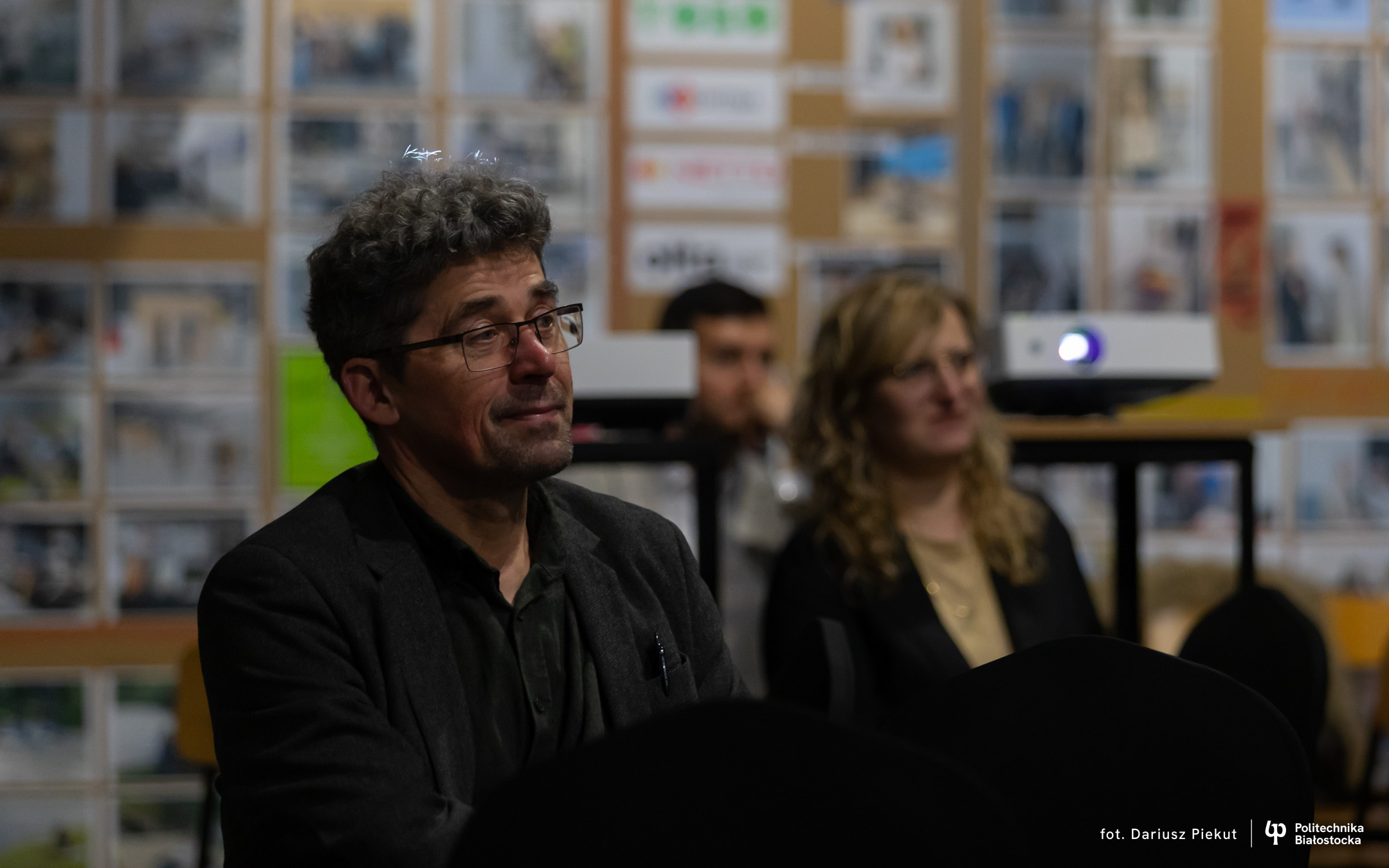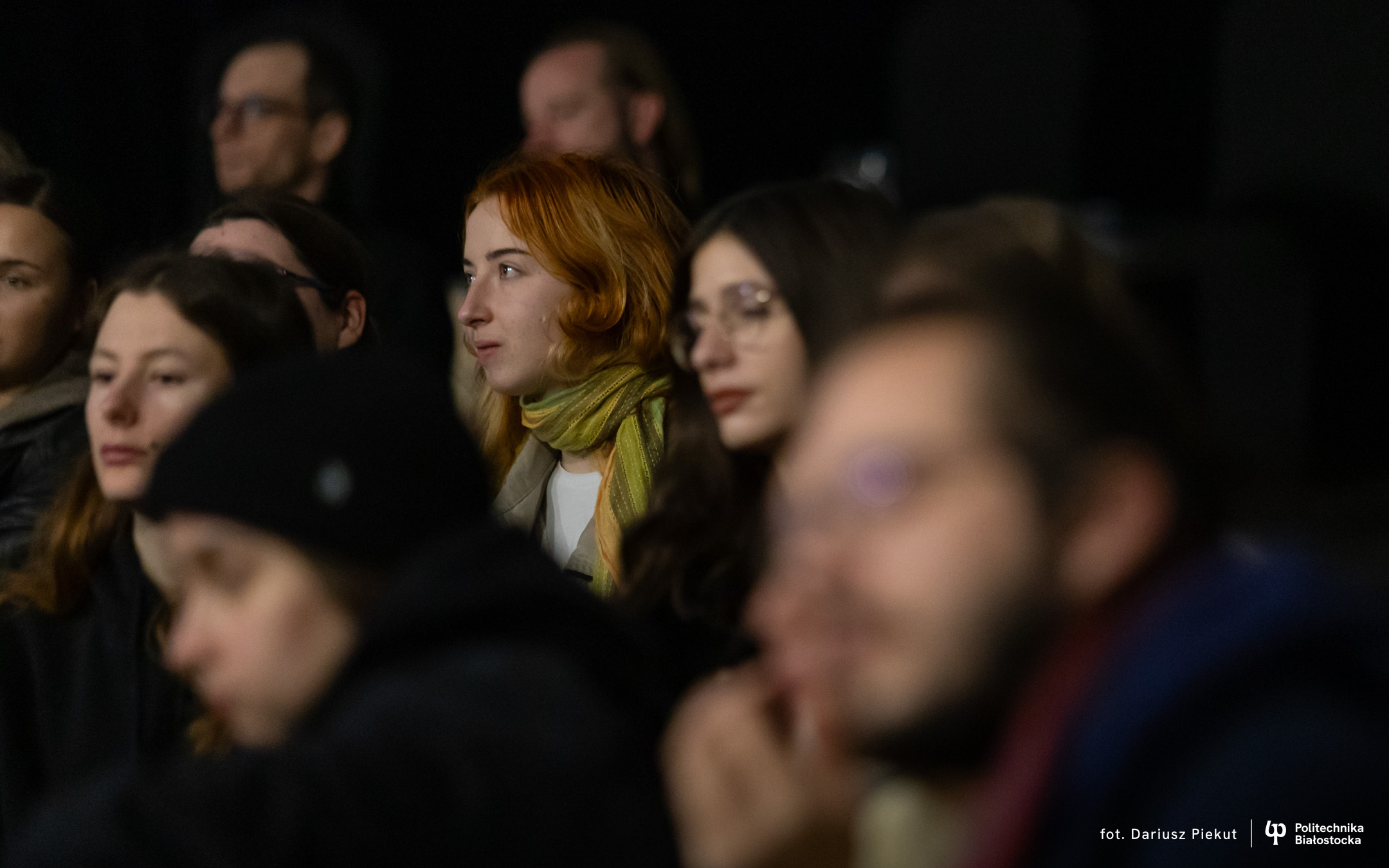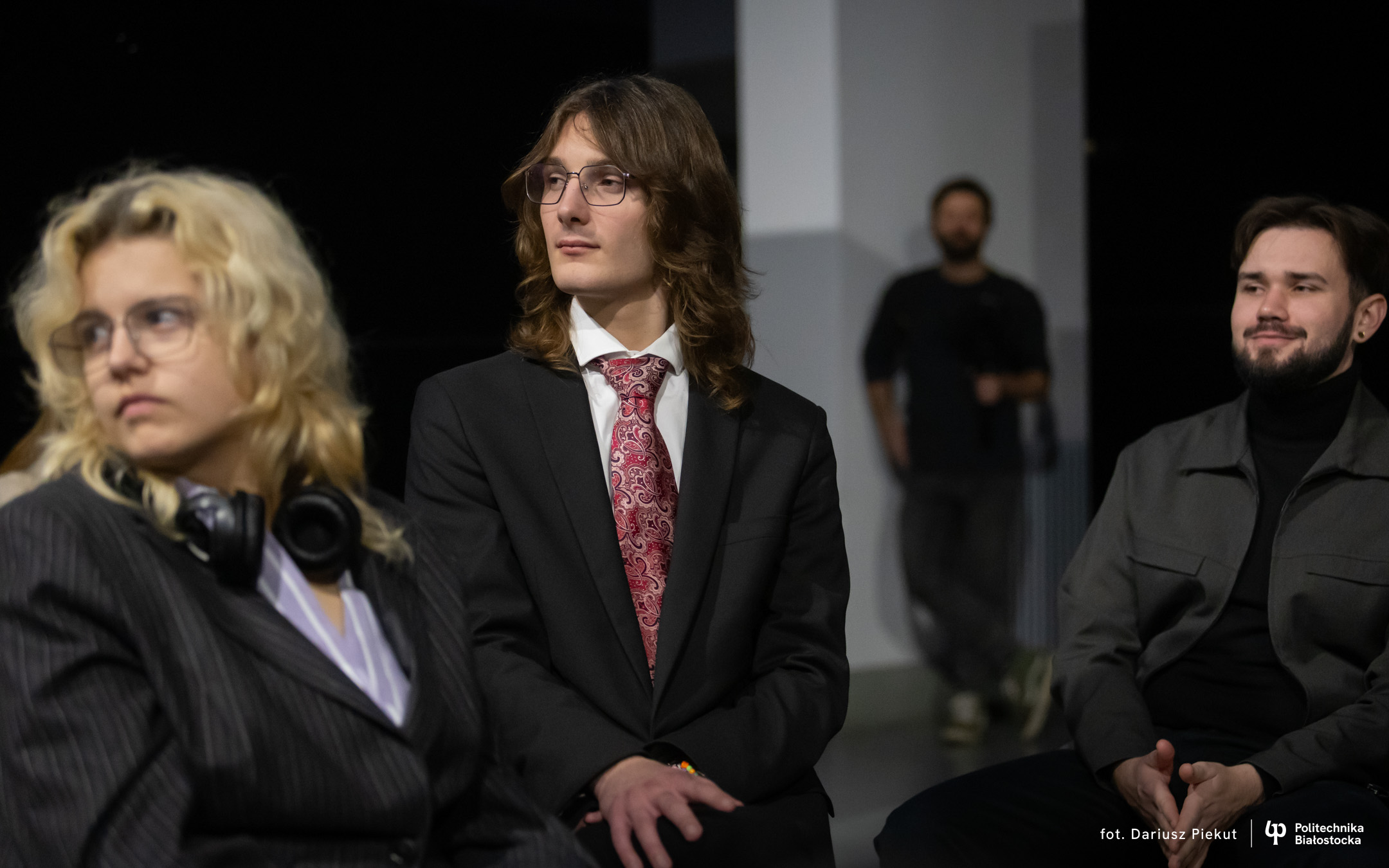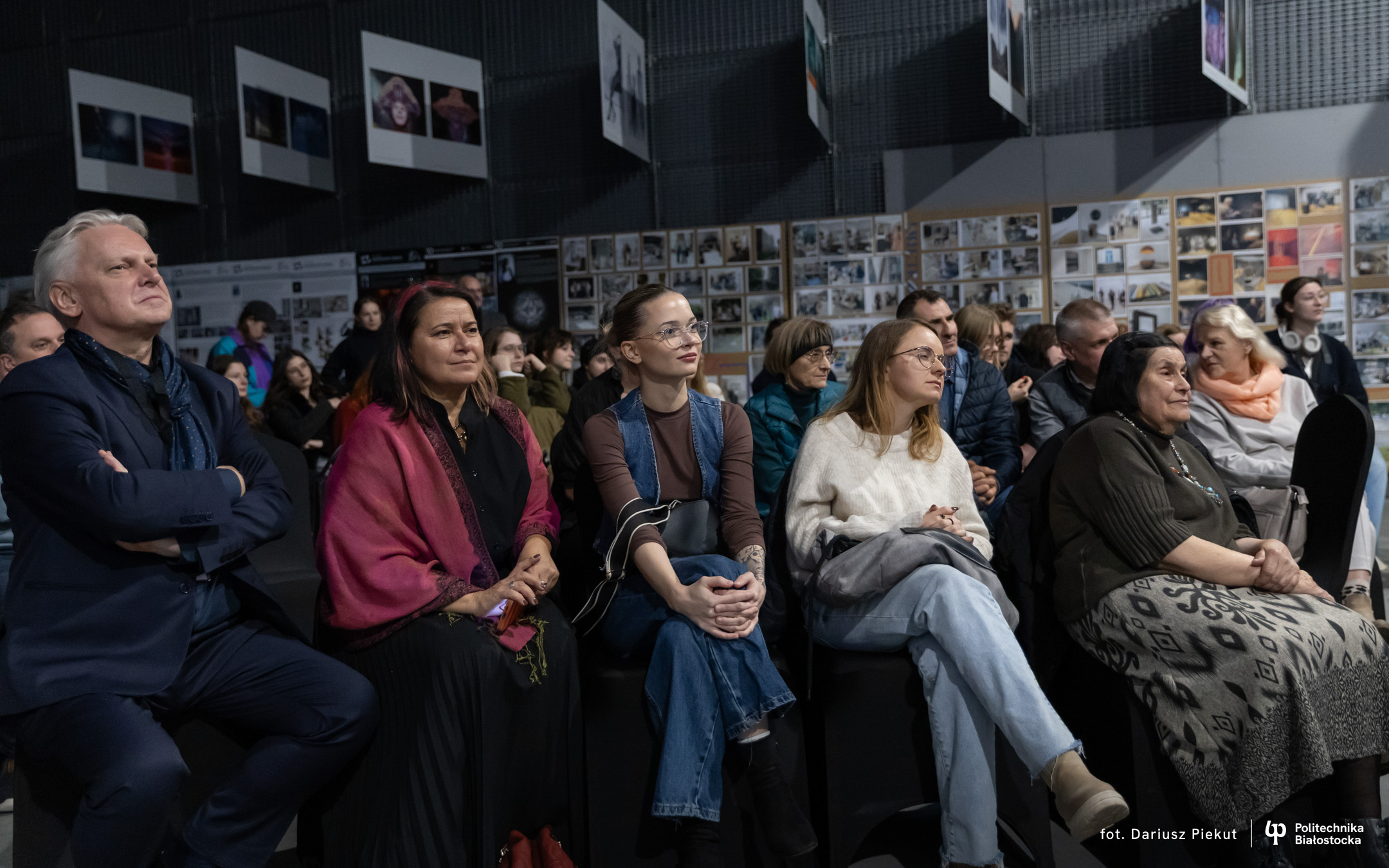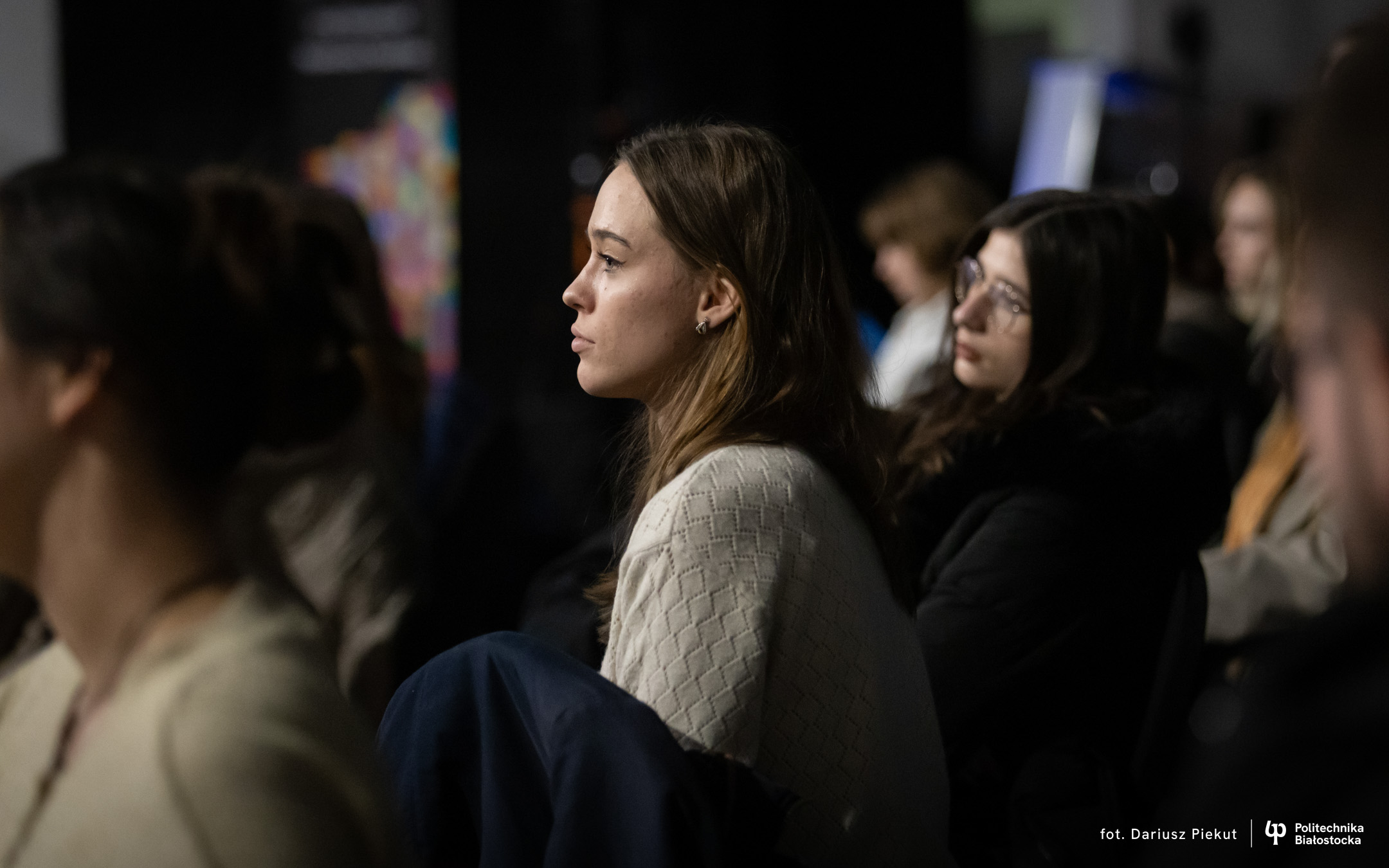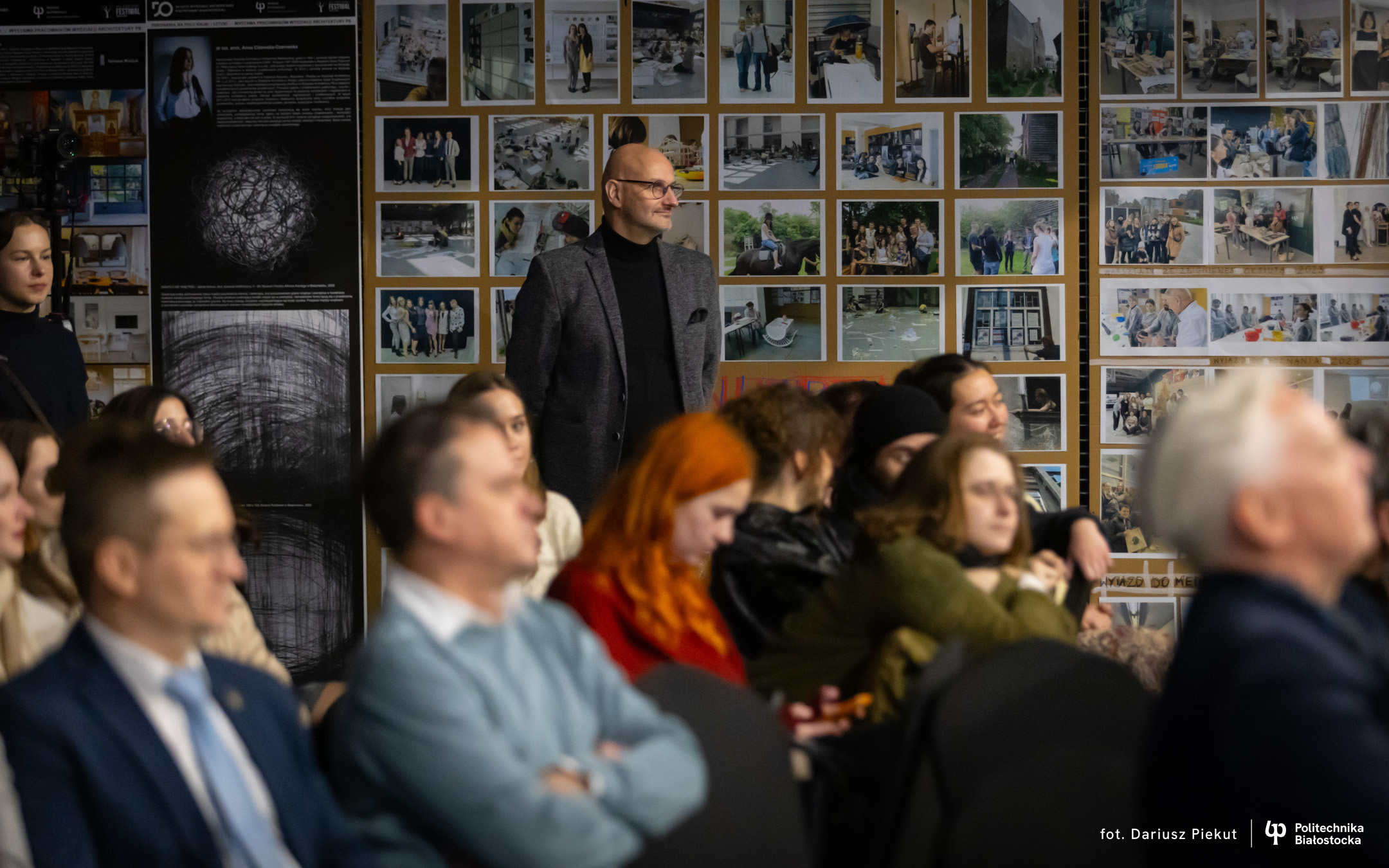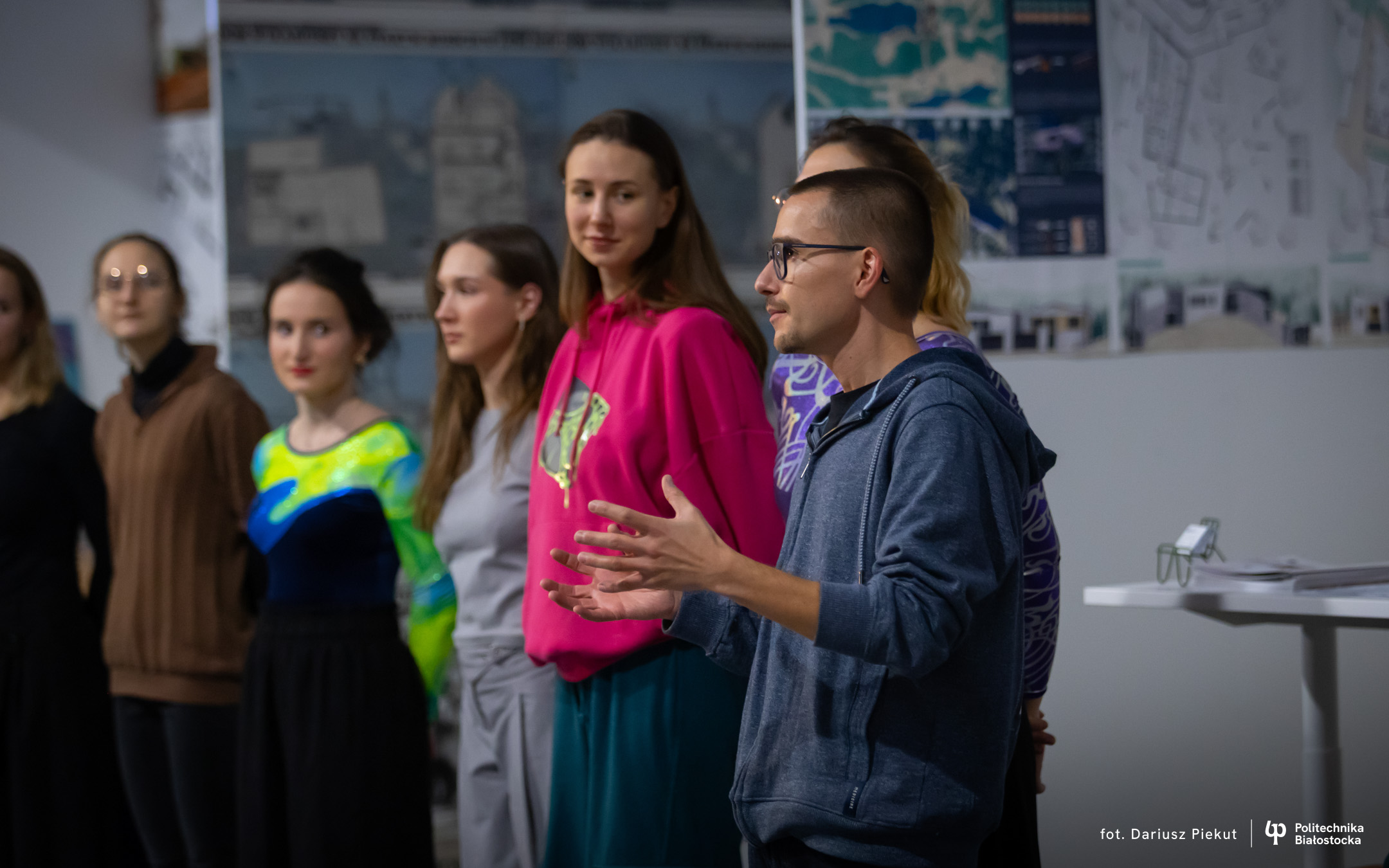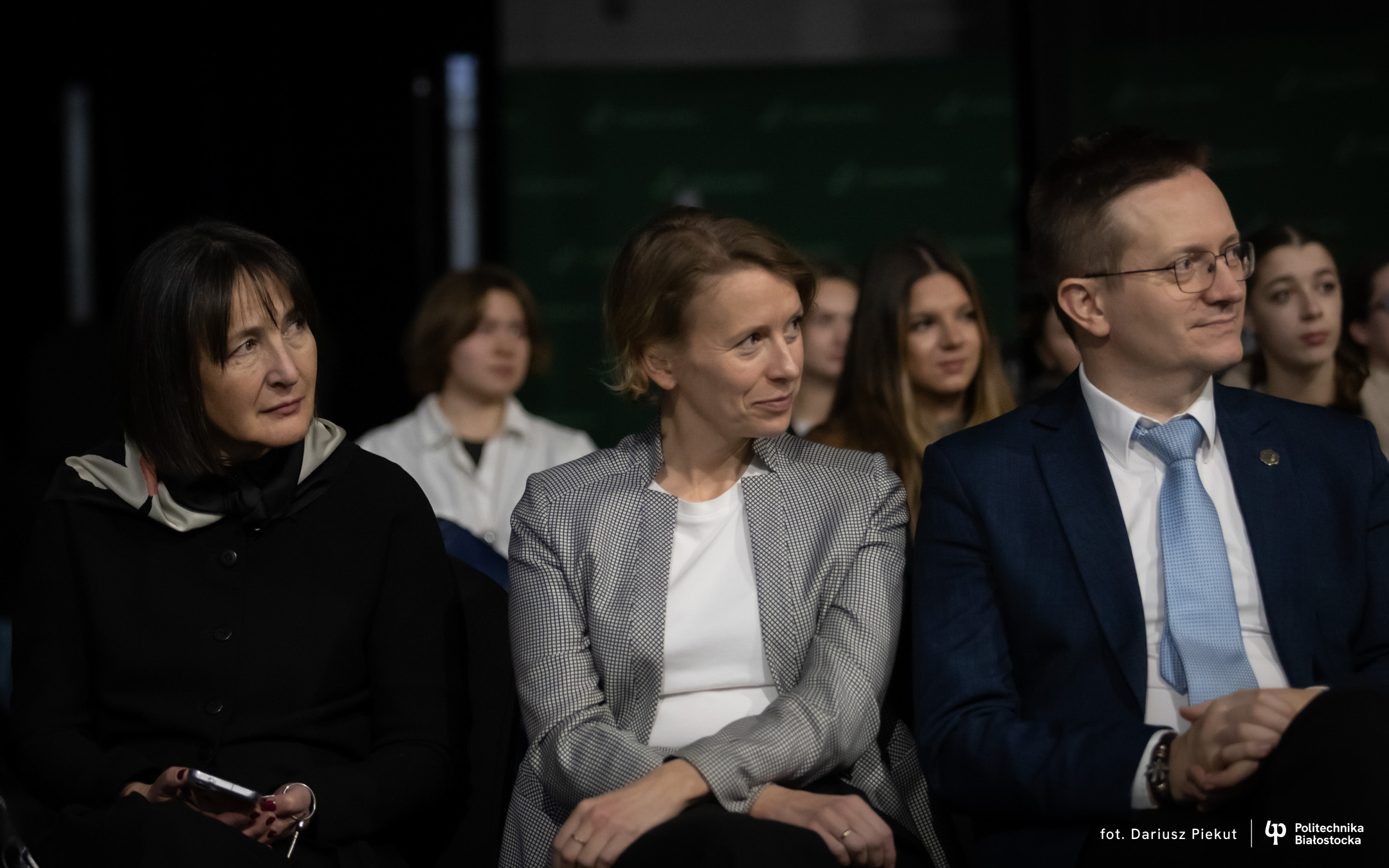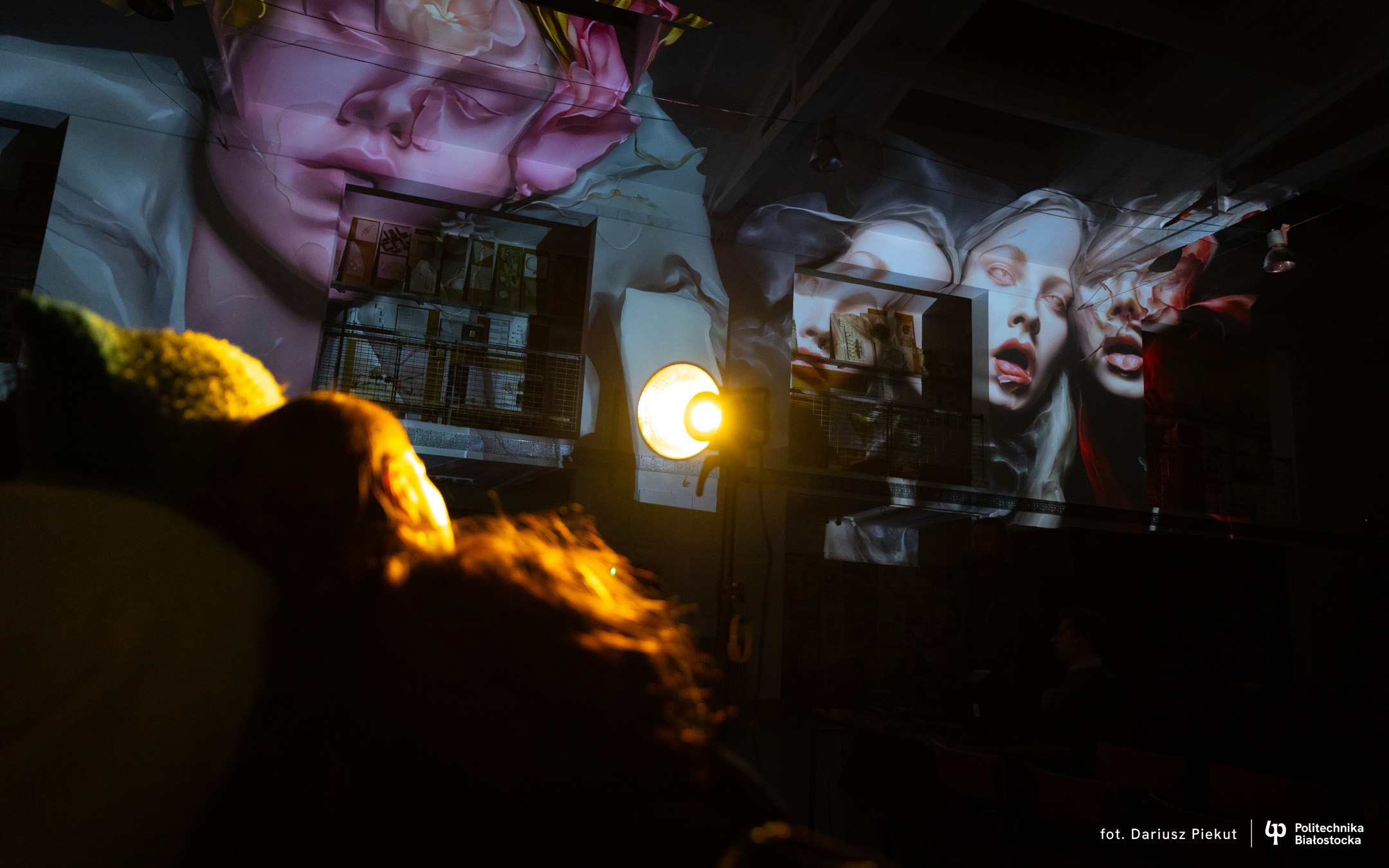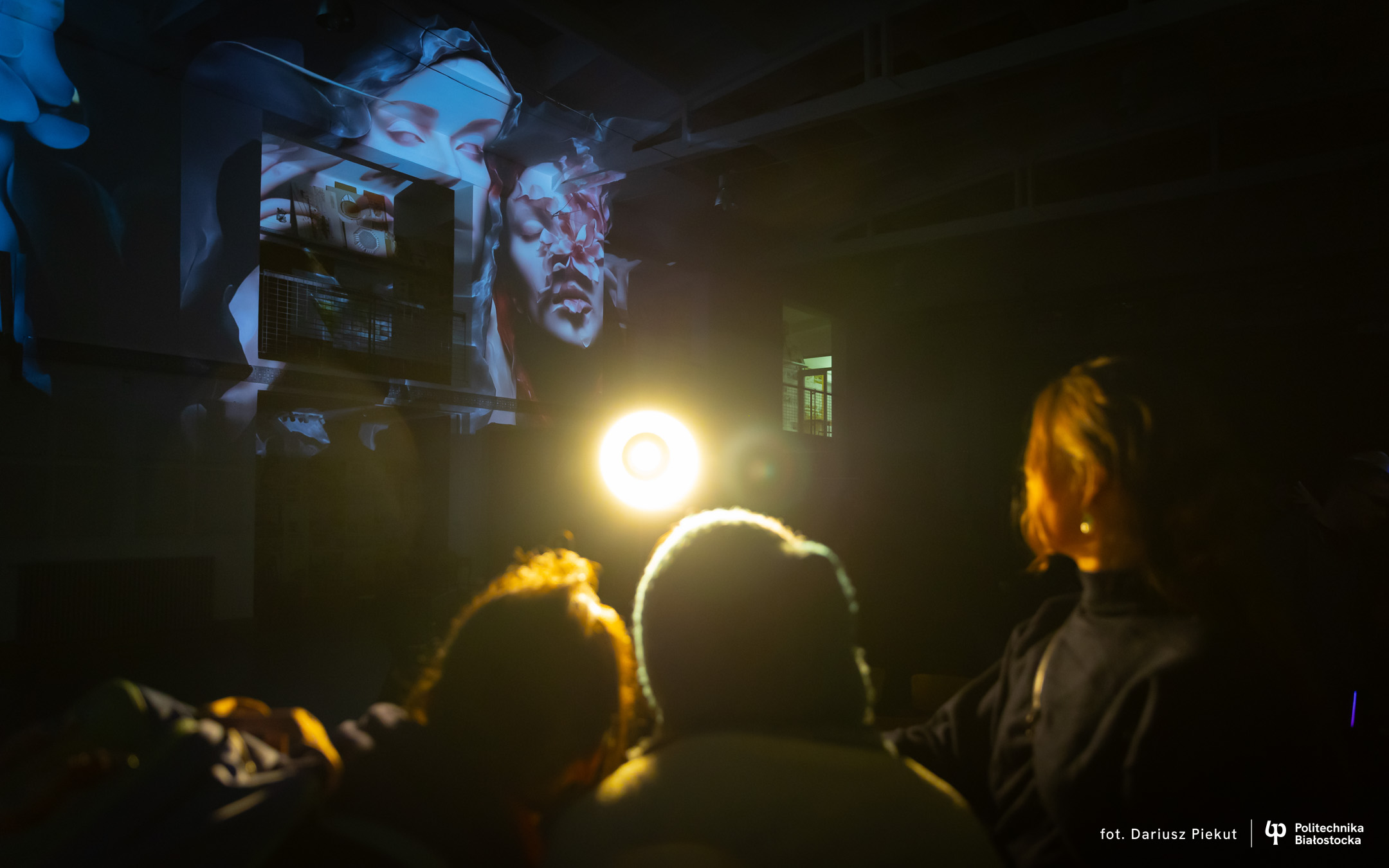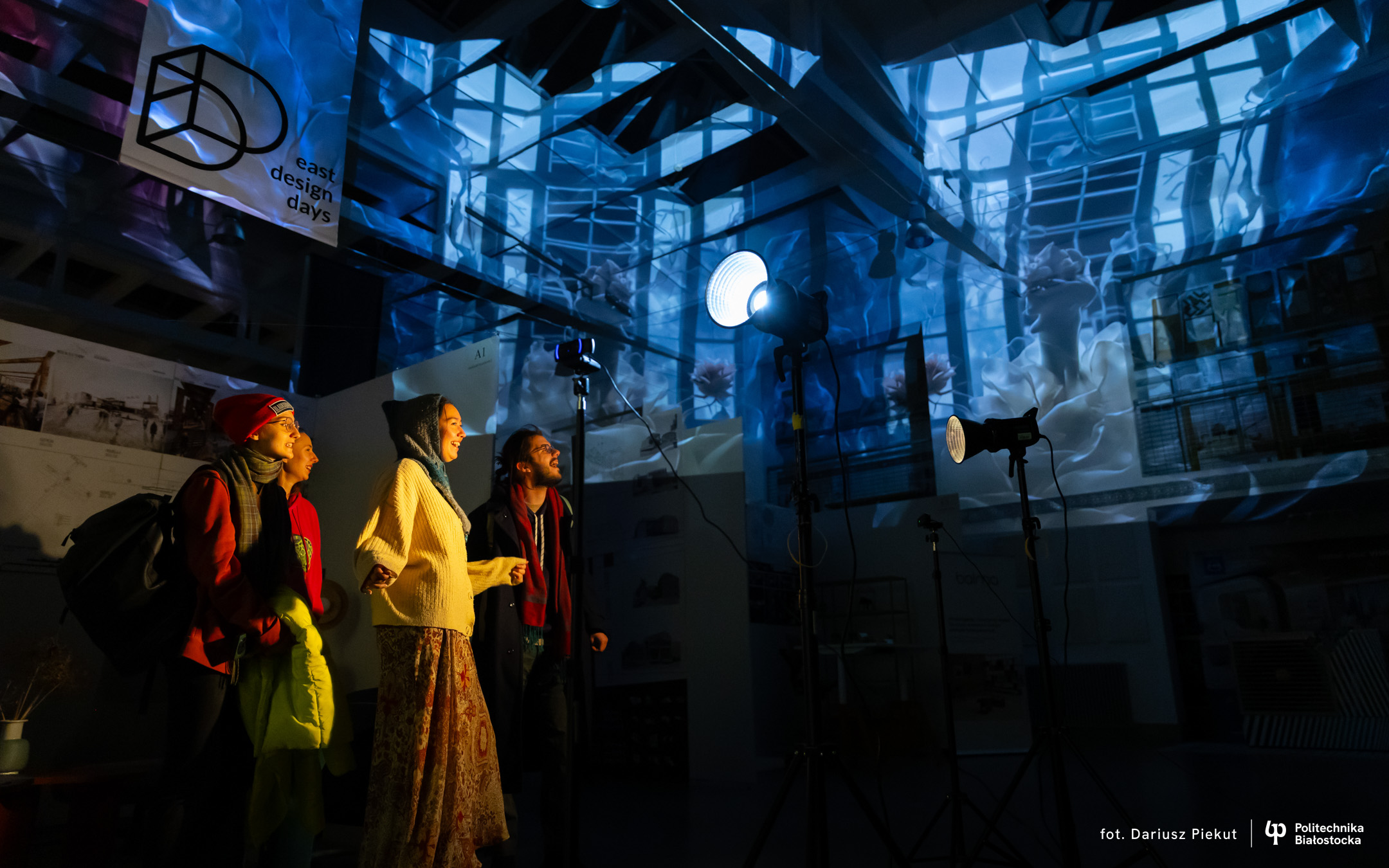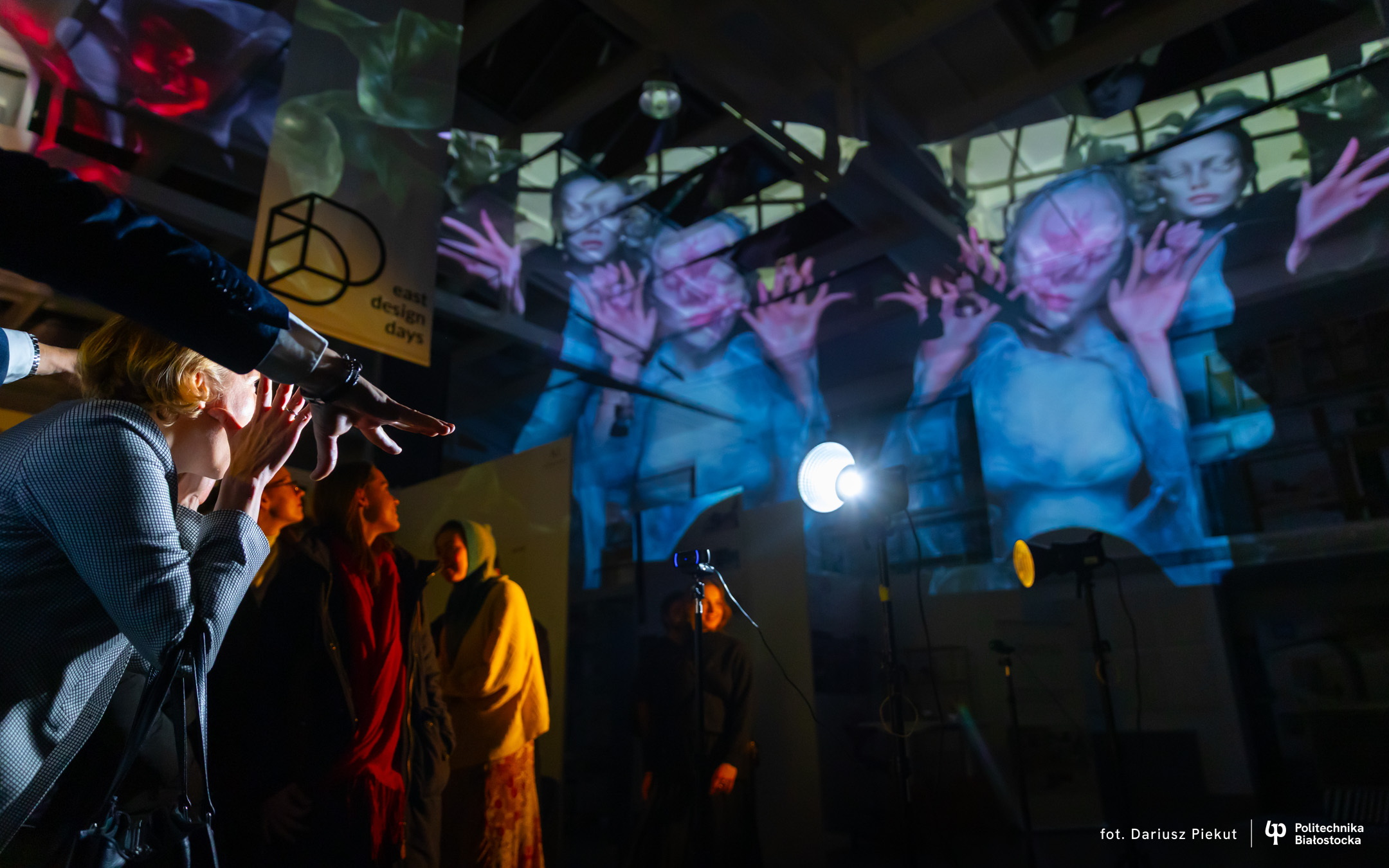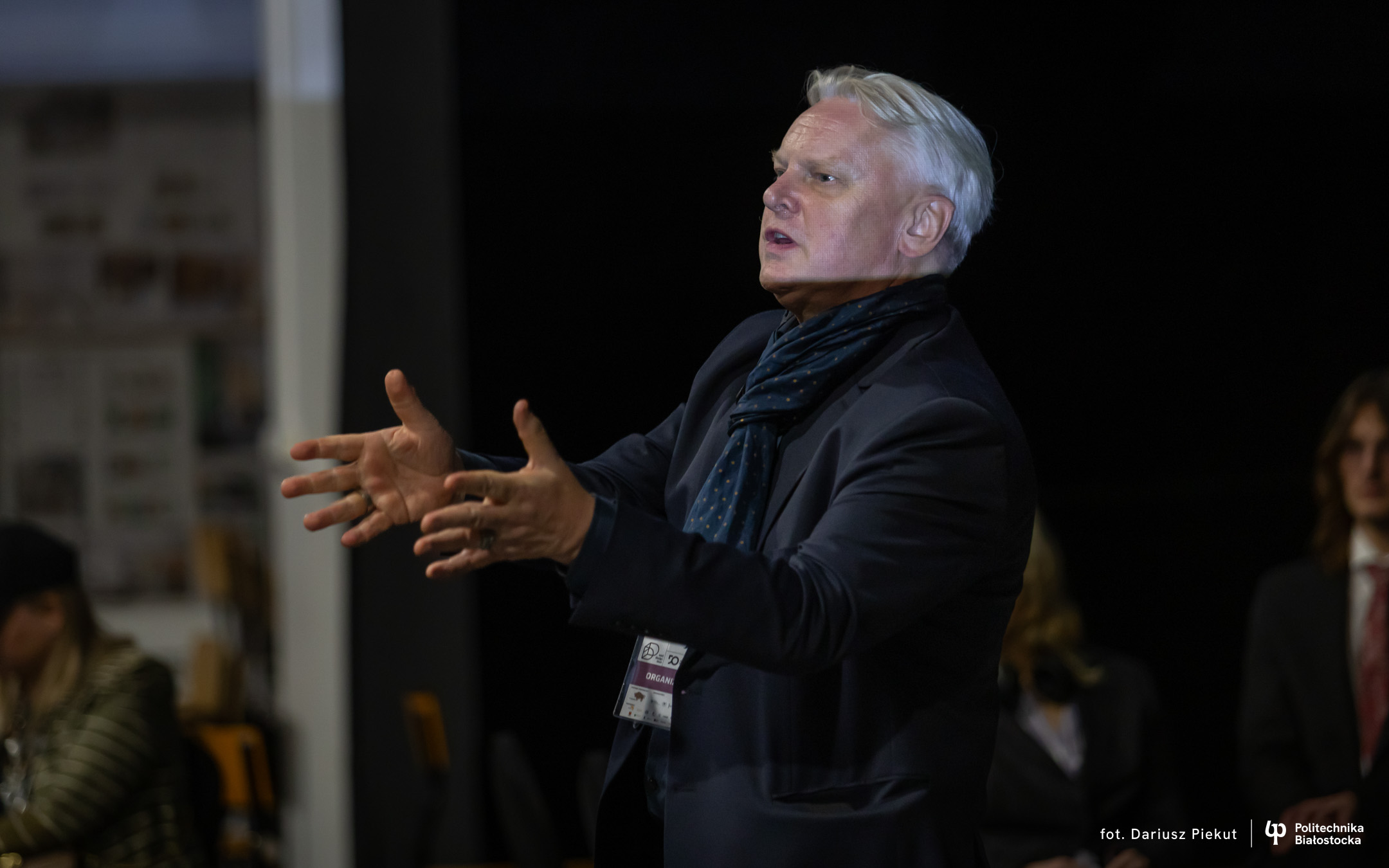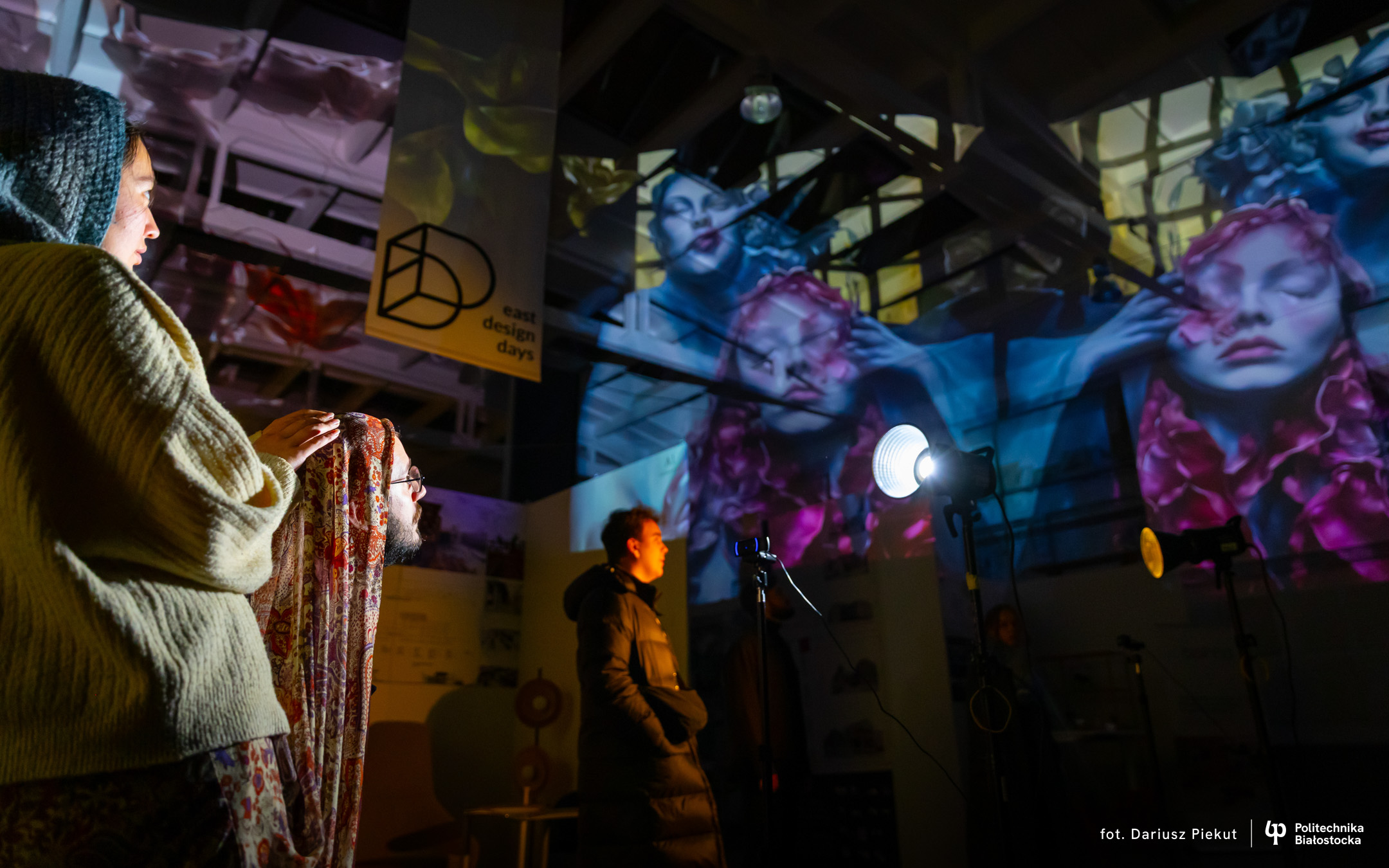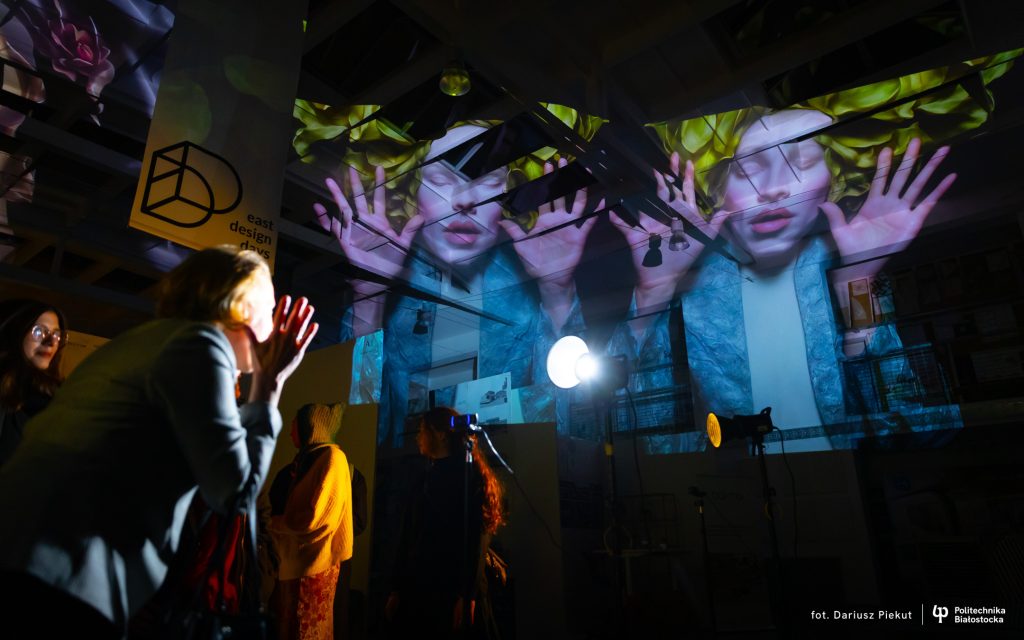
The artistic project “impAKT” combines physical theatre and movement with artificial intelligence (AI) technology, which transforms the actors’ movements into unique computer visualizations in real time. The creators developed an unusual, interactive experience at the intersection of performance and technology, exploring the limits of artistic expression in the digital era.
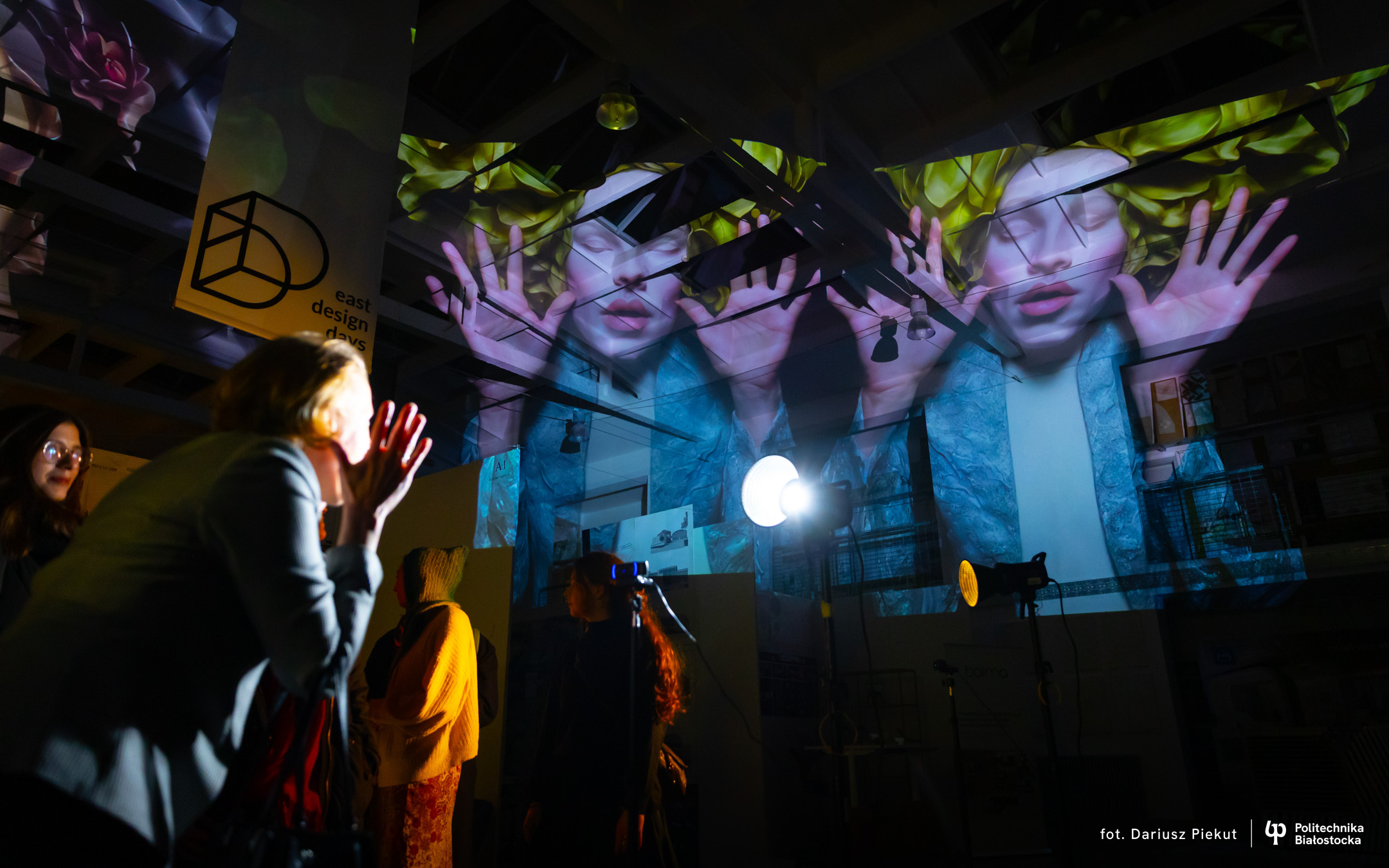
– Seeing oneself in the AI digital mirror and witnessing images driven by the real and intentional movements of the actors – students from the Academy – created an effect and was an exciting experience for them – says Maciej Popławski, IT specialist at the Faculty’s Augmented Reality Laboratory AuReLa at the Faculty of Architecture of Bialystok University of Technology. – This is an attempt at a new artistic form.
Earlier, Bialystok University of Technology and the Aleksander Zelwerowicz National Academy of Dramatic Art in Warsaw, Bialystok Branch, concluded a cooperation agreement. Students from both institutions eagerly joined the collaboration.
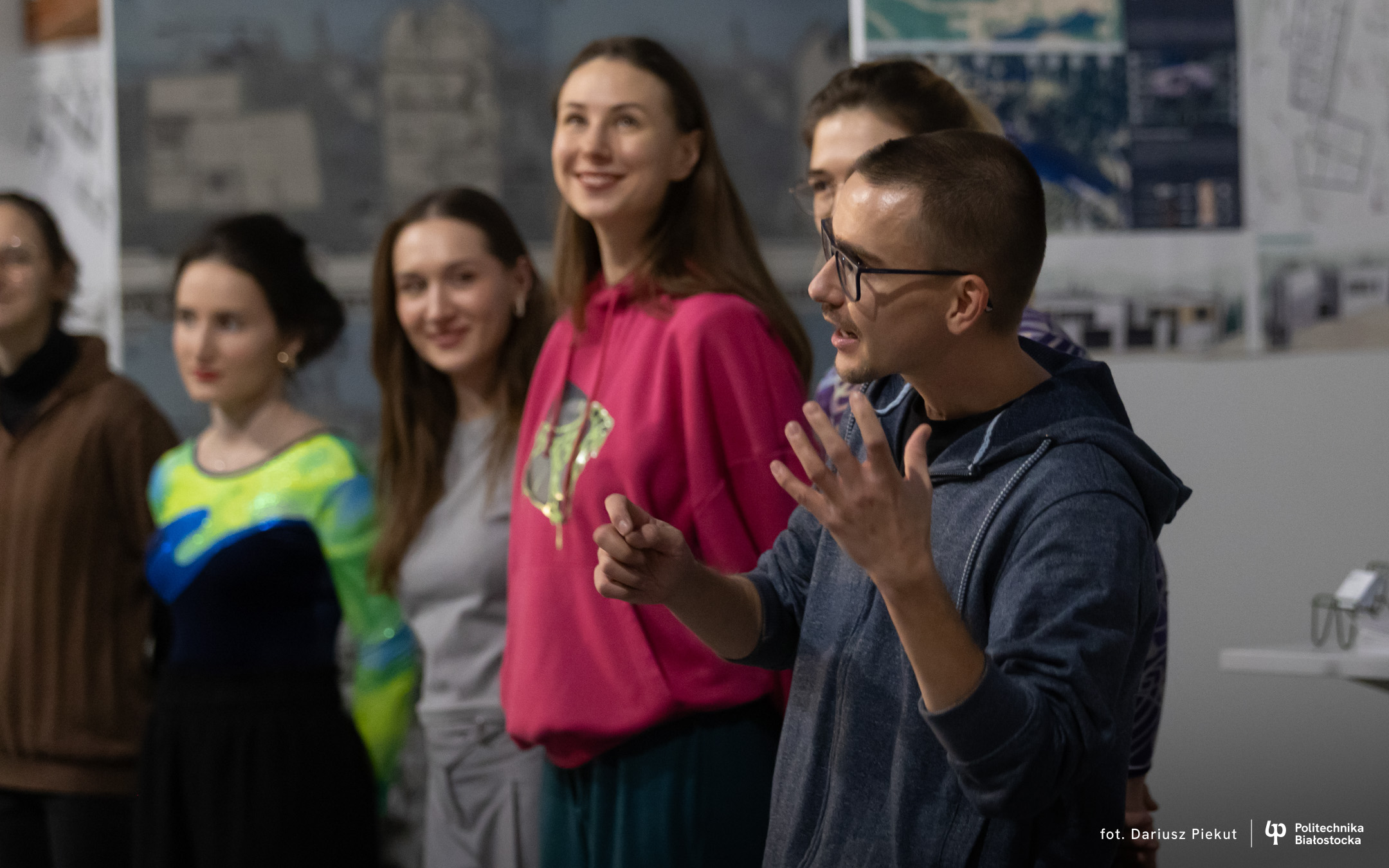
– At the initial stage, we were thinking about the concept of this performance – how to combine images, how to display them, where and how to place them in the space, and how to manage the space around the performance – says Gabriela Czech, a fourth-year architecture student at the Faculty of Architecture of Bialystok University of Technology and member of the Scientific Association Forma.
Then the collaboration really took off.
– It started with simply placing a student in front of a camera, and what it captured went through the digital processing of an AI model, which transformed the human movement into an image driven by words – explains Popławski about the initial steps.
Students began by generating simple geometric forms. The key to success turned out to be a properly written prompt – the text input that drove the whole process.
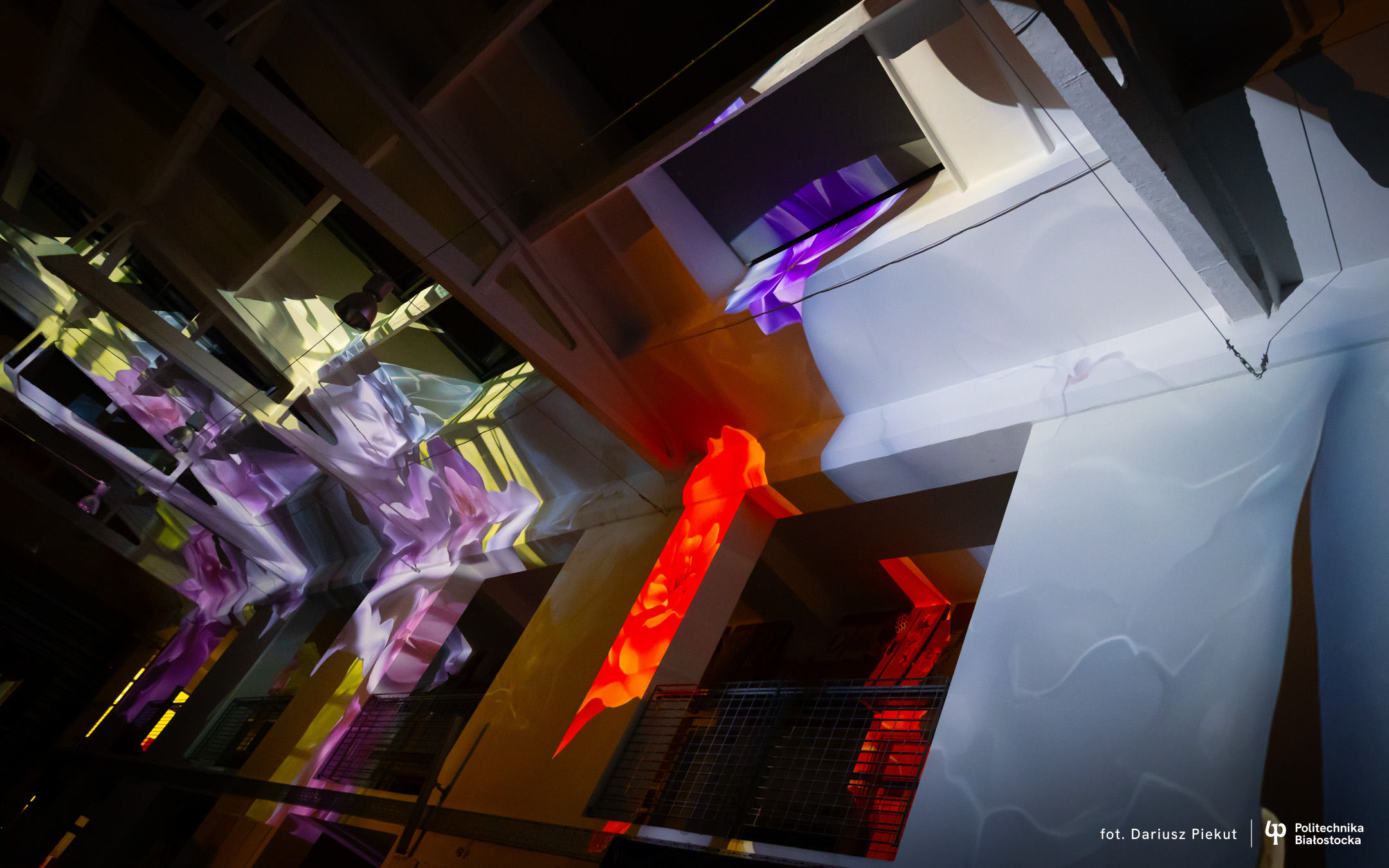
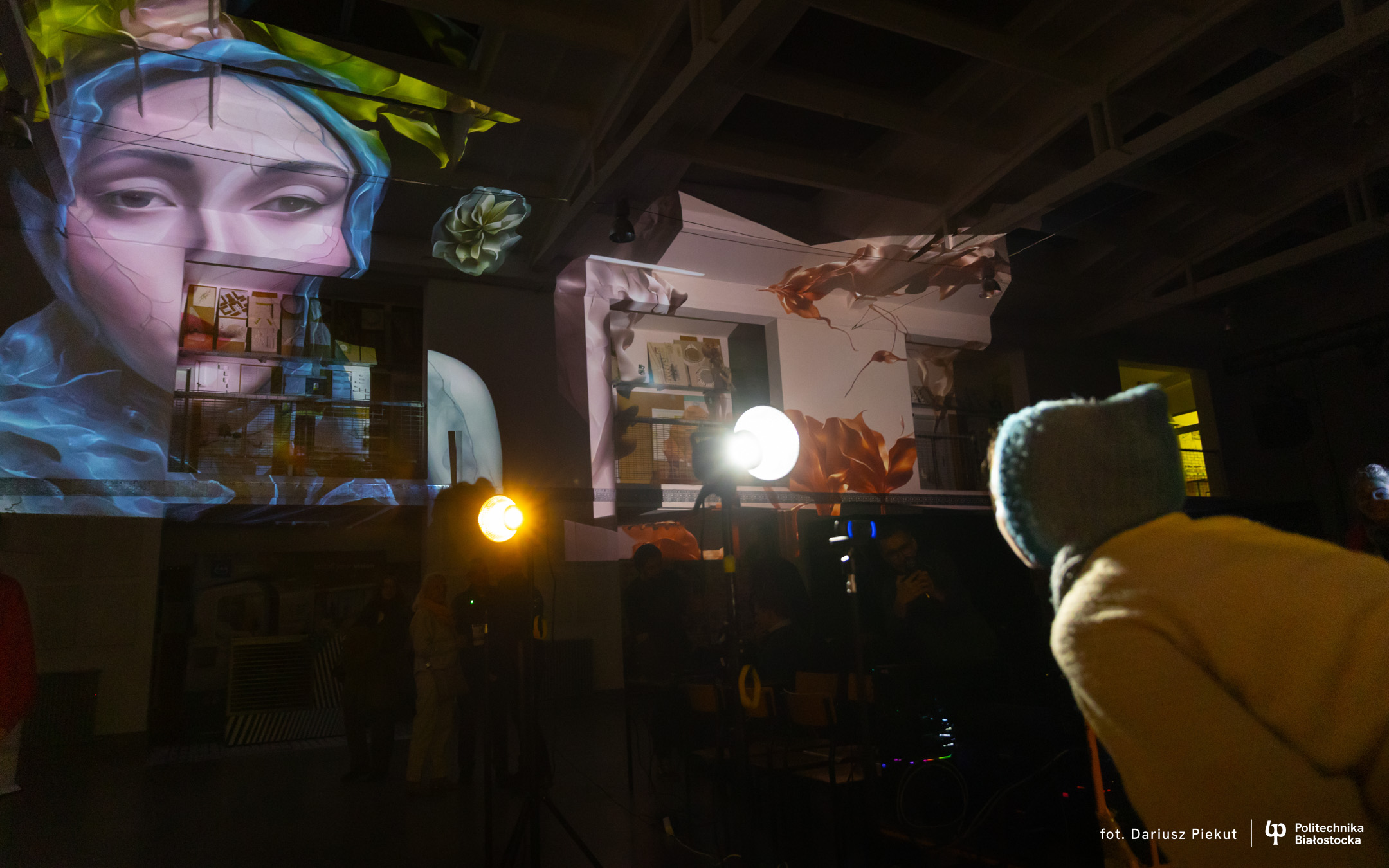
– In a way, it fooled the artificial intelligence – Popławski laughs. – It means that the person appearing through the technology, their human face, sometimes more closely resembles flowers or a marble sculpture.
The students were amazed and astonished by the effect of young actors working with artificial intelligence.
– The main goal of our project was to create a unique experience – says Wiktoria Falkowska, a third-year graphics student at the Faculty of Architecture of Bialystok University of Technology and member of the Forma Association. – We explored and expanded the boundaries of art by combining theatre with space, movement, and artificial intelligence, which processed all the movement captured by the cameras.
This is how the combination of theatre and computer visualizations was created.
– This is a live performance – emphasizes Popławski. – It’s about observing how AI, guided by a specific text prompt, sees us. But what happens on the screen – the extent to which we appear as a character, a flower, or a sculpture – is determined by the computer and the digital processing.
Despite the use of artificial intelligence, the creators had to make the final decisions.
– We focused on a single prompt, and the complexity of this input along with the actors’ performance was interesting enough that the scenes we watched evolved without any manual changes to what was displayed – Popławski recounts. – We discovered that the closer the actor was to the camera and the more they moved, the more elements like flowers appeared in the image. We tried using works by famous artists, but the results were less interesting. It got really fascinating when we built specific elements we wanted to appear and the AI began to get confused.
Teachers from the Academy ensured how to exist in a digital reality while remaining in the real space and in the presence of the audience.
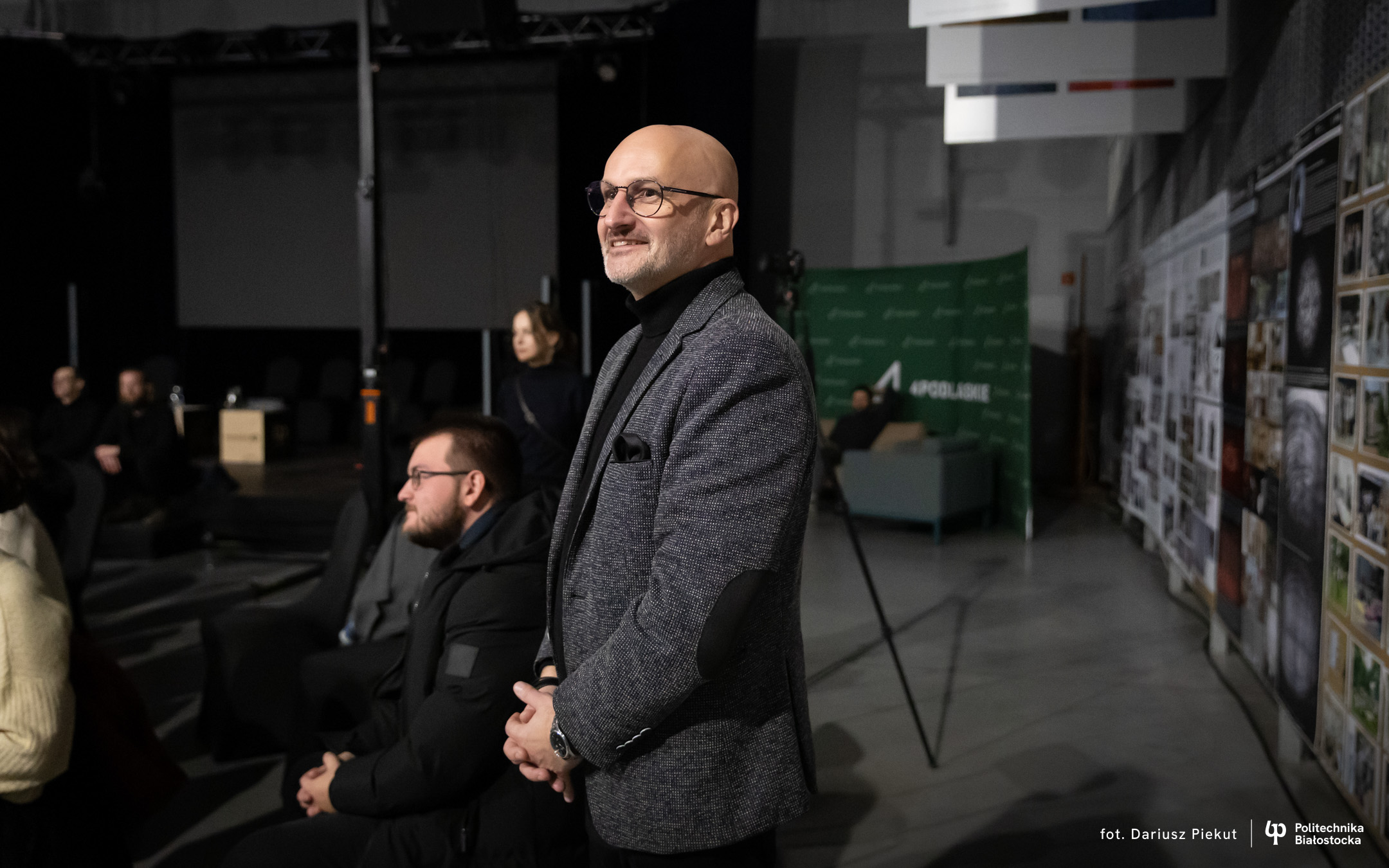
The overall direction was overseen by Dr. hab. Bernarda Bielenia, Dean for Programs at the Bialystok Branch of the Aleksander Zelwerowicz National Academy of Dramatic Art, visual consultations were provided by Małgorzata Tarasewicz-Wosik, and choreography for the Academy students was handled by Karolina Garbacik. The inter-university cooperation is also reflected in the fact that the concept of the entire performance was authored by Dr. Eng. Arch. Adam Jakimowicz, Vice-Dean for Development and Cooperation at the Faculty of Architecture of Bialystok University of Technology, and Dr. hab. Bernarda Bielenia.
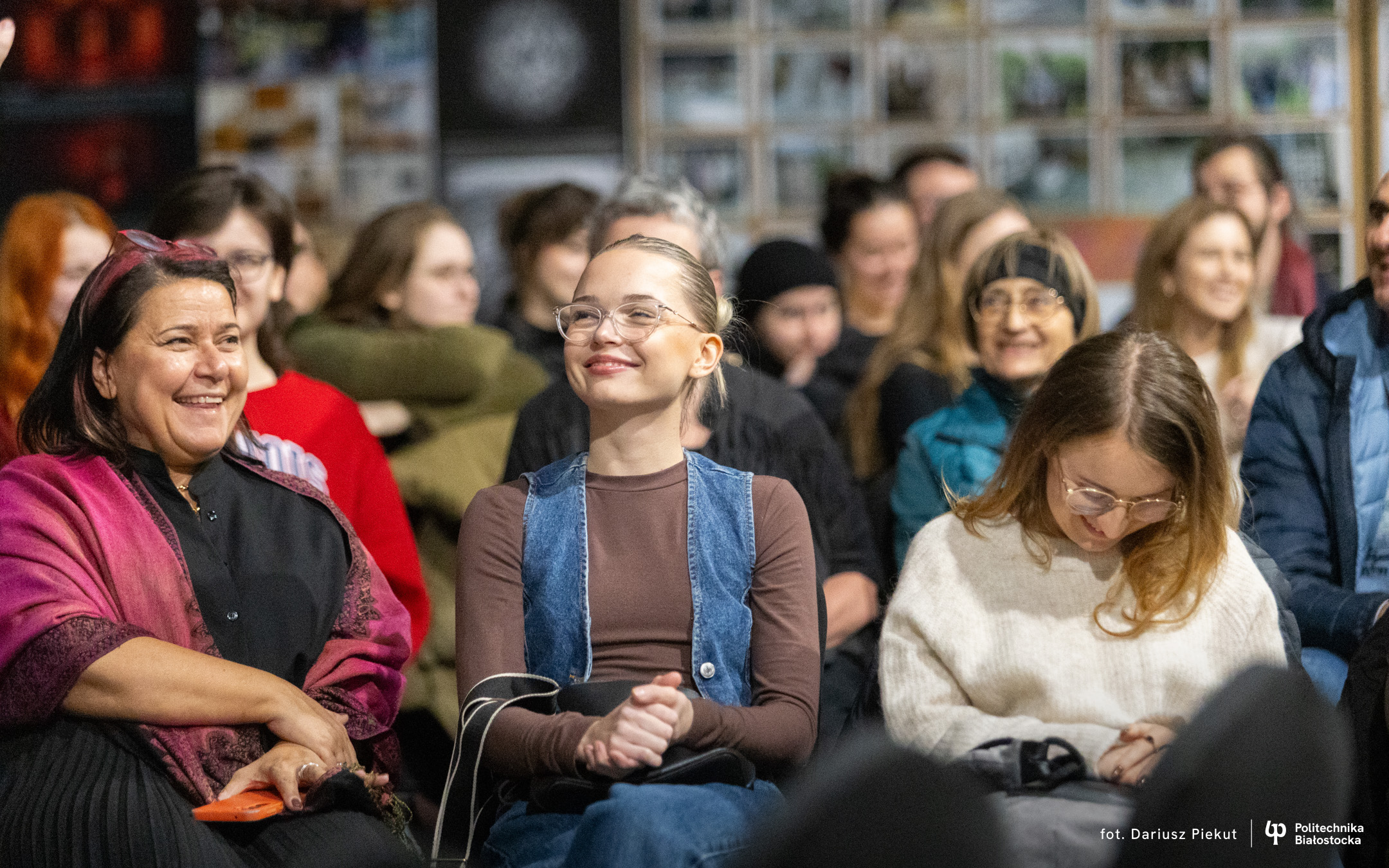
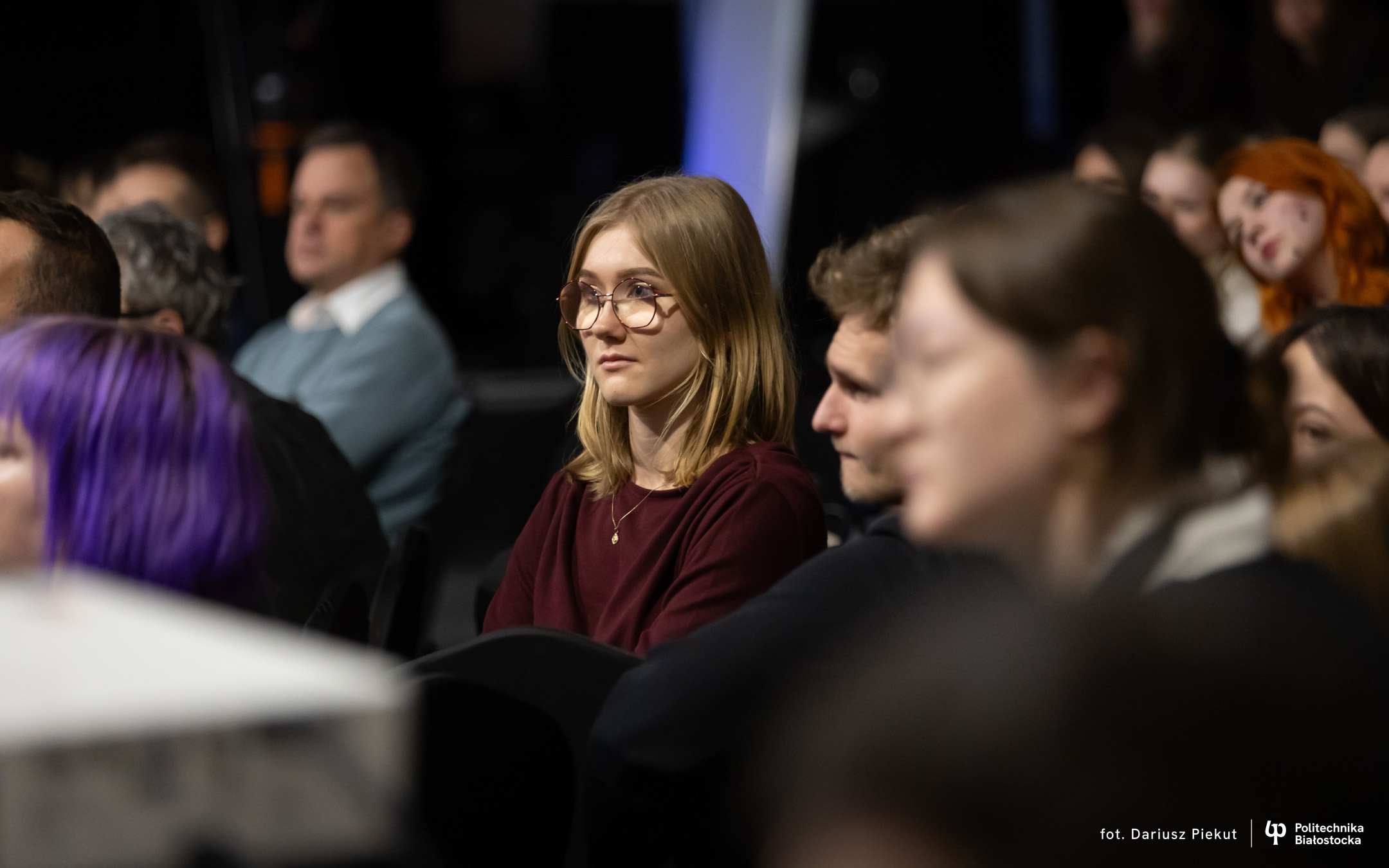
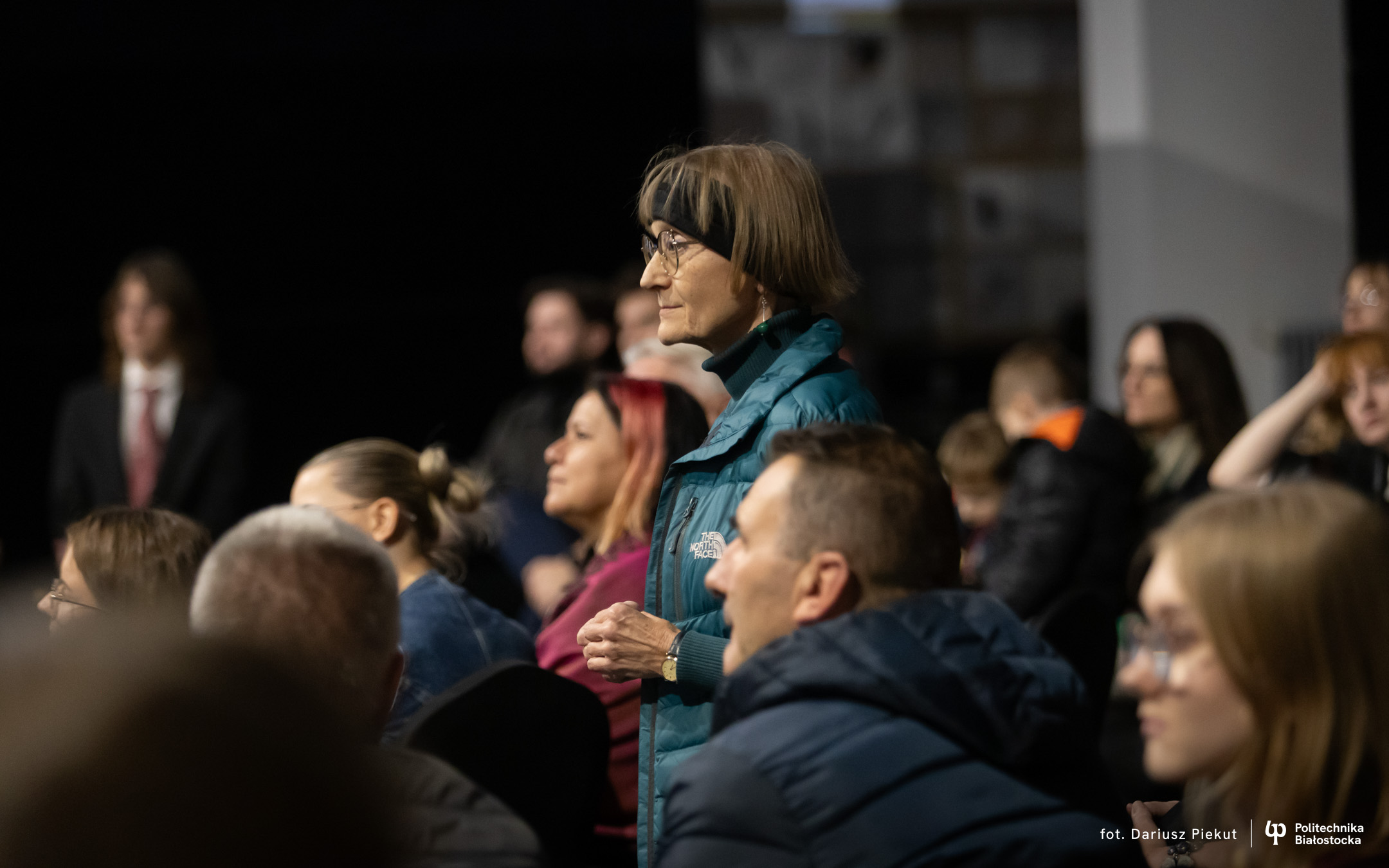
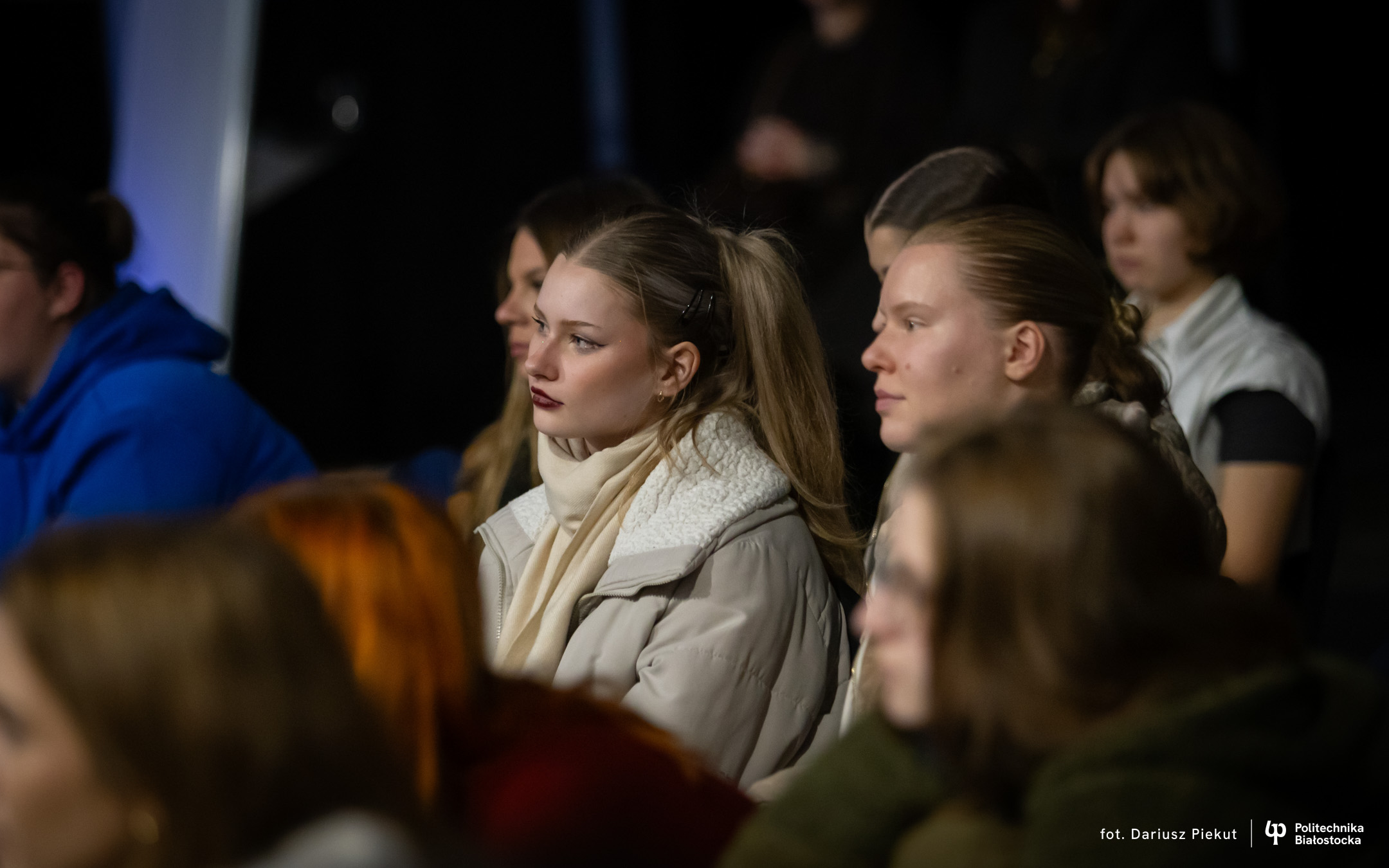
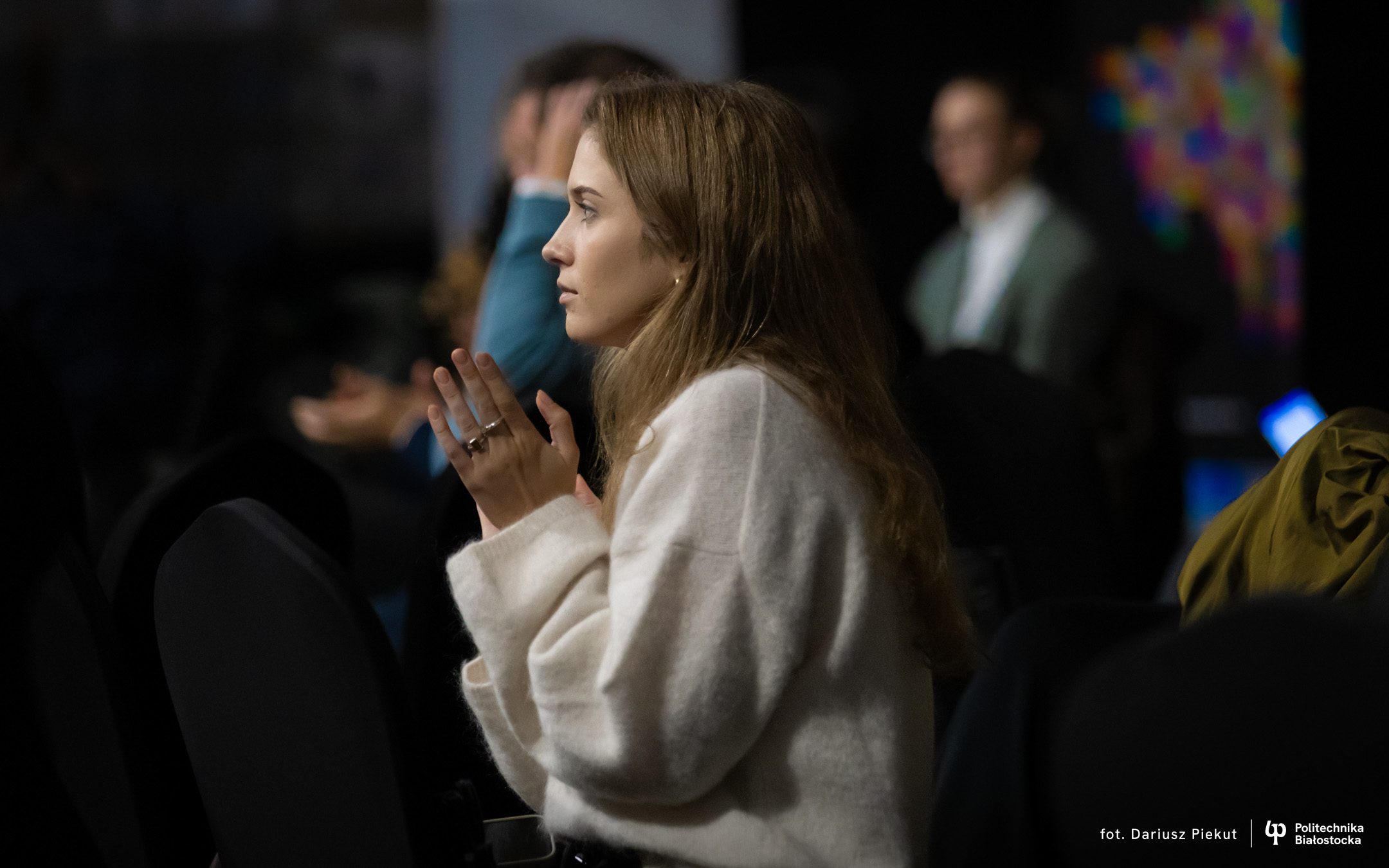
– The value of our project lies in the audience’s ability to interact with the cameras – emphasizes Falkowska. – At the end of the performance, viewers could approach the cameras, move their hands or bodies, come closer or step back, while seeing everything projected in the Faculty of Architecture hall. Thus, the audience was not just passive spectators but could contribute to the creation of this temporary, unique artwork.
The joint work on the performance was greatly appreciated by academic teachers and students from both the Academy and Bialystok University of Technology. It also provided a great deal of satisfaction.
– In my opinion, everything turned out great – Falkowska concludes. – The journey to the final show was amusing because it started as something completely different and ended as something entirely new. I am truly impressed and hope that all our viewers were as well.
Students plan to repeat “impAKT” in spring 2026. The premiere took place on November 20 during the VIII East Design Days.
The performance was co-created by students from the Scientific Association Forma: Paulina Borkowska, Zuzanna Godlewska, Klaudia Kapla, Dominika Kotowska, Natalia Wojewódzka, Wiktoria Falkowska, Diana Syrovatska, Gabriela Czech, Jan Konstantynowicz.
Students from the fields of acting, directing, and technology participated in the performance and preparations. Performers included: Aleksander Piesiecki, Bartłomiej Kowalski, Dominika Šoškova, Iza Makiel, Julia Żak, Julia Potrykus, Justyna Bożewicz, Łukasz Krasoń, Aleksandra Miętka, Lilianna Kłos, Nina Czaja.
Actively contributing during rehearsals were: Anna Chlebica, Lada Borovska, Lesia Pasichnyk, Ewelina Głowacka, Marta Wieczorkiewicz.
Authors: Agnieszka Sakowicz-Stasiulewicz, Jerzy Doroszkiewicz
Summary (AI):
The artistic project “impAKT” is a unique experience combining physical theatre and movement with artificial intelligence (AI), created by the Scientific Association Forma, the AuReLa Laboratory (Bialystok University of Technology), and the Aleksander Zelwerowicz National Academy of Dramatic Art in Warsaw, Bialystok Branch.
Benefits for students (actors and creators)
- Exploring and expanding the boundaries of art – Students had the opportunity to create a unique experience, exploring and expanding the boundaries of art by combining theatre, movement, space, and artificial intelligence, which processed recorded motion.
- Experimenting with a new artistic form – The project was an attempt to create a new, interactive artistic form at the intersection of performance and technology in the digital era.
- Exciting experience and satisfaction – Participation was an exciting experience for students, especially the chance to see themselves in the “AI digital mirror” and view images driven by their real movement. Working on the performance also provided great satisfaction.
- Practice in concept and space management – Students worked on the concept of combining images, the way they were displayed, and managing the space around the performance.
- Technological discoveries – Students discovered that a complex text input (prompt) and the actor’s intense movement near the camera influenced the visualizations, e.g., producing elements resembling flowers. Despite the use of AI, the creators had to make the final decisions about the form of the performance.
- Inter-university collaboration – The project was the result of successful cooperation between students from the Faculty of Architecture of Bialystok University of Technology and the National Academy of Dramatic Art.
Benefits for the audience
- Interactive participation in the art – Viewers were not just passive spectators.
- Possibility to interact with technology – A key feature of the project was the audience’s ability to interact with the cameras after the performance.
- Co-creating unique art – Viewers could approach the cameras, move their hands or bodies, and see their movements transformed into computer visualizations, contributing to the creation of a temporary, unique artwork.
- Observing digital perception – Viewers could see how artificial intelligence, guided by a specific text prompt, perceived the actors and transformed their human faces into geometric forms, marble-like sculptures, or flowers.