A historic city of science, culture and music on the River Saale.
Discover Halle (Saale)
Halle (Saale) is a city in central Germany, located in the state of Saxony-Anhalt. With around 226,000 inhabitants, it is the second-largest city in the state and an important centre of education, science and culture. Halle is located on the River Saale and, together with nearby Leipzig, forms part of one of the most important urban areas in central Germany.
Halle combines a long history with the atmosphere of a modern university city. Its historic centre, old churches and traditional market square exist alongside universities, research institutions and cultural centres.
The city is especially known for three things: its long tradition of salt production, its connection with the famous composer George Frideric Handel, and its importance as a centre of education and science.
Unlike many German cities, large parts of Halle’s historic architecture survived the Second World War without widespread destruction. As a result, visitors today can still experience many elements of its historic urban landscape.
A city with a long history 🏰
Halle has a history stretching back more than a thousand years. The city was first mentioned in written records in 806, making it considerably older than many modern German cities.
One of the most important reasons for the development of Halle was salt. Salt production influenced the economy and identity of the city for centuries. Even the history of Halle’s name is closely associated with the tradition of salt production.
As the city developed, Halle became an important regional centre for trade, education and culture. Today, its long history is still visible throughout the city centre.
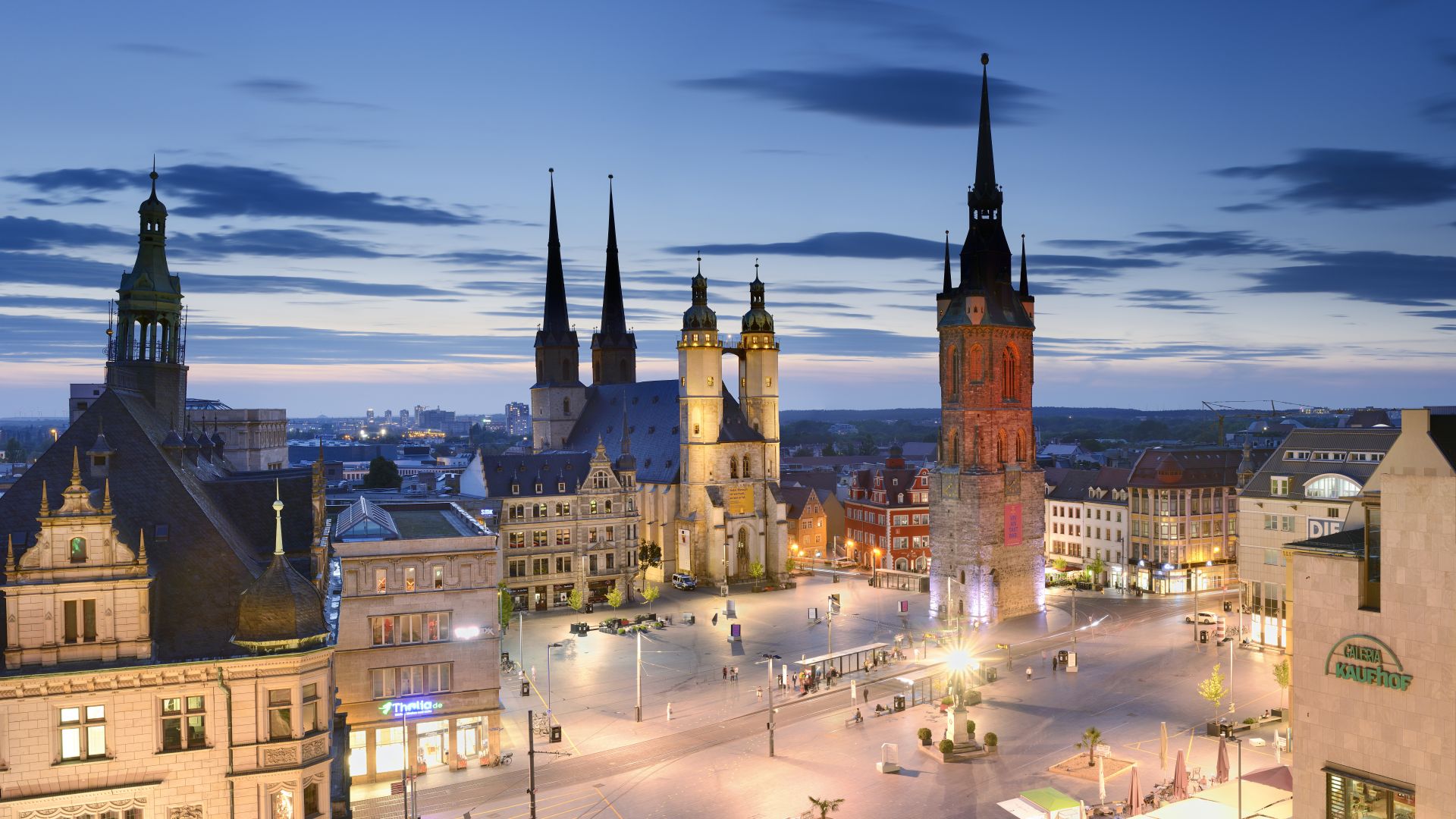
One of the best places to experience this is the historic Marktplatz, the central market square. The square is surrounded by some of Halle’s most recognisable landmarks, including the Marktkirche and the Roter Turm.
Together, the towers of these buildings create Halle’s famous Five Towers, one of the symbols of the city.
Halle – the city of Handel 🎵
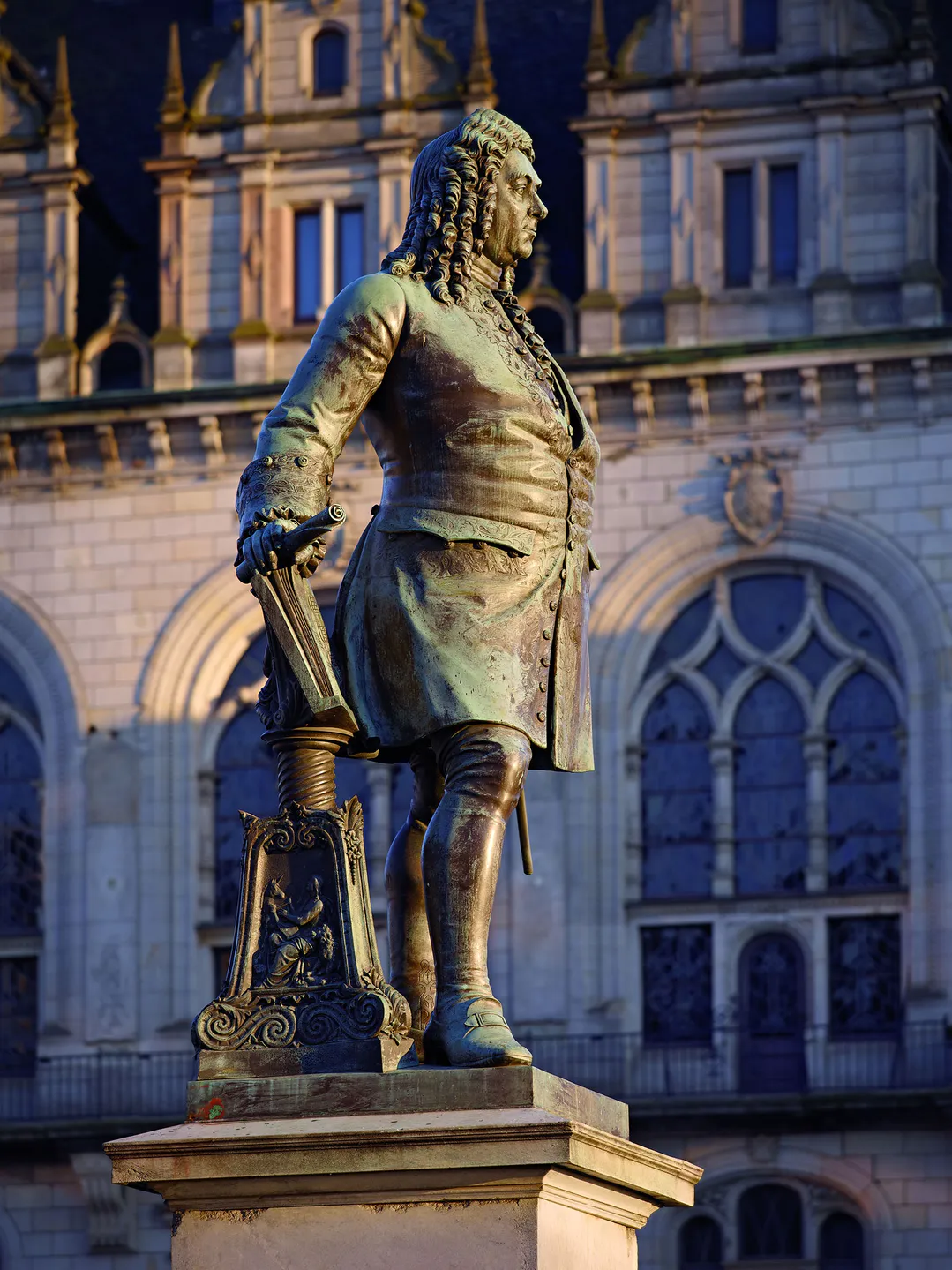
One of the most famous people connected with Halle is the composer George Frideric Handel, who was born in the city in 1685.
Handel later became one of the most important composers of the Baroque period and spent much of his career outside Germany. Nevertheless, Halle remains strongly connected with the composer and his legacy.
His connection with the city can easily be seen when visiting the centre of Halle. A monument dedicated to Handel stands in the Marktplatz, directly in the heart of the city.
This musical heritage adds another dimension to Halle’s identity. The city is not only a place connected with science and education, but also with art, music and European cultural history.
For visitors, this mixture of culture and history makes Halle much more interesting than its size might initially suggest.
A city of science and students 🎓
Education and science are some of the most important parts of modern Halle.
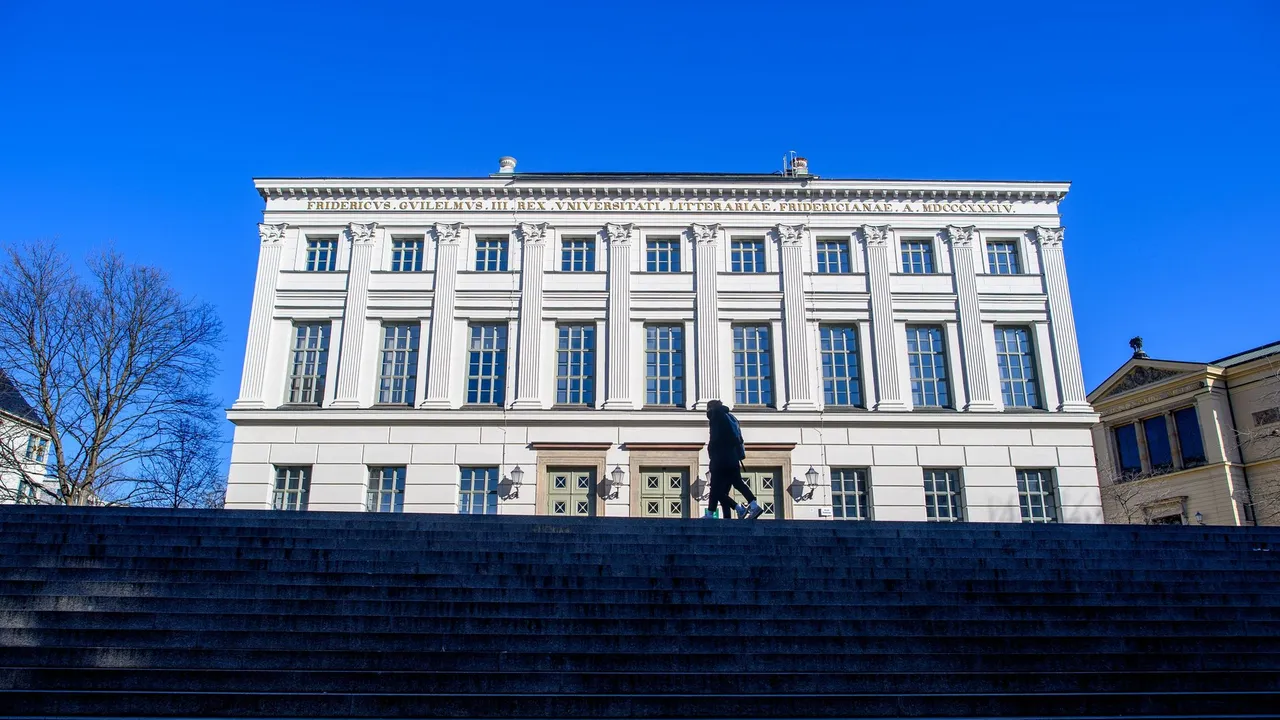
The city is home to Martin Luther University Halle-Wittenberg, one of Germany’s oldest universities and the largest university in Saxony-Anhalt. The university has locations in Halle and Wittenberg and makes Halle an important academic centre.
The large student community gives parts of Halle a young and international atmosphere. Students come to the city to study subjects ranging from natural sciences and medicine to humanities and social sciences.
Halle is also home to the German National Academy of Sciences Leopoldina, one of the country’s most important scientific institutions.
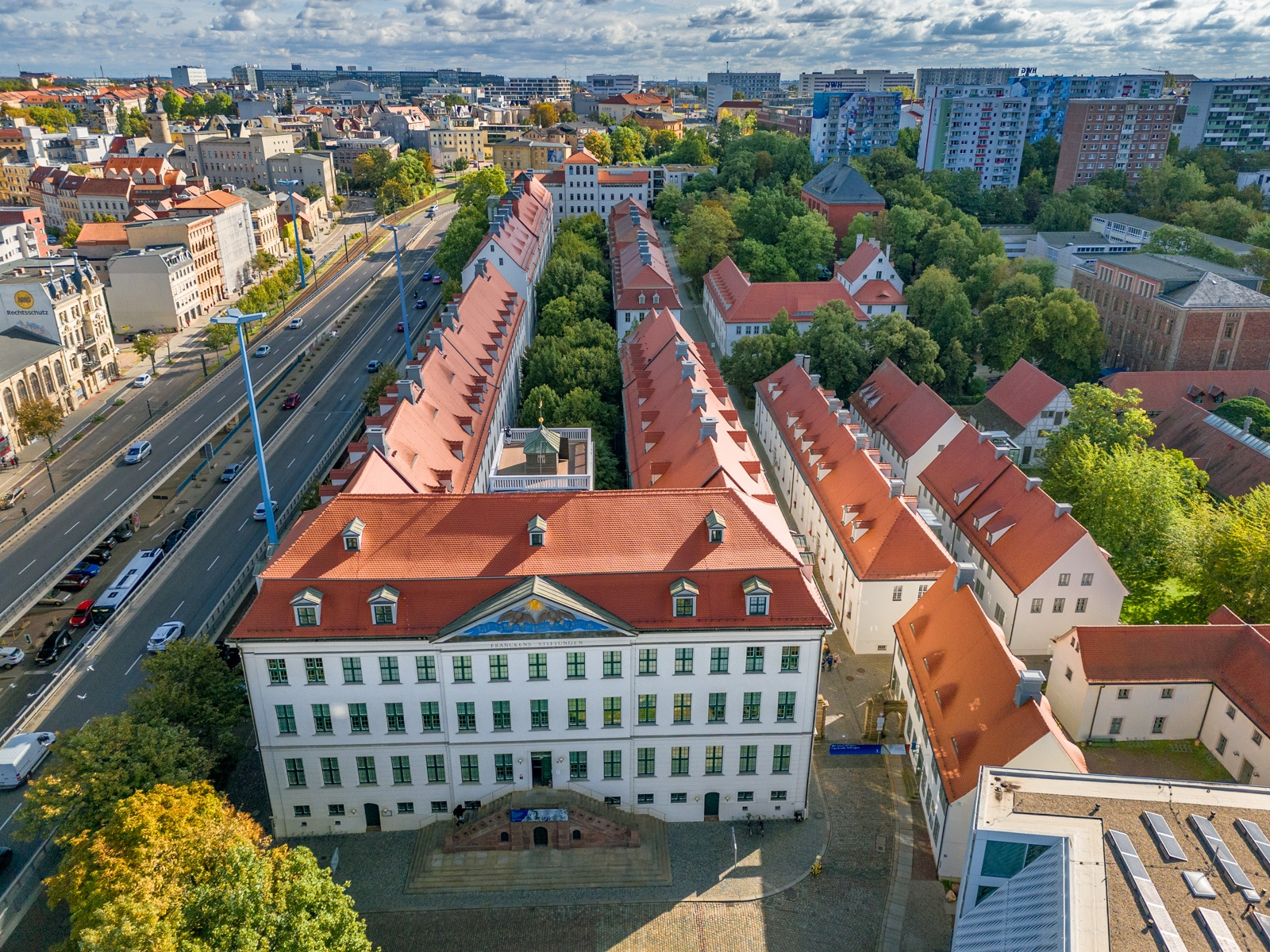
Another important educational institution is the Francke Foundations. Founded by August Hermann Francke in 1698, the foundations played an important role in the development of education and social ideas in Germany.
For a MINT project, this scientific and educational side of Halle is especially interesting. The city demonstrates how centuries of academic tradition can connect with modern research, technology and international cooperation.
The River Saale and nature 🌳
Despite being a relatively large city, Halle offers many opportunities to spend time close to nature.
The River Saale flows through the city and is an important part of Halle’s landscape. The river and the surrounding green areas provide places for walking, cycling and spending time outdoors.
The presence of the river creates an interesting contrast with the historic and densely built city centre. A visitor can explore Halle’s architecture and cultural attractions and later spend time in much quieter green areas close to the Saale.
The river has also influenced the development of Halle throughout its long history and remains one of the geographical features most strongly associated with the city. Halle is the largest city located on the Saale.
This balance between urban life and nature helps give Halle its distinctive character.
What can you see in Halle? 🏛️
The Marktplatz is probably the best place to begin exploring Halle. It is located in the historic centre and is surrounded by some of the city’s most recognisable buildings.
Here visitors can see the Marktkirche, the Roter Turm and the monument to Handel. The towers of the Marktkirche and Roter Turm together form the famous Five Towers skyline that has become a symbol of Halle.
Another important place is the Francke Foundations, which represent Halle’s long tradition of education and social development.
Visitors interested in science can discover Halle’s strong connection with its university and research institutions, while people interested in culture can explore the city’s museums, historic buildings and musical heritage.
Halle therefore offers an interesting combination: visitors can experience medieval and early modern architecture, learn about European music, discover the city’s scientific tradition and enjoy the landscape along the Saale, all within one city.