A historic university city where culture, science and wine meet.
Discover Würzburg
Würzburg is a historic city in the German state of Bavaria. Located on both sides of the Main River, the city has around 134,000 inhabitants and is an important cultural, educational and economic centre of Lower Franconia.
Despite being smaller than major German cities such as Munich or Frankfurt, Würzburg has a strong identity of its own. Historic architecture, vineyards, university life and the River Main all contribute to the city’s unique atmosphere.
Würzburg is particularly famous for the Würzburg Residence, its historic old town, the Marienberg Fortress and its long tradition of wine production. It is also home to one of Germany’s oldest universities.
The result is a city where history and modern student life exist side by side.
A city with more than 1,300 years of history 🏰
Würzburg has a very long history. The city was first mentioned in written records as Virteburch in 704, although people had lived in the area much earlier. The hill where Marienberg Fortress stands today had already been used during earlier periods of settlement.
Over the centuries, Würzburg developed into an important political and religious centre. The prince-bishops of Würzburg played a major role in the city’s development and were responsible for many of the impressive buildings that can still be seen today.
The city suffered enormous destruction during the Second World War, but many historic buildings were later reconstructed and restored. Today, the old town once again forms one of Würzburg’s most characteristic areas.
Walking through modern Würzburg therefore means discovering architecture and places connected with many different periods of German history.
The Würzburg Residence 👑
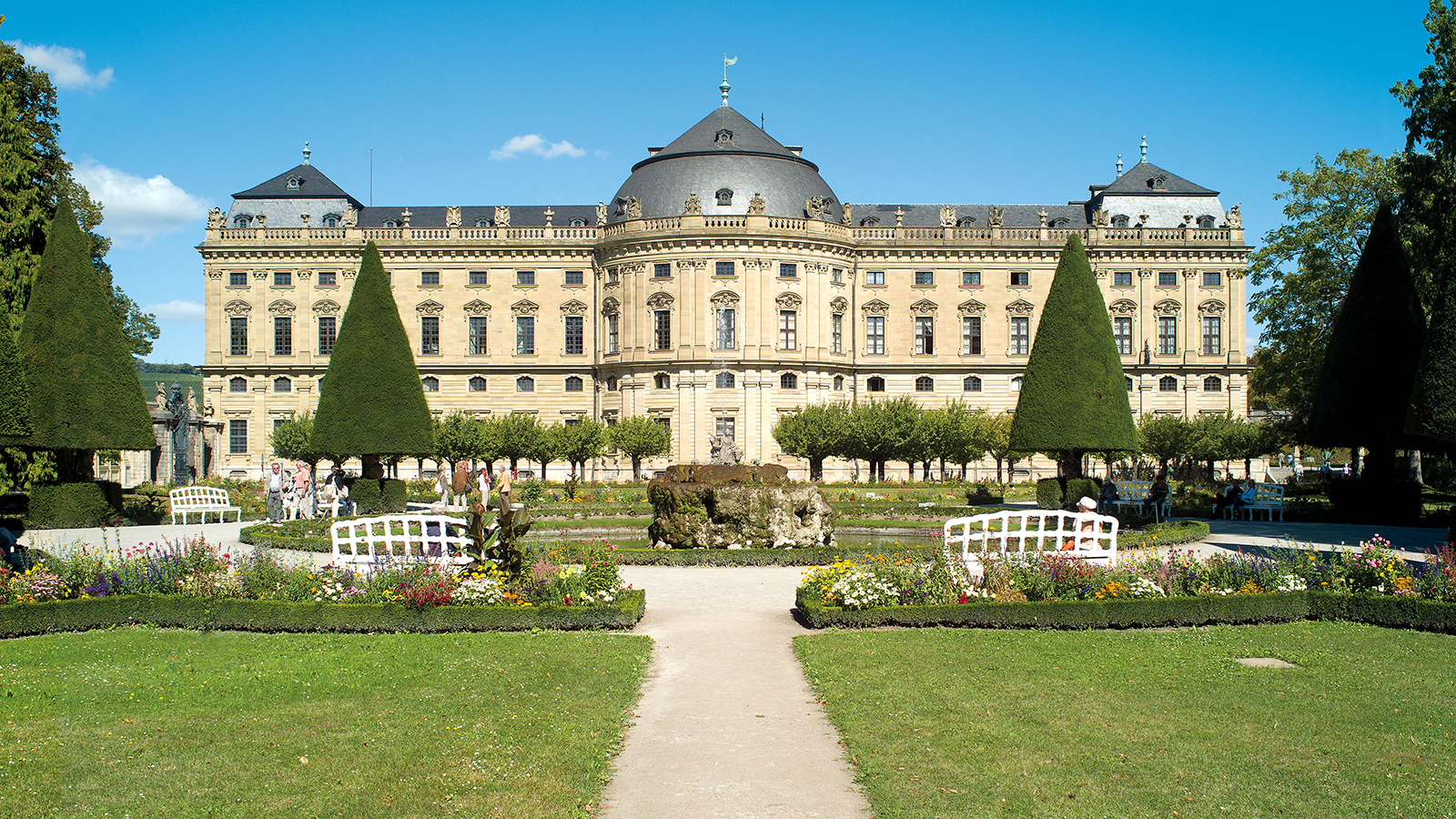
One of the most famous landmarks in Würzburg is the Würzburg Residence.
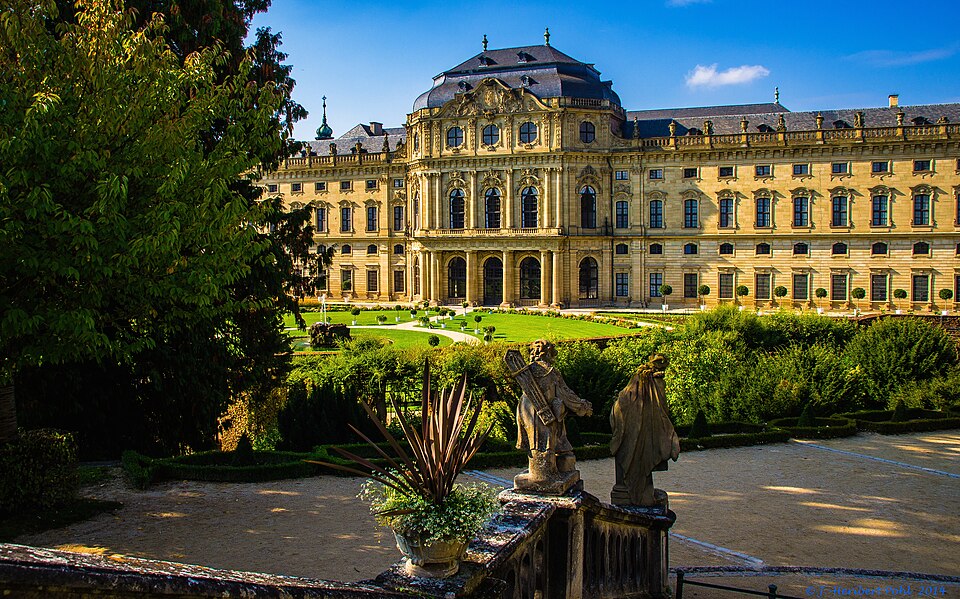
The magnificent Baroque palace was constructed in the 18th century and is closely associated with architect Balthasar Neumann. Its interior also includes famous frescoes by Giovanni Battista Tiepolo.
The importance of the Residence reaches far beyond Würzburg. The Residence, Court Gardens and Residence Square were designated a UNESCO World Heritage Site in 1981.
Today, the Residence is one of the city’s most important tourist attractions and one of the best-known examples of Würzburg’s architectural heritage.
Together with the Marienberg Fortress, it makes Würzburg immediately recognisable and gives visitors a glimpse into the city’s rich past.
A city of students and science 🎓
Würzburg is not only a historic city. It is also an important centre of education and scientific research.
The Julius-Maximilians-Universität Würzburg was founded in 1402, making it one of Germany’s oldest universities. After an interruption, it was re-established in 1582.
Today, the university has around 25,000 students, including more than 3,000 international students. The university offers education and research in a wide range of fields, including medicine, biology, chemistry, computer science and physics.
Science has an especially interesting connection with Würzburg. Numerous Nobel Prize winners have been associated with the university over its history.
For an international MINT project, Würzburg is therefore particularly interesting. The city combines centuries of academic tradition with modern research, science and technology.
A city of wine 🍇
Another important part of Würzburg’s identity is Franconian wine.
Würzburg lies in a major wine-growing region, and vineyards form a distinctive part of the landscape surrounding the city. Wine production and wine culture have been closely connected with Würzburg and the wider Franconian region for centuries.
The official Würzburg tourism website even has a section dedicated to Frankenwein, local vineyards, wineries and the distinctive Bocksbeutel wine bottle.
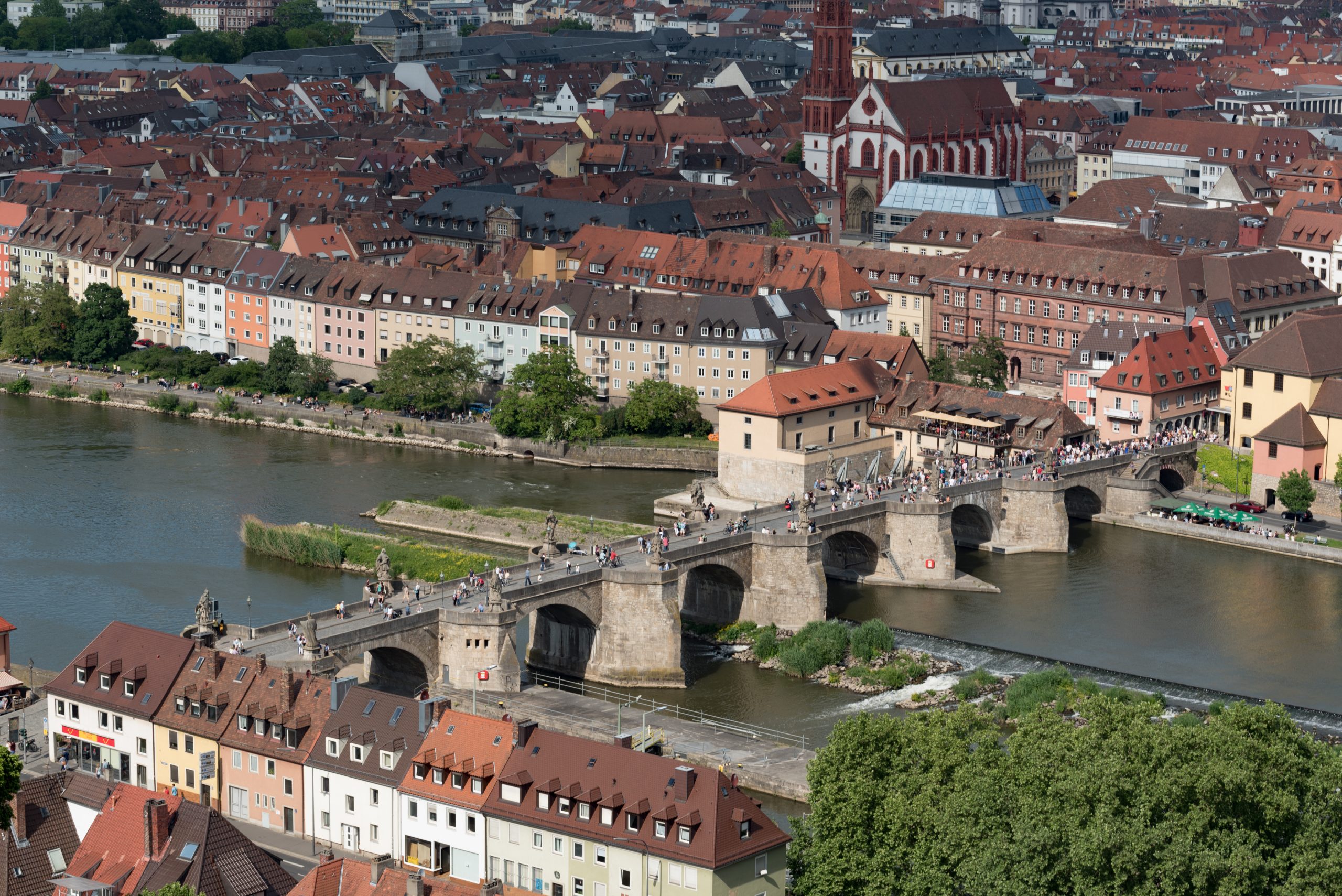
The vineyards provide an interesting contrast with the historic architecture in the centre of Würzburg. From elevated areas around the city, visitors can see the Main, historic buildings and vineyards forming part of the same landscape.
This combination gives Würzburg an atmosphere that is very different from large industrial German cities.
What can you see in Würzburg? 🏛️
Würzburg has many historical and cultural attractions.
The Würzburg Residence is one of the most important and is recognised as a UNESCO World Heritage Site.
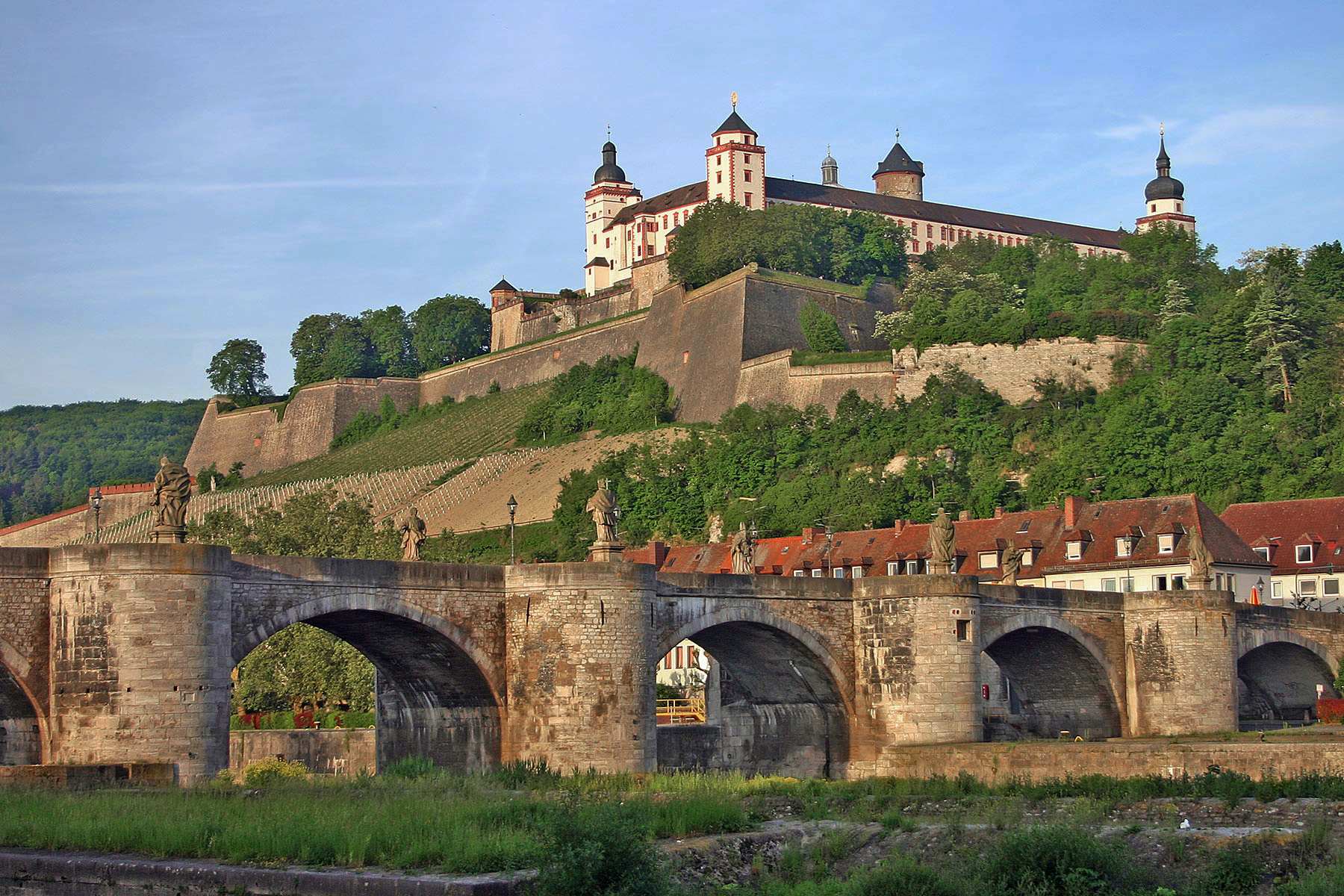
On the opposite side of the Main, the Marienberg Fortress stands above the city. The site has a history stretching back many centuries and was once the residence of Würzburg’s prince-bishops.
The Old Main Bridge is another symbol of the city and provides one of the characteristic views towards the fortress. Other important attractions include St. Kilian’s Cathedral, Marienkapelle, Neumünster and Käppele.
Together, these places make Würzburg an interesting destination for visitors who enjoy history, architecture and culture.